Dancers are taking their autonomy back on the world white web

 The Latest Protest By Black Creators On TikTok Just Might Be The Most Important One Yet "I think Black creators should just stop creating content for like a good 6 months and just observe what these people come up with," wrote Twitter user @Ariannnyy_ back in March, a magnificent foreshadowing of what was to come.
The tweet was in response to TikTok star Addison Rae's controversial dance segment on Late Night with Jimmy Fallon, in which Rae performed a series of viral dances she didn't create without taking the time to name the originators, who were mainly Black TikTokers with much smaller followings.
In less than two minutes, the Rae/Fallon spectacle epitomized the long-standing debate about who receives the credit in popular culture for content created on social media — as well as the plaudits (and often, profits) that follow it. It was, in short, the real-life version of the 2000 classic Bring It On.
Relatedly, if you frequently use TikTok, today you may have noticed a sizable decline in the number of dance-related challenges.
The absence isn't a coincidence, either: Several Black creators have pledged to not create any dance challenges for the foreseeable future in protest of rampant cultural appropriation. And at the center of this demonstration is Megan Thee Stallion's latest release, "Thot Shit."
The single, which typically would have received a challenge treatment as her music often does, is instead bserving as the rallying point for creators who no longer wish to see their creativity pilfered on the world white web (pun intended).
With the absence of a clear routine, some people are still attempting to mimic Black creators' videos, as demonstrated in this thread posted by Leslie Mac, with cringe results.
Amanda Bennett, a Duke PhD candidate and cofounder of education collective Define&Empower, told BuzzFeed News that the current demonstration was rooted in fatigue and the need to raise the bar for "white allyship."
"Black creators are tired of white people profiting off our work and appropriating Black culture. Unfortunately, many white people who consume Black culture have little respect or compassion for the Black people who are producing that culture," she said.
For those still attempting to make viral dances in the absence of Black contributions, there's plenty of evidence that they would fail at even the most basic game of "Simon Says": They don't seem able to tell the difference between their knees or their elbows or even how to follow instructions. Although Megan proclaims that she's putting her "hands on [her] knees" and "shakin' ass," non-Black TikTokers have been waving their hands in the air (like they just don't care). They clearly didn't understand the assignment.
Daniel Akomolafe, a 19-year-old TikToker better known by his username Uniekue, said he thinks "this strike of no longer doing Tik Tok dances was a long time coming."
"It just so happened that the black community wasn't doing a dance to Megan Thee Stallion's new Thot Shit yet, and then the non-black Tik Tok community jumped on the sound because all they saw was a new trend to hop on, then we started realizing…they aren't really giving anything," added Uniekue.
The strike has been brewing for a while. Many Black creators, who are often lesser known but doubly talented, have been frustrated that some of the biggest Gen Z stars on the platform found fame recreating their dances, typically to soundtracks also created by Black artists. Non-Black TikTokers have then been able to leverage their massive followings into major brand deals, acting roles, and music careers.
The importance of dance, and the intellectual property that comes along with it, is something that extends beyond the social media realm, however. Recently, JaQuel Knight, who was behind Beyoncé's iconic Coachella performance and the choreography in the official "Thot Shit" video, made history as the first choreographer to copyright his moves. Knight created the template that could eventually extend to those operating on social media.
"Copyrighting movement is about putting the power back in the artist's hands," Knight told Variety.
As it stands, Black performers on TikTok are feeling powerful for the first time in a long time, but this isn't the first time they have mobilized. In May of last year, a blackout was organized to coincide with Malcom X's birthday. Using the hashtag #ImBlackMovement, non-Black allies were encouraged to change their profile pictures to the Black power fist, unfollow a TikTok user who didn't support the movement, and follow at least one new Black creator.
Additionally, following the death of George Floyd, frustrated users who believed their Black Lives Matter content was being suppressed threatened a mass walkout, calling Black users to delete the application and give it a one-star review. The action was later halted out of respect for Pride Month.
In response to rising tensions, TikTok announced a series of measures and issued a statement in which it acknowledged that it had failed Black creators and had work to do to "regain and repair that trust." Still, complaints persist.
"While Tik Tok is a platform I am truly so grateful for because of the community I have been able to build, it is clearly not without its own issues," said Uniekue.
"I feel that we continue to show that we as black creators, especially black femme and black queer creators, carry the app and drive much of the culture and trends that people are talking about, and end up on our for you pages. I think just from a business POV it's in TikTok's best interest to not just suggest but actually implement changes that make the platform a more safe and enjoyable environment for black creators," he said.
"While I understand it is a long battle we are fighting, (again this is the optimist in me), I want to believe that we will get change and if we keep coming together and speaking our truth and amplifying one another's voices we will get what's ours."
Bennett is also hopeful the strike could lead to change.
"I would hope that one of the possible outcomes of this demonstration would be that Black creators begin receiving more equitable treatment," she said.
— Ade Onibada Becoming a Bachelor cast member is a direct pipeline to becoming an influencer, but what is so wrong with that? 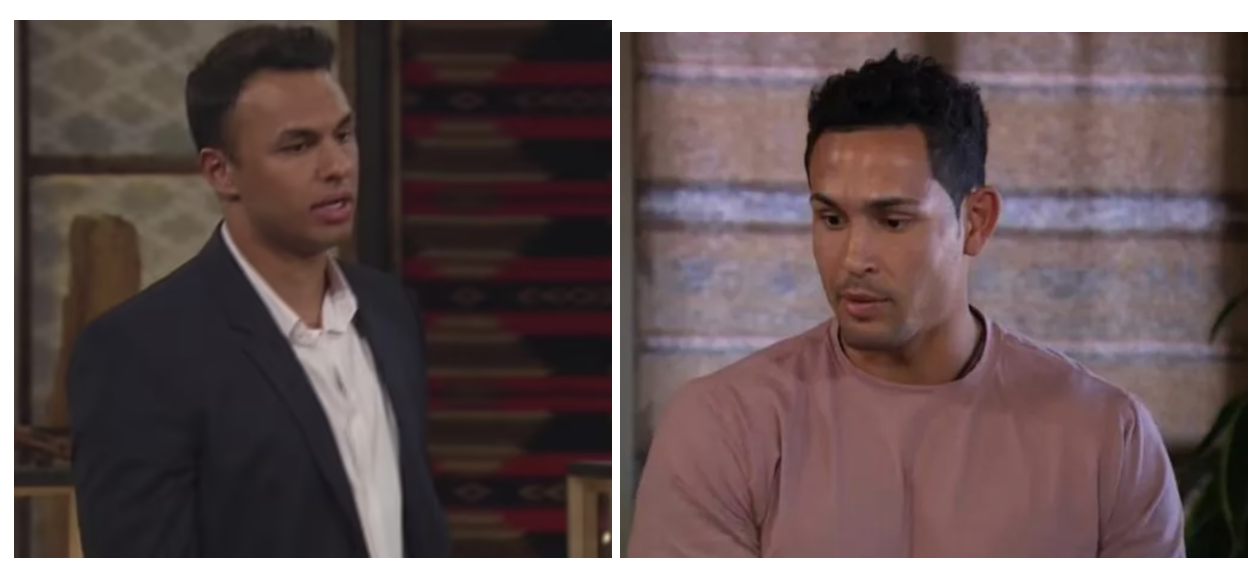 ABC A great staple of The Bachelor/Bachelorette is the constant debate over whether suitors are there for "the right reasons." The term and the show manufacturing tension around it has become canon and almost a parody in the franchise. And yet every season, cast members accuse one another of being on the show for fame and not simply for love. The horror!
On this week's episode with Bachelorette Katie Thurston, we once again had to watch contestants and producers carefully flirt with the fourth wall of the show.
Contestant Thomas Jacobs — who, IMO, is suspect for a number of other reasons that I won't fully get into here — admitted on a strange group therapy date that he hadn't been too interested in Katie when he first found out he would be vying for her affection. Instead, he was more angling to become the next Bachelor himself. The other men quickly erupted with anger in their talking heads afterward; there were back-to-back cuts of their disgusted reactions to Thomas's admission.
It became a major point of conflict when another contestant, Aaron Clancy, used it to build a campaign against Thomas. Aaron accused Thomas of not being on the show For The Right Reasons, or, rather, for the unadulterated love of Katie, a total stranger who the group of men had met like 48 hours ago only to then be thrust into a heavily controlled fantasy world to compete for the opportunity to propose to her within six weeks. Yes, going on the show for clout is apparently more out of touch and abhorrent than the alternative.
More than ever in the show's two-decade history, there are way more viable opportunities for people who get cast on the show than "winning" the heart or competition at the end. With social media and the burgeoning influencer industry in play, most people nowadays who make any appearance on the Bachelor/ette will see an immediate boost in followers. Even those who don't make it past the first rose ceremony will gain some kind of notoriety online if they're personable enough.
Greg Grippo, a current fan favorite for Katie, already has 127,000 followers on Instagram and only two episodes have aired so far. He's been catapulted out of obscurity, with old cringey photos still on his grid. Eric Bigger, a contestant on Rachel Lindsay's season who would have otherwise fallen back into obscurity after being sent home, now has a sustainable influencer career. He told Refinery29 that he and his other castmates can make anywhere from $1,000 to $30,000 for a sponsored post.
As the Bachelor/ette's conservative premise has continued to feel increasingly unsupportable in today's environment, its pipeline to the influencer space is arguably its only selling point for participants. If the franchise didn't present exciting ventures for contestants beyond "finding love" on the show, fewer people would be interested in applying. Statistically, the chances of "winning" the show and finding everlasting love are so, so, so, so slim, while the chances of establishing new streams of revenue for yourself are incredibly high. So why are we still pretending like most rational people applying to the show aren't doing so with this in mind? And why are we then shaming them for doing so?
Of course I'd love to subscribe to the purity narrative that contestants are compelled only by love, but that is not the reality we live in. In every newsletter I have the exhaustive pleasure of reminding us that we live in a capitalistic reality! Which means we are all compelled by the potential for capital gains as a means of survival, even if we would much rather challenge that system as much as we can. It's one reason why influencing as a job is inherently controversial — it forces us to acknowledge our own reflection in the mirror.
So I understand why men on Katie's season, or the public at large, might feel a moral imperative to call out someone who so boldly proclaims they are not there For The Right Reasons. It feels dirty to be so honest about our primal desires for fame and money.
So, c'mon, let's just let this trope go. There are so many more valid reasons to dislike the many contestants on the show already.
Until next time, Tanya Want more? Here are other stories we were following this week. Please meet TikTok's lesbian sheep shearing sweetheart. Right Choice Shearing has captivated over 1 million followers who just love the satisfaction of seeing that wool roll off.
P.S. If you like this newsletter, help keep our reporting free for all. Support BuzzFeed News by becoming a member here. (Monthly memberships are available worldwide.) 📝 This letter was edited and brought to you by Tanya Chen, Stephanie McNeal, and BuzzFeed News. You can always reach us here. BuzzFeed, Inc. |


