| The Supreme Court unanimously ruled Monday that the NCAA, the organization that oversees American college sports with what justices have described as a monopoly, put too many limits on compensating athletes who participate in college sports — and earn their schools, and the NCAA, huge piles of money while getting little of that money themselves. The court's decision is perhaps a reflection of the pressure collegiate athletics has found itself under in recent years to more fairly compensate the athletes who bring the star power, and who actually compete in the games and tournaments that earn the NCAA and its member institutions billions. 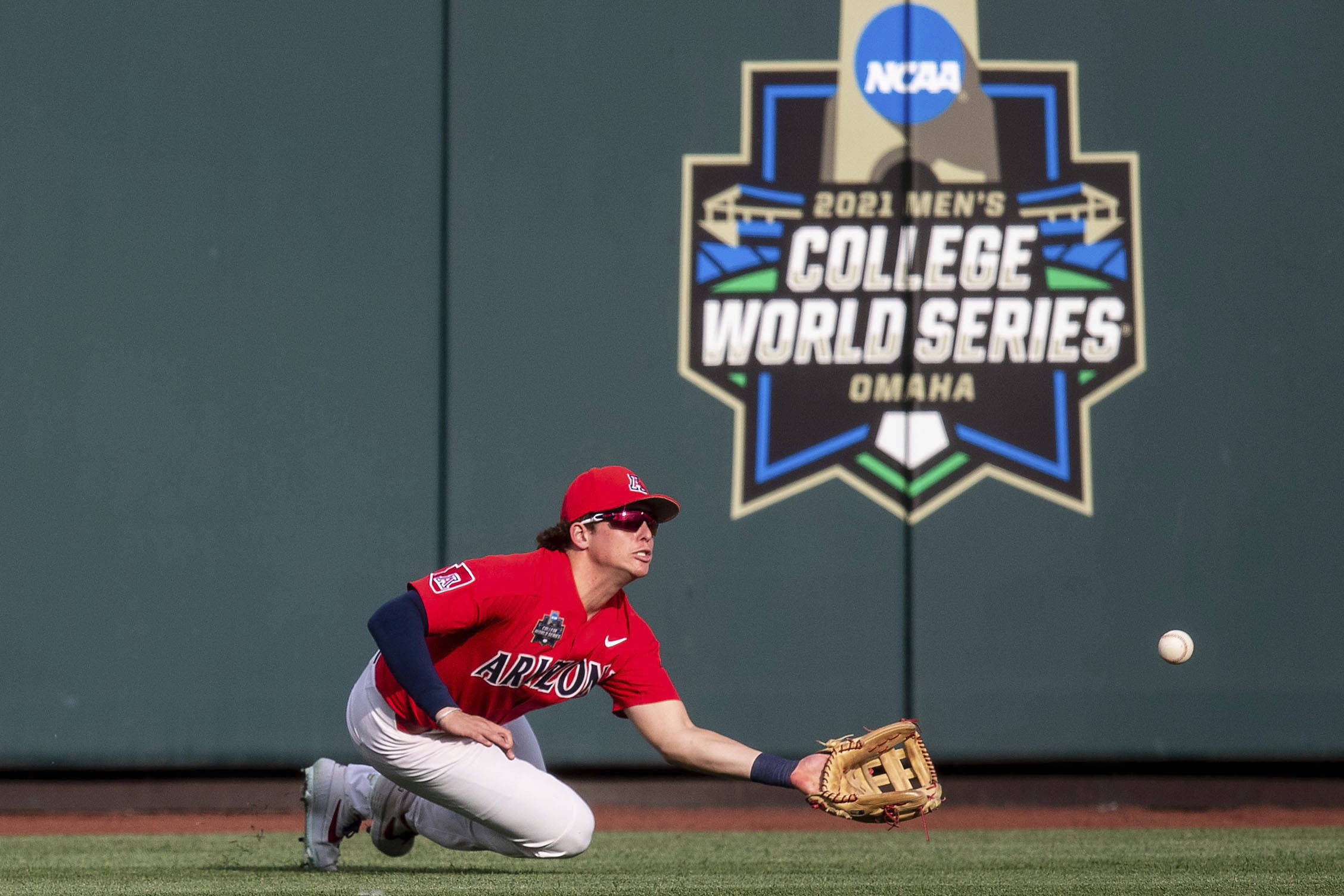 Arizona's Tyler Casagrande at the College World Series on Saturday in Omaha (Photo by Chris Machian/Omaha World-Herald via AP) | Monday's decision in the case of National Collegiate Athletic Association v. Alston doesn't suddenly open the door to college athletes being paid directly — though it's a signal that the rules are likely headed that direction. Instead, it was more specifically about whether schools could offer prospective athletes education-related perks beyond NCAA-allowed scholarships, like paid internships, free laptops or other items related to athletes' schooling. Justice Neil M. Gorsuch wrote in the unanimous opinion that the NCAA didn't make a compelling case that student athletes should be subjected to different rules than other people seeking compensation for work. And while Monday's ruling was relatively narrow, Justice Brett M. Kavanaugh wrote a separate, concurring opinion that seems to be a warning shot to the NCAA about the larger issue of athlete compensation — and in a way, could serve as a guide for any lawyer who wants to take on the NCAA in the future. The even bigger, related issue looming over college athletics is compensation for name, image and likeness rights, known as "NIL." Six states have new laws on the books that go into effect on July 1 that allow athletes attending universities in their states to profit from their own names, likenesses and images, potentially allowing those athletes to make money from previously-prohibited activities like appearing in commercials or endorsing products on social media. And Monday's Supreme Court decision seemed to be a clear message: The courts are running out of patience for the NCAA's arguments — both in this case and more broadly — that athletes shouldn't be compensated more than they already are for participating in lucrative college sports. The case for keeping things the same The NCAA has long argued that benefits to athletes should be limited for a few reasons — but the biggest is that it's simply tradition. NCAA athletes have always been "amateurs" (though Gorsuch wrote that the definition of amateurs has changed repeatedly over the years), and have traditionally received only scholarships plus limited academic expenses in return for playing. And even those benefits aren't given to all NCAA athletes; some don't get scholarships at all, while many others only get partial scholarships. The NCAA also says a system that allows student-athletes to make more money will lead to an uneven playing field, in which athletes who attend certain universities could get significantly more benefits than students at other universities. NCAA lawyers, in oral arguments, said keeping that kind of money out of college athletics is what prevents the NCAA from essentially becoming a professional sports organization. The case for new rules or laws allowing student-athletes to make money The Supreme Court didn't seem to have much time for the NCAA's argument that things should essentially stay the same because that's how they've been for a long time. "You can only ride on the history, I think, Mr. Waxman, for so long," Kagan told and NCAA lawyer during oral arguments. "I guess it doesn't move me all that much that there's a history to this if what is going on now is that competitors, as to labor, are combining to fix prices." 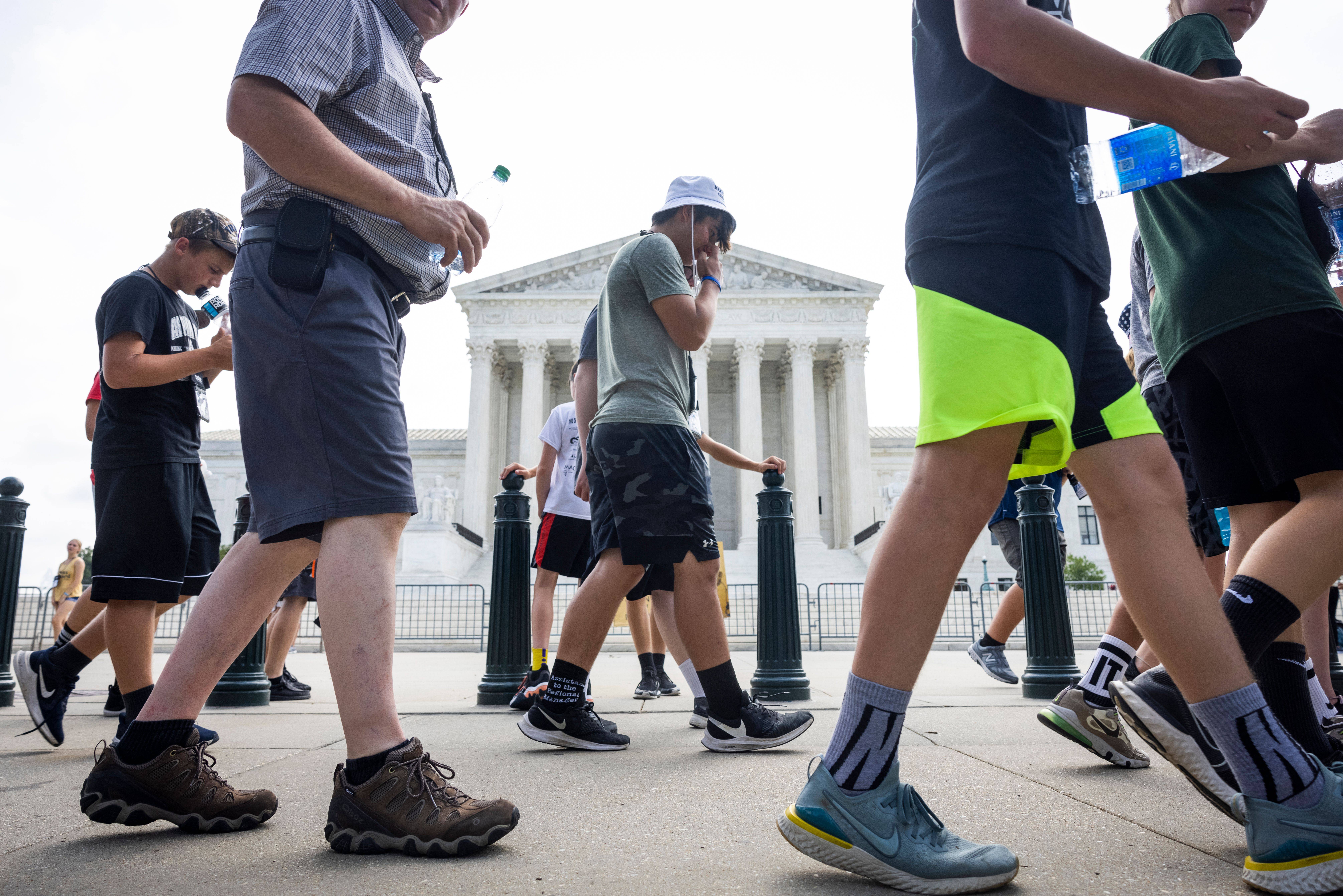 A tour group outside the Supreme Court on Monday. (Photo by Jim Lo Scalzo/EPA-EFE/REX/Shutterstock) | Those competitors Kagan is referring to are universities. And let's be clear here: NCAA member schools could vote pretty quickly to allow more compensation. But the universities that make up the NCAA have been behind the ball on that for years — leading dozens of states to start working on their own laws that would allow student-athletes to profit from NIL rights, including the six states whose laws go into effect on July 1. And Kavanaugh went even farther than the other justices in his concurring opinion, writing that the NCAA's history of not paying athletes "cannot justify the NCAA's decision to build a massive money-raising enterprise on the backs of student athletes who are not fairly compensated," Kavanaugh wrote. "Nowhere else in America can businesses get away with agreeing not to pay their workers a fair market rate on the theory that their product is defined by not paying their workers a fair market rate." Where things go from here It seems all but sure that more money is coming to college athletics. Monday's decision means universities can offer additional educational perks to prospective athletes. And when states pass laws allowing them to profit from NIL rights, it gives universities in those states a law to fall back on when the NCAA comes knocking. The NCAA wants Congress to pass a national law, but Congress seems to be lagging pretty far behind athletes and universities on the issue, for now. Six collegiate conferences called Monday for a stopgap measure until Congress can pass some kind of national legislation on the issue. Right now, all universities have to go on is NCAA rules. But the law is starting to catch up — and that increasingly means athletes getting paid for their labor. | 




 Email
Email 


