| President Biden wrapped up his first trip abroad Wednesday with a news conference that followed a meeting with Russian President Vladimir Putin. Both leaders declared their meeting a success, though the two seemed to agree on little. The trip as a whole, which included stops in the United Kingdom, Belgium and Switzerland, gave Biden a chance to try to reassure allies that he'll be a more reliable presence in the world of international diplomacy than his predecessor. 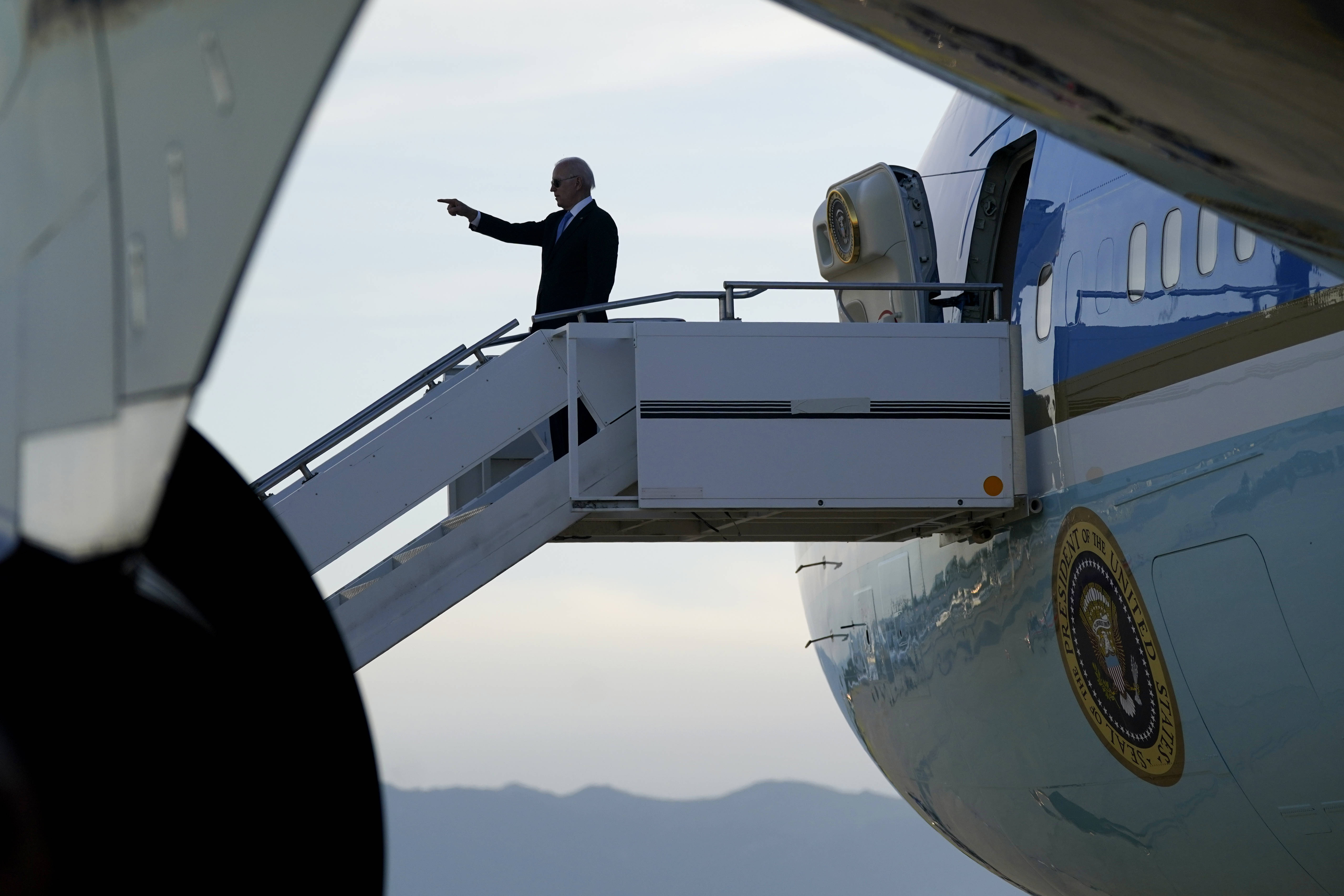 President Biden in Geneva on Wednesday. (Patrick Semansky/AP) | But it also gave Biden a chance to differentiate himself from former president Donald Trump — especially when it came to confronting geopolitical adversaries. Biden started with meetings with allies One consistent theme we heard from Biden throughout the trip: That the challenge of democracies isn't just to confront the rise of populist, right-wing movements at home, but also to confront authoritarian countries abroad, namely an emergent China and a disruptive Russia. "I think we're in a contest, not with China per se, but a contest with autocrats, autocratic governments around the world, as to whether or not democracies can compete with them in a rapidly changing 21st century," Biden told reporters at the Group of Seven conference in Cornwall, England. Perhaps the biggest policy announcement at the meeting came when Biden committed to purchasing 500 million doses of Pfizer's coronavirus vaccine to donate to a World Health Organization-backed effort that distributes doses to low- and middle-income countries. But experts say that's just a start — and that global efforts to combat the coronavirus will require sustained contributions from wealthy countries. After the G-7 summit, Biden moved on to a meeting of NATO allies in Brussels, where he sought to reassure allies that the military alliance is "rock solid and unshakable" after years of Trump publicly trashing the group, and wrongly accusing member countries of failing to meet financial commitments to the group. The president's final meeting of the trip was with an adversary Biden's third stop was a set of meetings with Putin in Geneva. The Fix's Aaron Blake writes that Biden presented himself as a contrast to Trump, while avoiding directly threatening Putin or Russia. Blake writes Biden sought to strike a different tone than Trump did on Russia: It was one that, somewhat similar to Trump's, emphasized the importance of working together rather than pitching Russia as an irredeemable adversary. But unlike Trump's, it also sought repeatedly to emphasize human rights and foreign interference like cyberattacks — albeit with relatively little specificity about consequences. Biden did say he confronted Putin on such issues as cybersecurity, human rights and election interference — and he's already imposed sanctions on Russia related to two of those issues. "He knows there are consequences," he said of Putin. "And one of the consequences that … I suspect you may all think doesn't matter, but I'm confident matters to him and matters to him and other world leaders of rogue nations: His credibility worldwide shrinks." The two leaders spoke for about three hours, and unlike Trump — who controversially met with Putin without aides present — Biden was accompanied by Secretary of State Antony Blinken and aides. What Biden faces coming home When he gets back to Washington later tonight, Biden will come home to a political landscape that hasn't changed since he left; there's still no agreement on an infrastructure spending package that Biden has made his top priority, and much of the rest of his domestic agenda seems to be stuck, with a narrowly divided Senate seemingly uninterested in serious bipartisan compromise on a range of issues including immigration, climate change and other topics. And while his administration's vaccine program has gotten a lot of shots into a lot of arms, the United States marked its 600,000th coronavirus death Wednesday. Less than half the country is fully vaccinated, and it's getting more and more difficult to convince skeptics to get their shots. That would seem to make it unlikely that the country will hit Biden's stated goal of having at least 70 percent of Americans get their first shot before July 4. The nationwide death rate has dropped significantly, but so has the number of people getting their first shots; the country is averaging fewer than 1 million shots per day, a huge decline from the peak of 3.4 million per day in April. As of earlier this month, more than a dozen states, mostly on the coasts, had vaccinated 70 percent of adult residents; that number is expected to pass two dozen by Biden's July 4 goal. But about one third of Americans say they have no plans to get vaccinated, which could make it more difficult to prevent a resurgence of cases — especially as the highly infectious Delta variant reaches the U.S. population. | 




 Email
Email 


