 (Henry Holt; Twelve; Penguin Press) | This month's Trump exposés aren't out yet, but they're already competing bigly for attention. The fearsome threesome includes: - "Landslide: The Final Days of the Trump Presidency," the third volume of Michael Wolff's White House trilogy, which began with "Fire and Fury" and "Siege" (July 13).
- "Frankly, We Did Win This Election: The Inside Story of How Trump Lost," by Wall Street Journal reporter Michael C. Bender (July 13).
- "I Alone Can Fix It: Donald J. Trump's Catastrophic Final Year," a sequel to "A Very Stable Genius," by Washington Post reporters Carol Leonnig and Philip Rucker (July 20).
These imminent bestsellers pose a peculiar marketing challenge, aside from the fact that they're all launching together in a seven-day horror-fest of Trumpian malfeasance. As their on-sale dates approach, the publishers must whet but not sate our appetite. Consequently, you can find carefully chosen excerpts in New York magazine, the Wall Street Journal and elsewhere, but the books themselves are being kept under wraps. Publishers want a striptease; journalists want a strip mine. You'll see enterprising reporters breaking the embargoes and quickly raking through copies they "obtained" (i.e. wheedled from disgruntled publicists, careless bookstore clerks, even the authors' frenemies). Before you can find the books in stores, the hottest anecdotes and most shocking quotes will be typed up and posted online as "news." Once you've heard the best parts, will you still buy the book? That's the publishers' dilemma, but it was always thus. In the 19th century, popular authors like Charles Dickens wanted fans to be salivating. But that meant racing to send books abroad before pirated editions sapped their sales. Does Little Nell find happiness? Does Donald Trump? 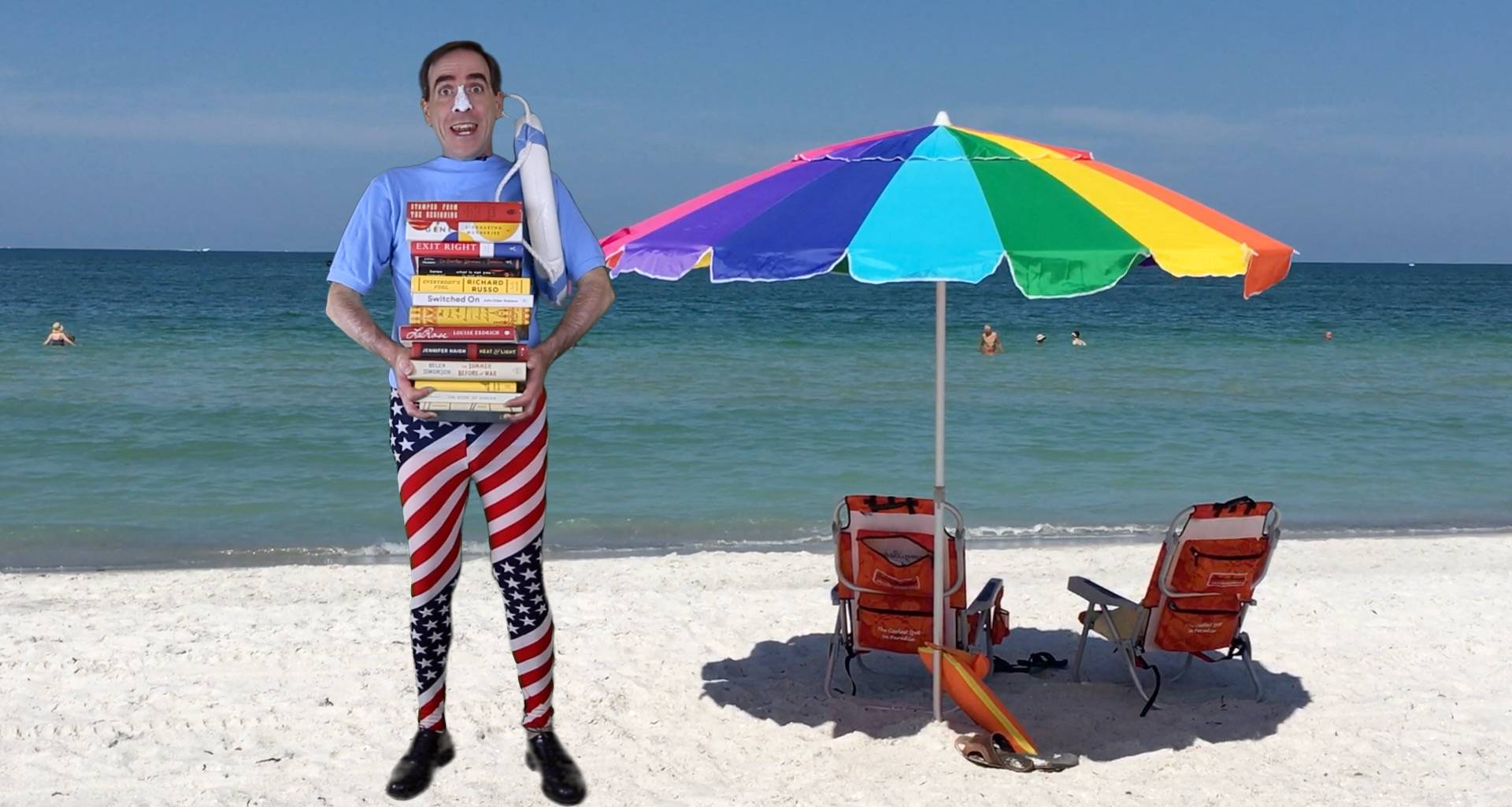 "50 Things to Do at the Beach," by Easkey Britton, suggests 49 things I hadn't thought of. (Ron Charles/The Washington Post) | I've never particularly liked the beach because it's too bright to read there and I have the skin of a shy vampire. But a new book by Easkey Britton says I've got it all wrong. She's a marine social scientist and an Irish national surfing champion, which is cool cubed. Her "50 Things to Do at the Beach" is an informative introduction to the ocean and a thoughtful guide on how to enjoy it along the shore. (The book is part of the cleverly designed Explore More series from Princeton Architectural Press.) In 50 very short chapters illustrated by Maria Nilsson, Britton explains how oceans behave, regulate the climate and soothe the soul. Other chapters describe activities for the whole family, like investigating rock pools, looking for bioluminescence and photographing wildflowers. A tide of woo-woo sometimes washes over these pages — "We are always connected to the ocean through our breath" — but Britton is a scientist, and her emphasis throughout is on understanding, appreciating and preserving the sea. 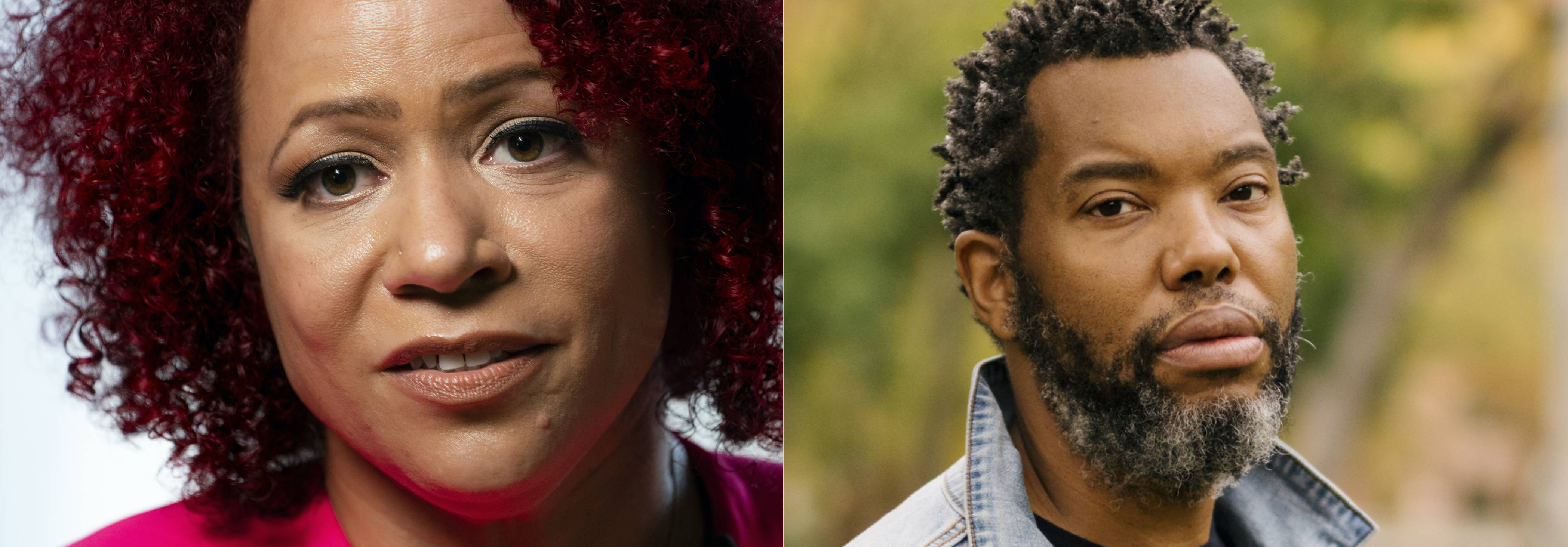 Nikole Hannah-Jones (AP Photo/John Minchillo); Ta-Nehisi Coates (Elias Williams for The Washington Post) | Two of the nation's most celebrated nonfiction writers — both MacArthur "geniuses" — have accepted endowed chairs at Howard University in Washington. Pulitzer Prize-winning journalist Nikole Hannah-Jones, who conceived the New York Times's "1619 Project," will be a tenured professor in the School of Communications. National Book Award winner Ta-Nehisi Coates, author of "Between the World and Me," will be a writer-in-residence at the university's College of Arts and Sciences (story). Hannah-Jones's arrival at Howard is the happy result of a gobsmacking administrative mess at the University of North Carolina. In April, UNC offered Hannah-Jones a teaching job but not tenure, despite strong support from the faculty. Rumors swirled that a conservative member of the board of trustees was not happy with "The 1619 Project," which emphasizes slavery's foundational role in American history (story). As pressure mounted around the country, the trustees belatedly offered Hannah-Jones tenure, but by that time she'd apparently had her fill of UNC's fickle hospitality. She accepted a position at Howard instead. (Dozens of UNC faculty members have signed a public statement decrying their university's behavior, saying, "We will be frank: It was racist.") At Howard, Hannah-Jones will found the Center for Journalism and Democracy, which, according to the university, will give aspiring journalists "the investigative skills and historical and analytical expertise needed to cover the crisis our democracy is facing." 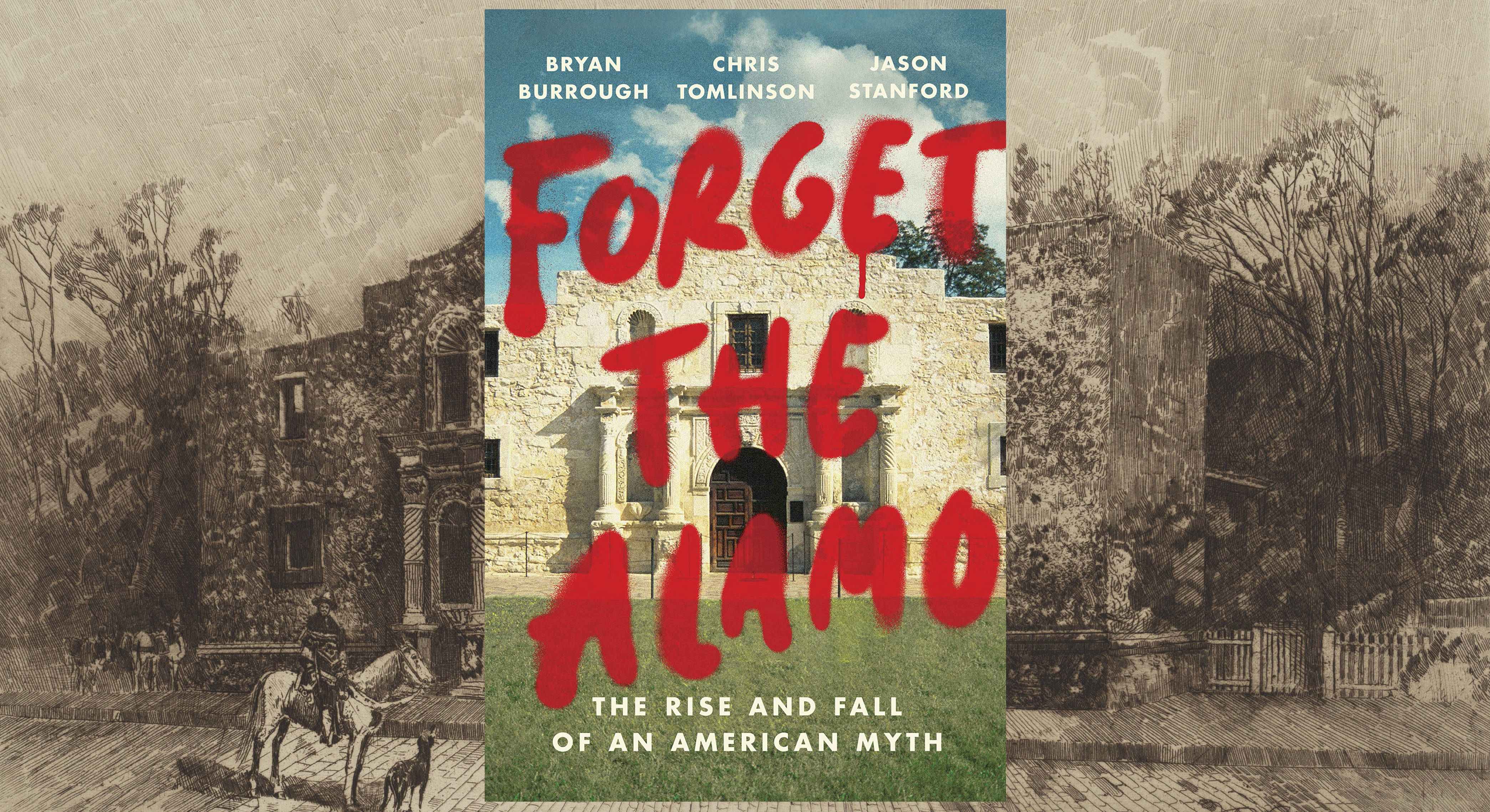 "Forget the Alamo: The Rise and Fall of an American Myth," by Bryan Burrough, Chris Tomlinson, Jason Stanford (Penguin Press); "The Alamo," etching by Robert Shaw (1905). | Folks who've shown little interest in recent history — such as the assault on the U.S. Capitol — are suddenly obsessed with the 19th century. In what may be the most panicked promotion of historical amnesia since the Jim Crow era, Republicans have filed dozens of bills across the country to restrict what teachers can say about racism. The Foundation for Individual Rights in Education, for instance, notes that a bill proposed in Rhode Island could make it illegal for a teacher to say, "In the United States, until 1865, the enslavement of black people by white people was widespread." The latest act of myth preservation comes from Texas. On July 1, a talk hosted by the Bullock Texas State History Museum on a book called "Forget the Alamo" was canceled just hours before it was set to begin. Lt. Gov. Dan Patrick took credit for the muzzling, boasting on Twitter, "As a member of the Preservation Board, I told staff to cancel this event as soon as I found out about it." Some 300 people had pre-registered for the presentation before Patrick rode in to protect them from a free exchange of ideas. "Forget the Alamo" is about the legendary 1836 battle at a Spanish mission in San Antonio. The authors — Bryan Burrough, Chris Tomlinson and Jason Stanford — recount the details of the conflict and then examine how it's been remembered, interpreted and mythologized. In his review for The Washington Post, H.W. Brands wrote, "At numerous points in their account of the siege and battle, the authors challenge the traditional view. In doing so they follow historians who abandoned the traditional view decades ago. They sometimes appear to be beating a horse that, if not dead, was put to pasture awhile back, at least outside the political classes." It's almost as though Brands could see Lt. Gov. Patrick off in the desert getting ready to mount that old nag. This week, Stanford, one of the book's co-authors, looked back at the whole sorry controversy: "I'll leave it to First Amendment scholars to say whether forbidding a state facility to host a conversation because of the contents of a book constitutes censorship. As a Texan, I'm just embarrassed to be governed by politicians who quaver at the prospect of a single uncomfortable conversation. If Texans were tough enough to fight at the Alamo, they should be tough enough to talk about why" (column). 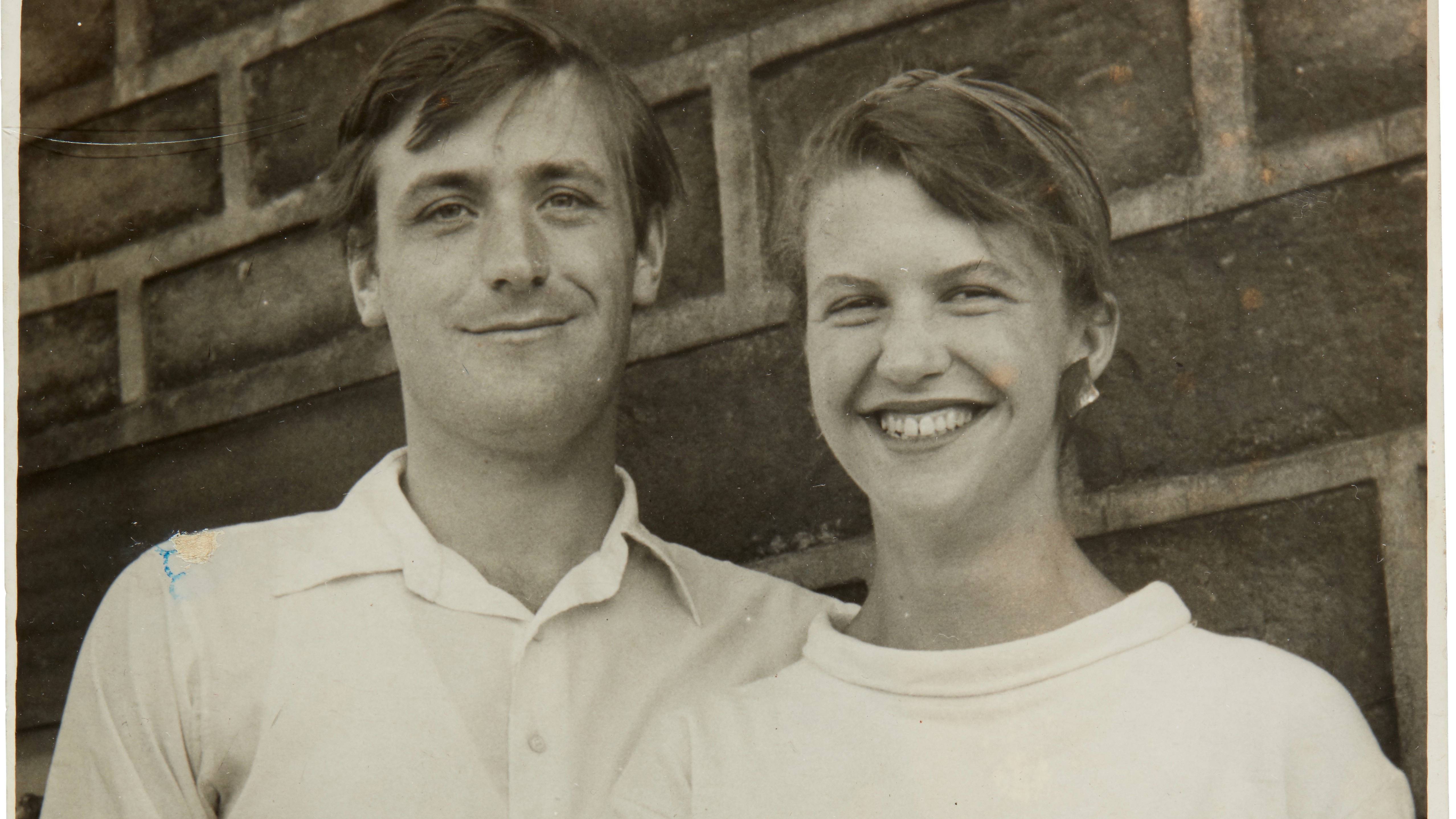 Poets Ted Hughes and Sylvia Plath in Yorkshire, 1956. (From "Your Own Sylvia: Sylvia Plath's letters to Ted Hughes and other items, property of Frieda Hughes," courtesy of Sotheby's.) | In 1963, Sylvia Plath put her head in a gas oven and died while her two children slept in another room. Her relationship with Ted Hughes became a legend of depression, abuse and suicide. The poets' only surviving child, Frieda Hughes, believes that grim appraisal of their marriage is not the whole story. "My parents' lives were balanced by good and bad," she tells me by phone from Wales. "The bad was truly terrible, but the good was equally phenomenal." Today, through Sotheby's, Frieda has begun auctioning off her mother's love letters to her father, along with a trove of family photographs, Ted's tarot cards and paperweights, the Plath family Bible and more (auction details). It's an extraordinary act of personal dispersal, both painful and freeing. "I have loved these items and cherished these items for many years," Frieda says. But the long covid lockdown sent her into a flurry of house cleaning so deep that she rented a six-foot dumpster. When everything that could go was gone, her parents' treasures remained — along with an existential certainty. "I'm kind of shocked that I'm 61," Freida says. "I know that the years behind me likely outnumber the years ahead." She began to feel the full weight of maintaining the complicated stories attached to each letter, photo and object from her famous parents. "One day, my stuff is just going to be stuff," she says. "When we go, everything else suddenly ceases to have meaning." Resisting the urge to hold anything back, she turned all these cherished items over to Sotheby's, which is accepting bids over the next 12 days. She's comforted by "the absolute certainty that the people who acquire them will maintain that little cosmos of history around each object." That doesn't mean it's been easy to let go of her parents' possessions. More than a dozen of Sylvia's typed and handwritten letters to Ted burst with the passion of the early months of their marriage. "I love you," she wrote in 1956, "and perish to be with you and lying in bed with you and kissing you all over and go just wild with thinking + wishing + remembering of your dear lovely mouth + incredibly lovely made flesh." (What Sylvia Plath's letters reveal about the poet we thought we knew.) The hardest objects for Frieda to part with were her parents' wedding rings. "They fit exactly inside each other, which was very much new to me," she says. "Sometimes, I'd put them in my hands, and I'd look at the way they work together, and then I'd put them back in the jewelry box, and they would simply vanish. Among all the other stuff in there, they could have, for all the world, just been a piece of junk. Without me there attached to them to say, 'These are the wedding rings of Sylvia Plath and Ted Hughes,' nobody would know." 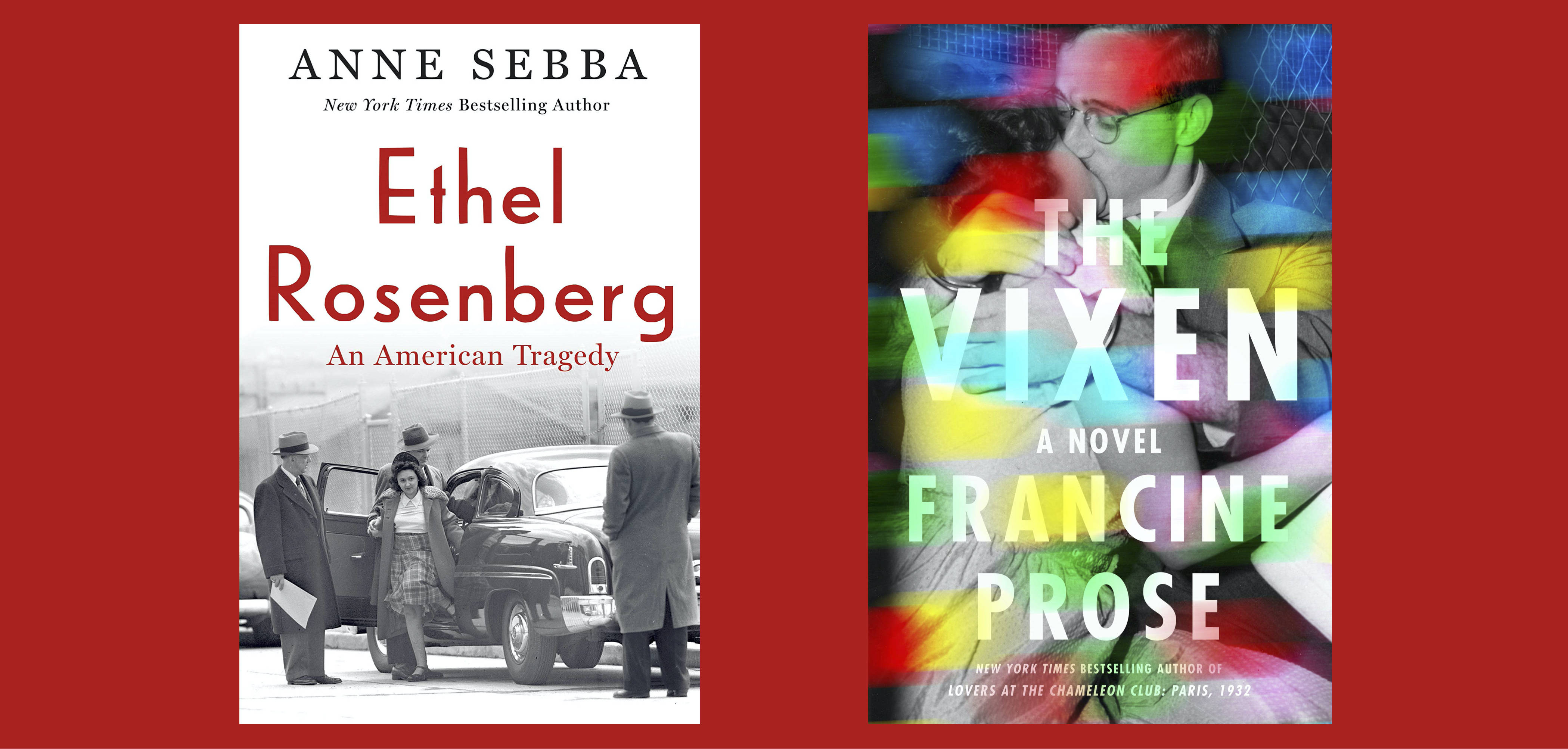 (St. Martin's; Harper) | Sylvia Plath's "The Bell Jar" begins, "It was a queer, sultry summer, the summer they executed the Rosenbergs." Almost 70 years after they were electrocuted for espionage, we're still trying to figure out what the Rosenbergs did to us. At the time, the federal government claimed Julius and his wife, Ethel, passed atomic bomb secrets to the Russians. Condemning them to death, Judge Irving Kaufman blamed the Rosenbergs for 50,000 U.S. casualties in Korea and told the couple, "Millions more of innocent people may pay the price of your treason." That's hyperbolic, but the Rosenbergs clearly did something to America. For one, their stoic refusal to cooperate challenged the government's commitment to the rule of law. Coincidentally, Ethel is the subject of two new books. The first is "Ethel Rosenberg: An American Tragedy," a feminist biography by Anne Sebba. She claims that "Ethel's story is as important today as ever" because it illustrates "what can happen when fear, a forceful and blunt weapon in the hands of authority, turns to hysteria and justice is willfully ignored." The other new book is a comic novel called "The Vixen," by Francine Prose. Creating her own space between E.L. Doctorow's "The Book of Daniel" and Robert Coover's "The Public Burning," Prose tells the story of a young editor who must rewrite an outrageously erotic thriller about Ethel Rosenberg. Depending on the light, it's either a very funny serious story or a very serious funny story (review). 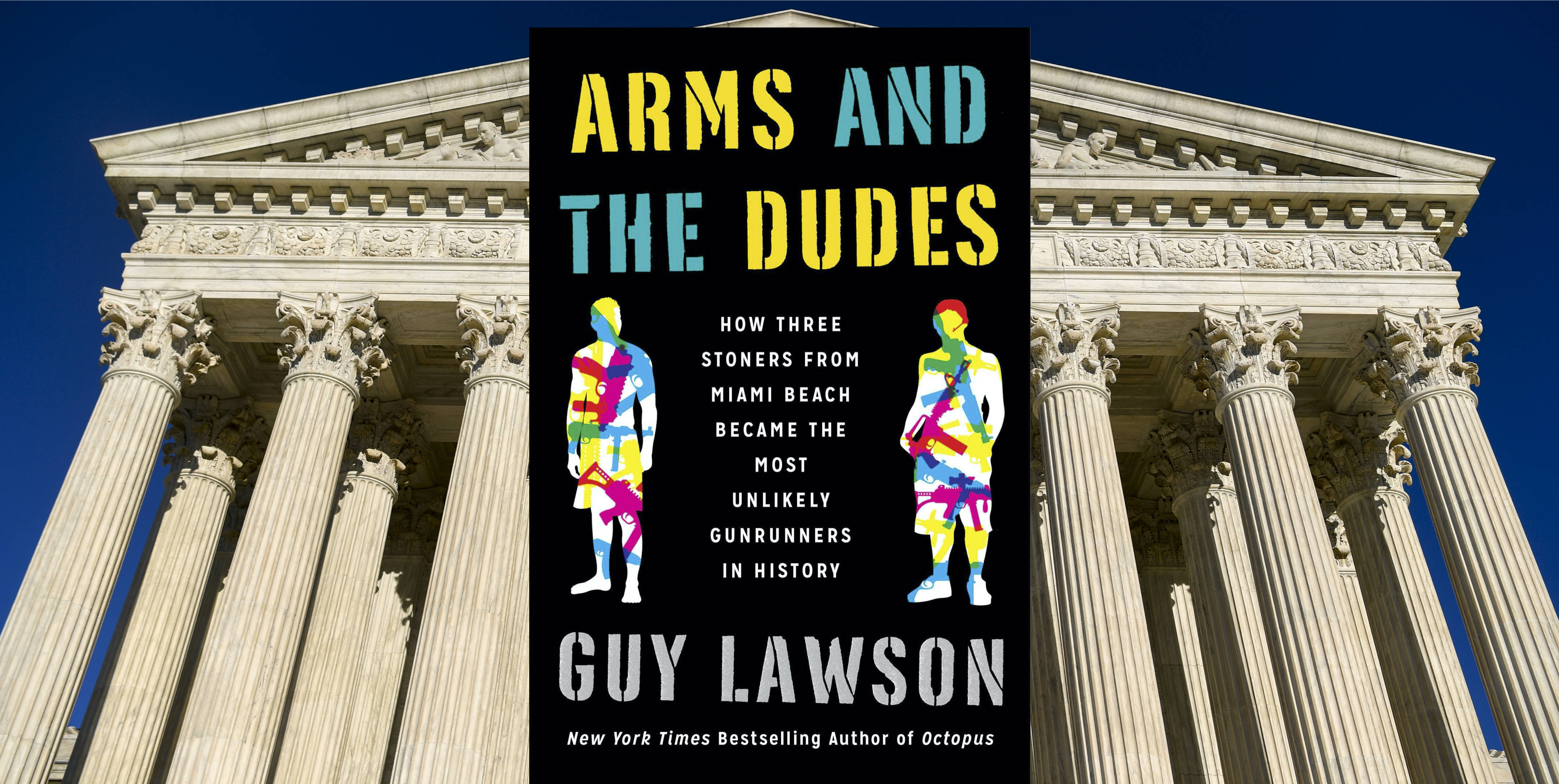 "Arms and the Dudes: How Three Stoners from Miami Beach Became the Most Unlikely Gunrunners in History," by Guy Lawson (Simon & Schuster); Supreme Court of the United States (File photo by Jonathan Newton/The Washington Post) | The Supreme Court has refused to revive a failed libel case against Guy Lawson and his publisher, Simon & Schuster. That good news was widely expected, but keep an eye on the dissents. Background: In 2015, Lawson published a book called "Arms and the Dudes" (review), which became the basis of the movie "War Dogs." In his book, Lawson suggested that Shkelzen Berisha, the son of the former prime minister of Albania, was a member of the Albanian mafia. When Berisha sued Lawson in Florida for defamation, a District Court threw out the case. The court found no evidence that Lawson knew his description of Berisha was untrue and wrote it "with actual malice." In short, Berisha could not meet the high bar set for public figures by the Supreme Court's 1964 decision in New York Times v. Sullivan. Last Friday, in their dissents, Justices Clarence Thomas and Neil Gorsuch questioned the usefulness of New York Times v. Sullivan, the precedent that protects writers from frivolous, harassing and expensive lawsuits. "Lies impose real harm," Thomas wrote. "Instead of continuing to insulate those who perpetrate lies from traditional remedies like libel suits, we should give them only the protection the First Amendment requires." Gorsuch claimed that the media environment is now so disintegrated, the volume of misinformation so vast and the risk of legal damages so low that the standards of Sullivan no longer function as they were intended. "It seems that publishing without investigation, fact-checking, or editing has become the optimal legal strategy," he wrote. "What started in 1964 with a decision to tolerate the occasional falsehood to ensure robust reporting by a comparative handful of print and broadcast outlets has evolved into an ironclad subsidy for the publication of falsehoods by means and on a scale previously unimaginable." But as Washington Post columnist Erik Wemple writes, "Any move to weaken Sullivan would stack the deck further against traditional outlets," without doing anything to "combat the brand of Internet disinformation mentioned by Thomas and Gorsuch" (column). And in any case, Sullivan doesn't enable authors to lie; it enables them to make mistakes. Tampering with that protection would make writing about politicians and public figures substantially more risky. Thomas and Gorsuch's opinion needs to remain in the minority.  Amazon founder Jeff Bezos at the Washington Convention Center in 2019. (File photo by Jonathan Newton/The Washington Post) | For the first time in almost 30 years, Jeff Bezos is not running Amazon. On Monday, the indefatigable founder handed over the reins to Andy Jassy (story). If you had a nickel for every word written about this monumental transition, you'd be almost as rich as Bezos. (Jeff Bezos owns The Washington Post.) It's still astounding to me that the Amazon empire, which has transformed how the world shops for everything, started with books. Books, after all, are a technological innovation at least 2,000 years old. But in the 1990s, Bezos realized they were the perfect non-perishable objects to sell over the Internet, which millions of ordinary people were starting to use. ("You've got mail!") At the time, Amazon seemed quirky and quixotic. Publishers were excited to have a place to sell their wares besides Barnes & Noble, the 800-pound gorilla of book retailing. Now, Barnes & Noble is the 80-pound chimp of book retailing. Amazon dominates the industry in ways that were once inconceivable, capturing about half of physical book sales and the majority of e-book and audiobook sales. And while indie bookstores struggle to survive on the margins, publishers claim they're increasingly at the mercy of this ever-growing behemoth demanding ever-greater concessions. Are publishers doomed? Possibly not. Brad Stone is author of the new book "Amazon Unbound: Jeff Bezos and the Invention of a Global Empire" (review). He sees a reason for publishers to be guardedly optimistic about their future relations with Amazon. But, he tells me, "it has nothing to do with the fact that Bezos has stepped aside as CEO and turned the keys over to Andy Jassy." Instead, Stone points to the changing political climate, which has grown deeply concerned about the actions of large tech companies (story). "At a time when lawmakers are watching the company closely for any sign that it's abusing its market power," he says, "it no longer makes sense for Amazon to grind publishers into the dirt over what are relative pennies to a $1.8 trillion juggernaut." In other words, the future still belongs to Amazon, but if Congress pays attention, traditional publishers might survive in this brave new world. 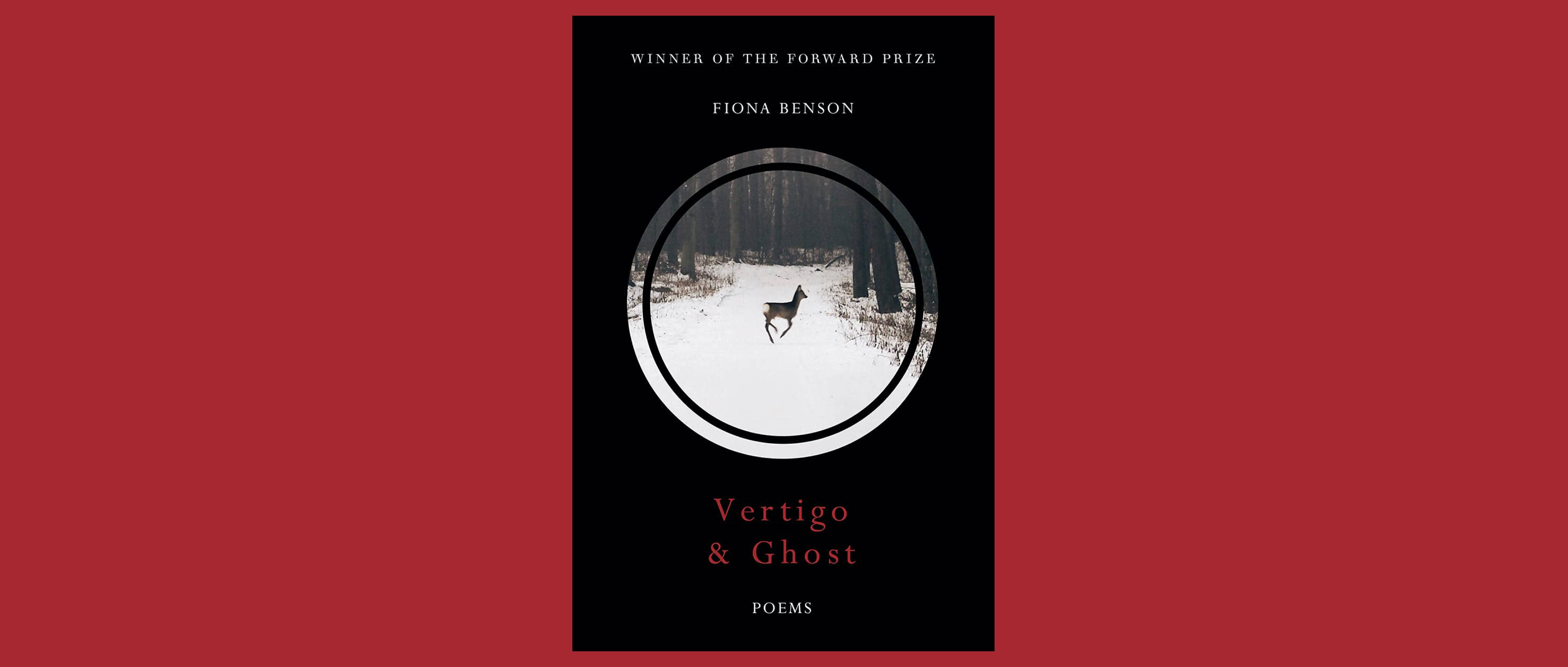 W. W. Norton | "Vertigo & Ghost" is a ferocious new collection of poetry from British writer Fiona Benson. The first part offers a series of responses to Zeus, a classical and contemporary rapist. The second part is less formally experimental and contains subtler, more personal poems about the life of a woman. They're quietly devastating. Fly Spring broke out but my soul did not.
It kept to sleet and inwards fog.
Forget-me-nots around the path,
a speckled thrush; I spoke rarely
and had a sour mouth. I couldn't make love.
My husband lay beside me in the dark.
I listened till he slept. I picked out
all the bad parts of my day like sore jewels
and polished them till they hurt.
I wanted to take myself off like a misshapen jumper,
a badly fitting frock. I wanted
to peel it off and burn it in the garden
with the rubbish, pushing it deep
into the fire with a fork. And what sliver
of my stripped and pelted soul there still remained,
I'd have it gone, smoked out, shunned,
fled not into the Milky Way,
that shining path of souls, but the in-between,
the nothing. But this overshoots the mark,
this gnashing sorrow, so Wagnerian;
it was more a vague, grey element I moved in
that kept me remote and slow,
like a bound and stifled fly, half-paralysed,
drugged dumb, its soft and intermittent buzz,
its torpid struggle in the spider's sick cocoon.
What now if I call on the sublime?
What bright angels of the pharmakon
will come now if I call, and rip
this sticky gauze and tear me out? From "Vertigo & Ghost: Poems," by Fiona Benson (W.W. Norton, 2021). Reprinted with permission of the publisher. All rights reserved. 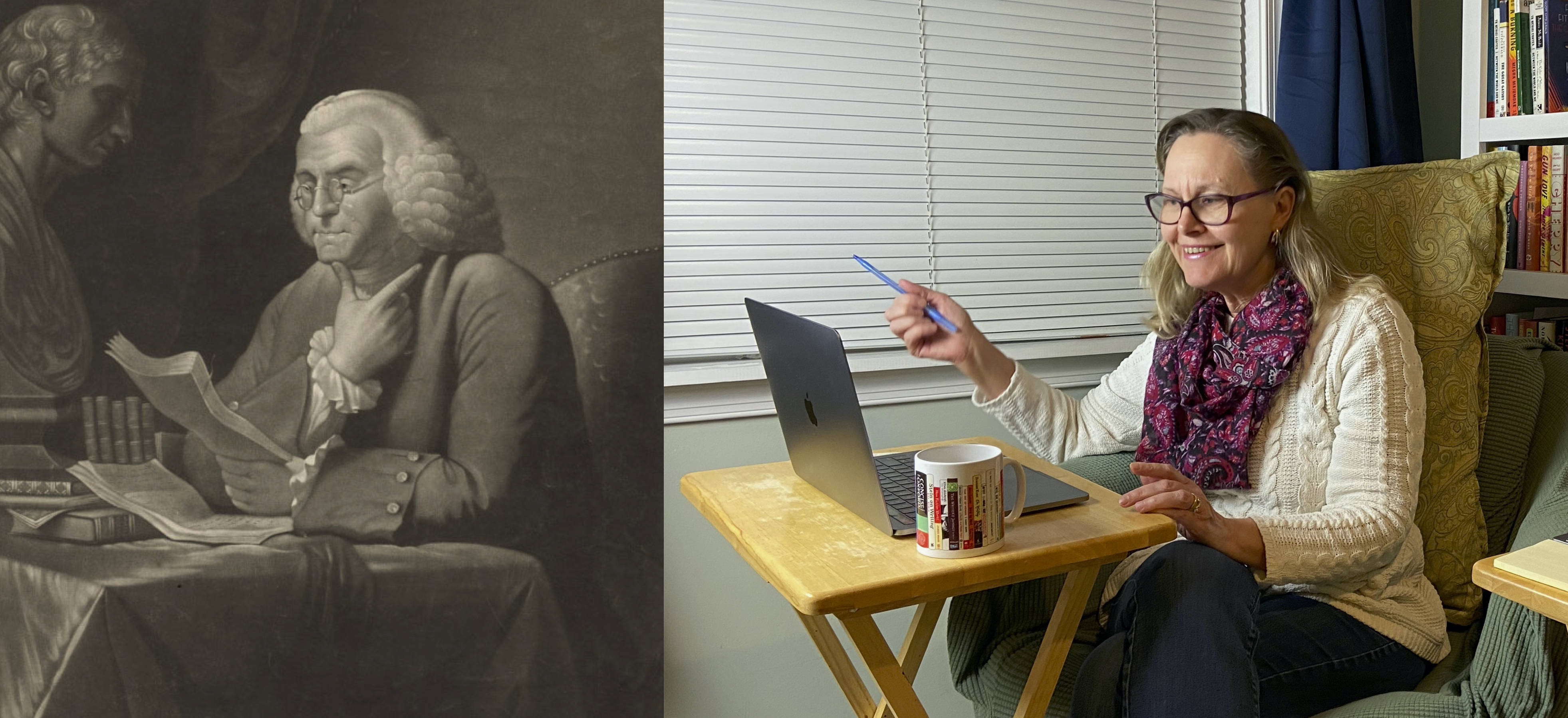 "The bold and arduous project of arriving at moral perfection." ("Benjamin Franklin," engraving by Edward Savage, c. 1793); ("Dawn Charles," photograph by Ron Charles, c. 2021) | My favorite part of Benjamin Franklin's "Autobiography" is his wry description of "the bold and arduous project of arriving at moral perfection." You may remember that he confidently outlines a rigorous chart of 13 virtues, including "Humility." After throwing the system away, he notes, "I cannot boast of much success in acquiring the reality of this virtue, but I had a good deal with regard to the appearance of it." Alas, Franklin's wit died with him, but his chart of 13 virtues spawned America's most persistent and banal literary category: the self-help book. Over the decades, we've turned for inspiration to "The 4-Hour Workweek," "The Five Love Languages," "The Six Pillars of Self-Esteem" and on and on (story). This week, one of the great gurus of the self-help movement came for my poor wife. Having survived more than a year of online teaching, she was required to endure three full days of training based on Stephen R. Covey's "The 7 Habits of Highly Effective People." So far as I can tell, it was a grab bag of culty aphorisms and management maxims, something like "L. Ron Hubbard Moved My Cheese." To recover, tonight we've both pledged to be just as highly ineffective as we possibly can. Meanwhile, if you have any questions or comments about our book coverage, send a note to ron.charles@washpost.com. And if you know friends who would enjoy this newsletter, please forward it to them. To subscribe, click here.
Interested in advertising in our bookish newsletter? Contact Michael King at michael.king@washpost.com. |





 Email
Email