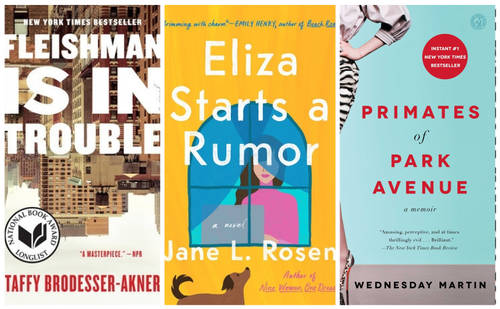
 Top: Farrar, Straus, Giroux; Doubleday; Riverhead; Knopf; Mariner; former President Barack Obama (Photo by Charlotte Kesl for The Washington Post). Bottom: Ecco; Ballantine; Little, Brown; Knopf; Crown; New York Review Books | This week, former President Obama continued his tradition of announcing a list of summer reading recommendations. It's a cerebral but remarkably diverse collection — including nonfiction, literary fiction, genre fiction and works in translation: - "At Night All Blood Is Black," by David Diop, translated from the French by Anna Moschovakis, is about a Senegalese man in the French army during World War I.
- "Empire of Pain," by Patrick Radden Keefe, investigates the Sackler family and its role in the opioid epidemic that has killed hundreds of thousands of Americans (review).
- "Intimacies," by Katie Kitamura, is a novel about a new interpreter at the World Court who must work with a man accused of crimes against humanity (review).
- "Klara and the Sun," by Kazuo Ishiguro, tells the story of an android purchased as a companion for a sickly young woman (review).
- "Land of Big Numbers," by Te-Ping Chen, is a debut collection of stories about a diverse group of Chinese people (10 books to read in February).
- "Leave the World Behind," by Rumaan Alam, is about a White family and a Black family thrown together on Long Island during a crisis (review).
- "Project Hail Mary," by Andy Weir, begins when an astronaut wakes up on a spaceship and doesn't know where or who he is (The plot has some problems).
- "The Sweetness of Water," by Nathan Harris, imagines a complicated friendship between two recently freed slaves and a grieving White man in Georgia (review).
- "Things We Lost to the Water," by Eric Nguyen, is about a Vietnamese woman who flees with her two sons to New Orleans, where they struggle to make a new life.
- "Under a White Sky," by Elizabeth Kolbert, examines the elaborate efforts humans are making to repair the damage they're doing to the Earth (review).
- "When We Cease to Understand the World," by Benjamín Labatut, translated from the Spanish by Adrian Nathan West, is a novel about real-life scientists whose work changed the world (U.S. edition forthcoming Sept. 28).
 Jane Austen's "Pride & Prejudice" (Dover) set against Abbey House Gardens in Malmesbury, England. (Ron Charles Sr. for The Washington Post) | It is a truth universally acknowledged that a single studio in possession of a good fortune must be in want of a reality TV show. Which brings us to the latest exceedingly dubious Jane Austen knock-off. Peacock has announced plans for a Regency-inflected dating program called "Pride & Prejudice: An Experiment in Romance." This series, set in an English castle, will "require hopeful suitors to bring the ultimate romance back to dating" — because nothing says romance like strangers in 200-year-old costumes trying to sleep with each other on TV. In a statement that would make Lady Catherine choke on her tea, the producers explain, "The heroine and suitors will experience that with which dreams are made of. From carriage rides and boat rides on the lake to archery and handwritten letters to communicate, they will be immersed in a time-traveling quest for love." (I don't remember any archery in "Pride & Prejudice" except "Elizabeth looked archly," but perhaps I'm too literal for reality TV.) If you're an old maid (or bachelor) and "long for a night of romance," you could be a cast member on "Pride & Prejudice." The application requires more than four dozen responses, including all your social media links. (I imagine Mr. Darcy's TikTok channel as a series of disdainful glances set to the music of Lil Nas X.) You must also respond to such Austenian questions as, "Why are you a good catch?" and "What are the top 3 qualities you look for in a partner?" Answer carefully. And if you get chosen for "this profound and thrilling quest," remember Lizzy Bennet's words, "Every day confirms my belief of the inconsistency of all human characters, and of the little dependence that can be placed on the appearance of merit or sense." 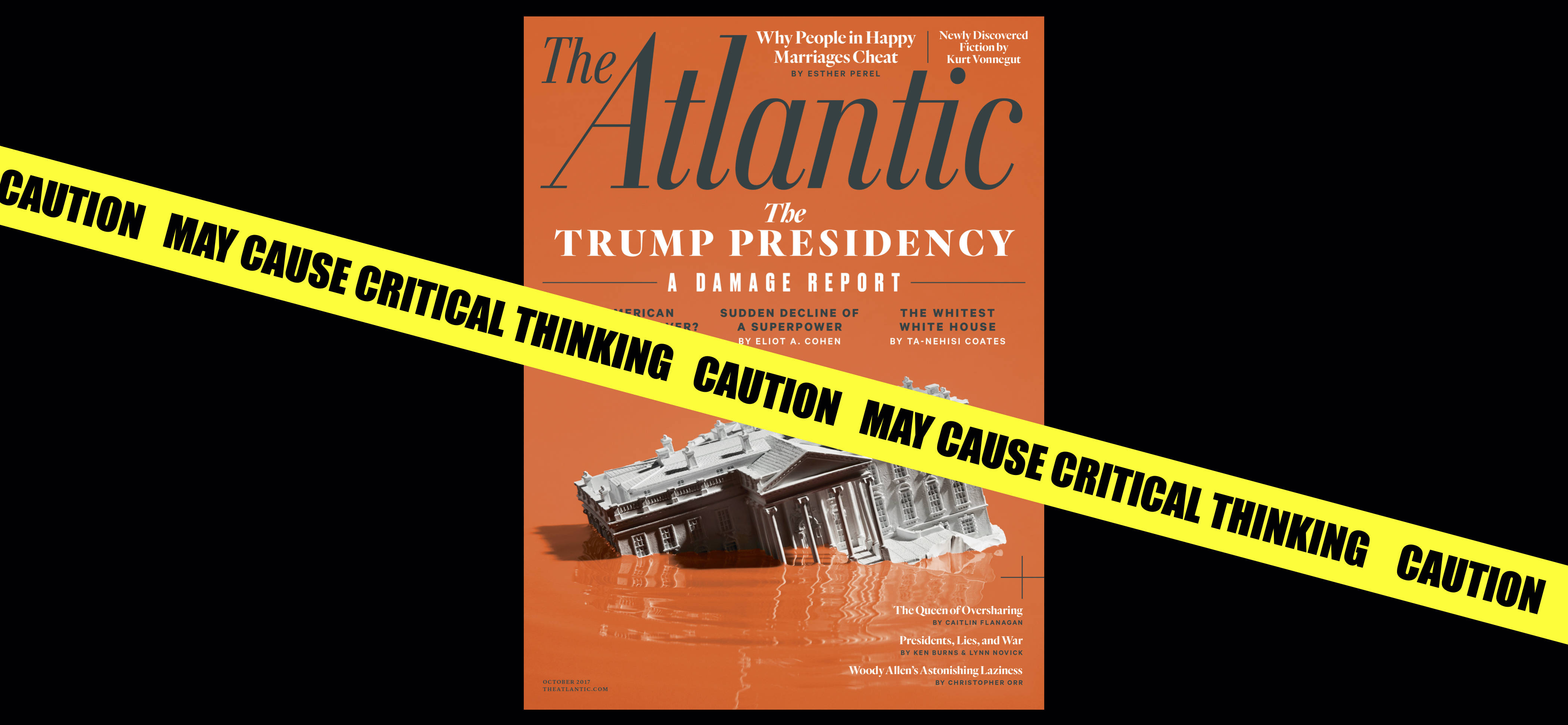 The Atlantic magazine: corrupting youth since 1857. (Cover courtesy of The Atlantic; photo illustration by Ron Charles/The Washington Post) | A radical faction in Tennessee is fixing to make kids sick and stupid. The state offers a chilling example of what happens when zealots control access to information. This week comes news that — in deference to anti-vaccine Republican lawmakers — the Tennessee Department of Health will stop vaccination outreach programs for adolescents (story). According to the Nashville Tennessean, this policy isn't limited to the covid-19 vaccine; it will snuff out the health department's outreach to teens for all vaccines. As Rachel Maddow asked on Twitter, "They're now, like, pro-polio?" That policy has already inspired national outrage, and I trust responsible politicians will reverse it soon. But in a different part of the state, you can see the longer-term effects of such anti-intellectualism. Last month, the Sullivan County (Tenn.) Board of Education approved the dismissal of social studies teacher Matthew Hawn. He was reportedly terminated because in his Contemporary Issues class he assigned an Atlantic magazine essay critical of Donald Trump written by National Book Award winner Ta-Nehisi Coates, and he showed a video of a poem by Kyla Jenee Lacey decrying white privilege. In a letter of reprimand, the assistant director of Sullivan County Schools suggested that Hawn should have considered asking parents to sign permission slips before exposing 11th and 12th graders to the Atlantic. (Who doesn't remember hiding tattered copies of David Frum's essays under the mattress?) Hawn claims that he muted the profanity in Lacey's poem, but board members noted that a parent had complained that certain words should not be "introduced to our children by a high school teacher." If there's someone in America being "introduced" to the f-word at the age of 17, their parents must have kept them submerged in a vat of milk in the basement. But what really seems to have outraged the all-white school board is that when presenting these anti-racism texts, Hawn failed to provide students with "varying points of view." Let that sink in. Of course, this administrative silencing is being inflicted in the name of promoting a diversity of opinions in the classroom. But surely even these board members don't believe that firing a challenging teacher will help students "seek out and consider varying and credible perspectives." Such draconian actions will only drive away good instructors and frighten those who remain to present the palest, most anodyne reading material. As always, students pay the price for adults' ideological grandstanding. 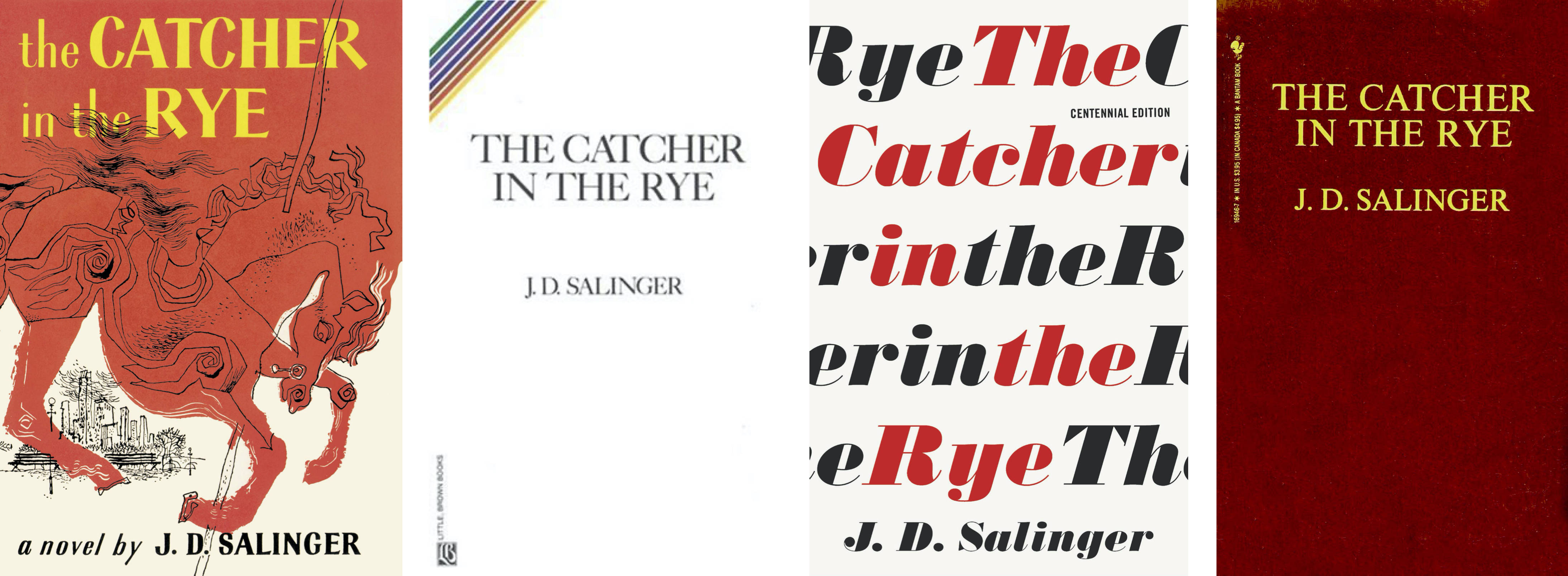 Catchers in the Rye: The classic carousel cover from the original hardback in 1951; an out-of-print rainbow paperback cover; the centennial edition to celebrate the 100th anniversary of J.D. Salinger's birth in 1919 (All courtesy of Little, Brown); the classic out-of print red cover (Bantam). | In the opening pages of "The Catcher in the Rye," Holden Caulfield wants to say goodbye to his history teacher, Mr. Spencer, who must be "around seventy years old, or even more than that." "If you thought about him too much," Holden says, "you wondered what the heck he was still living for." Sweet revenge: Today, Holden Caulfield, the patron saint of disaffected youth, turns 70. Since J.D. Salinger published the novel on July 16, 1951, "The Catcher in the Rye" has sold tens of millions of copies — even the publisher doesn't know the total for sure. (Is the story still relevant?) When the book first appeared, the dust jacket sported an illustration of a carousel horse drawn by Salinger's friend, E. Michael Mitchell. Other designs followed, but the writer quickly became convinced that he wanted a completely plain cover, like the red one I had in high school. Salinger's son, Matt, tells me, "His feelings were crystal clear, and I think very persuasive: He didn't want anything to come in between the reader and his writing. And if you have a representational picture or drawing or photograph or artwork on the cover, you've already begun to pull it away and through that intermediary. He felt that relationship was . . . Well, to say 'sacred' is probably too much, but worth the utmost care and respect." Matt said his father "railed against" and finally canceled an early paperback cover with "a moody, film noir cityscape." And he can still recall a cover that Salinger helped design: plain white with a rainbow across the top left cover. "I was at home when he drew those rainbow lines, and I remember him in his living room in New Hampshire holding it up, 'What do you think, Matt?'" Alas, booksellers complained that the white cover got dirty too easily. Salinger died in 2010, but Matt is still defending his father's strict aesthetic. Every month he receives proposals for new editions of "Catcher" from around the world. He turns most down. "Some of them are horrible," he says, "just frighteningly awful." But what's encouraging is that so many readers are discovering his father's novel. "I love that people are still affected by his voice and his characters and his take on the world," Matt says. "It makes me think the world is a more hopeful place."  "Mystery Message" Forever 55¢ Stamps (Courtesy of USPS) | Pssst. On Wednesday, the U.S. Postal Service issued a "Mystery Message" stamp at the International Spy Museum in Washington. According to the USPS, this Forever stamp has been designed by Antonio Alcalá to "put your sleuthing skills to the test!" I confess, after staring at these stamps for too long, my sleuthing skills failed the test. (This is not surprising. Back in the 1990s, when confronted with those blurry Magic Eye posters, I just lied.) Keep looking at the stamp and you might see the secret five-word message (Hint: It starts with an "M"). Here's some more essential intel: Over the objections of the Greeting Card Association, the USPS plans to raise the price for mailing a first-class one-ounce letter from 55 cents to 58 cents on Aug. 28. So buy your Forever stamps now and use them anytime in the future. 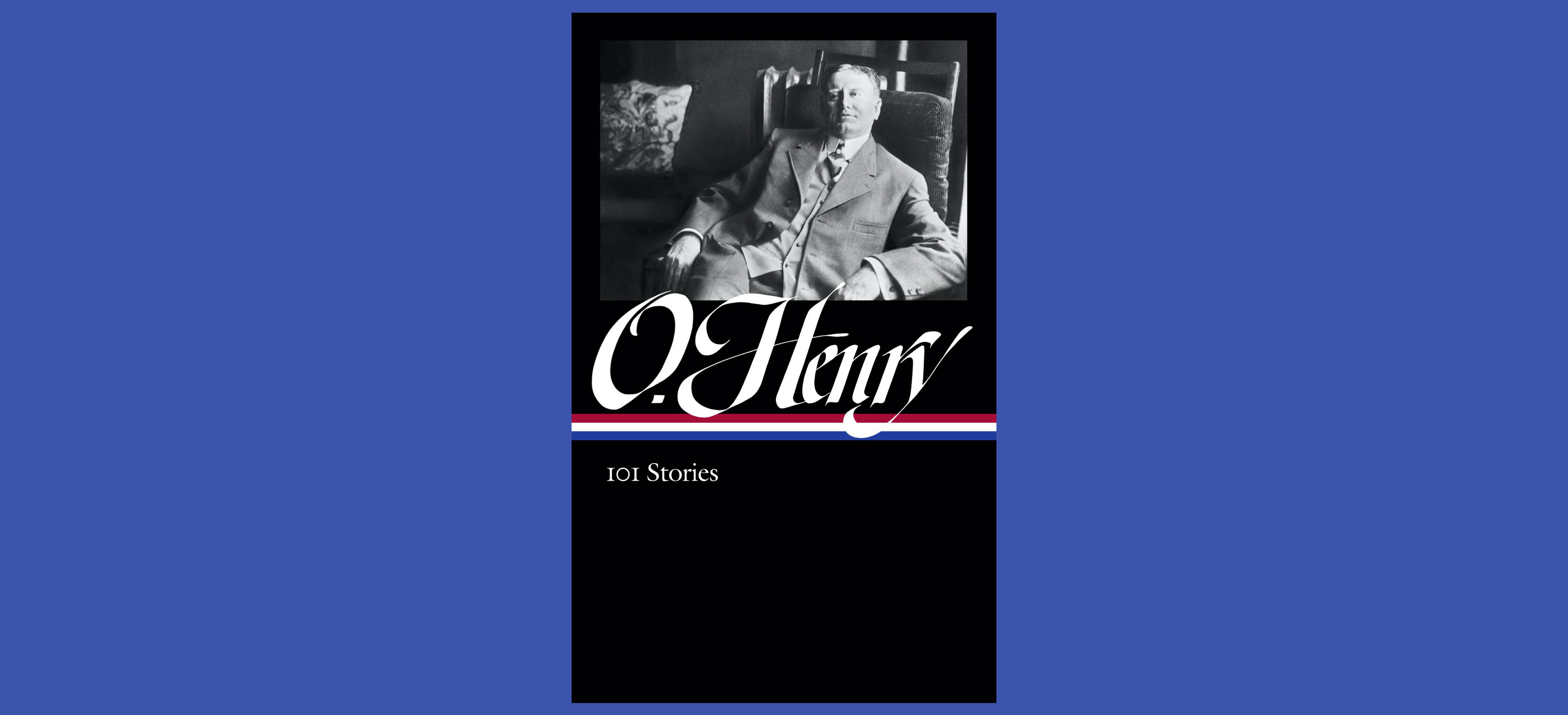 The Library of America | Since it was created in 1919, the O. Henry Prize has become the highest honor for short story writers. But the man who inspired the award has faded into history. O. Henry — the pen name of William Sydney Porter — published hundreds of sketches and short stories during his relatively brief life (1862-1910). The wide variety of characters and adventures he described were informed by his own experiences as a pharmacist, rancher, draftsman and more. While working at a bank, he was accused of embezzlement and fled to Honduras. He eventually served time in Ohio, selling stories even from prison. (Wonderful essay from our archives: In the House of O. Henry.) I would have been hard pressed to name any of O. Henry's stories except "The Gift of the Magi," originally published by New York Sunday World in 1905. But this week, the Library of America has released "O. Henry." From more than a dozen collections, innumerable magazines and newspapers and the author's archives, editor Ben Yagoda has selected the 101 stories and sketches he considers the best — including three never before published. The result is an invaluable anthology, enhanced with helpful notes and a biographical chronology. (It's a shame, though, this volume couldn't have included some of O. Henry's cartoons.) Ironically, O. Henry would never win an O. Henry Prize today. His stories are very much a product of their time and quick composition — sometimes more than one a week. He can be melodramatic, sentimental, glib. But there is still something rewarding, even comforting about these pieces with their hardscrabble characters, their ingenious plots, their flawless final lines. "So there it rests," O. Henry writes. "And you will have to decide for yourself."  (Tor; Tom Doherty Associates; Tordotcom) | Out of this world: Science fiction & fantasy fans will enjoy a new podcast called "Tor Presents: Voyage into Genre." The first episode, which dropped Wednesday, is smartly shaped around three great cities: T.L. Huchu talks about "The Library of the Dead" set in new-old Edinburgh; P. Djèlí Clark discusses the presence of Cairo in "A Master of Djinn"; and storyteller Kamau Ware finds tales everywhere in New York. Host Drew Broussard is congenial and well-read and conducts these conversations with an infectious enthusiasm that will have you jotting down titles to check out. (I'm now dying to read "The Library of the Dead," which apparently involves "Zimbabwean magic and Scottish pragmatism"!) Future episodes will include our own SF/F reviewer Silvia Moreno-Garcia (latest column) and Nghi Vo, who wrote the Gatsby-inspired fantasy "The Chosen and the Beautiful," which my wife and I have been raving about (review). You can subscribe to this podcast on Spotify and Apple.  Riot police walk the streets after an anti-government demonstration on Monday in the Arroyo Naranjo section of Havana. (Yamil Lage/Agence France-Presse/Getty Images) | This week, the Cuban government has responded violently to demonstrators protesting electricity blackouts, vaccine shortages and political repression (story). Among the many people arrested and detained was Afro-Cuban poet Amaury Pacheco, one of the founders of the artists protest group Movimiento San Isidro. On Sunday, U.S. State Department official Julie Chung included Pacheco's name in a tweet calling for the immediate release of Cuban protestors. Searching for poetry by Pacheco, I made contact with American scholar and journalist Michael Deibert, who has concentrated on the Caribbean, most notably Haiti and Cuba, for over 20 years. He met Pacheco at the O, Miami Poetry Festival in Florida in 2014, and the two have remained in contact since. Pacheco has recently been released by the government. With Pacheco's permission, Deibert graciously translated one of his friend's poems for The Washington Post. "Oración," the title of this poem, means prayer. And Deibert notes, "San Lázaro (Saint Lazarus), the patron saint of healing and the sick, is represented by the orisha Babalú-Ayé in the Santería religion. His shrine, the site of an annual pilgrimage, is located in the Havana suburb of Rincón." Oración Here we are the pilgrims.
Myrrh, incense, gold from our poetic stay,
diamond rain we bring.
SAN LÁZARO, I pray to your heart for each Cuban,
materialize your goodness on the island, bathe it with your gifts,
beyond these edges so that prosperity
lights a fire in homes, in mind, body and soul. SAN LÁZARO of the diasporas
poetic chimeric kabbalistic buddhist new age christian
progressive put in the 17 Cosmic friend of GOD
Give us Cubans the certainty to make our way
between the deceptions dangers discrepancies
disappointments sadness miseries and misfortunes
of a blurred destiny. Convert the adventure of living
into the joy of being reborn at every moment.
Give us Cubans today the peace of change. "Oración" from "Kandonga," an as-yet unpublished collection by Amaury Pacheco, translated from the Spanish by Michael Deibert. Reprinted with permission of the poet and the translator. All rights reserved. 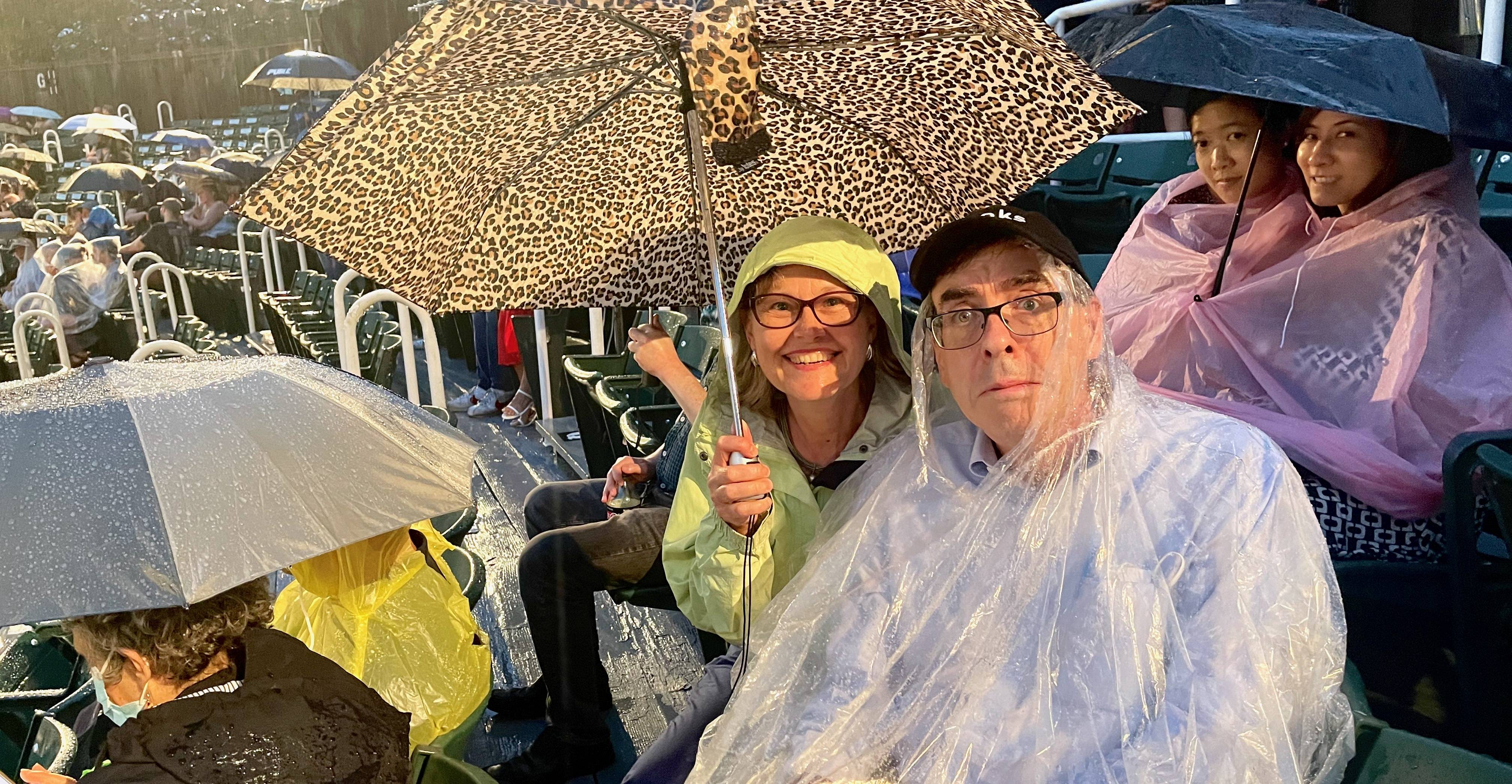 Dawn and Ron Charles waiting in the rain for the start of "Merry Wives" at the Delacorte Theater in New York on July 10, 2021. (Madeline Charles for The Washington Post) | Last weekend, Dawn and I went to New York to see "The Merry Wives of Windsor," but first we had to endure the tempest. The play was presented outside at the Delacorte Theater in Central Park. On a humid Saturday night, artistic director Oskar Eustis welcomed the eager audience back to live theater. We all cheered! And then the heavens opened and it rained hard for 90 minutes. Umbrellas popped up — "Blow, winds, and crack your cheeks!" — and patrons donned dry-cleaner bags. Some got damp, some achieved dampness, and some had dampness thrust upon them. Dawn and I finally abandoned ship and splashed across the park to the subway. But soft, what light through yonder window breaks? We ran back and arrived at the theater just in time to hear that the play would begin at 10 p.m. I'm so glad we — and they — persisted. Jocelyn Bioh's adaptation of Shakespeare's play is a delightful African-infused production set in South Harlem, and Jacob Ming-Trent makes a very funny, tremendously endearing Falstaff. The final, lavish scene, which opens up the stage to the park grounds and the Belvedere Castle beyond, is sheer magic. "Merry Wives" runs through Sept. 18. It's free, but you must register for a ticket online (information). If you're coming from out of town, make your hotel reservations carefully: Dawn misread the address, so we stayed in an industrial park under the train tracks. Very convenient had we needed plumbing supplies or auto body work. Meanwhile, if you have any questions or comments about our book coverage, send a note to ron.charles@washpost.com. And if you know friends who would enjoy this newsletter, please forward it to them. To subscribe, click here.
Interested in advertising in our bookish newsletter? Contact Michael King at michael.king@washpost.com. | 




 Email
Email