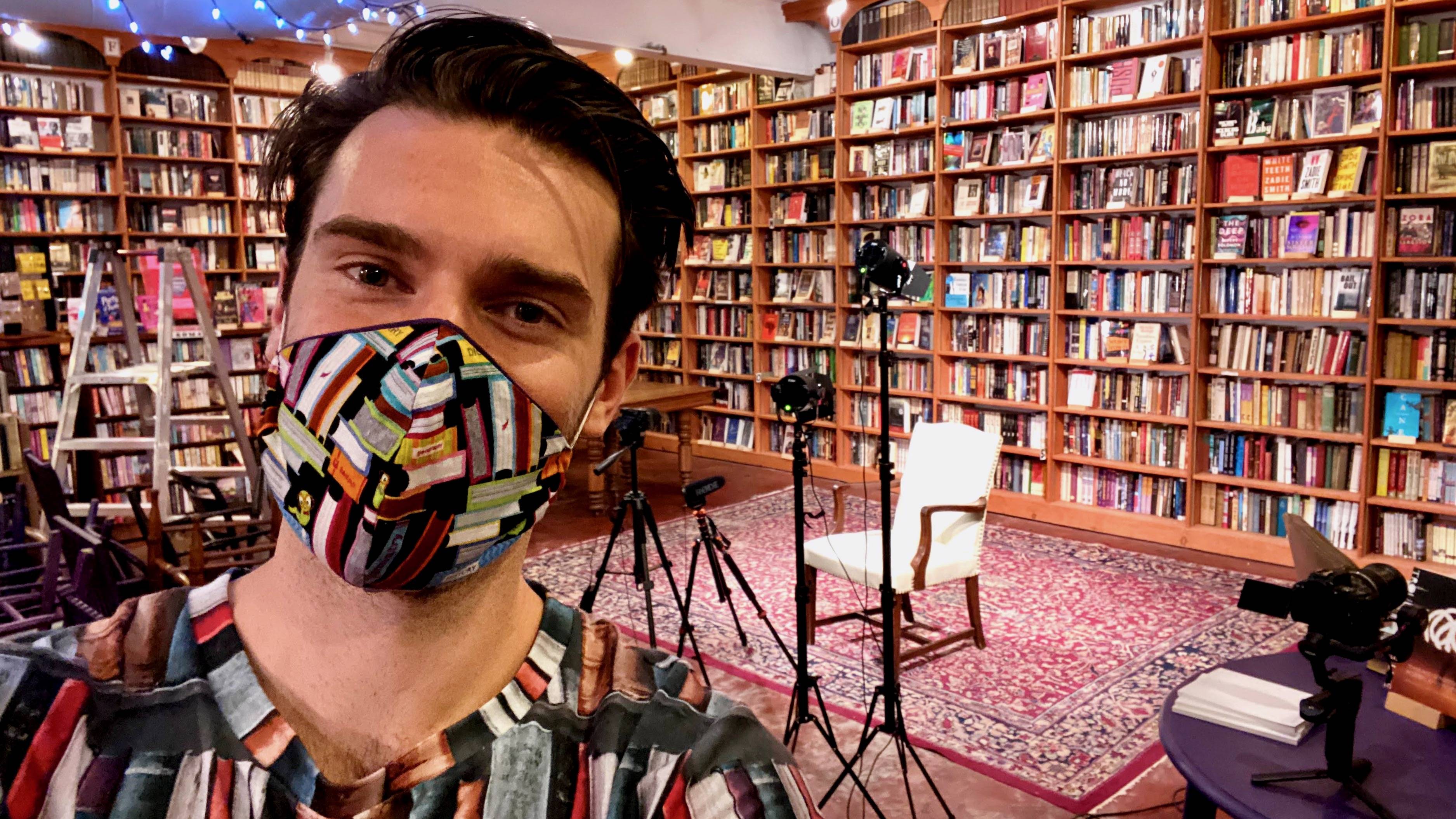
 Mason Engel in "The Bookstour," a documentary about the importance of independent bookstores. (Photo courtesy of Mason Engel) | "Why would anyone shop indie when there's a better price just a few clicks away?" That's the question Mason Engel set out to answer by visiting bookstores across the United States. It was not a glamorous trip -- especially during the worldwide pandemic. And he had to stay ahead of a hurricane, too. But Engel, a 26-year-old science fiction writer, persisted. Over 17 days last summer, he drove 5,000 miles to talk with booksellers about their work and their ideals. Now you can watch Engel's quest in a charming documentary he made called "The Bookstour." Wearing a series of goofy bookish T-shirts, Engel talks with Bradley Graham at Politics & Prose here in Washington, Emma Straub at Books Are Magic in Brooklyn and two dozen other literary entrepreneurs. They describe the transformative effect of in-store book clubs and author appearances, the way bookstores serve as community hubs and the thousands of titles bookstores give away to local children. "It's intoxicating," Straub says, "to feel like you're a part of this swelling ocean of love." You can be a part of that love by watching "The Bookstour" online ($10). Even better: Engel is donating all proceeds from his documentary to Binc, the Book Industry Charitable Foundation, which has been a lifeline for booksellers, especially during the pandemic. Elisabeth Plumlee-Watson at Loganberry Books in Cleveland says, "It's the bookstores' responsibility to work for a better world." But they can't do it alone. (To watch "The Bookstour," click here.)  Dress photos courtesy of online clothing retailer eShakti; "Freed," by E.L. James (Bloom Books) | When Christian Grey and Anastasia Steele got married, they gave new meaning to "tying the knot." Today, as I'm sure all of you know, is the wedding anniversary for the college graduate and the kinky billionaire immortalized by E.L. James. "Freed," the sixth and most recent book in her "Fifty Shades of Grey" series, allows fans to see that beautiful ceremony when the minister says, "You may kiss the bride," and Christian tells his new wife, "Don't let anyone take that dress off but me, understand?" I'm not crying -- you're crying! Bloom Books, James's new publisher, is celebrating by launching an innovative collaboration with online clothing retailer eShakti. The Gala Dress Giveaway sweepstakes asks readers to use the eShakti site to design the perfect dress for attending the wedding of Mr. and Mrs. Grey. Upload a photo of your creation to social media and you'll be entered to win a $500 eShakti gift card and an autographed copy of "Freed"; one thousand runners-up will receive $25 gift cards. Entries may be submitted till Aug. 21 (full details). Don't stop, as Christian would say: Today and tomorrow, all three of the "Fifty Shades as Told by Christian" e-books are available online for just $4.99. Laters, baby.  From "Elephants Are Not Birds," written by Ashley St. Clair, illustrated by Steliyana Doneva (Brave Books) | Jud Burgess started getting calls at 6 o'clock in the morning from people who said they'd seen his new book on Fox News. Trouble is, Burgess had no idea what they were talking about. He and his wife, Laurie, are the owners of Brave Books, a bookstore in El Paso, Texas created in early 2019 as a safe space for everyone. But a different Brave Books just launched this week in Texas. It's a conservative publisher that aims "to Bring Real American Values that Endure into the hearts and minds of children and their families." Brave Books CEO Trent Talbot says, "It's a combination of Netflix, Marvel and the Berenstain Bears." Actually, it's a subscription service that offers monthly picture books like you might find at the Rush Limbaugh Memorial Day-care Center, if day care weren't a feminazi plot to destroy the nuclear family. Each Brave story takes place on Freedom Island, an imperiled realm where cartoon animals battle "the same villainous ideologies that our children face." For instance, Asher the Clever Fox defends capitalism from the purveyors of central planning. The website says, "His wit and bravery are pinnacle in the battle against a communist enemy," which probably sounds more coherent in the original Fox. The first offering from Brave Books is "Elephants Are Not Birds," by "media personality" Ashley St. Clair. In her story, Culture the Vulture convinces Kevin the Elephant that he must be a bird because he likes to sing. Kevin is briefly misled by Culture and tries to dress and act like a bird. But he ultimately realizes, "My life is not just about how I feel; I can sing as an ELEPHANT; that's what is real!" Talbot, the new publisher, assures me, "It's not anti-trans at all. It's about an elephant who becomes happy with the way God made him." But St. Clair is running around saying the quiet part loud. In an article about her book in the New York Post, she said, "I am going to have a little boy in November, and it's scary to think he could come home and say, 'My friends all identify as something else and that's how I feel' and have my son crying because he's not put on hormone replacement therapy." Future picture books will address cancel culture and critical race theory, which should clear up a lot of the questions kids have been raising on the playground. Talbot's enterprise is off to a strong start. "We're getting thousands of orders every single day," he says. "It's a fun time." But it's not a fun time for Burgess, the owner of Brave Books in El Paso. He says the other Brave Books is "antithetical to everything we stand for in terms of humanity." On the positive side, whenever somebody calls him for a copy of "Elephants Are Not Birds," he uses it as an "opportunity to just give them a little lesson in loving your neighbor." 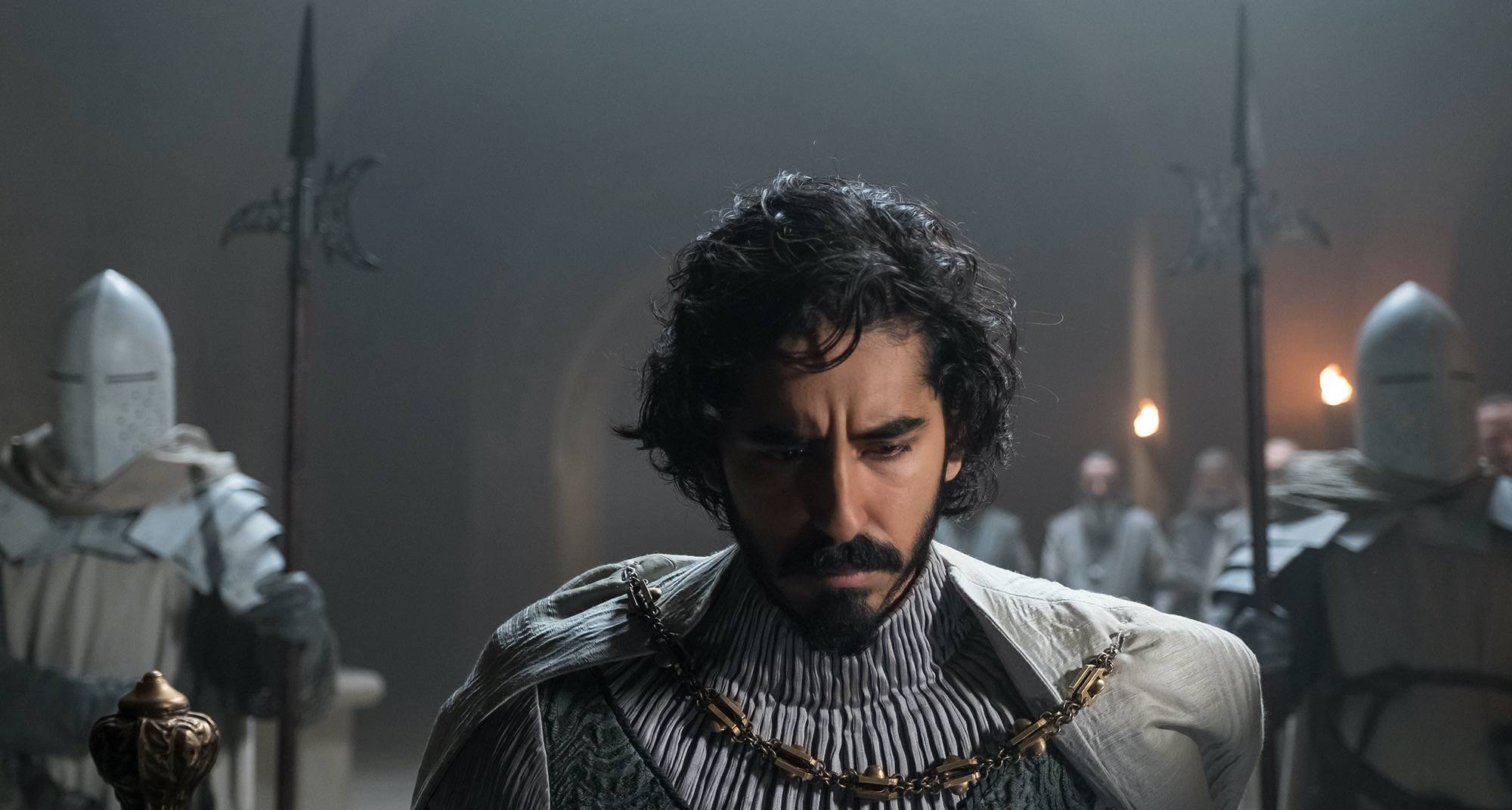 Dev Patel in "The Green Knight," written and directed by David Lowery. (Photo by Eric Zachanowich/A24 Films) | "If you'll pay attention for just a short while I'll tell it straight." So says the narrator of "Sir Gawain and the Green Knight" before unspooling a tale of horror and honor that's captivated listeners for more than 600 years. Today is the U.S. debut of "The Green Knight," a film adaptation of the Medieval classic written and directed by David Lowery. Dev Patel stars as Sir Gawain, the young man who beheads the Green Knight only to watch him pick up his noggin by the hair and ride off, vowing to see Gawain again in a year's time. Our movie critic Michael O'Sullivan says the film "casts a magical, and sometimes mist-bound, spell" (review). Lowery, though, is surprisingly modest about his production. "I arrive now at the end of this journey with a finished film that I'll happily admit cannot do justice to the well from which it's drawn," he writes in a new foreword to "The Green Knight," translated by Bernard O'Donoghue. "This may be a poem that resists adaptation." If the movie piques your interest in the original text, beware. Though the "Gawain" poet was probably writing around the same time as Chaucer, "The Green Knight" is harder to read in Middle English than "The Canterbury Tales." (And frankly, even after testing the patience of three brilliant professors, I still find "The Canterbury Tales" fairly difficult.) But "The Green Knight" isn't long -- about 75 pages -- and there are several good translations of this bizarre adventure. In addition to O'Donoghue's, check out versions by J.R.R. Tolkien, W.S. Merwin and Simon Armitage. Whichever translation you choose, it's an education in chivalry. As the knights say of Sir Gawain, "We will learn how to excel in unlaboured speaking, since we have here the master of manners." 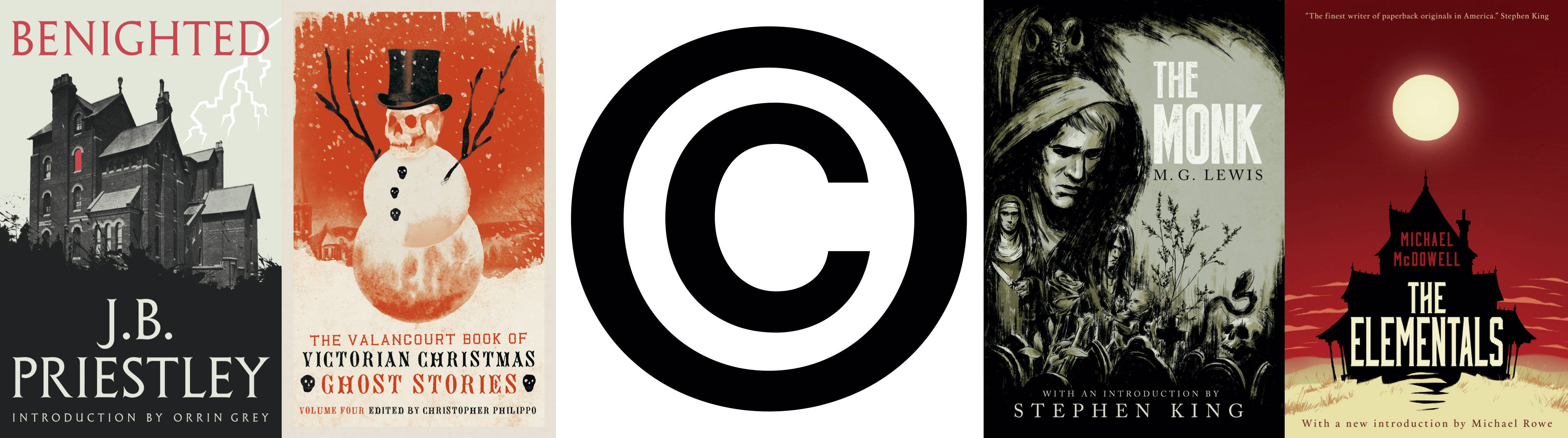 Courtesy of Valancourt Books | A small Virginia publisher is fighting a legal battle that rests, in part, on whether books are more like chemicals or raisins. The trouble began in 2018, when James Jenkins, the co-founder of Valancourt Books, received an email message while he was at dinner. The U.S. Copyright Office, a division of the Library of Congress, demanded that he send in copies of every book he'd ever published -- or face fines totaling more than $100,000. Surely, there was some mistake, right? After all, Valancourt is a two-person, home-based business based in Richmond that reprints rare and neglected books. But alas, the federal government was serious. Jenkins discovered that he was in violation of the "mandatory deposit" requirement, an antique regulation which demands that all publishers submit "two complete copies of the best edition" of their books with the Copyright Office. But Valancourt is a print-on-demand publisher. "I didn't have those books," Jenkins tells me. "To actually have them printed and then ship them UPS to the Library of Congress was going to cost something in the neighborhood of $2,500." That expense, along with the considerable investment of time, "in exchange for no benefit of any kind," struck Jenkins as unfair. Adding to this absurdity, the Library of Congress apparently gives away and discards many of these books every year. (I contacted the Copyright Office, but a spokesperson for the ill-named Outreach & Education dept. declined to comment.) So Valancourt sued the Copyright Office and the Justice Dept., arguing that the mandatory deposit rule "is an unconstitutional taking of private property that violates the Fifth Amendment and a burden on freedom of speech that violates the First Amendment." Alas, last week Valancourt lost. The U.S. District Court for the District of Columbia ruled in the government's favor. Looking at earlier Supreme Court cases, Judge Amy Jackson decided that books are more like chemicals, which the government may regulate, than raisins, which it may not. That's a fruitless oversimplification of the judge's ruling, but in any event, her decision effectively reaffirms that every publisher – big publishers, indie publishers, even self-published authors -- could face ruinous fines if they don't comply with the mandatory deposit law that's more than 200 years old and no longer serves a legitimate purpose. Valancourt, which is represented by the Institute for Justice, plans to appeal. However that plays out, Congress needs to step in and overhaul our copyright law. And until then, the Library of Congress needs to stop arbitrarily bullying small publishers. 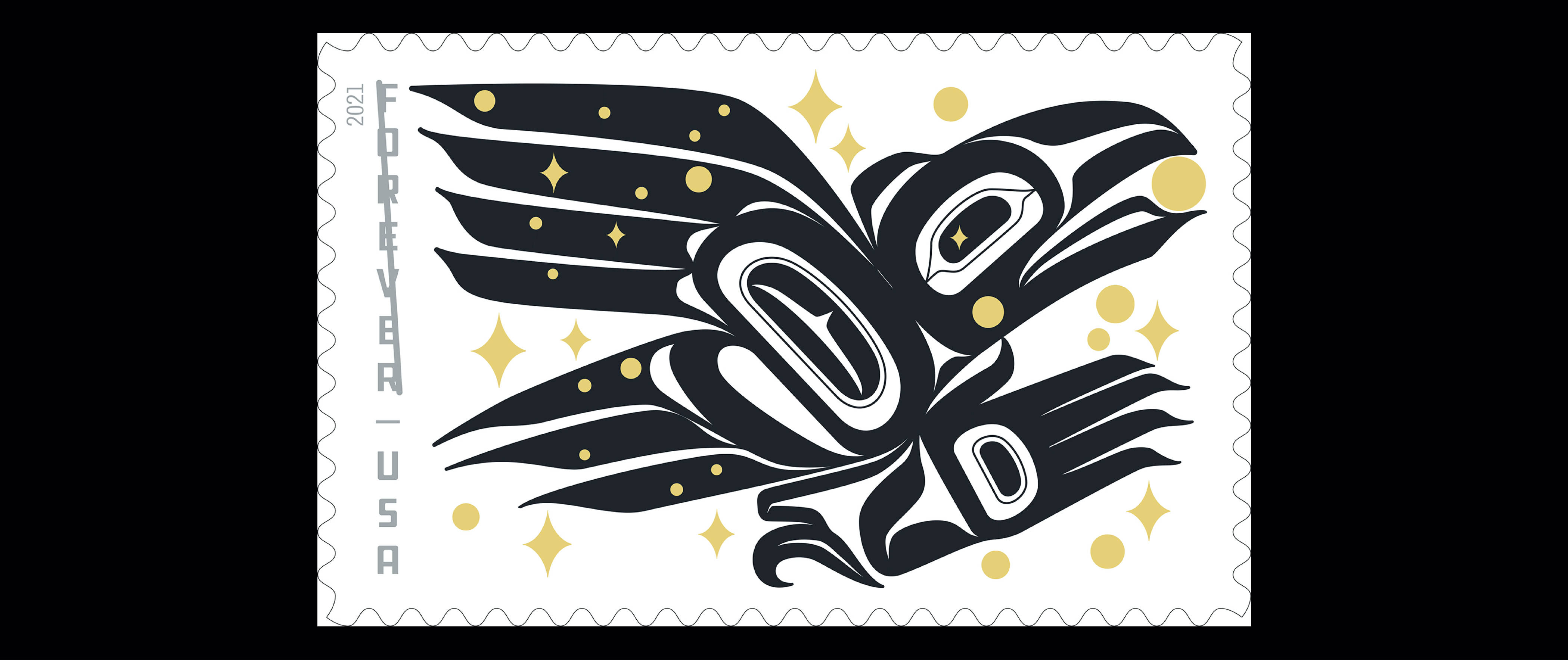 The Raven Story stamp, designed by Rico Worl, will be issued today in Juneau, Alaska, by the United States Postal Service. (©2020 USPS) | Thousands of years before Edgar Allan Poe wrote his famous poem, Native peoples of the Pacific Northwest were immortalizing Raven in their tribal stories. Today, the United States Postal Service is honoring that indigenous Raven by issuing a new 55-cent stamp. The stamp is designed by Rico Lanáat' Worl, a Tlingit/Athabascan artist whose work celebrates Native people and culture. The image he created -- with USPS art director Antonio Alcalá -- depicts Raven and the Box of Light. This foundational Tlingit story takes place long ago in a time of darkness. Raven transformed himself so he could be born into a human family whose grandfather possessed boxes of celestial objects. Unable to resist little Raven's pleading, Grandfather let him play with the boxes, which allowed the clever bird to release the sun, moon and stars into the world. "I felt like the Box of Daylight story was a good gateway story for learning about the culture," Worl tells me. "Let's share light with the world." Bits of golden foil embedded into the stamp make it literally sparkle. Raven stories take on many forms, but they often emphasize his craftiness, empathy and foresight. Worl especially appreciates the bird's trickster characteristics -- indeed, the design company he founded with his sister is called the Trickster Company. "The thing I like about the stories," Worl says, "is that they're not necessarily a good versus evil situation. They're more along the lines of helping people question the status quo and challenge the way things are." You can order Raven Story stamps and related products from the USPS here. Like Raven, these stamps are Forever. 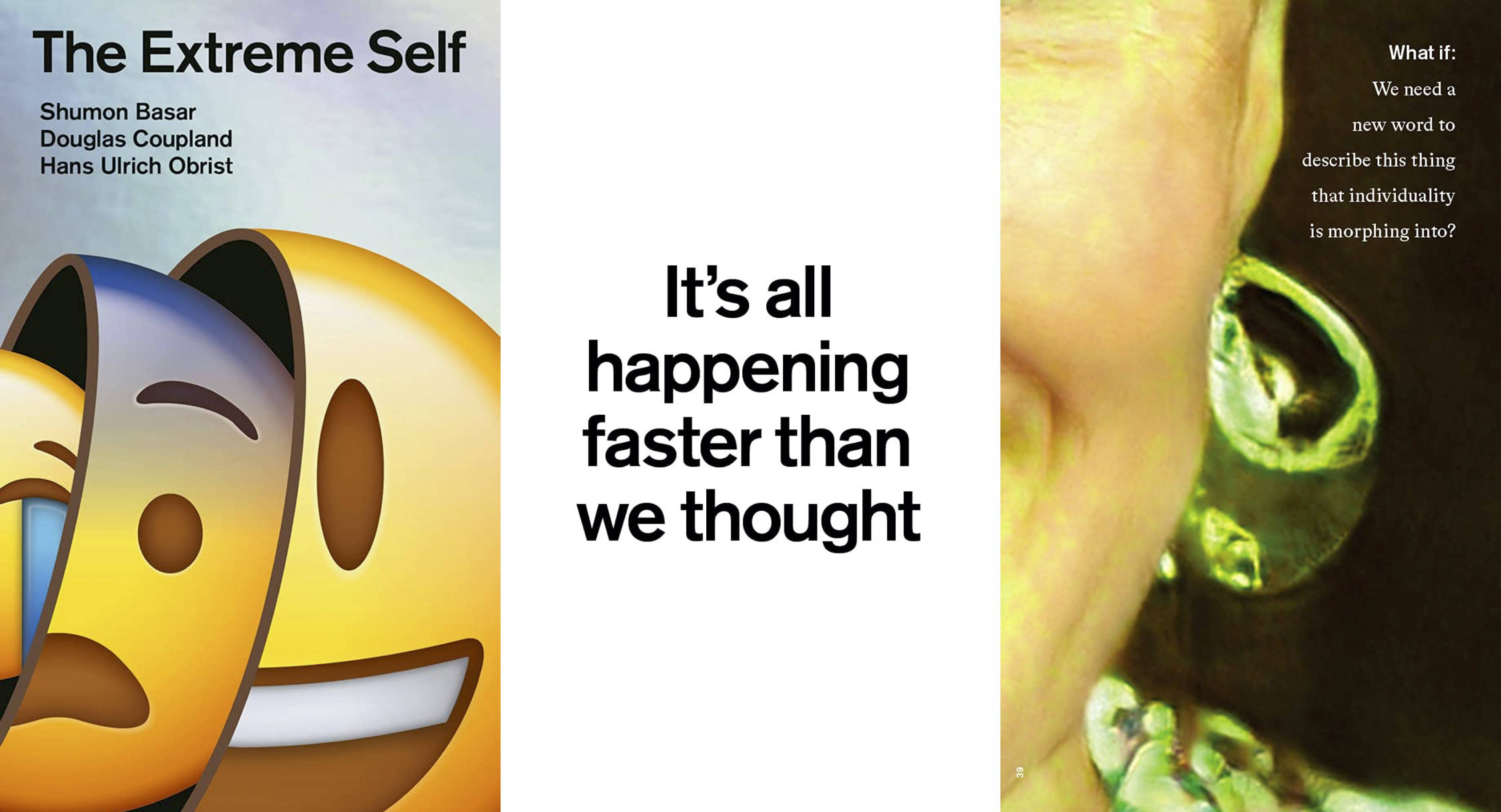 Cover and interior images from "The Extreme Self," by Shumon Basar, Douglas Coupland and Hans Ulrich Obrist (Walther Konig Verlag) | Douglas Coupland christened a generation 30 years ago when he published his first novel, "Generation X: Tales for an Accelerated Culture." This month, Coupland and two colleagues have released a curious graphic novel called "The Extreme Self," which attempts to articulate what's happening to humanity now. Depending on your coolness quotient, you'll recognize this as a sequel to the trio's 2015 book, "The Age of Earthquakes." Each page presents a striking image or field of color and a few words or phrases -- like a collection of grim fortune cookies designed by a teenager who's read too much William Gibson: - "Machines will quite soon be outsourcing their work to humans because it'll be the cheaper option."
- "Outrage is good for business."
- "One day I realized that the screen was looking back at me. That was too much intimacy."
These pages, contributed by more than 70 photographers, artists and "technologists" strive to rouse us from the slumber of our social media haze and push back against the disintegration of authentic selfhood. One of the pages, which I take to be the book's thesis, says, "We're not built for so much change so quickly. Technology has outrun our ability to absorb it." We're still grappling with Henry Adams's existential warning more than a century ago. After being dazzled by a giant electrical generator at the Paris Exposition of 1900, Adams sent a tweet to the future: "At the rate of progress since 1800," he wrote, "every American who lived into the year 2000 would know how to control unlimited power. He would think in complexities unimaginable to an earlier mind." But Adams knew that getting there would be a harrowing, possibly overwhelming ordeal. The last page of Coupland's new book pleads, "Restore me to my factory settings." Alas, that's not possible. We're all full speed ahead -- toward whatever cloud-based, advertising-supported life form that might be. 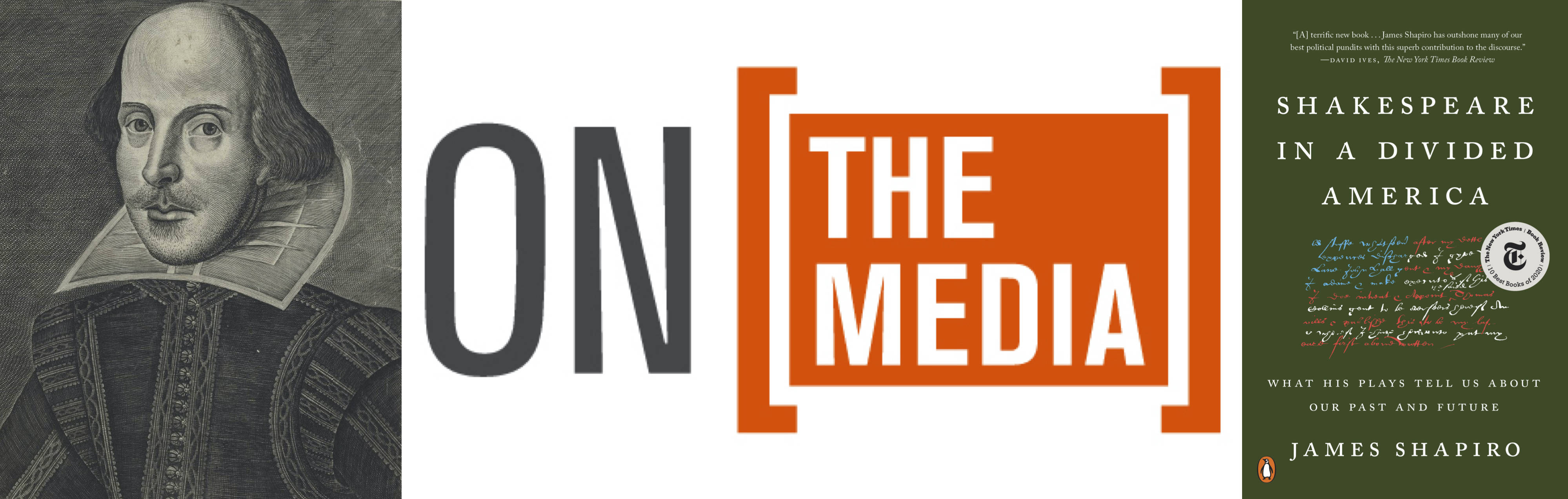 William Shakespeare portrait from the 1623 First Folio (Courtesy of the Folger Library); On the Media/WNYC Studios; "Shakespeare in a Divided America: What His Plays Tell Us About Our Past and Future," by James Shapiro (Penguin Press) | Lend me your ears: A recent episode of the podcast "On the Media" offers a fascinating interview with James Shapiro about America's complicated engagement with Shakespeare. "You would think that having broken from Britain in 1776 and then going on to fight another war with them, that we would not adopt as our national poet England's national poet, but, in fact, we have," Shapiro says. "Going back to 1776 and even a few years before then, those on both sides of the cultural divide, whatever the cultural divide at that moment was, reached out to Shakespeare, enlisted him in their cause." Shapiro is particularly enlightening on how Shakespeare's plays plumb our national myths and heroes, anxieties and terrors. "Shakespeare presents America's worst nightmares," he says. "And when we stage these things, we're forced to confront the stuff we don't really like confronting as Americans. It's right in our face." (You can listen to "On the Media" wherever you get your podcasts or here.) 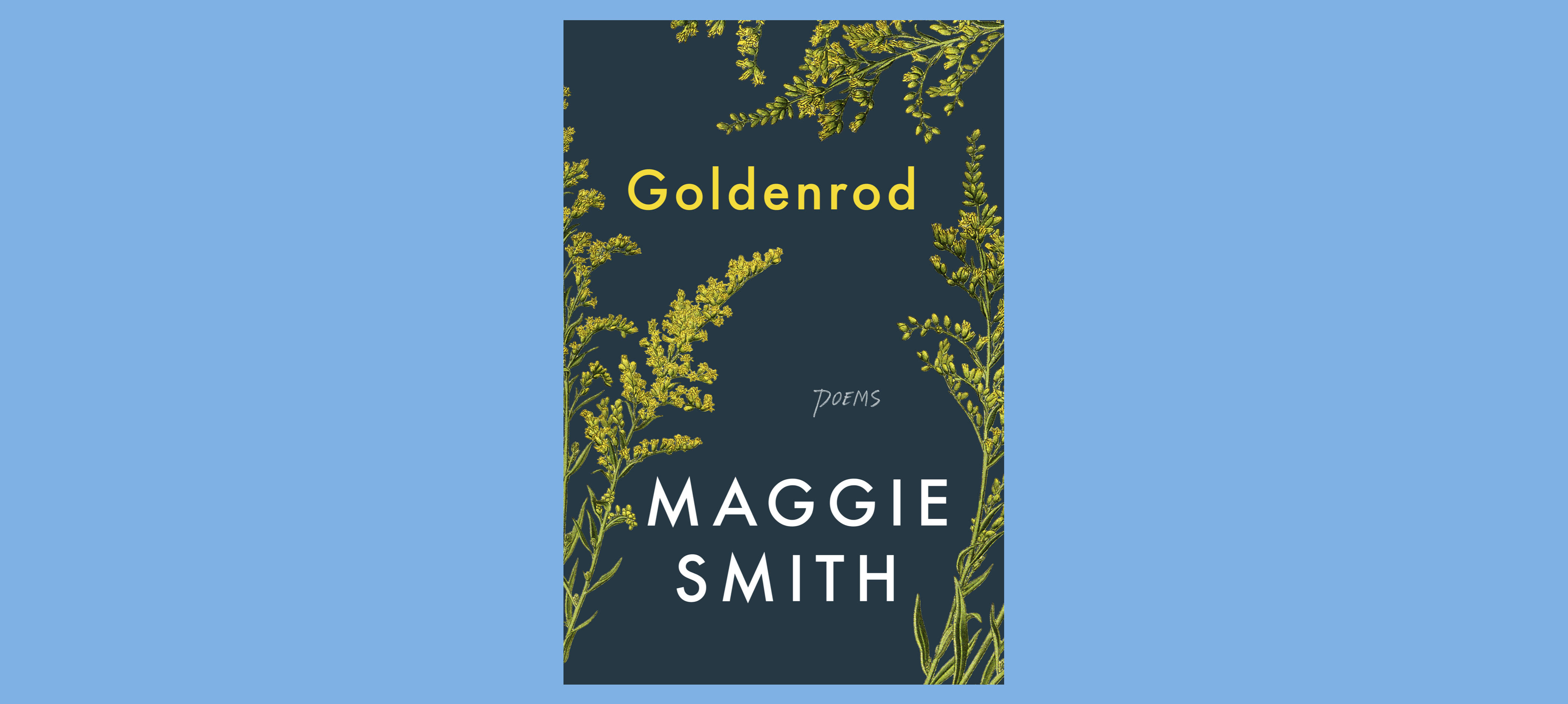 One Signal/Atria | "Goldenrod," Maggie Smith's new collection of poetry, captures the profound joys and terrors laced into the folds of ordinary life. She's that rare poet who remains wholly accessible while rewarding deeper study. This is a collection to keep; buy another copy to press into the hands of a friend. Confession My son's terrible fevers are softening me
to God. To the idea. When he sizzles to the touch, speaks a strange new language
of not-consonants and not-vowels, I need one golden iteration I can live with.
When even syntax is burnt black, smelling of creosote. By nightlight I mitten his hands
and sock his feet with cold washcloths. I wipe down his cheeks and forehead, his chest
and the back of his neck. He is nearly too big, but I lift him, hold him guitar-slung
across my body, and sway. Now and then he whimpers, brain blazing. This is terror
and this must be how it happens—how need alchemizes into belief. I try to visualize being
held myself, in a cupped hand. In the shining idea of a hand. I try to feel myself held,
holding. My arms tremble with his weight. Excerpted from "Goldenrod" published by One Signal/Atria, a division of Simon & Schuster, Inc. Copyright © 2021 by Maggie Smith.  A trio of Charleses boating in Andover, N.H. (File photo by Ron Charles/The Washington Post) | Emily Brontë was born on this day in 1818 ("Let me in! I'm come home!"). I should be celebrating by lurking around the moors, but instead, I'm stuck in a Honda Civic heading up to New Hampshire. (Don't worry -- Dawn's driving.) The Charleses are gathering for a small family reunion at my folks' farmhouse. There will be lots of canoeing and a little hiking, some rousing card games and a communal jigsaw puzzle. Meals and the planning of meals will take up a surprising amount of our time. I'll recommence my annual search for carnivorous plants in the nearby bog. And in the evenings, we'll gather around a campfire and eat S'mores, curse ourselves for eating too many and then eat more. Heaven. Meanwhile, if you have any questions or comments about our book coverage, send a note to ron.charles@washpost.com. And if you know friends who would enjoy this newsletter, please forward it to them. To subscribe, click here.
Interested in advertising in our bookish newsletter? Contact Michael King at michael.king@washpost.com. | 




 Email
Email