July 18: How Catherine Opie Makes Myths


July 18: How Catherine Opie Makes Myths
Your lens to the internet's most powerful photographs.
 📸For Your 👀 Only: 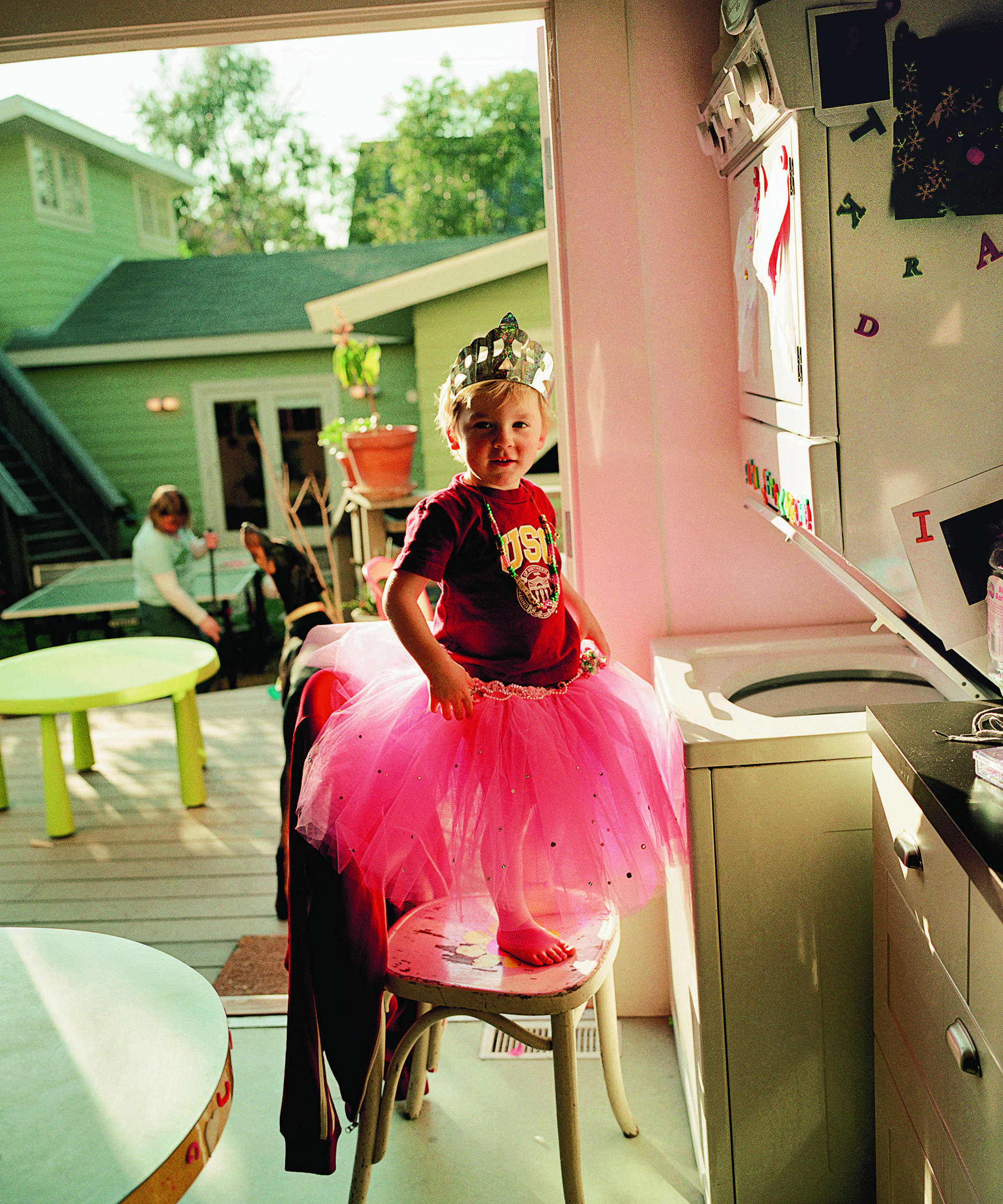 Catherine Opie If you don't know the work of Catherine Opie, her new book by Phaidon is a great place to start. The professor and fine art photographer has long questioned the status quo in America, from the treatment and expectations of the LGBT community to how we create myths and interact with democracy. We spoke with Opie about her long career and why reflection is so important.
This book really feels like a retrospective of your work, and it's laid out in a really beautiful way where it feels very nonlinear. Could you talk about how you were thinking about putting this book together and why it felt important to do so now?
This is my first stand-alone monograph of all the different bodies of work, and it represents almost 40 years worth of work. With turning 60 years old this year, it was time to actually begin to put a book together in this way. Phaidon [my book publisher] was excellent because they actually came up with the themes.
I was interested in having the work be a conversation with one another through the decades versus making a chronological book. I've never been a singular photographer in terms of having one way of making an image. The thing that is always continuing within the work is its relationship to community — what identity is, what is landscape as a place and as a site, how do we view America and the complexities of identity within our country itself, looking at all of those kinds of vast relationships to the history of colonialism. Who is allowed to take up space? How do we create a language? I pray by making images that reflect a broader, diverse society in America. 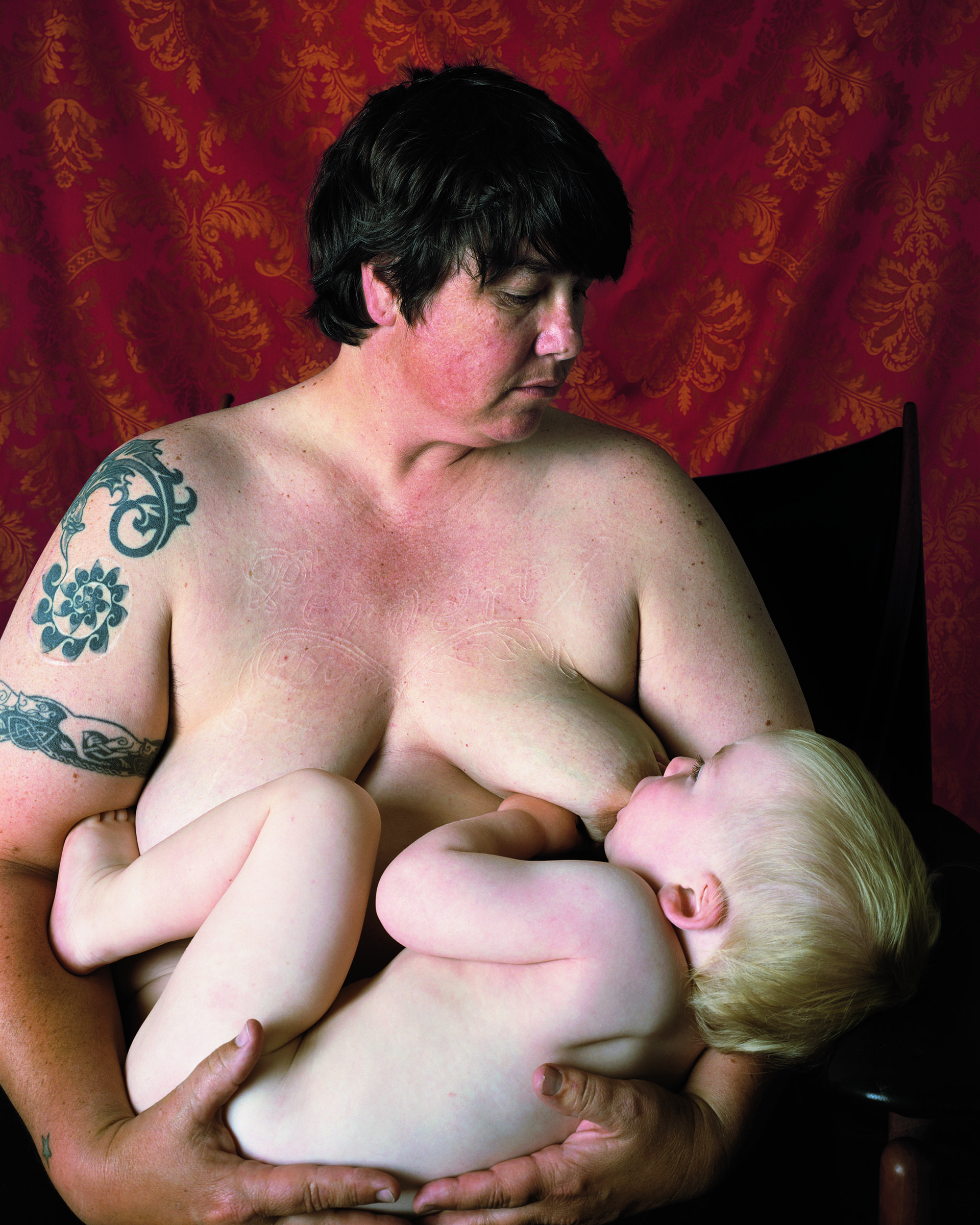 Catherine Opie Do you see this book as a historical artifact where people can look back and be like, oh, this is what it was like to be alive in this era?
Photography always reflects the time in which it's made. That's one of the reasons why I wanted to be a photographer — I grew up with Life magazine on my coffee table and the way that pictures created a narrative of our time, that was work that inspired me. I was so happy to dig out the photograph of the guy holding up the sign, "Eat the rich." It's like a Stephen Shore photograph because of the cars always show[ing] when it was taken.
There are photographs that haven't necessarily been in exhibitions, like the candlelit vigils and San Francisco in the '80s, those are moments where you understand like, oh, this is what people were wearing, this is how people gathered.
It feels like there's layers of mythmaking that you use throughout your work, whether you're dealing with people or with infrastructure. Can you talk a bit about that?
Well, I poke the bear a lot. I'm definitely a poker. Especially with the work in the last four years, with a modernist and rhetorical landscapes where I'm actually poking and being more satirical in a certain way. And I think that is mythmaking, I think especially rhetorical landscapes in those political collages are really in that place of mythmaking for myself and to a certain extent, the abstract landscapes, it's like I'm placing you and I'm displacing you. How often do we feel these kinds of binaries or what our relationship to space is? 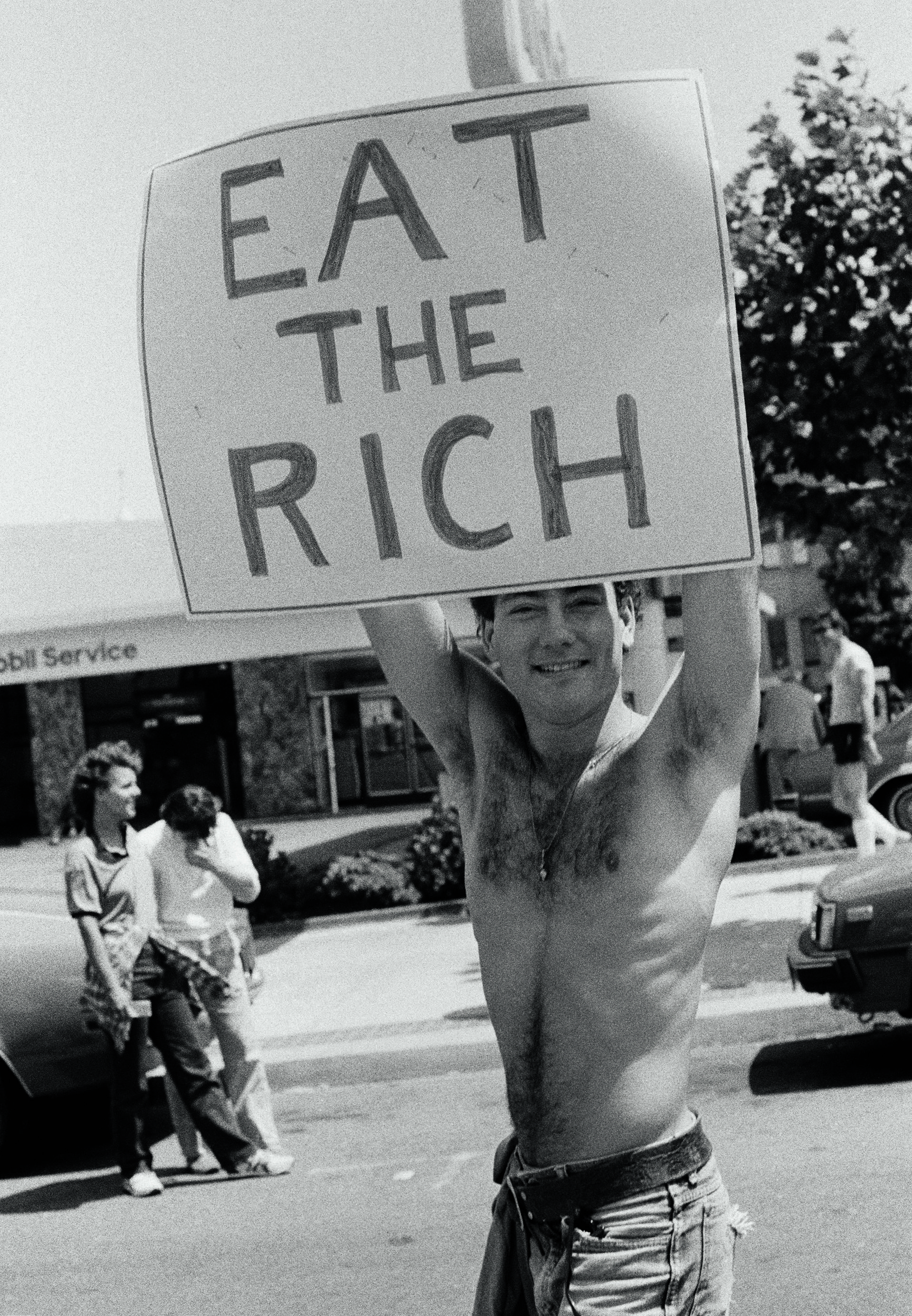 Catherine Opie Can you pick five adjectives that you think make a Catherine Opie image? I would say that seduction, I like to seduce the viewer. Seduction is important to me. Lighting, I am proud of the way that I make light work in the studio. I think that color can, I mean, if you're gonna work in color, like you need it to be about color. Contemplation is really important. And the other word that I use all the time in interviews is the pause.
Can you talk more about the pause? We're moving a million miles an hour, right? I think that because society got so intense with the needs of communication on all these levels that I just had this image in my head of pressing the pause button, just bringing it down a notch. I like the idea that you can stand in front of my images and hopefully want to stand there for a long time. A quietness happens. Some of them are asking you to react, but most of them are asking you to be quiet with me.
What is exciting to you about the field of fine art photography right now? Hmm. I guess that it's more inclusive. It's less of a boys' world. When I got into photography, it was really a boys club. It really didn't even seem that women went out to make photographs. The kind of documentary practice and ideas of visual anthropology were always from a male perspective. And so what's exciting for me is, is those who are able to actually do incredibly well with their work, such as Deanna Lawson. Her work is so good. I have to know what she's making. I appreciate her knowledge of the history of the medium and her dedication to teaching. 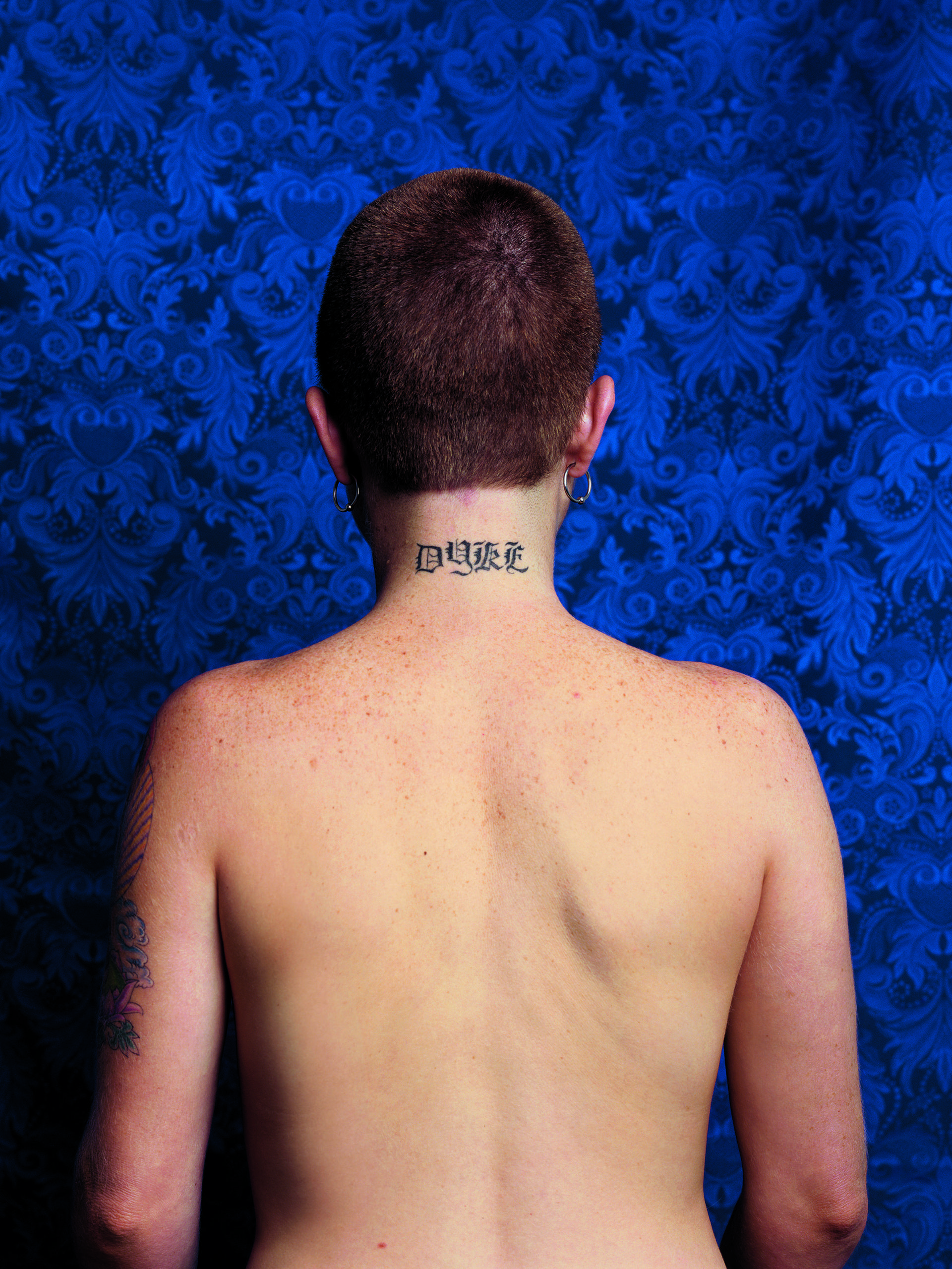 Catherine Opie  📸FROM OUR DESK 📸 As always, here are some of the best photo stories from around the internet, and what we loved from our desk. DEVASTATING SCENES OF THE FLOODS IN GERMANY THAT KILLED OVER ONE HUNDRED PEOPLE 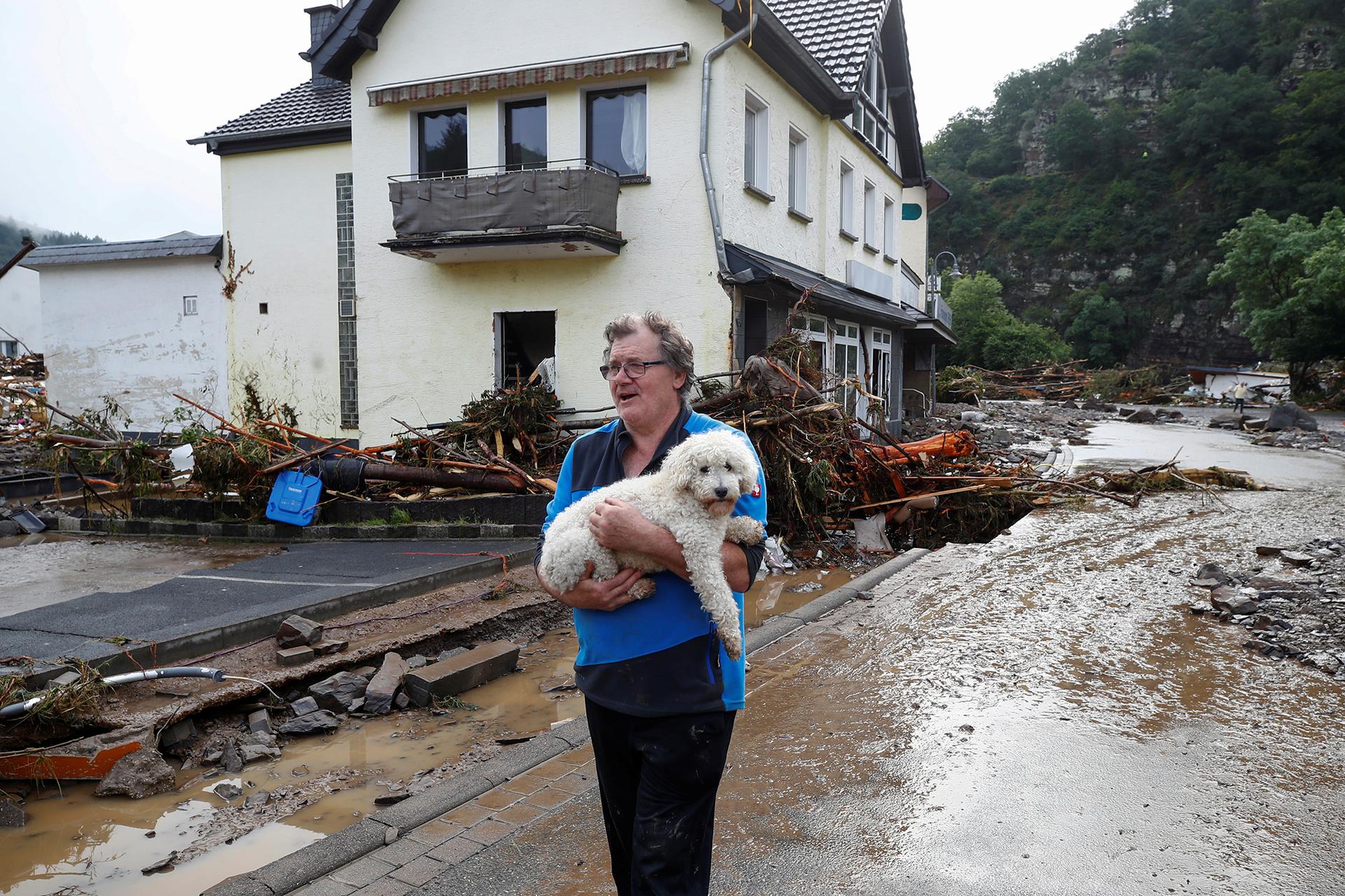 Getty Images THESE PHOTOS ARE A REMINDER THAT BRITNEY SPEARS WAS EVERYWHERE BEFORE HER CONSERVATORSHIP 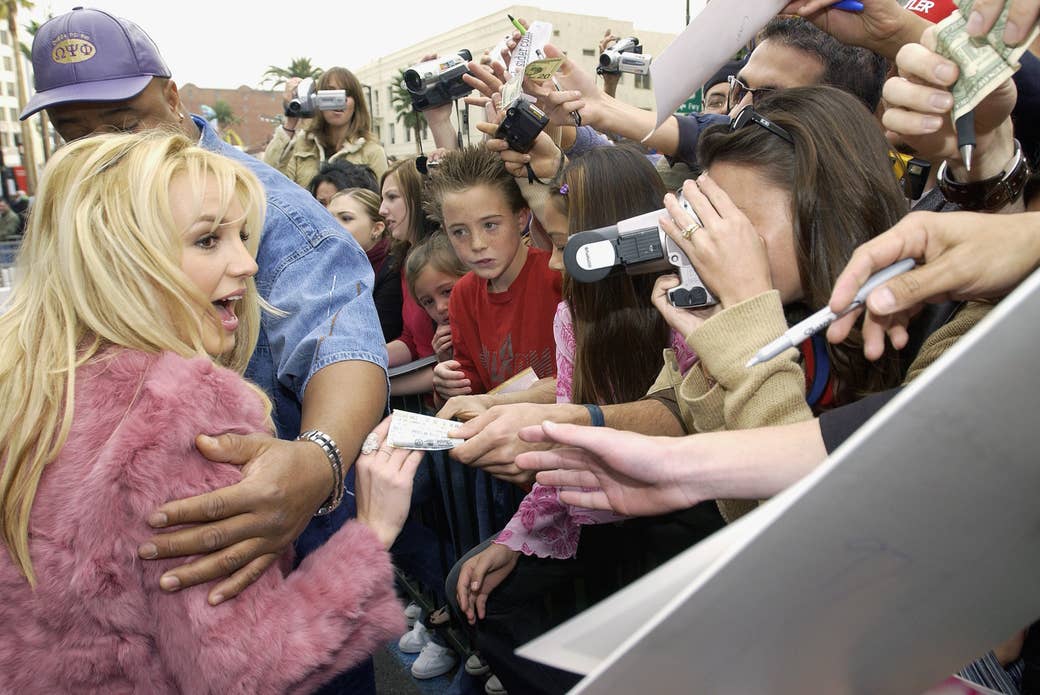 Getty Images SOPHIE RIVERA WAS A VISIONARY PHOTOGRAPHER 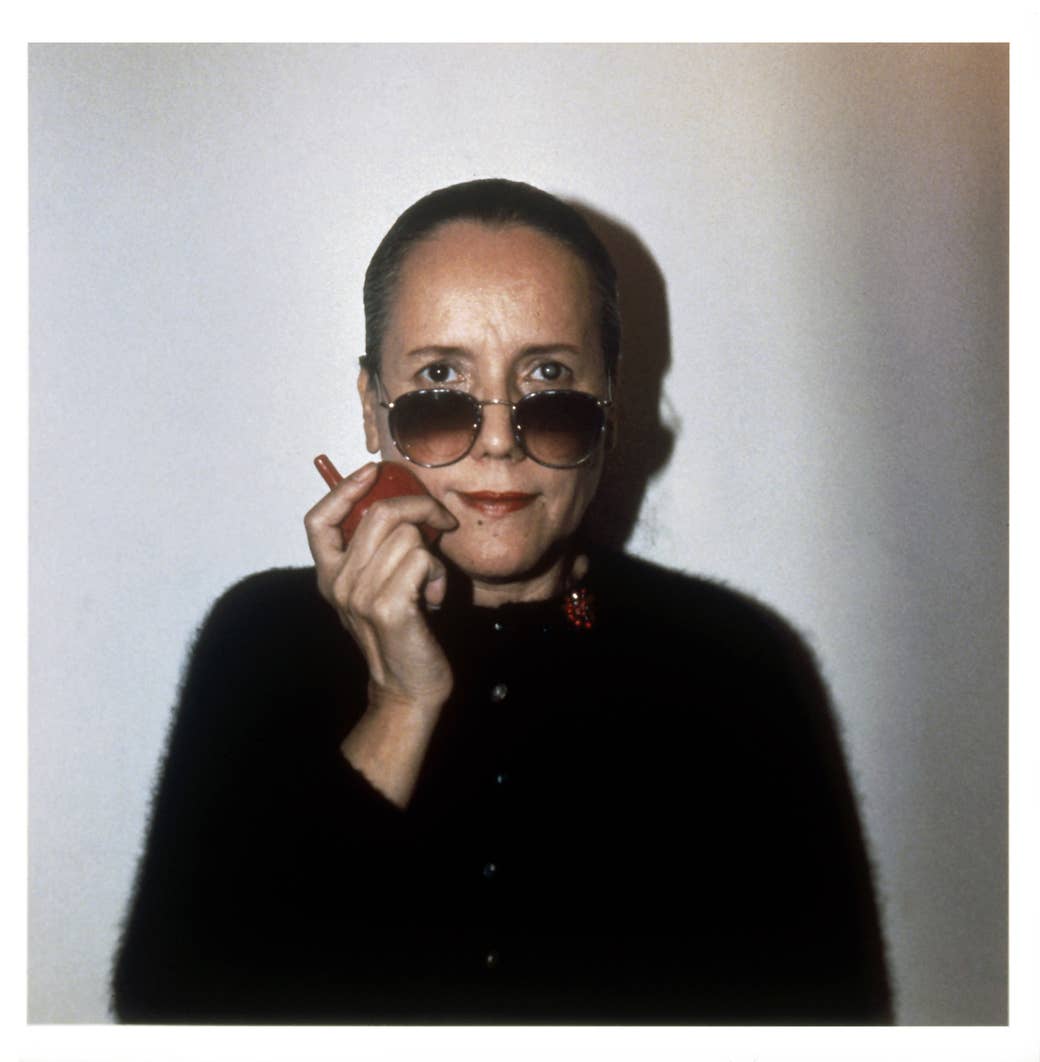 Sophie Rivera SOME HOPE 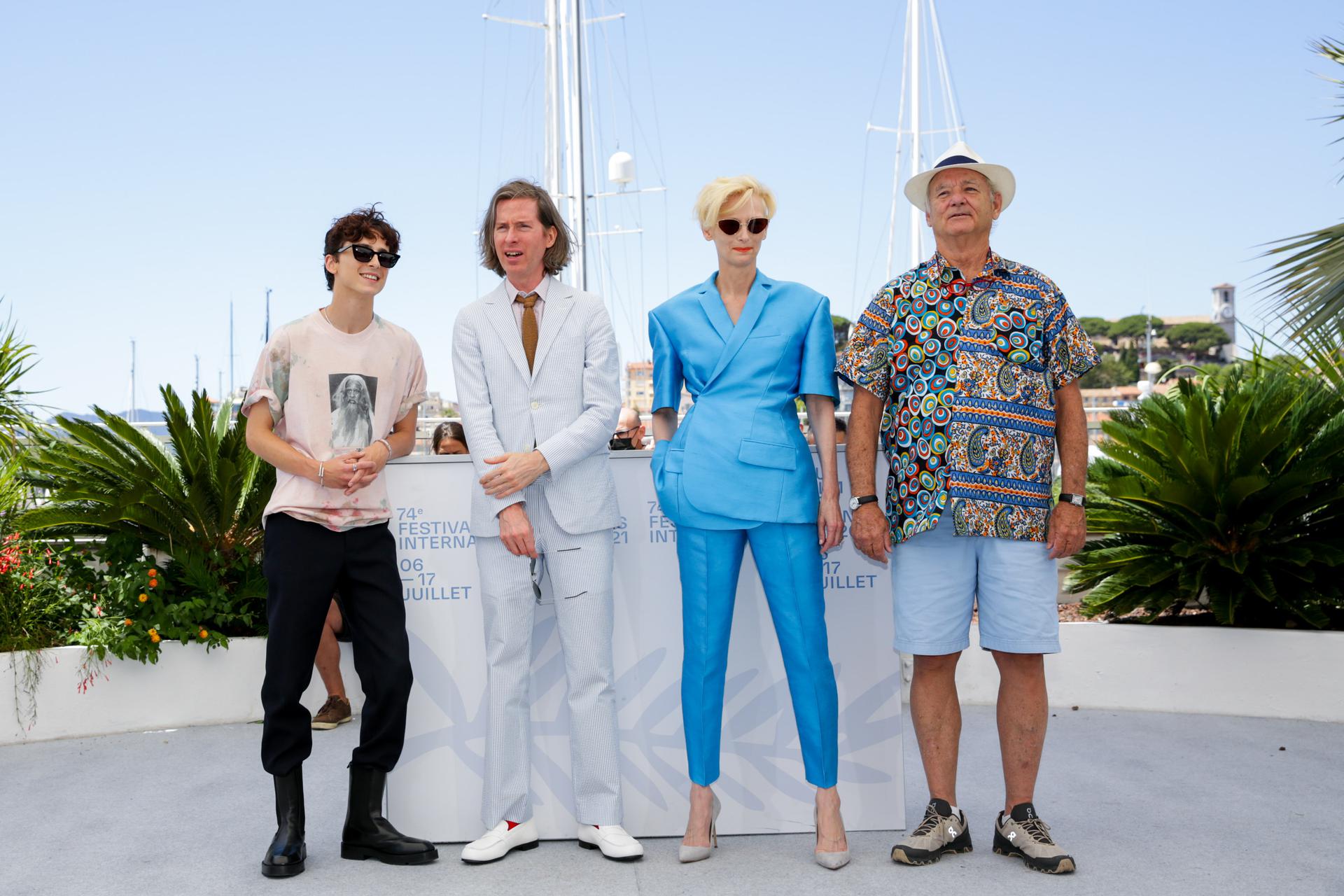 Stephane Cardinale / AFP via Getty Curation / Copy / Art / Breaking This image took the internet by storm this week — I think we can all agree this is the most fun meme to come of out Cannes
"We are making photographs to understand what our lives mean to us." — Ralph Hattersley That's it for this week! Kate + Pia
📝 This letter was edited and brought to you by the News Photo team. Kate Bubacz is the photo director based in New York and loves dogs. Pia Peterson is a photo editor based in Brooklyn. You can always reach us here.
BuzzFeed, Inc. |


