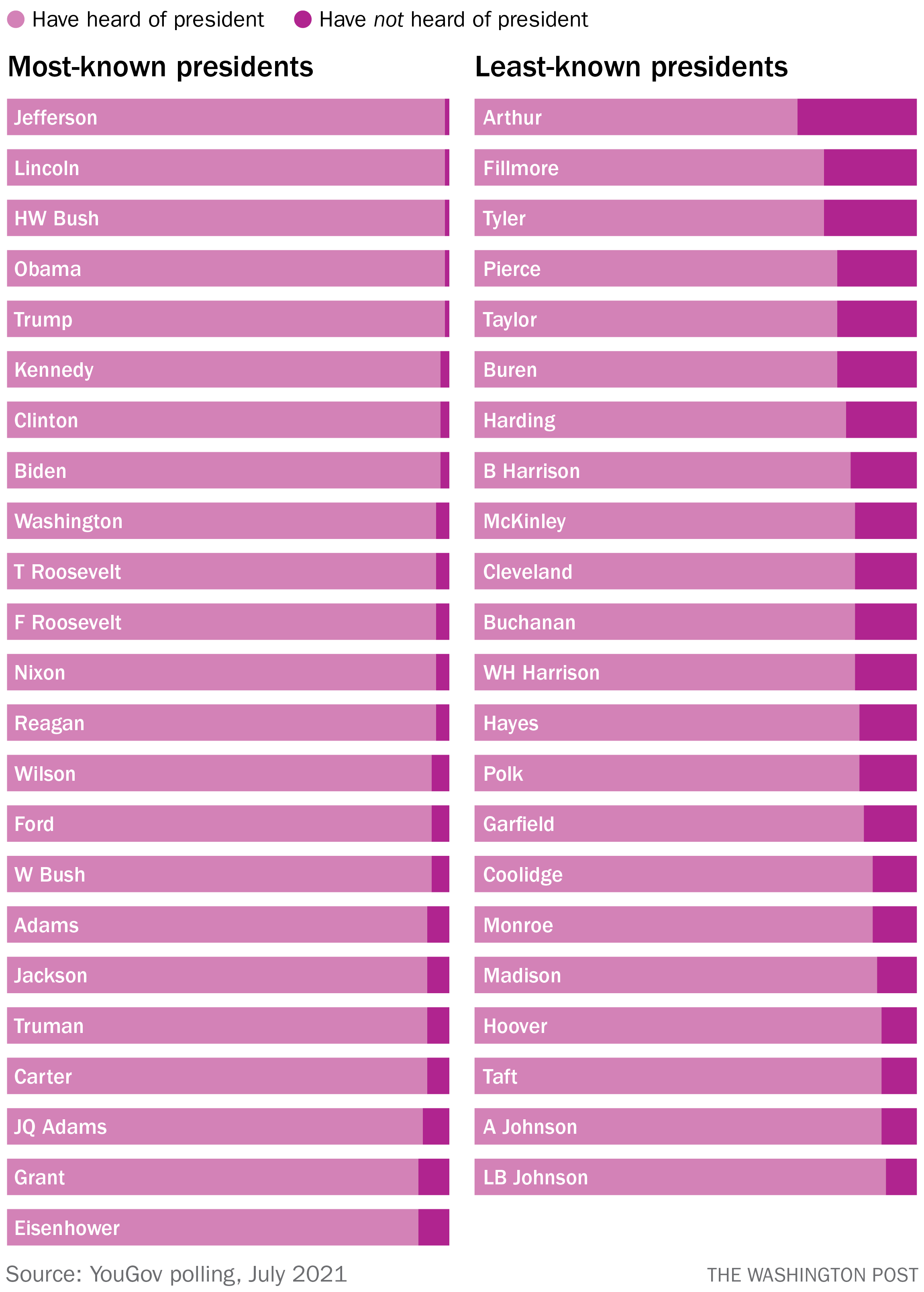
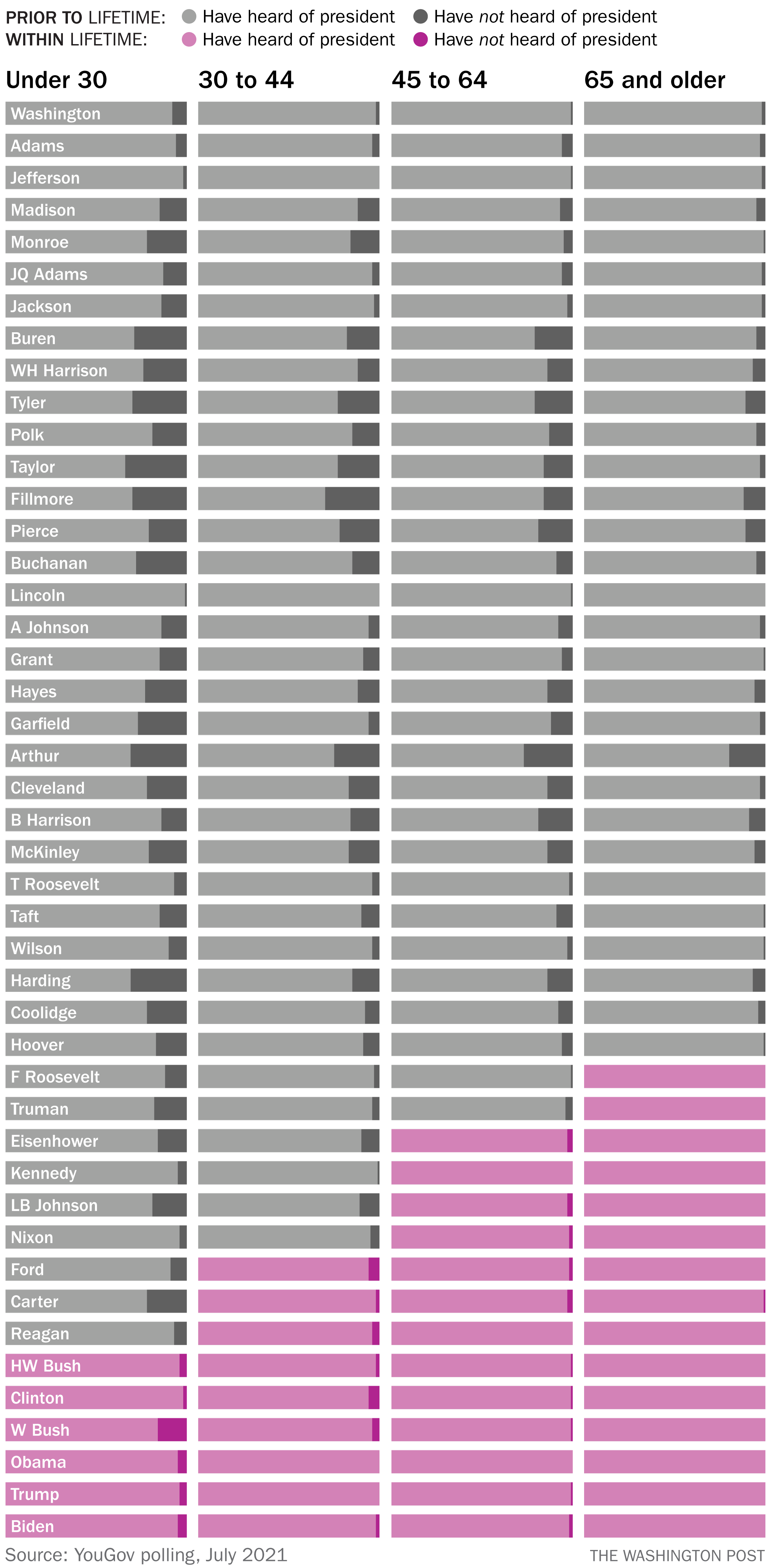
| When I was a kid, my dad had those place mats designed for children that have educational material printed on them. One had portraits of the presidents, from George Washington to probably Ronald Reagan, I'd guess, based on the time period in which I remember this happening. What I learned from that place mat is that a good way to get people to remember the presidents is to show pictures of what they looked like. To this day, I can summon a mental image of a bemulleted James K. Polk, thanks to that place mat. Bringing us to the day's subject: Remembering Our American Presidents! Enjoy. Using a No. 2 pencil, please share your opinion of William McKinley Like many guys born in the 1970s, I have an encyclopedic knowledge of the first few seasons of "The Simpsons." So on those occasions when I am presented with the name "Chester A. Arthur," my mind immediately jumps to a bit of dialogue from an episode entitled "Lisa the Iconoclast." (If you share my demographics, you're probably know where this is going.) In that episode, Lisa Simpson is visiting the Springfield Historical Society to learn more about Jebediah Springfield, the town's founder. The overzealous curator of the museum (voiced by Donald Sutherland) warns her that she might be coming down with "a serious case of Jebeditis." "Just as I was getting over my Chester A. Arthritis!" Lisa jokes. "You had arthritis?" the curator asks, confused. "No," Lisa replies meekly. It's all in the delivery, of course, but it sticks with you. In part because one comes across the name "Chester A. Arthur" infrequently enough that the former president's start turn on an enormously popular television show is a robust anchor point for your memory. Sadly, many Americans have no such association. In a poll conducted by YouGov this month, more Americans said they hadn't heard of Arthur than any other president. He is, perhaps deservedly, our least-remembered president. The point of the poll was to evaluate how people felt about the presidents. Those results weren't very surprising: people like the presidents who either (a) have extensive hagiographic tributes woven throughout our history and who (b) served recently and aligned with the respondent's own party. So Democrats and Republicans both had Abraham Lincoln near the tops of their lists, but Republicans placed Donald Trump far higher than did Democrats (far higher) and Democrats placed Barack Obama (far) higher. This is how it goes, I suppose. But I think that the question of who is most- and least-remembered is far more interesting. There are margins of error in this polling that make the difference between having 1 percent of Americans say they haven't heard of you (like Lincoln) negligibly different from having 5 percent say they haven't (Harry S. Truman). But it is certainly statistically significant that 21 percent of people have never heard of John Tyler, compared to the 4 percent of Americans who've never heard of Gerald Ford. There are some oddities in there. Why, for example, do twice as many people say they've never heard of Warren G. Harding than William Howard Taft? (*coughs into hand* bathtub *cough*) How is it that people are about twice as likely to say they've never heard of Millard Fillmore as James Garfield, given that each should most immediately be associated with newspaper comic strips? Is it possible that newspapers have declined as a cultural touchstone? What's particularly interesting about the YouGov data, though, are the breakdowns by age. On average, about 16 percent of Americans under the age of 30 said they hadn't heard of any individual president, a far higher rate than among those aged 65 and over, where the average was 3 percent. Some of this is probably a function of simple lack of familiarity with the diaspora of American presidents, many of them forgettable. Some of it, too, is probably a function of people pretending they know who Benjamin Harrison is and, more ridiculously, having any opinion of his tenure. The least-known president among the youngest respondents was Arthur, followed by Zachary Taylor and Harding. Among those age 30 and older, John Tyler was also commonly forgotten. Among the oldest respondents, Franklin Pierce slipped into the top three. And now the kicker: Among those under the age of 30, an average of 6 percent said they'd never heard of presidents who served during their lifetimes. That average was inflated by a remarkable (and almost certainly anomalous) 16 percent who said they'd never heard of George W. Bush, a guy who served as president (*checks calendar*) a little over a decade ago. Even among those ages 30 to 44, the average percentage who said they couldn't remember any particular president who overlapped with that age period was 3 percent. Two percent of Americans said they have never heard of President Biden, a guy who (*checks calendar*) is currently the president of the United States. It makes me wonder what percentage of that group could, however, correctly identify all of the members of the Simpsons family. How to read this chart One of the things I've been trying to do with this section is explore different ways of showing data, particularly ones that I think are particularly aesthetically pleasing. So it seemed appropriate to share this graph that I made as New York City was struggling to hold a mayoral primary last month. This is called a "beeswarm" chart, for obvious reasons. On this one, each dot represents a county, arrayed from left (biggest margin for Biden in 2020) to right (biggest margin for Trump). The size of the dot correlates to population. The placements on charts like this are only approximated, elevating the shape of the swarm over the specific accuracy of each dot. This graph quickly conveys a number of useful bits of data. There were more Trump counties than Biden ones. Biden counties tended to be more populous, unsurprising given what we know about population. And, to the point I was trying to make, that the city isn't as uniformly Democratic as it might seem. An exercise for you: Which president best represents each New York borough? Send responses by email and make me laugh, please. | 




 Email
Email