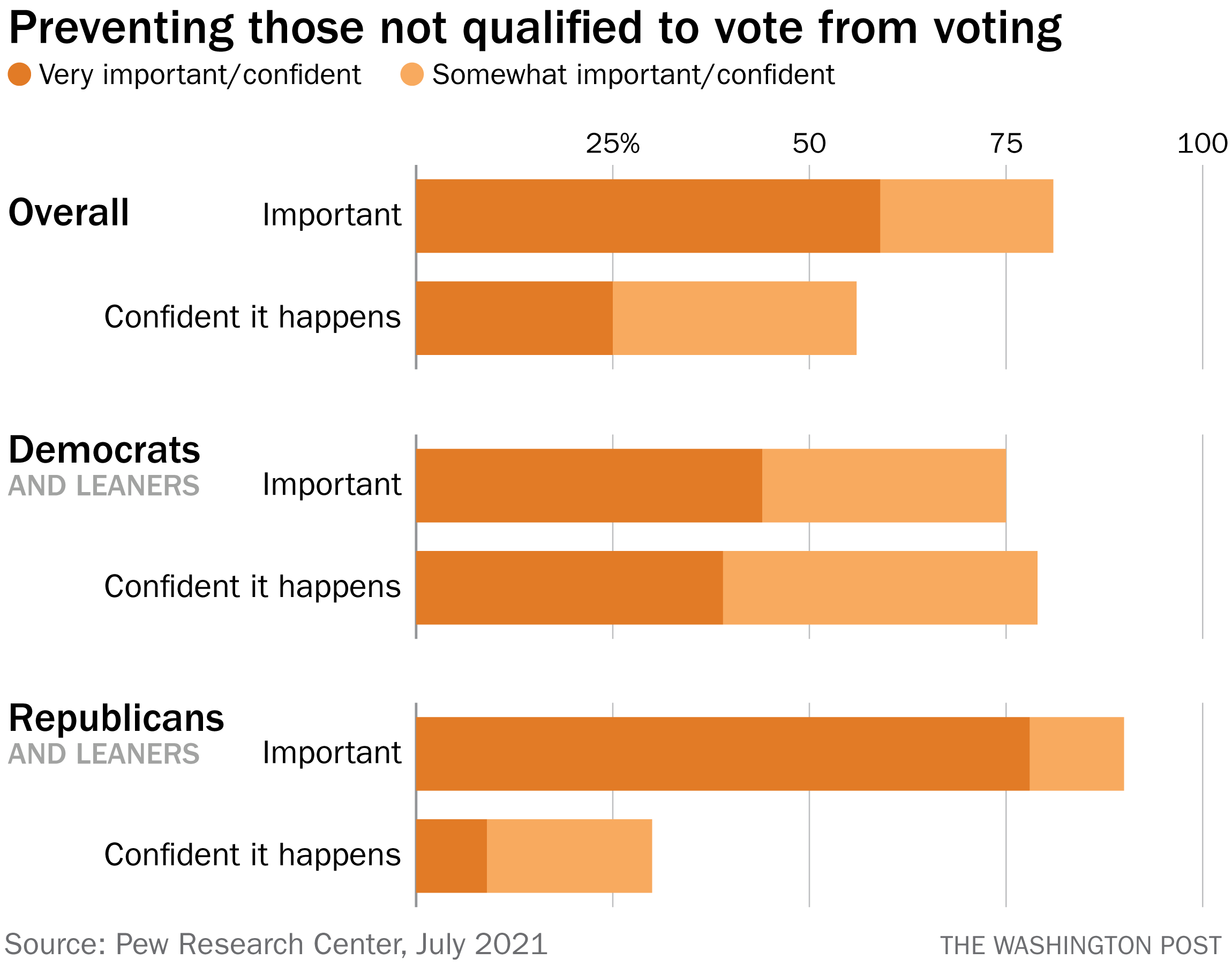
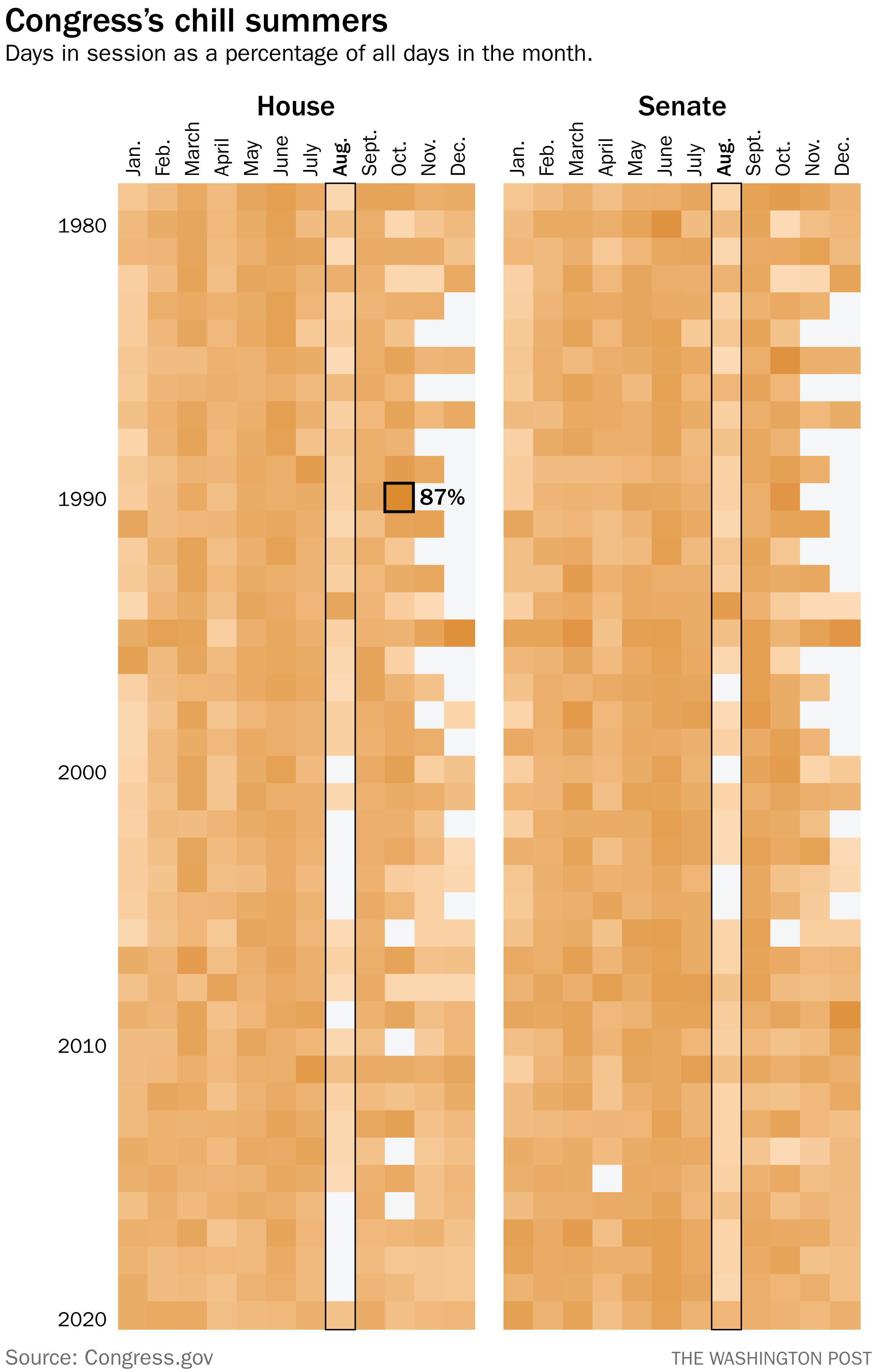
| Here we are on Day Two of the eight I've been allotted, meaning that, in the blink of an eye, I'm already an estimated 28 percent of the way through my tenure (+/- 4 points). I honestly was not aware that so many people would email me in response to Wednesday's newsletter, which was a pleasant surprise until I got to the complaining ones. But more on that in a bit. America's most successful criminals spend their time throwing House races, apparently Much of the political conversation at the moment centers on one particular false belief: that millions of ballots in the 2020 election were cast illegally. (I was informed that people like bolding.) This belief takes many forms, from the assumption that somehow thousands of fraudulent ballots were simply injected into state totals or that countless individual voters cast ballots multiple times or that thousands of people voted who weren't legally allowed to. Whatever the manifestation of the fraud, it's always the case that the belief precedes the proof for the simple reason that proof of such claims doesn't exist. I mean, it's clearly true that in every election a few people cast ballots that they shouldn't, either accidentally or intentionally. I went back a few weeks ago and looked at how many people had been reported to have cast illegal votes; the total was under two dozen. One rejoinder to this is that all of the fraud is simply undetected, which is a bit like claiming that the murder rate is 20 times higher than you might think — we just haven't found any bodies yet. At its heart, this belief often derives from an exaggerated sense of how easy casting an illegal vote would be. There are numerous checks in place to prevent illegal voting, including matching voters to voter rolls, audits and identity verification for in-person and mail-in votes. They're not perfect, but that people are identified as having voted illegally after the fact is evidence that the systems work to at least some extent. Polling released by Pew Research Center on Thursday shows just how little confidence Republicans and Republican-leaning independents have in the ability of officials to keep illegal votes out of the mix. (I was also informed that people like bullet points.) - Overall, 81 percent of Americans think it's at least somewhat important to prevent illegal votes, but only 56 percent are at least somewhat confident it happens.
- That 56 percent figure is so low because while 90 percent of Republicans think that preventing illegal voting is at least somewhat important, only 30 percent are at least somewhat confident it happens.
There are two ways to look at this, the literal way and the correct way. The literal way is to assume that Republicans more than Democrats understand that a few illegal votes are cast in every election cycle and that, while there's no evidence that such occurrences are the norm or even particularly common, it is therefore impossible to be fully confident that all illegal voting is stopped. The correct way to read this is that Republicans have been convinced that fraud is rampant and a serious threat to American democracy. In YouGov polling conducted for the Economist, more than three-quarters of Republicans said they believed millions of illegal votes were cast in last year's election. Millions! By contrast, about 265,000 houses were burgled in 2019. Yet, somehow, despite occurring several times more often, there's no actual evidence of even hundreds of votes having been illegally cast. Despite the best efforts of America's most brilliant bedding manufacturers, the proof remains elusive. I am really looking forward to the emails I'm going to get for this one. How to read this chart Speaking of emails! So, Wednesday I included a graph that showed the rank over time of each state in the bleak contest to have the most unvaccinated adults. California, with the most people overall, has the most unvaccinated people, but the interesting movement was down below, where similar-sized states were rising and falling depending on how many vaccines they'd administered. This was a very good opportunity, apparently, for people to harrumph about how I should have showed the vaccination rates relative to population. Which would have been a good thing to do if that was what I was trying to show! But I was not trying to show that, so I didn't. I say this not out of petulance (not entirely, anyway) but instead as a reminder both that I'm cognizant of the value of showing relative values and that this section is called "how to read this chart," not "here is the per capita level of vaccination in each state but I don't know how to do that so email me." That section is going to be in Friday's newsletter. Today's chart will make you mad at someone besides me. Here's a chart I made last month showing how much of each month Congress has been in session since 1979. I've highlighted August because Congress basically takes a month off every year. Reading this is pretty simple: The darker the square, the more of each month that the House and Senate were in session. The highest density of days came in October 1990, when the House was in session for 87 percent of the time. But all those light orange or gray boxes in August? That's vacation time. One time a conservative writer got very mad at me for suggesting that this is mostly vacation time. I don't want to use his real name, so I'll call him Aaron Aaronson. Those hard-working legislators simply go back to their districts and work hard on policy or whatever! was his argument in broad strokes. And, sure, they do some town halls and so on. But since every year someone threatens to take this vacation away and make them work in Washington (which ends up almost never really happening) reinforces that much of the time is spent at lakes. Nice work if you can get it. And to get it, you just need to secretly commit the federal crime of voter fraud a few hundred thousand times without anyone noticing. | 




 Email
Email