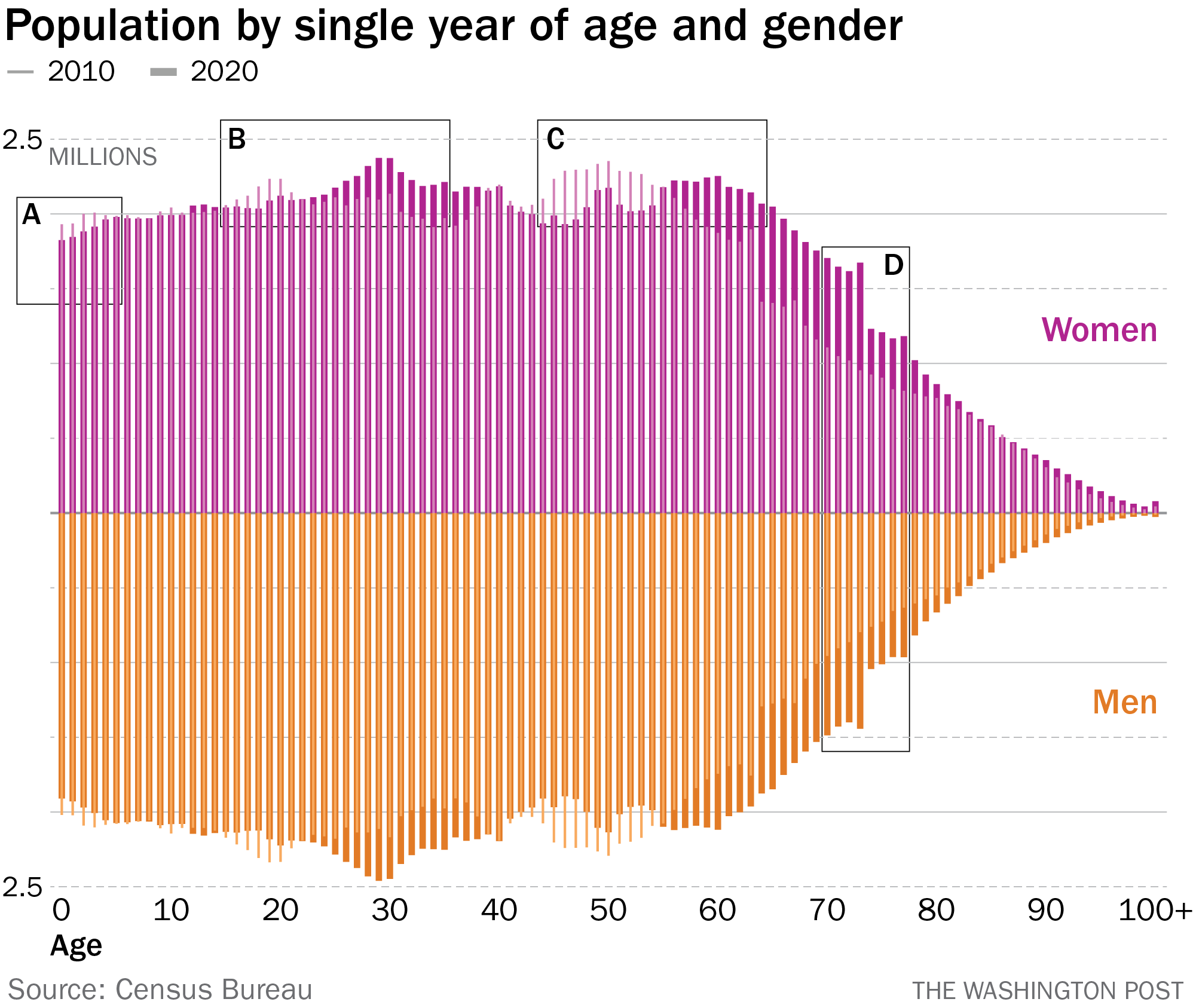
| Seen from the back, the room hosting the first hearing of the select committee investigating the Jan. 6 Capitol riot seemed claustrophobically small. The weight of the offered testimony probably contributed to that suffocating feel, and, in the mid-pandemic world, any space with a lot of people can seem dangerously overstuffed. But from a distance, the room and its cookie-cutter Capitol Hill ornateness seemed simply too constrained. This one contentious thing, packed into one corner of the Cannon House Office Building. 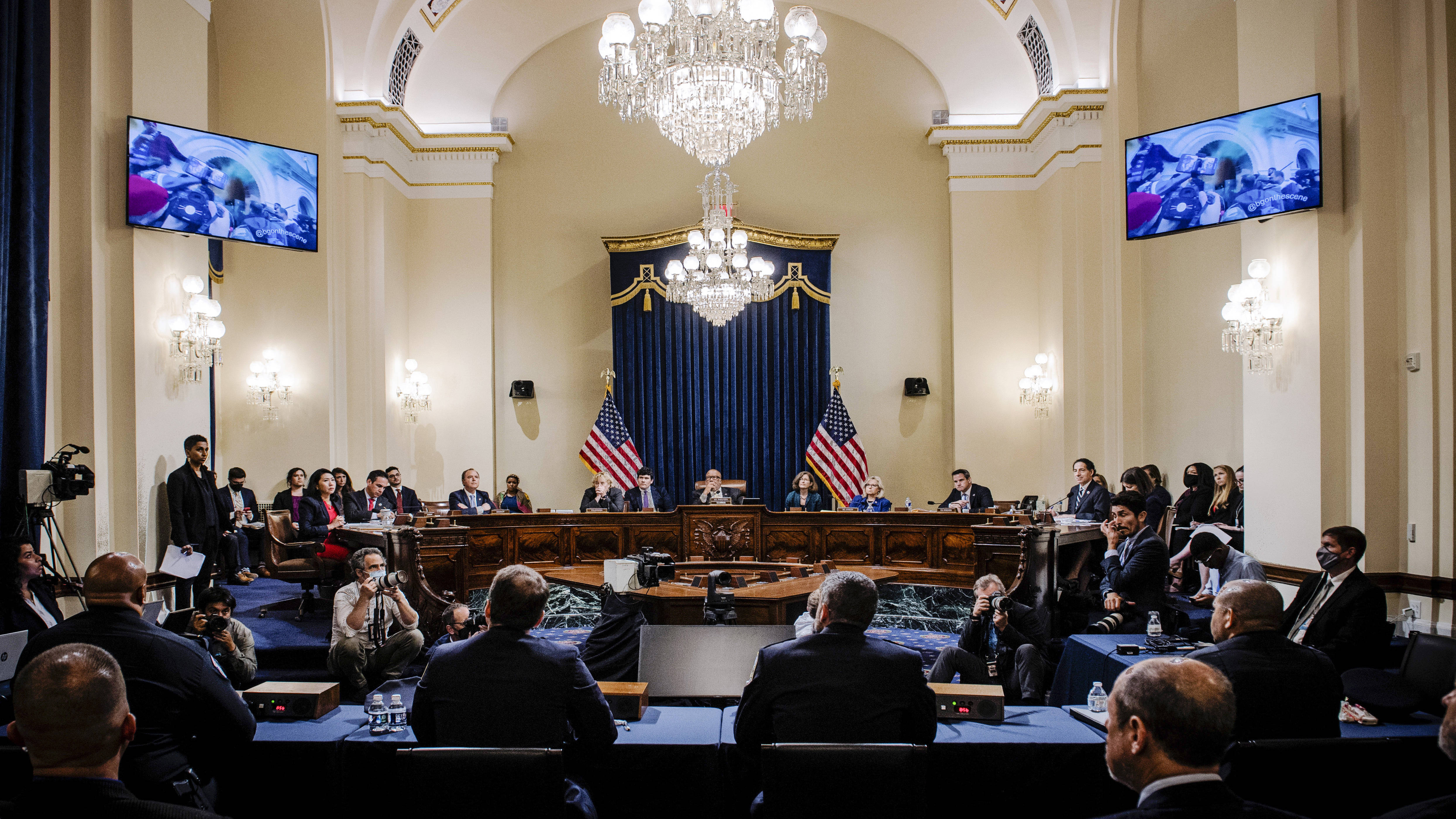 A video of the Jan. 6 Capitol attack is played during the House select committee hearing on Capitol Hill on July 27, 2021. (Bill O'Leary/The Washington Post) | Everything seemed amplified within those close walls. The four law enforcement officers asked to describe their experiences that day did so with obvious emotion. D.C. police officer Michael Fanone at one point slammed his fist on the table in front of him, demanding that elected officials respect the service and sacrifices of his colleagues in defending the Capitol that day. Officer Aquilino Gonell of the Capitol Police wiped away tears. To this point, there had not been a similar institutional effort to tell the stories of those members of law enforcement. They were the ones who faced that tidal wave of supporters of President Donald Trump. The wave pushed over flimsy barriers before slamming into the line of police, then rushing through the windows and doors behind them into every part of that capacious building — washing into every corner before draining away. In the cramped room designated for the hearing, the officers described what they'd seen. And in their descriptions, a clear if unsurprising pattern was easily distinguished. Judging the Capitol's defenders by the color of their skin Capitol Police officer Harry Dunn is a big guy. Photos from the hearing in which he is speaking with Rep. Liz Cheney (R-Wyo.) show him towering over her. Perhaps that's what prompted him to feel confident on Jan. 6 in challenging the rioters on one of their false beliefs about the 2020 election. "We're here to stop the steal," Dunn described the rioters as telling him. "Joe Biden is not the president. Nobody voted for Joe Biden." Dunn rejected that idea, telling those in the mob that he'd voted for Biden. "Does my vote not count?" he says he told the rioters. "Am I nobody?" "That prompted a torrent of racial epithets," Dunn testified. "One woman in a pink MAGA shirt yelled, 'You hear that, guys? This [racist slur] voted for Joe Biden.' Then the crowd, perhaps around 20 people, joined in screaming, 'Boo! [expletive] [racist slur]!'" Dunn is Black. The slur is the one you'd expect. He later added that other Black officers at the Capitol that day had experienced similar disparagement. "Another Black officer later told me he had been confronted by an insurrectionist in the Capitol," Dunn said, "who told him, 'Put your gun down and we'll show you what kind of [racist slur] you really are.'" Gonell is a native of the Dominican Republic and a naturalized American citizen. He served in the military before joining the Capitol Police. But he, too, testified that he faced racist abuse that day. "Apparently they seen, even through my mask, they saw my skin color and said, 'You're not even an American,'" Gonell said. "Regardless of whether I was in the military, they don't know that. But they— yelling and saying all these things to me." He said it took him a while to process the intent behind those attacks. Only later did he understand that, like Dunn, he was being singled out as something other than a real American. The experience of D.C. police officer Michael Hodges was very different. Hodges, who is White, described the events of the day as a white supremacist insurrection in his prepared testimony. Asked to explain that description, he noted that nearly everyone he saw at the Capitol that day was White, and that white nationalist organizations had been in attendance. He also made clear how his experience differed from Dunn's and Gonell's. "Some of them would try to recruit me. One of them came to me and said, 'Are you my brother?'" Hodges said of the rioters. Despite those differences, each officer described his focus on the day in the same way. They were there as a bulwark, the thin line of blue that is featured on so many bumper stickers, the line seen on so many of the flags carried by the rioters that day. The officers were there to protect the Capitol, and they did. "For me, I wasn't even thinking of that," Gonell said to the members of the committee about the racist abuse. "I'm there to stop them, regardless. I'm not thinking what they were yelling in terms of my skin color or my race. I know I'm an American soldier— former soldier and a police officer. I didn't take that into account when I was defending all of you guys." How to read this chart Last month, the Census Bureau released its new tally of the U.S. population following the 2020 Census, including a breakdown by single year of age — that is, the number of 13-year-olds and the number of 72 year-olds. Being a nerd, I unabashedly love data in general and this bit of data in particular, so I wrote about what the new numbers show. That analysis featured this wonderfully detailed graph. It shows the number of Americans of each age by gender: Purple is women, and orange, men. Ages go from zero (born in 2020) at left to 100 or older (born in or before 1920) at far right. The more a column extends from the midpoint, the more U.S. residents there are of that age. The thinner lines are the values from the 2010 Census; the thicker lines are the new figures. I've highlighted four particularly interesting aspects of this data. Box A: See how the thinner lines extend higher than the thick ones? In 2010, more children were being born. The decrease in 2020 is a bad sign for population trends. Box B: The peak at the left side of this box in the 2010 data became the peak in the right side of the box in 2020. How did it get bigger, since you can't suddenly have a bunch more people born 30 years ago? Immigration. Box C: Here, the opposite effect is at play. Since 2010, the number of people in this small population surge shrank. As they got older, more of them died. Box D: Two things to note here. The first is the baby boom, which, hopefully, you can spot. Yes, it was that big. Second, notice how much farther from the midpoint the column for women extends than the one for men. Women live longer, and it shows in the data. One final note: Sorry this newsletter wasn't very fun. It turns out that hours of testimony about the violence that accompanies an insurrection is simply not that entertaining to consider. Hopefully tomorrow the news will be less bleak and more ridiculous, in a break with recent trends. | 




 Email
Email