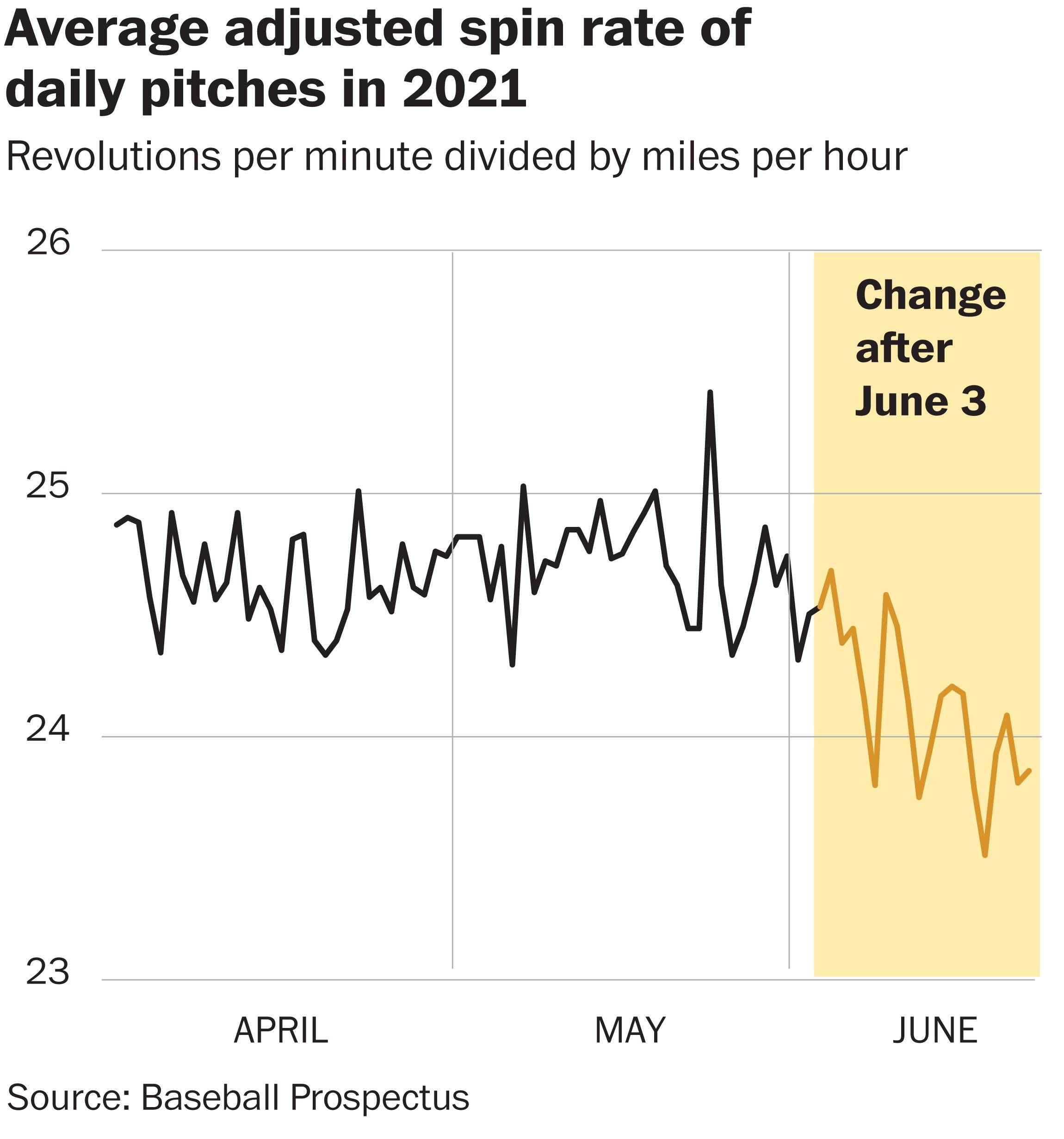
| Welcome to The Daily 202 newsletter! Tell your friends to sign up here. On this Friday, shoot some of that Zaila Avant-garde energy right into our veins. And if Bill Murray doesn't reach out to her, we'll be disappointed. It was Nov. 1, 2001, and every official I ran into in George W. Bush's White House was angry. A prominent reporter, R.W. "Johnny" Apple, Jr. of the New York Times had written a news analysis explicitly comparing Afghanistan, where a handful of U.S. ground forces had just barely begun to fight, to Vietnam. Apple had used the "Q" word, "quagmire," even as some American politicians, mostly Republicans, had started to pressure Bush to launch a ground invasion. Caught between a warning that the nascent conflict could turn out like America's signature, scarring Cold War-era defeat and demands for deepening the U.S. military's involvement, Bush aides were outraged. The new war was nothing like Vietnam, they insisted. After all, in an Oct. 7 address to the nation, Bush had insisted the mission was "defined" and the objectives were "clear." But he had not spelled out any clear or defined criteria in that speech for success in Afghanistan. He hadn't even referred to al-Qaeda leader Osama bin Laden by name. (He had said he wanted him "dead or alive" two weeks earlier.) Much less had he given even a notional timeline. 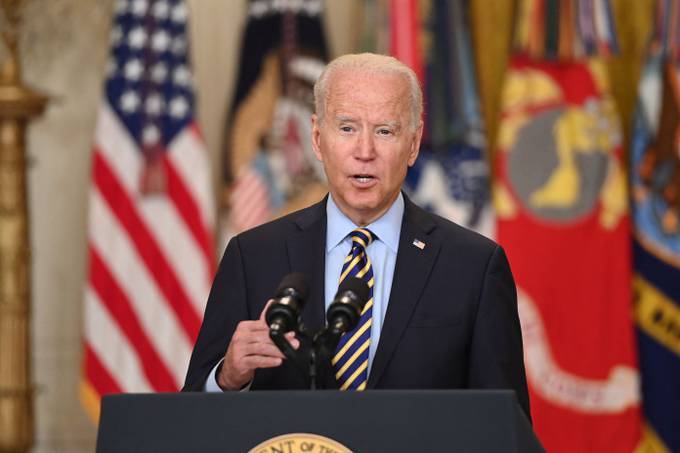 President Biden speaks about the situation in Afghanistan from the East Room of the White House on Thursday. (Saul Loeb/AFP/Getty Images) | On the Afghanistan stop of Bush's farewell tour in late 2008, then-Afghan president Hamid Karzai drew nervous chuckles when he sketched out the relationship his country would have with America and its allies. "Afghanistan will not allow the international community [to] leave it before we are fully on our feet, before we are strong enough to defend our country, before we are powerful enough to have a good economy, and before we have taken from President Bush and the next administration billions and billions of more dollars," Karzai said. Even as America's combat death toll in Afghanistan slowed to a trickle, the Vietnam analogy never went away — shorthand for a long, expensive, grinding conflict of questionable national-security value. Nearly 20 years after the U.S. invasion, President Biden rejected comparisons between Afghanistan and Vietnam, telling reporters yesterday he saw "zero" parallels and predicting there would be no equivalent to the arresting images of helicopters urgently carrying people from the rooftop of the U.S. Embassy as Saigon fell. "There's going to be no circumstance where you see people being lifted off the roof of an embassy the United States from Afghanistan. It is not at all comparable," Biden promised. As he announced the U.S. troops withdrawal would be complete by Aug. 31, the president insisted the United States had achieved its chief goal. "The mission was accomplished in that we got Osama bin Laden, and terrorism is not emanating from that part of the world," Biden said. (Hundreds of Americans died in Afghanistan in the months and years after the May 2011 raid that killed the al-Qaeda chief.) And Biden categorically rejected any U.S. responsibility for civilian deaths if the Taliban continues their campaign to recapture district after district in Afghanistan, 20 years after American power shoved them from absolute rule in Kabul. "No. No, no, no. It's up to the people of Afghanistan to decide on what government they want, not us to impose the government on them," he said. "No country has ever been able to do that." And, Biden said, "we did not go to Afghanistan to nation-build." That goal was absent from Bush's first major speech about the way, but the idea America was building the foundations of a democracy — think of every time a politician has talked about schools for Afghan girls — became standard fare in the debate over whether to stay or go. At Agence France-Presse, Sebastian Smith noted: "Biden walked a tightrope in a major speech Thursday explaining to the American people his decision to withdraw from the so-called 'graveyard of empires' after a 20-year war sparked by the 9/11 attacks in 2001. … Biden conceded that "the Taliban is at its strongest military (position) since 2001." However, he slapped down widespread talk that it is inevitable the guerrillas will seize the entire country, toppling the Afghan government and the army built at huge cost by the United States. 'No, it is not,' he said." At the Associated Press, Zeke Miller and Aamer Madhani reported: "The administration in recent days has sought to frame ending the conflict as a decision that Biden made after concluding it's an 'unwinnable war' and one that 'does not have a military solution.' On Thursday he amplified the justification of his decision even as the Taliban make rapid advances in significant swaths of the country. 'How many more, how many more thousands of American daughters and sons are you willing to risk?' Biden said to those calling for the U.S. to extend the military operation. He added, 'I will not send another generation of Americans to war in Afghanistan, with no reasonable expectation of achieving a different outcome.' " My colleagues Cleve R. Wootson, Jr and Dan LaMothe reported: "In his first speech on the issue since announcing the [withdrawal] decision in April, Biden also pledged to relocate thousands of Afghan interpreters who had served alongside U.S. troops and now fear for their lives and the safety of their families, adding that some relocation flights would begin as early as this month. Biden's remarks at the White House came as the rapid disintegration of security in Afghanistan, and sweeping gains by the Taliban, threatened to hinder the president's desire to make a clean break with a two-decade war that has cost trillions of dollars and killed about 2,400 U.S. service members. … A recent U.S. intelligence assessment said that President Ashraf Ghani's government in Kabul could fall within six to 12 months of the U.S. departure, potentially creating a humanitarian and security crisis — and a political problem for Biden." Still, after nearly 20 years, the president's rationale was clear: "I judged that it was not in the national interest of the United States of America to continue fighting this war indefinitely." | | | What's happening now Pfizer says booster shots will be needed this year, but government officials say science will dictate the timing. "Pfizer and the German firm BioNTech announced Thursday they plan to seek approval for a booster shot within weeks, predicting that people would require a vaccine boost six to 12 months after being fully immunized. Hours later, the Department of Health and Human Services issued an emphatic rebuke, saying 'Americans who have been fully vaccinated do not need a booster shot at this time,'" Carolyn Johnson reports. "The statement did not mention Pfizer by name, but said 'a science-based, rigorous process' headed by the Centers for Disease Control and Prevention, the Food and Drug Administration and the National Institutes of Health would determine when or whether boosters were necessary. The decision, the statement said, will be only partly informed by data from drug companies." To start your day with a full political briefing, sign up for our Power Up newsletter. | | | Lunchtime reads from The Post - "Attorneys general in 4 states looking into online fundraising practices of both major parties," by Steve Thompson and Amy B Wang: "The practices being examined include the use of pre-checked boxes that lock in recurring donations from political donors who may not intend to sign up for more than one contribution, according to an April 29 letter included in a court filing Wednesday by WinRed, a fundraising platform for GOP committees and campaigns. WinRed is asking the U.S. District Court in Minnesota to stop the investigations by the attorneys general of Minnesota, Connecticut, Maryland and New York, arguing that consumer protection statutes that the attorneys general may try to enforce are preempted by federal law. Identical letters were sent to WinRed and ActBlue, a fundraising platform for Democrats."
- "Legally, Trump's tech lawsuit is a joke. But it raises a serious question," an op-ed by Fred Hiatt: "The fact that Trump failed so miserably to find alternatives to these platforms reinforces the common-sense feeling that they are not ordinary private businesses. Most people understand that they are private companies but also that, in today's America, if those three are silencing you, you are being excluded in a serious way from the public square. And many understandably wonder: Why should they get to make that call?"
| | | … and beyond - " 'Financially hobbled for life,': The elite master's degrees that don't pay off," by the Wall Street Journal's Melissa Korn and Andrea Fuller: "Recent film program graduates of Columbia University who took out federal student loans had a median debt of $181,000. Yet two years after earning their master's degrees, half of the borrowers were making less than $30,000 a year. The Columbia program offers the most extreme example of how elite universities in recent years have awarded thousands of master's degrees that don't provide graduates enough early career earnings to begin paying down their federal student loans, according to a Wall Street Journal analysis of Education Department data."
- "Citizens, not the state, will enforce new abortion law in Texas," by the New York Times's Sabrina Tavernise: "People across the country may soon be able to sue abortion clinics, doctors and anyone helping a woman get an abortion in Texas, under a new state law that contains a legal innovation with broad implications for the American court system. ... Ordinarily, enforcement would be up to government officials, and if clinics wanted to challenge the law's constitutionality, they would sue those officials in making their case. But the law in Texas prohibits officials from enforcing it. Instead, it takes the opposite approach, effectively deputizing ordinary citizens — including from outside Texas — to sue clinics and others who violate the law. It awards them at least $10,000 per illegal abortion if they are successful."
| | | The Biden agenda Biden will sign a broad executive order today to promote competitive markets and limit corporate dominance. - "The order encourages agencies across the federal government to adopt policies and write regulations that push back against corporate consolidation and business practices that may stifle competition, lead to higher prices and lead to fewer product choices," the WSJ's Brent Kendall and Ryan Tracy report. "Among the White House's targets are agriculture, healthcare, shipping, transportation and technology, as well as labor practices that the administration says limit wages and mobility. The executive order also seeks to promote affordable broadband and boost consumers' rights to repair products they own, an issue of concern because of limitations imposed by an array of companies."
- "Mr. Biden's move, months in the making, comes as Democrats have made competition policy and antitrust enforcement a key part of their agenda, arguing U.S. officials haven't done enough to preserve healthy, competitive markets. Republicans have agreed in some circumstances, particularly in the tech sector, but they along with business groups have disputed arguments that the U.S. has extensive problems with economic concentration."
Biden is calling for efforts to lower drug prices as part of the executive order to foster competition. - "The order will direct his administration to work with states to devise plans to import medicines safely from Canada, where they are sold at lower prices — an idea long endorsed by many Democrats and embraced by former president Donald Trump over the objections of the pharmaceutical industry," Amy Goldstein reports.
- "The president's directive also will urge the Federal Trade Commission to promote the availability of generic drugs by banning pharmaceutical manufacturers from paying their generic counterparts to delay entry of lower-price versions of medications into the market. Such a ban is consistent with Biden's support during his campaign for increasing the supply of generics. The idea also is part of legislation before the Senate."
Amid growing frustration, the White House continues pushing for voting rights. - "Facing a call to 'save American democracy,' the Biden administration on Thursday unveiled new efforts to help protect voting rights amid growing complaints from civil rights activists and other Democrats that the White House has not done enough to fight attempts by Republican-led state legislatures to restrict access to the ballot," the AP's Jonathan Lemire, Zeke Miller and Ashraf Khalil report. "Biden met with civil rights leaders in the West Wing, while Vice President Kamala Harris announced $25 million in new spending by the Democratic National Committee to support efforts to protect voting access ahead of the 2022 midterm elections."
- "That pressure has only mounted after a Supreme Court decision limited the ability of minorities to challenge state laws that Democrats say are discriminatory under the Voting Rights Act. Biden has brought in outside advocates for meetings at the White House and has consulted advisers on the best strategy for combating restrictive new laws."
- "Thursday's speech from Harris, tasked with leading the administration's response to voting rights challenges, was expected to be the first in a series of events from her on the issue, and aides were discussing a Biden speech potentially as soon as next week."
Democrats wrestle over control of the infrastructure deal. - "July and August will render a decisive verdict on Democrats' so-called 'two-track' strategy of enacting Biden's jobs and families plans via twin bills, one with GOP support focusing on physical infrastructure and the other on a partisan spending plan centered on fighting climate change, increasing child care and raising taxes on corporations and the wealthy," Politico's Burgess Everett and Sarah Ferris report. "Work on both items is nearing a climax, with senators in both parties drafting that centrist bill for a July Senate vote and the Senate's 50 Democrats haggling over how big to go in their own party-line endeavor."
- "Some House moderates are urging party leaders to focus squarely on the bipartisan bill, while many liberals remain skeptical it will happen at all — and Speaker Nancy Pelosi has threatened to sideline it without an accompanying Democratic package. A failed bipartisan result would force Democrats to write one huge spending bill marrying all their priorities."
- "After three months of plodding negotiations, Senate Majority Leader Chuck Schumer has laid out an aggressive timetable that envisions passage of both a budget resolution to allow a huge Democrats-only tax and spending package plus a vote on a deal with Republican centrists to plow nearly $600 billion into roads, bridges and broadband. Schumer will reiterate the timetable in a Dear Colleague letter to Democrats on Friday, according to a Democratic aide, and warn of the possibility of working long nights, weekends and into the August recess to finish that work."
ICE will avoid detaining pregnant, nursing and postpartum women. - This reverses a Trump-era rule that permitted officials to jail thousands of immigrants in those circumstances, Maria Sacchetti reports.
- "ICE's new policy is even more expansive than it was during the Obama era, when Biden was vice president. The Obama administration generally exempted pregnant women from immigration detention, but the Biden administration is also including women who gave birth within the prior year and those who are nursing, which could last longer than a year."
U.S. is set to add more than 10 Chinese companies to an economic blacklist over Xinjiang. - "The U.S. Commerce Department action will follow its announcement last month adding five other companies and other Chinese entities to the blacklist over allegations of forced labor in the far western region of China," Reuters reports.
| | | Quote of the day "Things that were rare are now much more common, and this trend will continue," said Michael Wehner, a senior scientist at Lawrence Berkeley National Laboratory, as he warned that, while surging temperatures like the country is experiencing this summer might have once been considered highly abnormal, they are no longer. "Things that happened once in a lifetime will now happen many times during a lifetime." | | | The new world order People in military gear broke into Taiwan's embassy in Haiti following the assassination of the Haitian president. - "A group of people in full military gear broke into Taiwan's embassy in Haiti on Thursday morning, following the assassination of President Jovenel Moïse, Taiwanese Foreign Ministry spokeswoman Joanne Ou said Friday," Eva Dou and Alicia Chen report. "Haitian police arrested 11 armed suspects, described as 'mercenaries' by Taipei. The embassy had closed on Wednesday for security reasons after Moïse's killing, so the facility was largely empty when the intruders broke in, Ou said. Embassy security discovered the breach and phoned staff and the Haitian police."
Twin epidemics in Haiti, violence and the coronavirus, have ushered in a "critical phase." - "The killing of Haiti's embattled president at his home by a group of gunmen followed months of escalating political instability and gang violence. Health and humanitarian organizations say the bloodshed has hamstrung efforts to combat a significant coronavirus outbreak in a country with weak health infrastructure and no access to coronavirus vaccines," Claire Parker and Emily Rauhala report.
Pakistan, after rooting for the Taliban, faces blowback. - "For two decades, a large part of the Pakistani security establishment rooted for the Taliban in the Afghan war. Now that the Taliban are taking over vast tracts of the country and seem to be on the cusp of seizing power, panic is spreading through Pakistan's halls of power," the WSJ's Saeed Shah reports. "With the Taliban sweeping through a third of Afghanistan's districts following the U.S. military withdrawal and surrounding the country's major cities, Pakistani authorities have to grapple with the unintended consequences of their policies. A total takeover by the Taliban or a new civil war in Afghanistan would backfire against Islamabad's national interests, senior Pakistani officials say."
South Korea will reverse its loosening of a mask mandate as coronavirus cases soar. - "South Korea was one of the first East Asian countries to lay a path out of the pandemic. In June, it announced plans to permit partially inoculated residents to go mask-free outdoors, while also allowing private gatherings of up to six people and for restaurants to stay open until midnight. It had also actively sought quarantine-free travel agreements with other countries," Min Joo Kim reports. "Experts said the country lowered its guard against the coronavirus too soon, with the majority of the population still unvaccinated and outbreaks continuing in the densely populated Seoul area."
Africa is suffering its "worst pandemic week ever" as cases surge and vaccinations lag. - "The continent's latest wave of infections is being driven in part by more contagious variants such as delta, health experts say, and is sending more young people to the hospital as countries struggle to acquire vaccine doses," Erin Cunningham reports.
- "Africa has just marked the continent's most dire pandemic week ever, " Matshidiso Moeti, WHO regional director for Africa, said in a statement. "But the worst is yet to come as the fast-moving third wave continues to gain speed and new ground."
The U.S. offered that Julian Assange could serve his sentence in Australia in an extradition appeal. - "Should he be convicted of espionage in Virginia federal court, the United States has offered that WikiLeaks founder Julian Assange could serve his sentence in Australia, a British court said Wednesday," William Booth and Rachel Weiner report. "The assurance came as the Justice Department seeks to extradite Assange from London, where he is currently in custody."
| | | Hot on the left Senate Majority Leader Mitch McConnell (R-Ky.) said he was "perplexed" by Americans who aren't taking the vaccine. Online, some suggested he tune into Fox News to understand why. | | | Hot on the right For the National Review, Victoria Coates, Trump's former deputy national security adviser for Middle Eastern and North African Affairs, details the life of the late Donald Rumsfeld through the lens of historical moments on what would've been his 89th birthday. Rumsfeld passed away last week. "I found it particularly instructive to examine six key events he personally interacted with between 1941 and 2001. This era contained one of the most remarkable series of experiences in our nation's history. It also traced the trajectory of Rumsfeld's own life, from a small child observing history to a senior statesman shaping its outcome. Having served as Rumsfeld's archivist and director of research for his memoir, Known and Unknown, I had the opportunity to personally discuss all these events with him, with sometimes surprising outcomes," Coates writes. | | | Baseball's war on sticky stuff, visualized After MLB got serious about foreign substances, spin rates fell, pitchers changed and hitting improved, a Washington Post analysis shows. | | | Today in Washington Biden will sign an executive order on promoting competition today at 1:30 p.m. At 5:15 p.m., he will travel to Delaware, where he will spend the weekend. Harris will deliver remarks at the National Association of Counties Annual Conference today at 1 p.m. | | | In closing Zaila Avant-garde, a 14-year-old from New Orleans, won the 2021 Scripps National Spelling Bee, becoming the bee's first African American champion. "Avant-garde spelled 'murraya' correctly to win the competition, after conquering words such as 'retene,' 'ancistroid' and 'depreter' over multiple rounds. Upon her win, Avant-garde, who is also a talented basketball player with three Guinness World Records in dribbling, jumped up and down and let out an excited shout as confetti rained down on the stage," Amy B Wang and Timothy Bella report.  | | | In New York City, residents had to wade through waist-deep floods to reach their trains. "Videos and photos posted to social media from around the city showed water pouring down subway staircases as undeterred riders waded through the flash floods to reach their trains. Police had to rescue more than a dozen people on a portion of the Major Deegan Expressway in the Bronx, the New York Times reported, after flooding near 179th Street appeared to halt traffic," Julian Mark reports. | | | |


 Email
Email