| I'm Dan Diamond and I'm in for Olivier Knox, who will be back on Wednesday, On this day in 1922, actor Jason Robards was born — and some say he was born to play Washington Post editor Ben Bradlee, a role that won Robards an Oscar in 1977 for "All The President's Men." This is the Daily 202 newsletter. The lawmakers attacking coronavirus measures and flirting with anti-vaccination messages could find themselves in political trouble in the 2022 midterms, say some political analysts and rivals. And even though more Republicans have pivoted to touting vaccine benefits in recent weeks, advocates warn they may have already done themselves damage. "I believe that our constituency is an ace card," said Kristin Urquiza, co-founder of Marked by Covid, an advocacy group for people whose lives have been touched by the virus, which is holding meetings with lawmakers on Capitol Hill all week. "And we're growing, unfortunately." How some politicians talk about coronavirus has alarmed public health experts. Several Democrats last year said they wouldn't trust vaccines overseen by the Trump administration, planting doubts about the shots' safety that may have lingered into 2021. But many more Republicans continue to sow doubts about the vaccines amid an uptick of cases mainly among the unvaccinated with the spread of the delta variant. In one widely panned tweet this month, Rep. Jason T. Smith (R-Mo.) warned his followers that President Biden planned to "knock down your door KGB-style to force people to get vaccinated." The message came even as coronavirus cases exploded in Smith's state and local hospital leaders pleaded for residents to get vaccinated, with Missouri's immunization rates lagging the national average. Other Republicans have framed the door-to-door effort as a sinister government scheme. But the reality is pretty boring: an ongoing public health push to share information about where to get vaccinated. The campaign was witnessed by your author, who tagged along with several young women who volunteered to hand out materials at one door-to-door event in May, well before Biden began stumping on it. "The politicization of covid added a new and dangerous layer to things," Jerome Adams, who served as surgeon general during the Trump administration, told The Post, criticizing what he framed as a bipartisan problem. "And in this 24-hour news and political cycle, there's no let up. We're already seeing jockeying for 2022 and even 2024." Some Republicans, however, have brandished their opposition to mitigation measures like mask-wearing and social distancing, and have seen something of a political bounce because of it. Take Florida Gov. Ron DeSantis (R), who is considering running for president in 2024. But with his state's cases now on the rise, his stance could backfire. 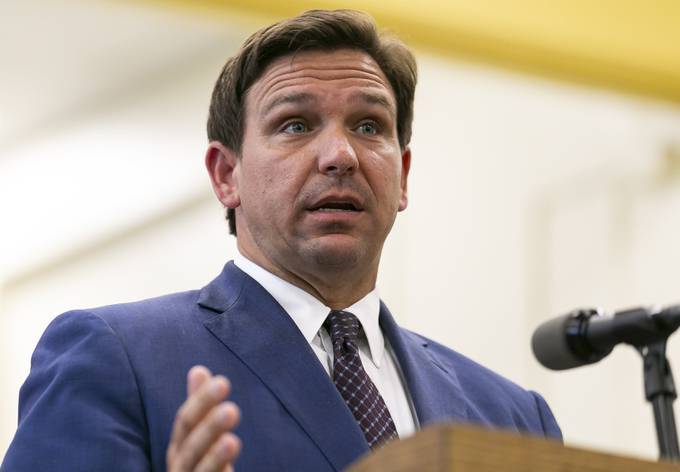 Florida Gov. Ron DeSantis (R) has flouted mask mandates and touted keeping the economy open even as coronavirus cases in his state start to clumb. (Matias J. Ocner/Miami Herald via AP, File) | But this isn't just a political spectacle. Coronavirus skeptics can do active harm to themselves and their followers, particularly with the virus surging again this month. Phil Valentine, a conservative talk show host, had consistently played down the vaccine, including late last month. But that was before he was sickened himself, having been hospitalized for nearly two weeks with a severe case of coronavirus. "He knows he is very, very sick," his brother, Mark Valentine, told the Tennessean. "When he gets the opportunity to tell the world, his message will be, get the vaccine, period." The divide between the vaccinated and unvaccinated mirrors political fault lines. The Kaiser Family Foundation this month found that counties won by Biden last year had vaccination rates nearly 12-point higher than counties won by Donald Trump. And even though more Republican lawmakers and pundits are now pleading with their followers to get shots, it will take weeks for a newly vaccinated person to acquire full immunity — perhaps too late to stave off infections, and possible resentments. We've already seen coronavirus help decide an election. Trump's pollster concluded the issue swung last year's presidential election to Biden, with Americans panning Trump's handling of the public health crisis, including many dissatisfied Republicans. One of those Americans was Urquiza, who founded Marked By Covid after her Trump-supporting father, Mark, died from the virus in June 2020. The tragedy became a catalyst: Urquiza stumped for Biden, including a high-profile slot at last year's Democratic National Convention, and she wrote a blistering op-ed after she believes she was exposed to coronavirus at a presidential debate. Her group — which now has about 100,000 followers and supporters across digital media, Urquiza said — includes many Americans who were new to political advocacy but energized by the public health crisis. "We will go all in again," she vowed, adding that her group would "make sure that we are electing public officials up and down the ticket who are committed to not only the recovery from the coronavirus, or the ongoing crisis response, but who have also demonstrated a commitment to it while they were in office." Urquiza and about 200 volunteers are participating in a mix of in-person and virtual meetings with roughly 90 lawmakers and their offices this week, pitching them on legislation to memorialize the pandemic and encouraging them to do more to address disparities affecting communities of color. Urquiza had sharp words for Republicans who she said have done too little to respond to the pandemic. But she said her group isn't letting Democrats off the hook, criticizing the Biden administration message that the nation is facing a "pandemic of the unvaccinated" — a line Urquiza says needlessly antagonizes people who haven't gotten the shots, including Americans who remain unvaccinated because of preexisting medical conditions. 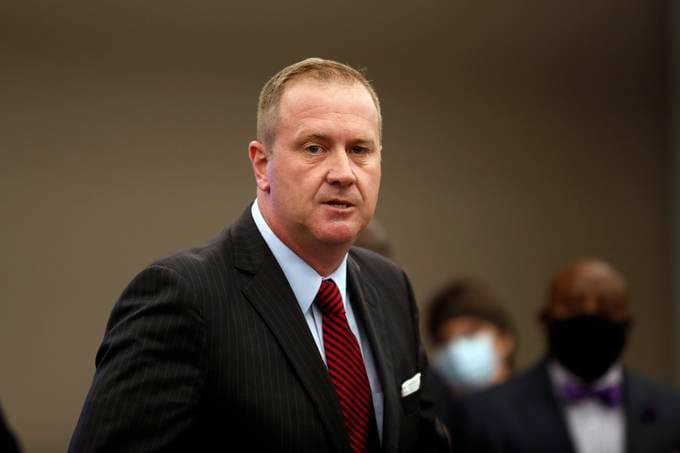 Missouri Attorney General Eric Schmitt (R) is thinking about running for Senate and has attacked Biden's coronavirus response. (AP Photo/Jeff Roberson, File) | Missouri is an interesting case study of the current politics of coronavirus. Retiring Republican Sen. Roy Blunt has consistently promoted the benefits of the shots, a message that isn't echoed by some of the candidates jockeying to replace him on the right. Attorney General Eric Schmitt, a Republican who's declared for the Senate race, has repeatedly challenged state public health officials' coronavirus measures. Smith, who's flirted with entering the field and has sought Trump's endorsement, has attacked Biden's coronavirus response. The tactics may work to carve out support among local conservatives. At the statehouse, GOP representatives have also joked about the microchips in vaccines and mocked efforts to get Republicans vaccinated. "I don't think they would be saying those things if their constituents weren't saying them too," said Jason Rosenbaum, a longtime political reporter for St. Louis Public Radio. But they've also become a target for watchdogs. "People are getting sick and needlessly dying. This is certainly not the time for imprudent rhetoric," the local Joplin Globe wrote in an editorial, panning Smith's comments about the vaccinations while praising Blunt. Democrats are taking notice. Lucas Kunce, a retired marine who's raised more than $1 million in seeking Blunt's seat — topping the Democratic fundraising field in the second quarter — said that he's disheartened that coronavirus measures had become an issue in the campaign. And he shared stories of meeting voters who parroted misinformation about the virus, predicting that Republicans who don't encourage vaccinations now will suffer politically later, as disaffected voters turn on them. "The ultimate consequence is that people are dying from it," Kunce added. "I don't think it's going to pay off for them." Asked about his tweet on Biden's supposed "KGB"-style vaccination campaign, and what he's done to get his constituents to get vaccinated, Smith provided a statement to The Post. "I took the Trump shot and told the largest newspaper in my district that I did so," Smith's statement said, in part. "Vaccinations are safe and effective, but the decision to take the vaccine must be free from pressure because it's a personal choice." Smith's tweet remains up. | 


 Email
Email