The joy of OlympicTok and the harm of “What I Eat In A Day” videos

 Olympic TikTok is the best 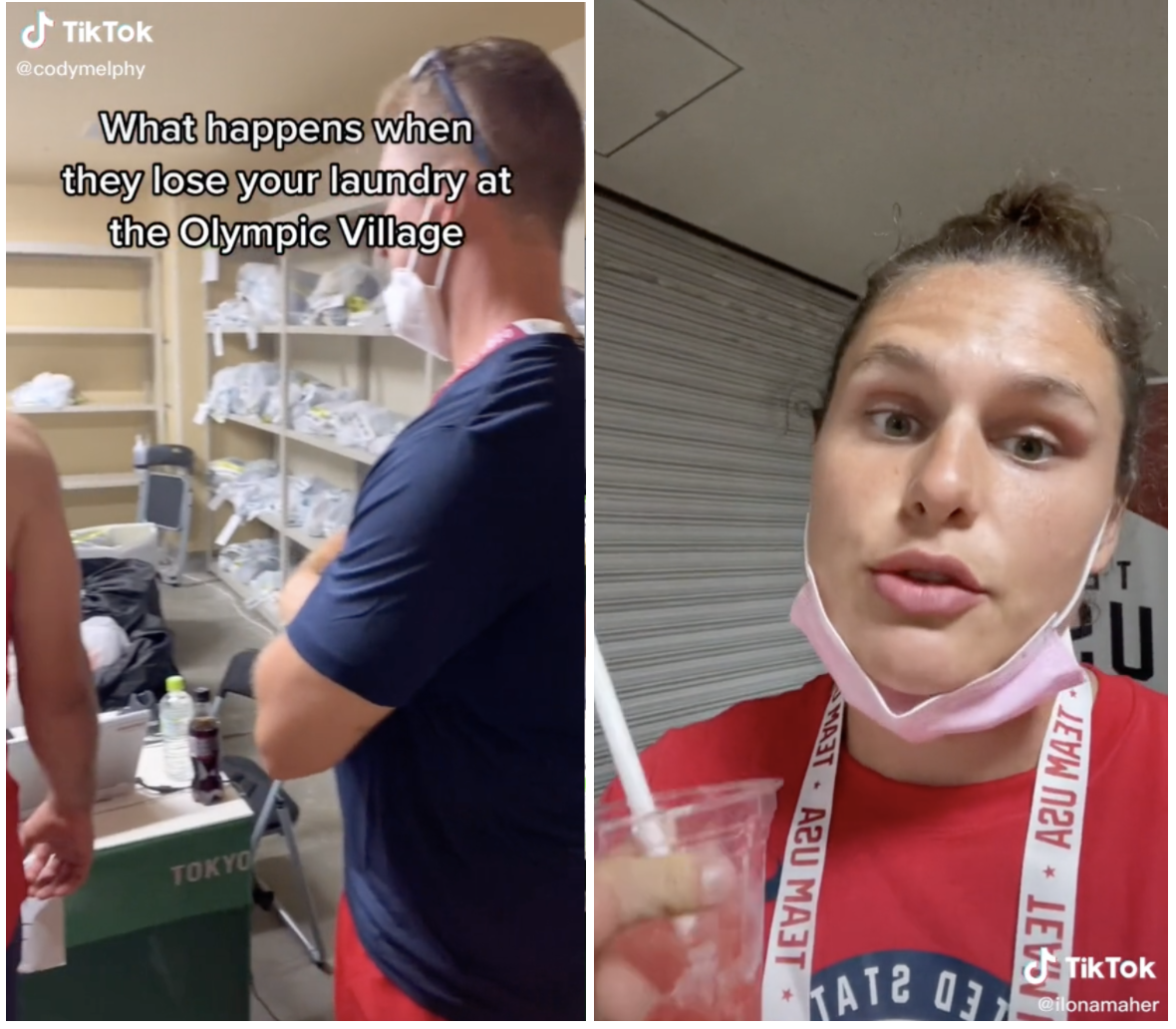 TikTok / @codymelphy / @ilonamaher My FYP has been populated with athletes sharing what it's like to be competing and hanging out in Tokyo during the Summer Olympics — and it's some of the best use of social media IMO.
There are TikToks about how laundry is sorted and distributed and what the cafeteria is like and the kinds of food they're serving. There's also some Olympians who are joking about the crackdown on sex at the Games.
The Olympics have been happening since the 17th century, and never before have we had this kind of access to what it's like behind the scenes. Never before have we gotten to know athletes on their terms — sharing their lives through their own phones and becoming a unique kind of influencer themselves.
I spoke to two US Olympians, rugby players Cody Melphy and Ilona Maher, who've been posting all kinds of behind-the-scenes TikToks in the Olympic Village. Their videos are fascinating. They're fun, compelling people to watch, and they both responded to my request for an interview so quickly. (If people competing in the Olympics in a time zone halfway across the world can respond this swifty, you should be able to text back, I'm just saying.)
Melphy, 28, and Maher, 24, have had TikTok accounts since before arriving in Tokyo, but their videos have recently gone massively viral because they make competing at the highest level of their sport while posting hilarious, cute content online look so easy. (Trying my hand at either one of these things would send me down a stress spiral.)
What struck me was that they both said that their social media accounts aren't an extra task for them during what is arguably the most critical time of their lives and careers. They both said social media has provided a much-needed relief from both the stressful and the boring parts of being at the Olympics.
"It's really fun for me. It takes my mind off the games," said Maher, who's from Burlington, Vermont, about posting TikToks. "Sometimes I start thinking too hard about the Olympics and our games that I get super stressed. So TikTok has almost been an escape and a way to connect with a ton of people."
Melphy, who's from Littleton, Colorado, told me something similar. He said having social media allows him to "express [him]self beyond rugby" and to humanize the intense sport for other people.
Plus, because there are no fans in the stands due to COVID protocols, it gives them that engagement and feedback loop that they're used to.
"I always remember looking up to [athletes] and wanting to know what it was like. Well, here I am able to share a little bit of our experiences," said Melphy. "It's been good to bring recognition to the game and to the Olympics considering there are no fans. The Olympics are the biggest talk everywhere on social media, and it's got a lot to do with us influencers sharing that with the world."
He added that "athletes are natural influencers no matter what" because how public their careers are and the amount of discipline it takes to do what they do is often inspiring to a lot of people. So being able to seem ~relatable~ to an ~average~ person is a good way to bridge that gap.
"It seems that people are now coming to the realization that athletes are just regular people too…we just happen to be really good at sports," Maher said. "We are funny and we have crushes and we do fun challenges."
She added that many athletes also rely on sponsorships for compensation, so their relationship to being pseudo-influencers or posting on social media can feel really innate.
I'm often pretty critical in these newsletters about how social media is sometimes weaponized and how it's affecting us long term, but here is a rare moment where I am so, so grateful for social media. Olympic athletes are almost portrayed as deities; I mean, rightfully, for the seemingly superhuman feats they can accomplish. But it's also created a huge intimacy gap between them and the people who watch them every four years. Being able to get to know them as individuals allows us to imagine them as people we could engage with IRL, or to simply remind ourselves that they aren't actually superhuman, the Olympics aren't actually otherworldly, and making it to the Games as an athlete isn't an unattainable goal. It's a strange kind of summer camp filled with extremely disciplined people.
I love the dichotomy of being able to watch the sporting events on live TV and then hopping on TikTok to watch athletes film themselves hanging out with their friends or testing out the strength of the infamous cardboard beds for, y'know, the sex that they are probably having. Hopefully safely. Because they're at adult summer camp — they also just happen to be winning medals for accomplishing physical milestones. It might be time to retire "What I Eat In A Day" videos 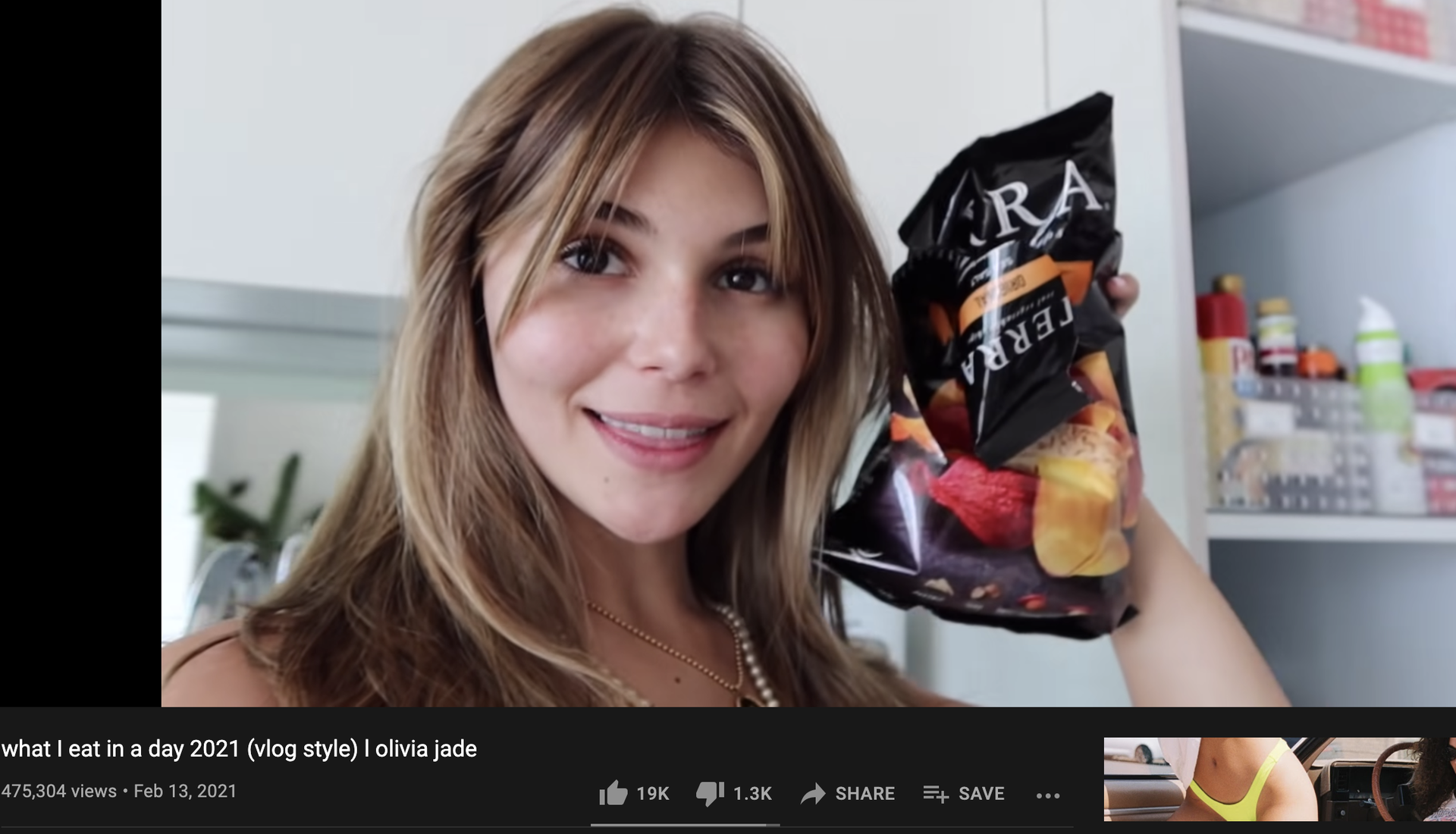 YouTube / Olivia Jade "What I Eat in a Day" vlogs have become a YouTube staple. The genre and tag is a part of almost every lifestyle YouTuber's profile, whether they have millions of followers or only a handful.
It seems easy to film — I mean, an influencer's gotta eat every day anyway, right? — and it's satiating for fans who are eager to consume any and all parts of their favorite gurus' lives. It's textbook voyeurism, which is always titillating, and the YouTube videos themselves are often edited with soothing music and feature cinematic shots of dainty and nicely curated meals.
There are a lot of reasons why these video constructs have become popular and normalized. I grew up reading glossy womens magazines that have also churned out similar content in editorial spreads, so the idea isn't novel. It's actually comforting despite its potential harm.
But the impact of watching countless "What I Eat in a Day" videos can be more damaging than soothing. And for that reason, I think it's time we finally graduate from them.
Firstly, enjoying WIEIAD vlogs hinges on us believing creators are actually being truthful about what they're eating. But for the sake of limiting some of these moral arguments because it's hard to know and verify this stuff, let's say most of them are accurate to an influencer's real life. Even so, the standard set by many of the most-viewed videos is untenable. More often than not, the genre is populated by young, extremely thin white women whose lives are regimented around "healthy" eating. These are women who have access to a variety of foods and nutrition profiles. Their bodies, their lives, and their diets aren't representative of the vast majority of people in the world today, who don't have the means or time to be this disciplined and image-conscious about food.
This doesn't mean these young influencers' diets and lifestyles are not true and viable for them and others; it just means that their visibility creates a very narrow image of what food consumption looks like…and that it invariably ends up making me feel bad about my own choices. According to popular WIEIAD videos, "healthy" eating is subjugated to salads and avocado toast. And often the language used to describe snacking or more calorie-dense foods is steeped in guilt and self-punishment.
I don't think I need to rehash The Dangers Of Narrow Beauty Standards 101, but the familiar messaging is always: Eat these things if you want a chance to have the ideal bodies these women have, and forgo the foods that are enriching to your body and soul.
Offering up someone's diet as a form of entertainment sets a strange and harmful precedent for how we all compare ourselves to others we admire. There are simply five hundred other ways for a creator to build community and connection with their fans. For example, the "What's in my Bag" video prompt is equally interesting and satisfying to watch while not veering into sensitive issues like disordered eating or body image.
In last week's newsletter, Paige Skinner wrote about the stickiness of influencers like Summer Mckeen speaking openly about her eating disorder and not being equipped with more responsible ways of talking about it.
"A lot of the advice she's recommending would tend to worsen an eating disorder or trigger an eating disorder," said psychologist Alexis Conason, who's also a certified eating disorder specialist-supervisor. "The kinds of things that the average person thinks that they should do to be healthy or lose weight is not necessarily what we would recommend from a psychological perspective in terms of healing your relationship with food and improving body image."
And these same kinds of triggers come up in WIEIAD videos. Although the influencers are not shilling advice on how to eat, sometimes the effects of presenting this very manicured way of eating can be similar.
If you're an influencer who's going to show us the foods you eat in a day, take that opportunity to also talk honestly about your relationship to food. How do you make the choices of what you eat? How do those foods make you feel — both during and after eating them? How do those foods inform your body image and your sense of self-worth? How do you define nourishment and satisfaction? What's your relationship to guilt and food?
If influencers rise to the challenge, something interesting might finally come out of WIEIAD video trends.
Until next time, Want more? Here are other stories we were following this week. What Simone Biles Did At The Olympics Is Revolutionary. The gymnast's decision to withdraw from some of her competitions at the Tokyo Olympics shows how much talking publicly about mental health has lost its stigma.
P.S. If you like this newsletter, help keep our reporting free for all. Support BuzzFeed News by becoming a member here. (Monthly memberships are available worldwide.) 📝 This letter was edited and brought to you by Tanya Chen, Stephanie McNeal, and BuzzFeed News. You can always reach us here. BuzzFeed, Inc. |


