| Not long ago, protests such as those that broke out in Cuba earlier this month might have remained relatively contained — and thus easier for the government to quash, and easier for much of the world to miss. This time, the technologist Antonio García Martínez writes, thanks to the availability of social media, it all went very differently. "What started as a spontaneous protest two Sundays ago in San Antonio de los Baños, a provincial town southwest of Havana, instantly spread to every major Cuban city," Martínez says, "and all because of a 49-minute video shared on Facebook." What's more, outsiders could now see the brutality unleashed on protesters by their government: "how Cuba deployed club-wielding thugs alongside riot police to take on peaceful protesters," and "how Cuban state security is now plucking people off the street in the dead of night and hauling them off to jail." Such transparency, Martínez argues, exposed the moral bankruptcy of a regime in a way that wouldn't have been possible as recently as 2017, when Cubans "mostly consumed the Internet by physically carrying it around, exchanging USB sticks and hard drives storing pirated content smuggled in by various means." And it demonstrates why the United States ought to take advantage of existing technologies to help extend Internet access to more of the country's citizens. "A crack has been opened in the monolithic edifice of Cuban state censorship," Martínez writes, "one that the regime will be at pains to ever fully seal again." 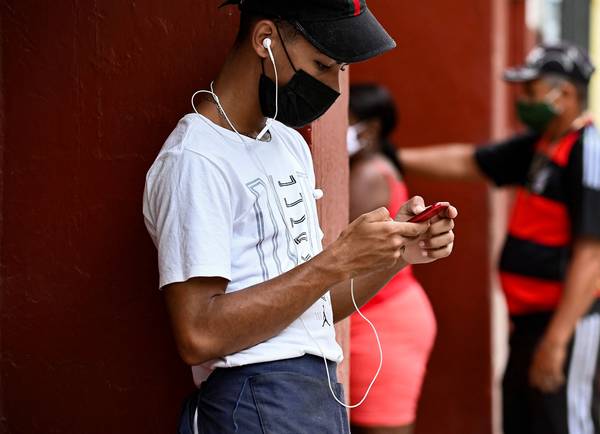 (Yamil Lage/AFP) The country's youths are transforming themselves into that cadre of media influencers who define the new culture and politics elsewhere. By Antonio García Martínez ● Read more » | | | | Forget the politics. We need to understand the origins of this pandemic so that we can prevent the next one. By Josh Rogin ● Read more » | | | | It is officially the Fed's job — not Congress's and not the White House's — to keep prices stable. By Catherine Rampell ● Read more » | | | | The investigation into sexual assault allegations against Kavanaugh wasn't used to uncover the truth. Its mission was to get the Supreme Court nominee across the finish line. By Ruth Marcus ● Read more » | | | Will you please accept enormous gobs of federal money to insure your own citizens? Please? By Greg Sargent ● Read more » | | | | Bipartisan compromise is possible when it comes to Texas's voting bills. By Eddie Lucio Jr. ● Read more » | | | | Republican leaders bear much of the responsibility for the public's reluctance to get vaccinated. By Fareed Zakaria ● Read more » | | | | Republican consent to the committee's findings is not necessary for them to be seen as credible. But Republican participation is. By Henry Olsen ● Read more » | | | | You can't stop them from coming up with ludicrous claims to smear qualified nominees, but you don't have to indulge them. By Paul Waldman ● Read more » | | | Scientists are starting to ask whether we've already reached a tipping point on climate change. The rest of us need to take the possibility seriously. By Eugene Robinson ● Read more » | | | | The vast majority of my neighbors vote Democratic. I used to worry that was a problem, but I don't anymore. By Perry Bacon ● Read more » | | | | The president's pressure on Ukraine is far more serious than Trump's efforts to get the country to investigate Hunter Biden. By Marc A. Thiessen ● Read more » | | | |




 Email
Email