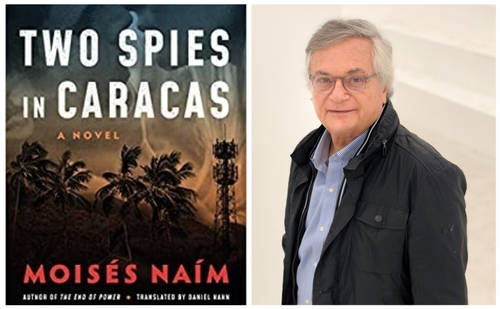
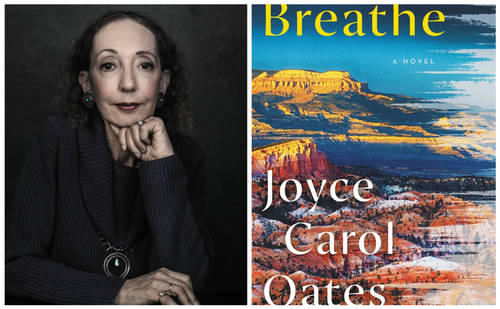
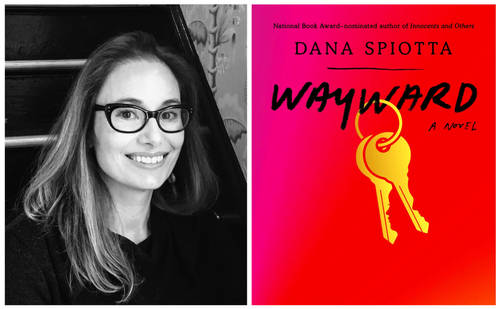
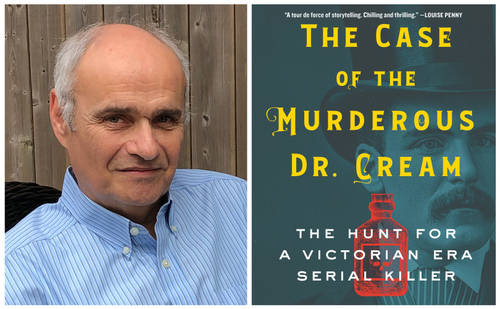
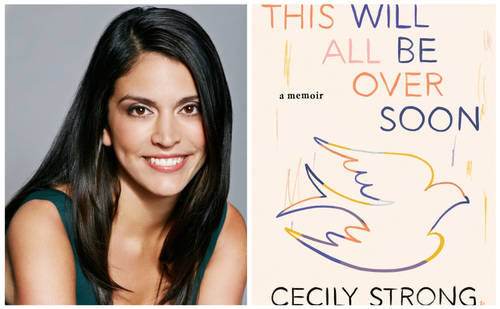
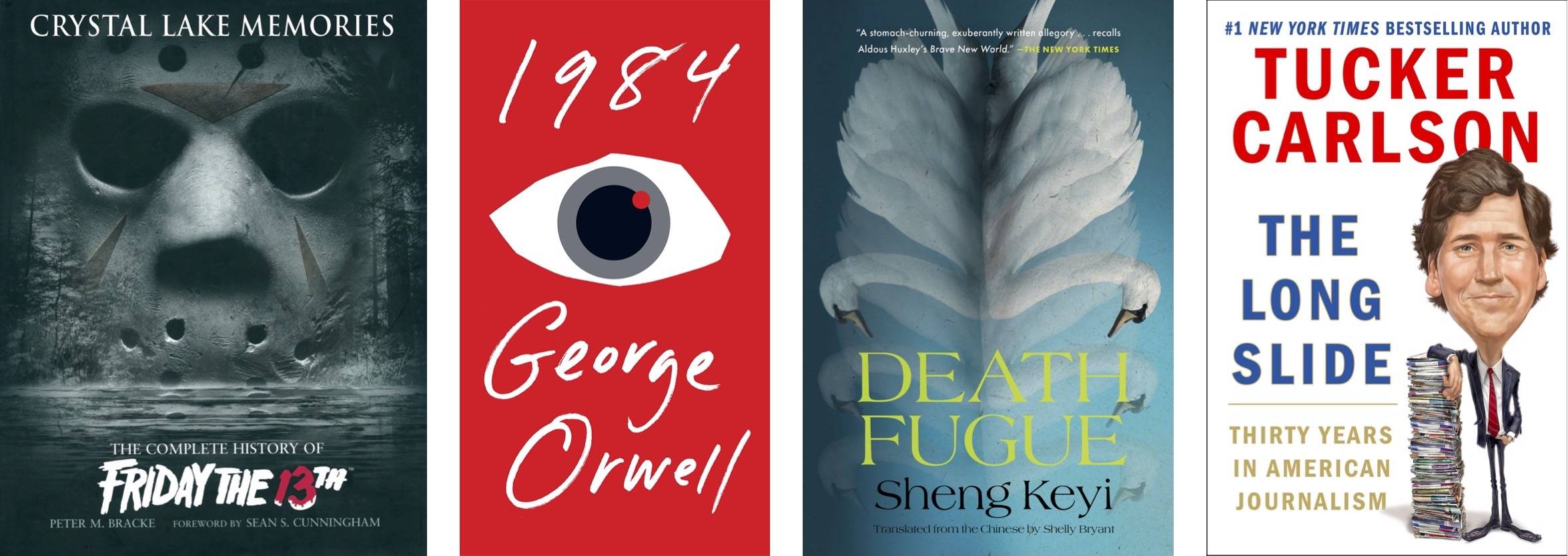
 Titan Books; Signet Classic; Restless Books; Threshold Editions | Paraskevidekatriaphobia — the fear of today, Friday the 13th — is not a valid Scrabble word. So far as I can tell, the term was coined more than a decade after camp counselors started dropping dead in that slasher flick which spawned a lucrative movie series and a shelf of tie-in novels and comic books. Speaking of an unstoppable bogeyman, MyPillow CEO Mike Lindell stirred up a little paraskevidekatriaphobia last month when he insisted that Donald Trump would be reinstated on Aug. 13. So far, today looks relatively peaceful, but like Jason, the legend of Trump's victory keeps rising up again (gobsmacking story). This week Madison Cawthorn – the irony-free congressman from North Carolina who recently hosted a roundtable with Trump and his cabinet in exile – lamented the alarming persistence of totalitarian deception. Referring to George Orwell's classic, Cawthorn tweeted, "1984 is a great fiction novel to read but it seems like it is becoming the reality we are currently living under more and more each day." (Conservatives crying "Orwell" are downright Orwellian.) If you're interested in "fiction novels" about how an entire political party can coalesce around deceit, you might enjoy a dystopia I just reviewed by Chinese writer Sheng Keyi called "Death Fugue." In shocking scatological terms, Sheng mocks the Communist Party's continuing lies about the Tiananmen Square Massacre (review). Meanwhile, back in America's alt-reality, right-wing entertainer Tucker Carlson has released "The Long Slide," a collection of his magazine stories (profile). In the introduction, Carlson claims that "censorship is now the rule in popular media," and he's seeing "the same variety of rot in book publishing." In particular, Carlson criticizes Simon & Schuster for cancelling a book by Sen. Josh Hawley after the Missouri Republican fueled the election skepticism that incited a mob to storm the Capitol on Jan. 6. Carlson, who has claimed that FBI agents helped organize the Capitol assault (seriously), can't fathom what Hawley did wrong to deserve getting dropped by Simon & Schuster. And he's astounded that to explain their shabby treatment of the senator, S&S executives cited a ludicrous essay by "a guy who works at The Washington Post" named Ron Charles. It's the best Friday the 13th present ever.  Courtesy of Preply Inc. | "The Little Prince," by Frenchman Antoine de Saint-Exupéry, is the world's most translated book (story). That's according to Preply, the online language learning provider. The company has released a world map that shows the most translated book in each country. (See full map.) Not surprisingly, children's books with universal or at least widely adaptable appeal dominate the list, with titles such as Carlo Collodi's "Pinocchio" (Italy), Lewis Carroll's "Alice's Adventures in Wonderland" (England) and Hans Christian Andersen's "Fairy Tales" (Denmark). The map offers a fascinating survey of national cultures, from Colleen McCullough's "The Thorn Birds" (Australia) to NoViolet Bulawayo's "We Need New Names" (Zimbabwe). Some countries boast particularly weighty books both old and recent, like Leo Tolstoy's "Anna Karenina" (Russia) and Marlon James's "A Brief History of Seven Killings" (Jamaica). But then there's Brazil, which, inevitably, gives us Paulo Coelho's "The Alchemist." Lamento. The supreme humiliation, though, is reserved for the home team. Preply claims that it "disregarded religious texts" when devising its map, but nonetheless, the United States is represented by "The Way to Happiness," by Scientology founder L. Ron Hubbard, which offers such sage advice as "Don't Do Anything Illegal." 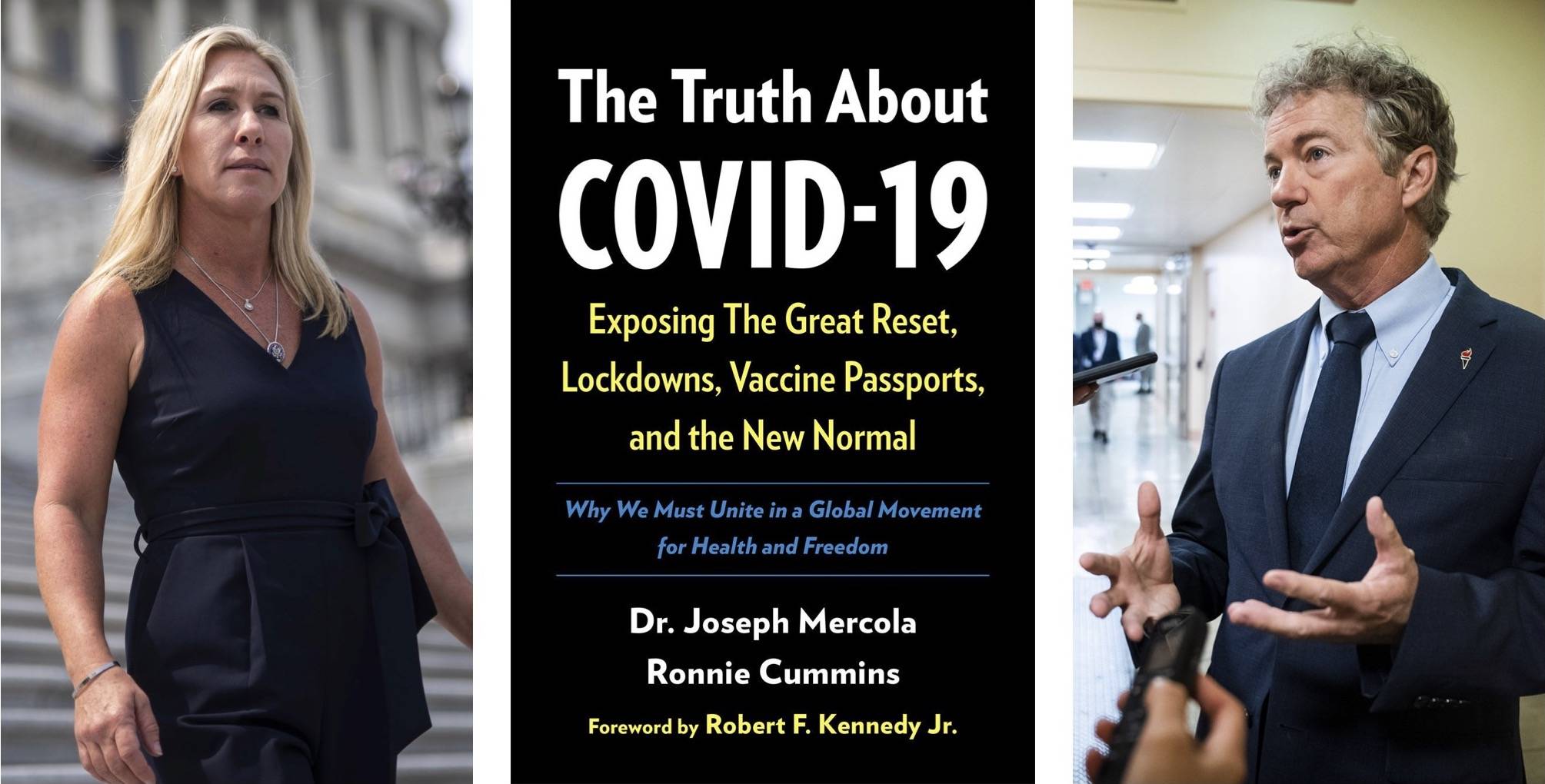 Rep. Marjorie Taylor Greene, R-Ga., on Capitol Hill (File photo by Jabin Botsford/The Washington Post); Chelsea Green Publishing; Sen. Rand Paul, R-Ky., on Capitol Hill (File photo by Jabin Botsford/The Washington Post) | As the delta variant surges across the United States, healthcare workers and public officials are battling a parallel virus of misinformation. To support that effort, this week Twitter temporarily banned Rep. Marjorie Taylor Greene (R-Ga.) for claiming, "These vaccines are failing and do not reduce the spread of the virus" (story). And YouTube suspended Sen. Rand Paul (R-Ky.) for violating the site's covid-19 medical misinformation policy (story). Social media companies enjoy the right to silence these bull horns of confusion, but what's the effective — and legal — response to a book that makes health claims at odds with the CDC? This spring, Joseph Mercola and Ronnie Cummins published "The Truth About COVID-19: Exposing the Great Reset, Lockdowns, Vaccine Passports, and the New Normal." Cummins is the founder of a nonprofit that opposes genetically modified food. Mercola is an osteopathic doctor associated with an anti-vax group cunningly called the National Vaccine Information Center. "The Truth About COVID-19" spins a conspiracy-laden vision of the world exploited by a cabal of "digital dictators, fearmongers, mad scientists, medical fascists, and indentured, bought-and-paid-for politicians." Mercola suggests, for instance, that the pandemic's dangers have been exaggerated to create "a state of totalitarianism." He writes, "A significant portion of those who have died from COVID-19 were in fact victims of medical errors." He also claims, "A large amount of data strongly suggests the COVID-19 vaccine may be completely unnecessary." And finally: "There are a number of especially helpful supplements that can help protect you from COVID-19." An investigation by The Washington Post in 2019 said, "Mercola has amassed a fortune selling natural health products, court records show, including vitamin supplements, some of which he claims are alternatives to vaccines" (story). The Center for Countering Digital Hate crowns Mercola No. 1 among its Disinformation Dozen, a list of "anti-vaxxers who play leading roles in spreading digital misinformation about Covid vaccines." (Robert F. Kennedy, Jr., who wrote the foreword to Mercola and Cummins's book, is No. 2.) Nonetheless, all the major online book retailers sell "The Truth About COVID-19." But at the top of the book's page on Amazon, there's a notice that states: "For the latest information on COVID-19 vaccines please visit the Centers for Disease Control." (Amazon founder Jeff Bezos owns The Washington Post.) Is that little notice necessary? Is it sufficient? Margo Baldwin, president and publisher of Chelsea Green, which publishes "The Truth About COVID-19," tells me the book has sold an extraordinary 250,000 copies in the last four months. On several days, it's been among Amazon's top 10 bestsellers. Baldwin stands by the authors' work. "We have very knowledgeable editors who are experts in their subject areas," she says, "a rigorous acquisitions and manuscript review process, and access to many medical and health experts we call on when content exceeds our own knowledge." When I asked if she felt any responsibility for adding to the culture of fear and misinformation, Baldwin replied, "Our public responsibility is to the truth, as far as we can determine it. Creating a climate of fear and misinformation is what mainstream media seems to excel at, not independent publishers like Chelsea Green." Meanwhile, the CDC states plainly, "COVID-19 vaccines are safe and effective." 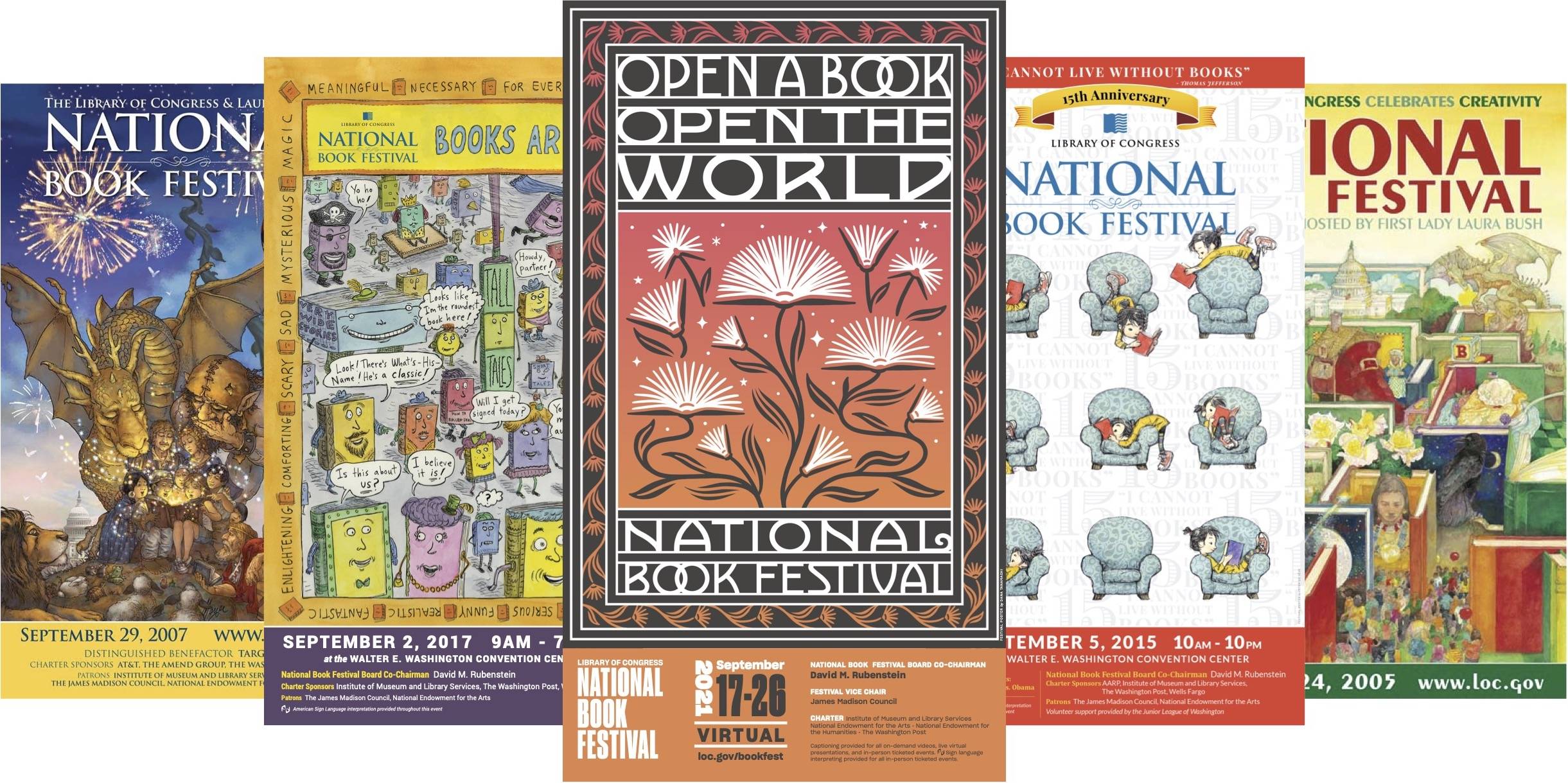 National Book Festival posters (r-l) by Mercer Mayer, Roz Chast, Dana Tanamachi, Peter de Sève and Jerry Pinkney. (Courtesy of the Library of Congress) | Dana Tanamachi created this year's official poster for the National Book Festival. A designer and book illustrator, Tanamachi adapted her art nouveau style to present a classy bouquet of blooming books. "Books and flowers both open up and invite us in to behold beauty, mark the seasons and experience change and growth," she said in an interview with the Library of Congress. "Combining the two images felt like the perfect metaphor." Tanamachi's poster joins an august collection by such renowned illustrators as Roz Chast, Peter de Sève, Mercer Mayer and others stretching back to the first National Book Festival in 2001. It's curious to observe how the posters have turned away from children's images over the past three years. You can see and download them all here. (Dawn and I have Jerry Pinkney's poster from 2005 hanging in our kitchen.) As the opening day of this year's festival approaches — Sept. 17 — you'll be able to order a printed version of Tanamachi's poster from the Library of Congress and the festival's official bookseller, Politics & Prose. (The Washington Post is a charter sponsor of the National Book Festival.)  "Native Guard," by Natasha Trethewey (Mariner Books); Missouri Statehood Stamp, designed by Greg Breeding based on a photograph by Charles Gurche (©USPS) | In her Pulitzer Prize-winning collection, "Native Guard" (2007), former U.S. Poet Laureate Natasha Trethewey explores historical erasure and cultural amnesia — particularly in relation to the Civil War. "I know," she writes in one poem, "there are things which must be accounted for." That kind of accounting has recently sent Republican fundraisers politicians into a tizzy of efforts to stamp out what they fatuously call Critical Race Theory. Sen. Tom Cotton (R-Ark.) claims that CRT "teaches people to obsess over race and to believe that America is an evil, oppressive place." In fact, CRT is merely an academic framework for excavating the ways racism functions in our supposedly colorblind society (explanation). For a little example of how historical whitewashing is reinforced in popular American consciousness, look no further than the Missouri Statehood stamp issued this week by the United States Postal Service. The stamp, celebrating the bicentennial of Missouri's admittance to the Union, shows the Bollinger Mill and the Burfordville Covered Bridge at the Bollinger Mill State Historic Site. A 1,000-word press release describes "two treasured structures that date to the American Civil War era." In a feat of precision-guided silencing, the USPS notes when and where Bollinger's Mill was built and exactly how long the bridge is. It praises Missouri's geography and biological diversity. There's a nod to French settlers, Lewis and Clark and even the 1904 St. Louis World's Fair. What there's no mention of is slavery — neither in relation to the Bollinger family in particular nor Missouri statehood in general. Imagine the mental gymnastics necessary to dodge that issue when discussing this state's official origins. After all, what's euphemistically called the Missouri Compromise was a grand White scheme to sanction slavery in Missouri in exchange for admitting the free state of Maine and banning slavery in the Louisiana Purchase north of the 36° 30´ latitude. Ignoring the extraordinary complications of that moment in Missouri's history while appearing to commemorate that very moment is a choice — a choice consistent with more than 150 years of carefully manufactured nostalgia. Activists and scholars don't want "to obsess over race," as Sen. Cotton claims. They just want us to stop obsessively ignoring the facts.  Winner of the 2020 Prix Goncourt: Hervé Le Tellier's "L'anomalie," published by Gallimard, 20€ everywhere in France; "The Anomaly," translated from the French by Adriana Hunter, forthcoming in the U.S. on Nov. 23 from the Other Press, $16.99, but prices will vary by retailer. | This week, readers in France are celebrating the 40th anniversary of their nation's fixed book price law. In the United States, such anti-competitive price-fixing would be scandaleux, but the French are far more determined than us to maintain a diverse network of booksellers. With few exceptions, every retailer in France must charge the same price for any particular title. For instance, the indie bookstore Shakespeare & Co., the big chain retailer Fnac and the online bookseller Amazon.fr are all supposed to sell Hervé Le Tellier's best-selling novel "L'Anomalie" for 20 euros. Vive la similitude! The fixed book price law looks like a brilliant defense against the predatory behavior of a particular online bookseller — et c'est! — but the legislation was actually passed way back in 1981. At that time, the culture minister carved out this exception to the free-market principle to protect indie booksellers from large brick-and-mortar stores that could afford to dramatically slash prices. (Discounts are tightly limited to just five percent.) Ten years ago, the law was extended to e-books, and this summer the French are working on a way to harmonize shipping costs, too, so that some powerful retailers don't lower their effective prices by charging next to nothing for delivery. A few other European countries have similar regulations on book prices, but such a law has no chance of passing in the United States. Still, it's a telling indicator of what's most important to a country: the lowest price for literature or the most diverse literary retail landscape. 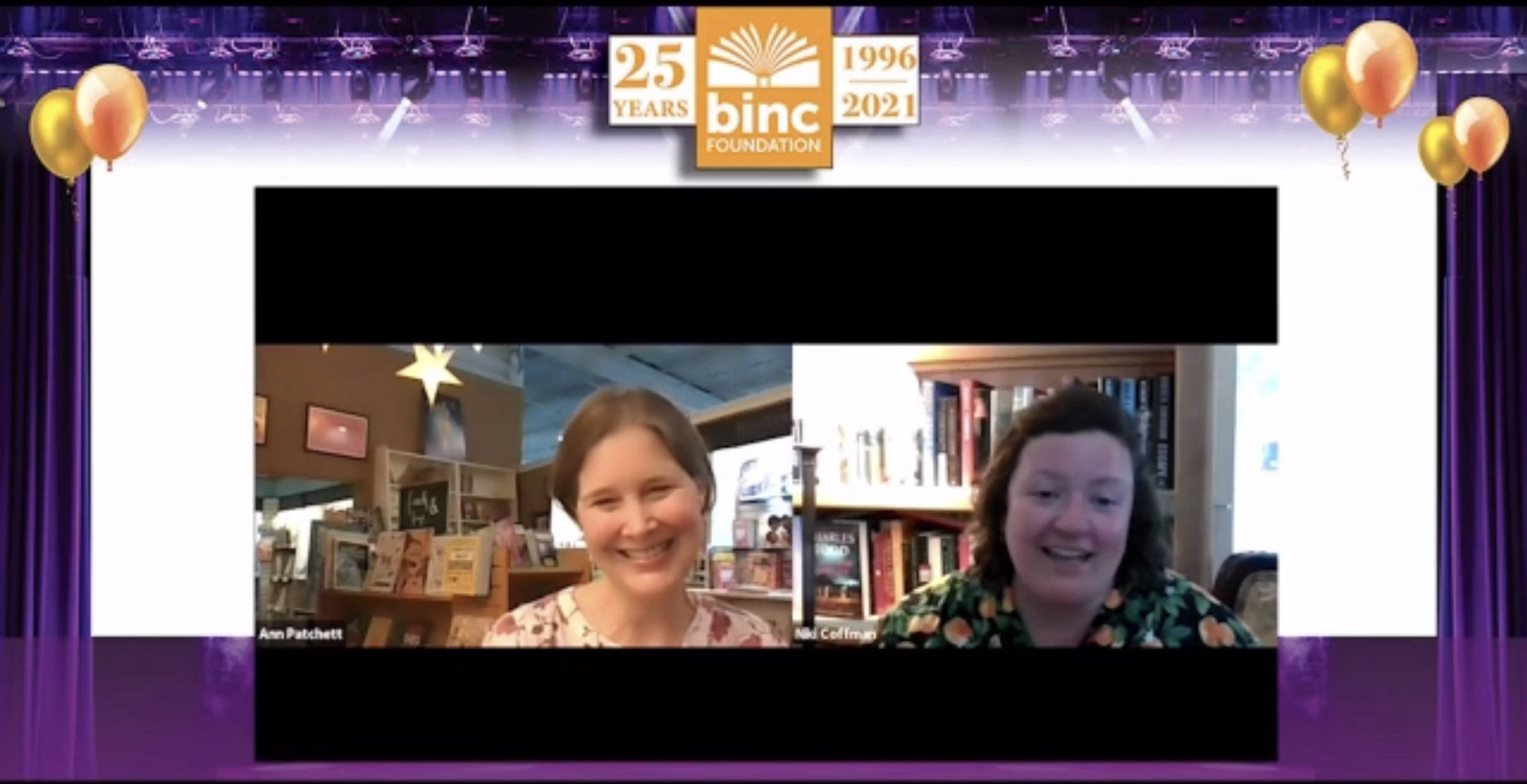 Novelist Ann Patchett, the owner of Parnassus Books in Nashville, Tenn., talks with her friend and fellow bookseller Niki Coffman at the Binc 25th anniversary gala, Aug. 12, 2021 (Screenshot). | Binc, the Book Industry Charitable Foundation, has been working to protect our ecosystem of indie bookstores and comic shops for 25 years. Last night, the nonprofit organization celebrated its silver anniversary with a virtual ceremony that included appearances by Anthony Doerr, Min Jin Lee, Jason Reynolds and other best-selling authors. Novelist and bookstore owner Ann Patchett was one of several people honored for raising awareness about Binc's work. Over the past 25 years, the foundation has distributed more than $11 million to bookstore owners, booksellers and comic store employees to help them meet emergency financial needs. Especially during the covid-19 pandemic, that support has been an essential lifeline. The highlight of last night's ceremony was hearing some of the moving and sometimes harrowing stories about the thousands of people Binc has assisted. (For a $10 donation, you can watch a recording of the ceremony through Aug. 19.)  Graywolf Press | Kaveh Akbar is an Iranian-American poet, who once said, "The language of Islam is the bedrock upon which my psychic life is built." As a gay Muslim in a secular country marbled with Islamophobia, Akbar writes with delightful humor and disarming candor about the complicated nature of faith. His new collection, "Pilgrim Bell," is a series of revelations. Despite My Efforts Even My Prayers Have Turned into Threats Holy father I can't pretend
I'm not afraid to see you again
but when the time comes
I believe my courage
will expand like a sponge
cowboy in water. My earth-
father came to America knowing
no English save Rolling Stones
lyrics and how to say thanks
God. Will his goodness roll
over to my tab and if yes, how
soon? I'm sorry for neglecting
your myriad signs, obvious
now as a hawk's head
on an empty plate. I keep
nearly waking up to whatever
I miss most: whiskey-
glass, pill bottles, my mother's
oleander — sweet and
evergreen but toxic in all
its parts. I know it's silly
to keep what I've kept from you;
you always so charmed
by my weaknesses. I just
imagine you fed up with
all your making, like a virtuoso
trying not to smash apart her
flute onstage. Plus, my sins
were practically devotional:
two peaches stolen from
a bodega, so sweet I savored
even what I flossed from
my teeth. I know it's no excuse,
but even now I'm drooling. Consider
the night I spent reading
another man's man the Dream
Songs in bed — we made it to
"a green living / drops
limply" before we were
tangled into each other, cat
still sleeping at our feet. Allow
me these treasures, Lord.
Time will break what doesn't
bend — even time. Even you. "Despite My Efforts Even My Prayers Have Turned into Threats" from "Pilgrim Bell." Copyright © 2021 by Kaveh Akbar. Reprinted with the permission of Graywolf Press, Minneapolis, Minn.  Morgan Hill Book Store in New London, N.H. is thriving again. (Ron Charles/The Washington Post) | I'm working this week from my folks' house in New Hampshire. Even saddled with the "job thing," I'm enjoying the idyllic setting. I've found snapping turtles in the bog, and yesterday morning, I came across a rafter of wild turkeys running across the yard like little velociraptors. In the nearby town of New London, I was delighted to see that the Morgan Hill Book Store has survived the pandemic. Anna and Chris Miner bought the 2,000-square-foot store around 2013 (story). Chris tells me that during the worst parts of the covid crisis they had to let staff members go and close the doors for about two months. It felt like he and his wife were working three times harder just to stay above water, but they received "tremendous community support." The place looks great now — with a steady stream of customers while I was there fantasizing about owning my own bookstore someday. . . . (I can sense you former and current bookstore folks out there rolling your eyes at my naivete!) If you have any questions or comments about our book coverage, send a note to ron.charles@washpost.com. And if you know friends who would enjoy this newsletter, please forward it to them. To subscribe, click here.
Interested in advertising in our bookish newsletter? Contact Michael King at michael.king@washpost.com. | 




 Email
Email