| Since the pandemic started, millions of renters and landlords in America have been uncertain about how long they can go without paying or collecting rent. More than ever, these Americans are in legal limbo as President Biden, who is trying to help renters stay in their homes, does something that by his own admission may be illegal. Here's how we got here and what's happening. Spring 2020: The coronavirus pandemic hits and lockdowns are ordered, causing the U.S. economy to crater and millions of people to lose their jobs all at once. September 2020: The federal government under President Donald Trump says landlords can't evict people right now, on the basis that putting people out in the street would expose them to the virus. January 2021: The Centers for Disease Control and Prevention, now under the Biden administration, extends the eviction protections. (It would do so again later in the year, saying an extension through the end of July would be the last.) Also, Congress approves more coronavirus assistance with billions of dollars to help renters and homeowners pay back due rent and mortgages. But the money has been slow in trickling out. June: Landlords, citing their own financial demands, ask the Supreme Court to effectively end the eviction ban. The Supreme Court keeps the ban in place, but Justice Brett Kavanaugh writes that only Congress, not the administration, has the power to halt evictions in the future. July 31: Congress is unable to agree on an extension, saying the White House kicked this over to them too late. The eviction ban expires at midnight, right as the coronavirus is picking up again. Rep. Cori Bush (D-Mo.) starts sleeping on the steps of the Capitol as part of a major push by liberal Democrats to pressure the Biden administration to do something, despite what the Supreme Court says. 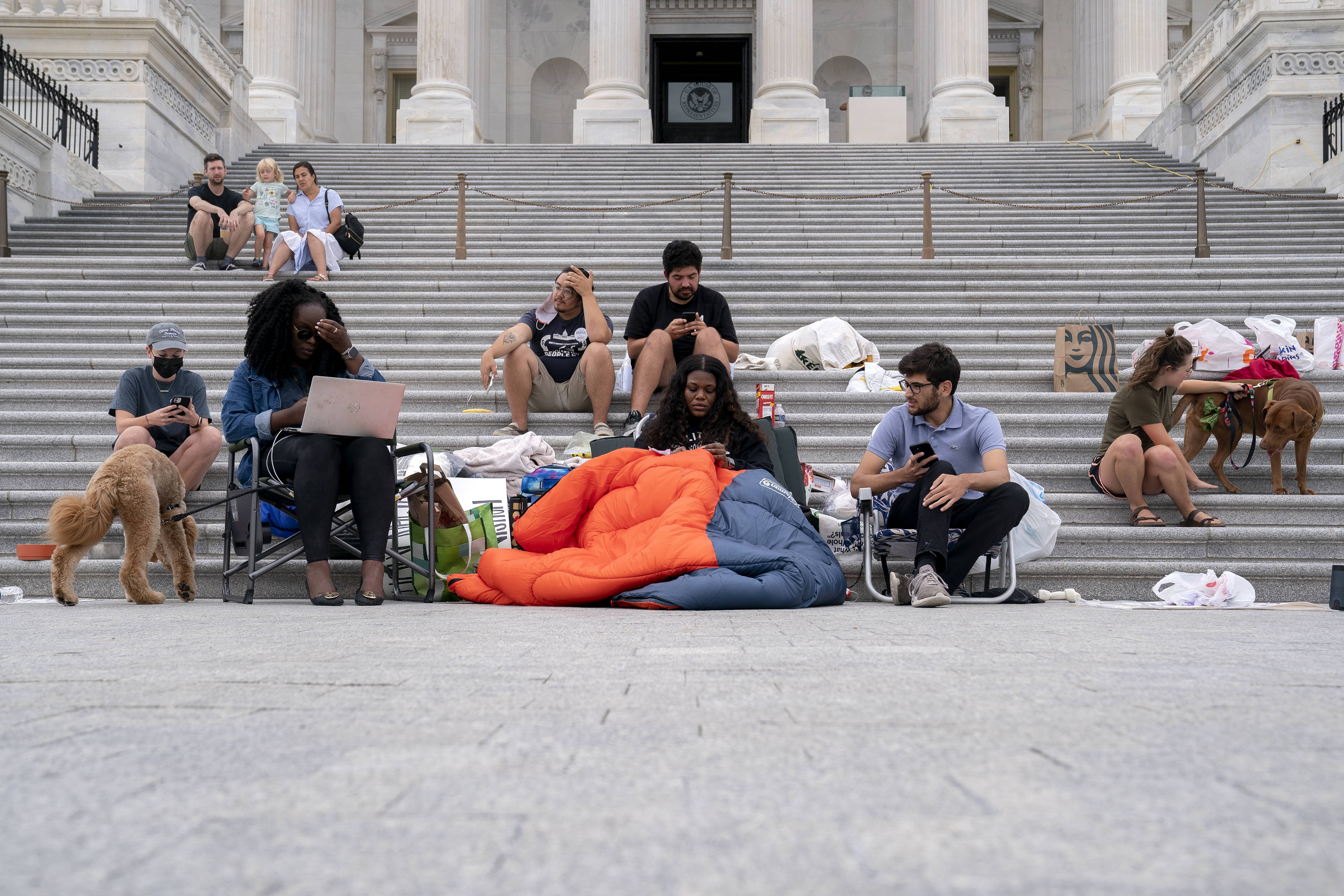 Rep. Cori Bush (D-Mo.), with congressional staffers, starts camping out on the Capitol steps on Saturday as the eviction moratorium expires. (Stefani Reynolds/Bloomberg) | Monday: The White House says it can't do anything; that they looked but couldn't find any legal authority to act on their own. And, they add, they didn't want to do something that could lead to the courts eroding the CDC's authority in a pandemic even further. Monday night: Liberal Democrats pressure Biden to act anyway. "Just do it!" tweeted Rep. Maxine Waters (D-Calif.), the chair of the House's powerful financial committee. Tuesday: Biden appears to buy into Waters's argument, as the CDC suddenly announces they're extending the ban through October for people in hard-hit areas by the coronavirus (which is most of the country right now). In a remarkable admission, Biden says his administration is doing something that will likely put the issue back in court: "[T]he bulk of the constitutional scholars say it's not likely to pass constitutional muster," he said Tuesday. He explained that he wanted to buy time so that the money Congress approved to help renters stay in their homes can filter down to them. Left unsaid: If the administration gets challenged in courts for this, they'll take that as it comes. Points for honesty, I guess. Except, Biden campaigned against Trump by pitching himself as someone who understands and even respects Washington. Now, it's not hard to see how the previous president's efforts to steamroll constitutional norms in other areas is creating a slippery hill for his successors. As The Fix's Aaron Blake writes, defending something that's illegal because it's worth it is "certainly a precedent to set." What's happening with another Cuomo, CNN's Chris Cuomo 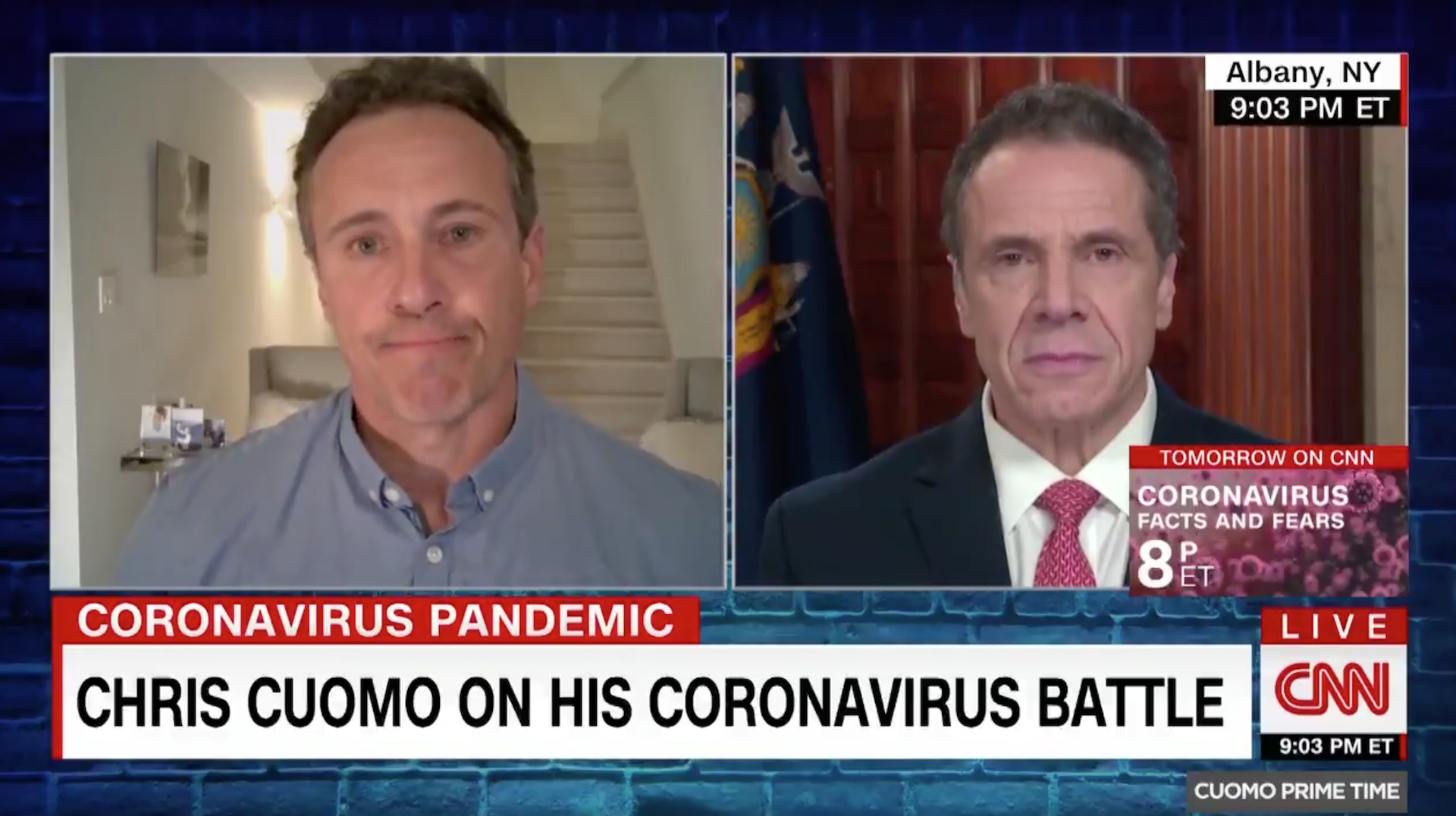 CNN's Chris Cuomo, left, with brother, New York Gov. Andrew M. Cuomo in April 2020 on his show "Cuomo Prime Time." | He's a CNN anchor and brother to New York Gov. Andrew M. Cuomo (D). This week the highest levels of New York law enforcement said the governor is a serial sexual harasser. And his brother, Chris Cuomo, was detailed in the attorney general's investigation as counseling to the governor and his staff on how to respond to the allegations, reports The Post's Elahe Izade. On Cuomo's show Monday, he didn't address his brother's allegations, even though it was one of the biggest political stories of the day. The problem for Cuomo, and perhaps CNN more broadly, is obvious: He's one of the network's most recognizable names, and here he is appearing to guide a politician in a major scandal on how to proceed. Journalists try to avoid even the appearance of conflicts of interest, and CNN has a legitimate one to navigate. | 




 Email
Email 


