| This week, Democrats have put themselves out there, politically speaking, by passing an expensive $3.5 trillion budget proposal that will dramatically increase the role government plays in many people's lives. They want to government to pay for universal pre-K, free community college, expand Medicare and much in between. Lawmakers still need to put money behind this budget proposal and have the House pass it. Democrats set this up in a way that lets them dodge a Republican filibuster. So if it becomes law, likely later this year, Sen. Bernie Sanders (I-Vt.) is probably right when he says the bill he helped write will be the "most consequential piece of legislation for working people, the elderly, the children, the sick and the poor since FDR and the New Deal of the 1930s." 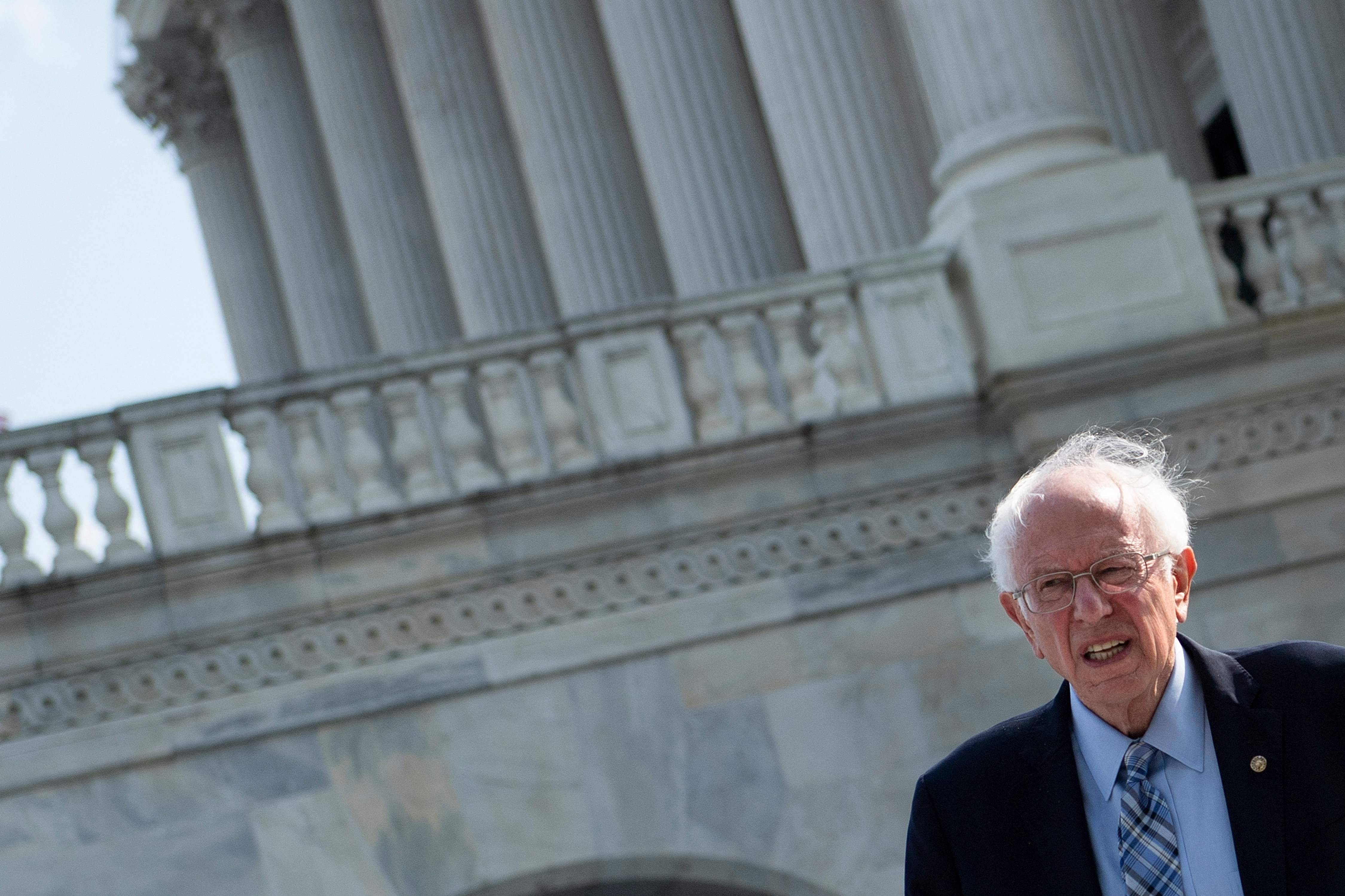 Democrats are moving to expand government in the vision of Sen. Bernie Sanders (I-Vt.) (BRENDAN SMIALOWSKI/AFP via Getty Images) | That's the marker Democrats laid down: While they have the power, they're aiming to drastically expand government and its safety net. They're calculating that Americans of all political stripes want that, since the pandemic took so much away from people. But everything comes with a cost. And Republicans argue that the Democrats' plans would cost Americans too much. These Republicans aren't necessarily highlighting the price tag, since trillions of dollars is an abstract concepts for most of us. What they are talking about is rising inflation, and about how everything is getting more expensive. And they are arguing Democrats will make it worse by expanding government. "Biden's agenda is really Build Back Broke, as prices for everyday goods continue to skyrocket while nearly 9 million Americans are still unemployed," said Republican National Committee spokeswoman Emma Vaughn in a statement. Big government vs. a big economic argument. The contours of the battle for which party will control Congress in 2023 is taking shape. This Texas lawmaker saga is getting really crazy 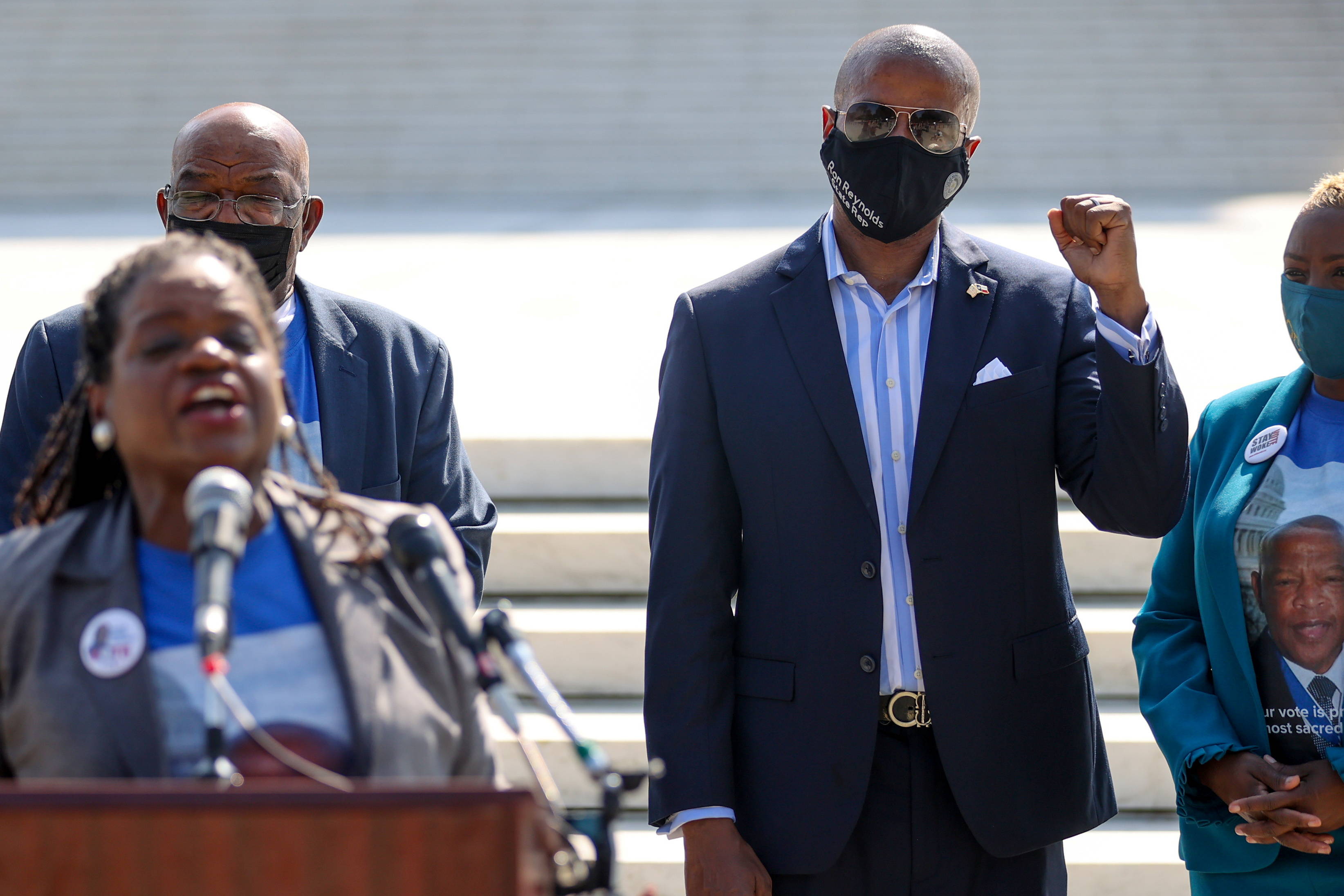 Texas Democratic lawmakers speak Wednesday as Republicans issue arrest warrants for them. (Jonathan Ernst / Reuters) | "I think they're bluffing. Do they really want to arrest a woman of color?" That's a Texas Democratic state lawmaker telling my colleagues she's not afraid of being arrested after she recently returned from Washington to her home in Austin. To back up, dozens of Texas Democratic lawmakers fled their state a month ago to rob their Republican counterparts of a quorum to pass a restrictive voting rights bill. They stayed in D.C. while the Texas legislative session ran out. Last week, the governor called a new special session, and Democrats have to decide whether to come back home or stay away to keep this bill from becoming law now. (Many also left their day jobs and families.) Republicans just upped the stakes again. After effectively winning a battle in the courts, the Texas House speaker signed arrest warrants Tuesday for the Democrats who left. That's where state Rep. Celia Israel (D) comes in, telling The Washington Post that she thinks Republicans are bluffing because the optics of arresting her and others would look terrible. What's even crazier to me is that about half of the Democrats who fled the legislature say they're going to stay in Washington possibly indefinitely. At least "for as long as Congress is working and making progress" on voting rights, my colleagues report. But Congress isn't making progress on voting rights: The Senate left Wednesday for a month-long break without any vote on it. This will go down in history as one of the most unprecedented legislative sessions of any state in modern memory. And we still have no idea how it's going to end. Okay, we could finally see Donald Trump's tax records Some of them, at least. Today a federal judge said that House Democrats can have the former president's tax returns from some of the years he was president, 2017 and 2018, reports The Post's Rachel Weiner. (Democrats wanted six years' worth of returns, and Trump has successfully blocked most of them in the courts.) The Democrats' investigation started after they won control of the House in 2018. They're looking into how and whether the IRS audits a sitting president, as well as what financial conflicts of interests Trump may have had while he was in office. (A New York Times investigation last year revealed there could be many.) If Congress gets to see Trump's tax returns, we could too, a Democratic aide told me in 2019 when this investigation started. Democratic lawmakers would consider making these returns public. That's a big change after years of Trump going out of his way to keep them secret. | 




 Email
Email 


