The messy politics of the Afghanistan attacks As the nation mourns 13 U.S. service members and dozens of Afghans killed in a suicide bombing Thursday, politicians in Washington are getting going on who's to blame. The politics of the war in Afghanistan have long scrambled traditional partisan lines. Hawkish Republicans and Democrats (such as President Biden) wanted to get into the war 20 years ago. Libertarian-leaning Republicans aligned with liberal Democrats on wanting to stay out. Today, some Democrats are criticizing Biden's withdrawal and signaling that they are going to investigate why he didn't evacuate people sooner. Then Americans died in the evacuation, and things simultaneously got more traditionally partisan and more complicated. Here's a rundown of the messy politics of this particular moment in the war in Afghanistan. Republicans want to capitalize on this This is the "well, duh" part of the newsletter. But throughout the 2020 presidential campaign and the first few months of his presidency, Republicans had trouble sticking much of anything on Biden. Now that the conversation about whether to end the war is over, Republicans are more or less united in bashing Biden for the chaotic, deadly withdrawal. And they plan to make this a central campaign message. But the GOP's 'Biden bungled Afghanistan' message could be complicated by a few things Like: Many Republican lawmakers want Biden to go back in. At least, they want to deliver swift retribution for the Islamic State terrorists who claimed credit for the attack, reports The Post's Paul Kane. Before the attack, polls continued to show that Americans want out of Afghanistan. A CBS News poll from last week found that 63 percent of Americans still wanted to end the war. Republicans haven't always been consistent in how they approach Afghanistan. Some — like top House Republican Kevin McCarthy (Calif.) — supported Trump's withdrawal efforts and then opposed Biden's. "This is Biden's mess," Rep. Adam Kinzinger (R-Ill.) told Politico. "But the problem is: It's somewhat disingenuous, then, for people who were all supportive of how Donald was doing it to now also be critical." I explore Trump's controversial 2020 deal with the Taliban here. Some far-right Republicans don't want Afghan refugees. That makes it more difficult for members in the center of the party to whack Biden for leaving tens of thousands of Afghans behind. 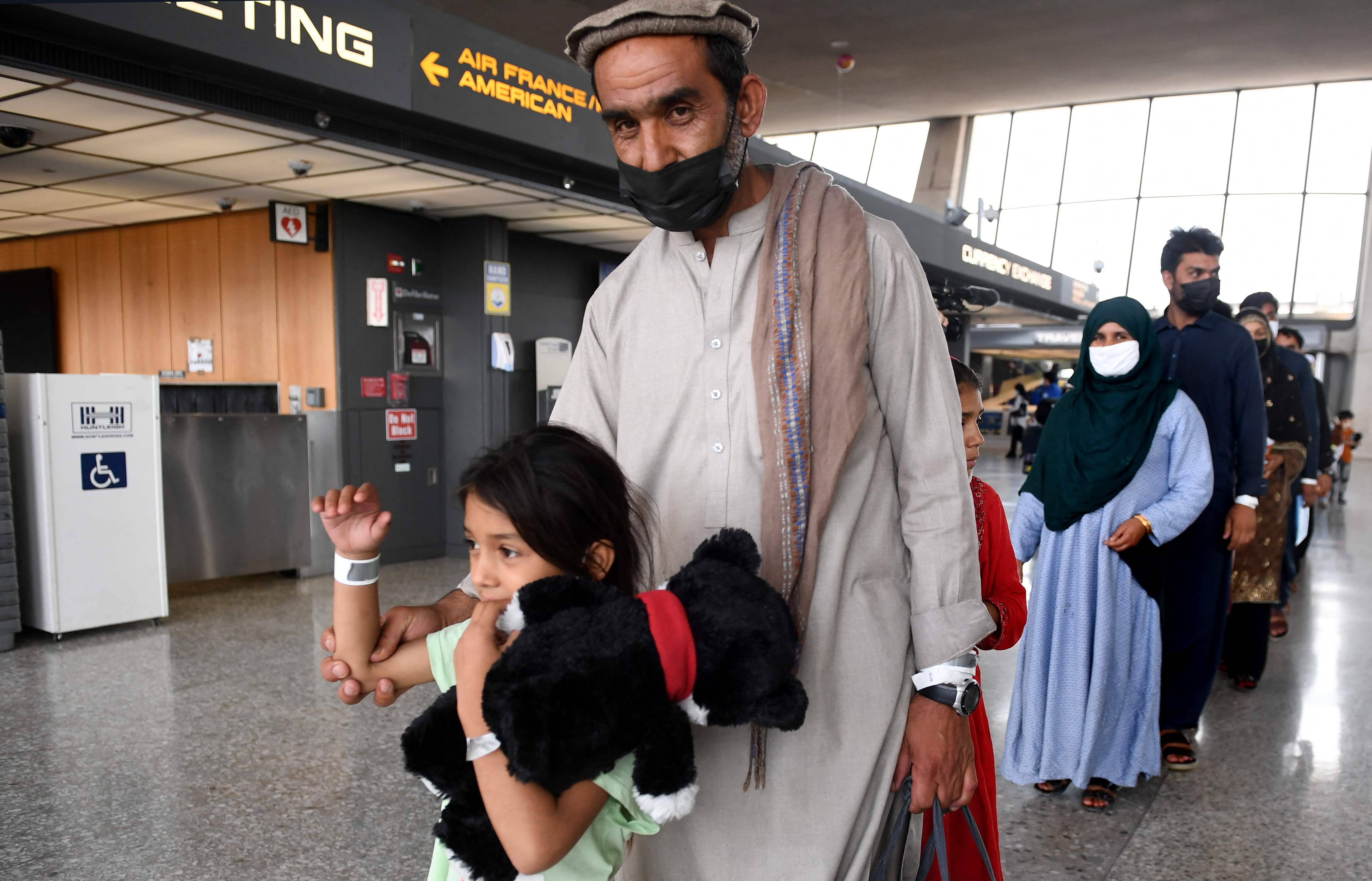 Afghan refugees arrive at Dulles International Airport outside Washington, D.C., on Friday. (Olivier Douliery/AFP via Getty Images) | The midterms are still more than a year away. Americans vote in November 2022 on who they want to represent them in Congress. How much will these two weeks in a faraway country — as heartbreaking and deadly as they have been — resonate with voters more than a year later? The argument for ending Biden's eviction ban On Thursday, the conservative-leaning Supreme Court ended the Biden administration's moratorium on evictions for renters across the country. Biden extended it this month, even as he acknowledged that doing so might be illegal. The argument for keeping the ban in place is simple: Some 11 million renters could be out on the streets as the delta variant of the coronavirus rages. 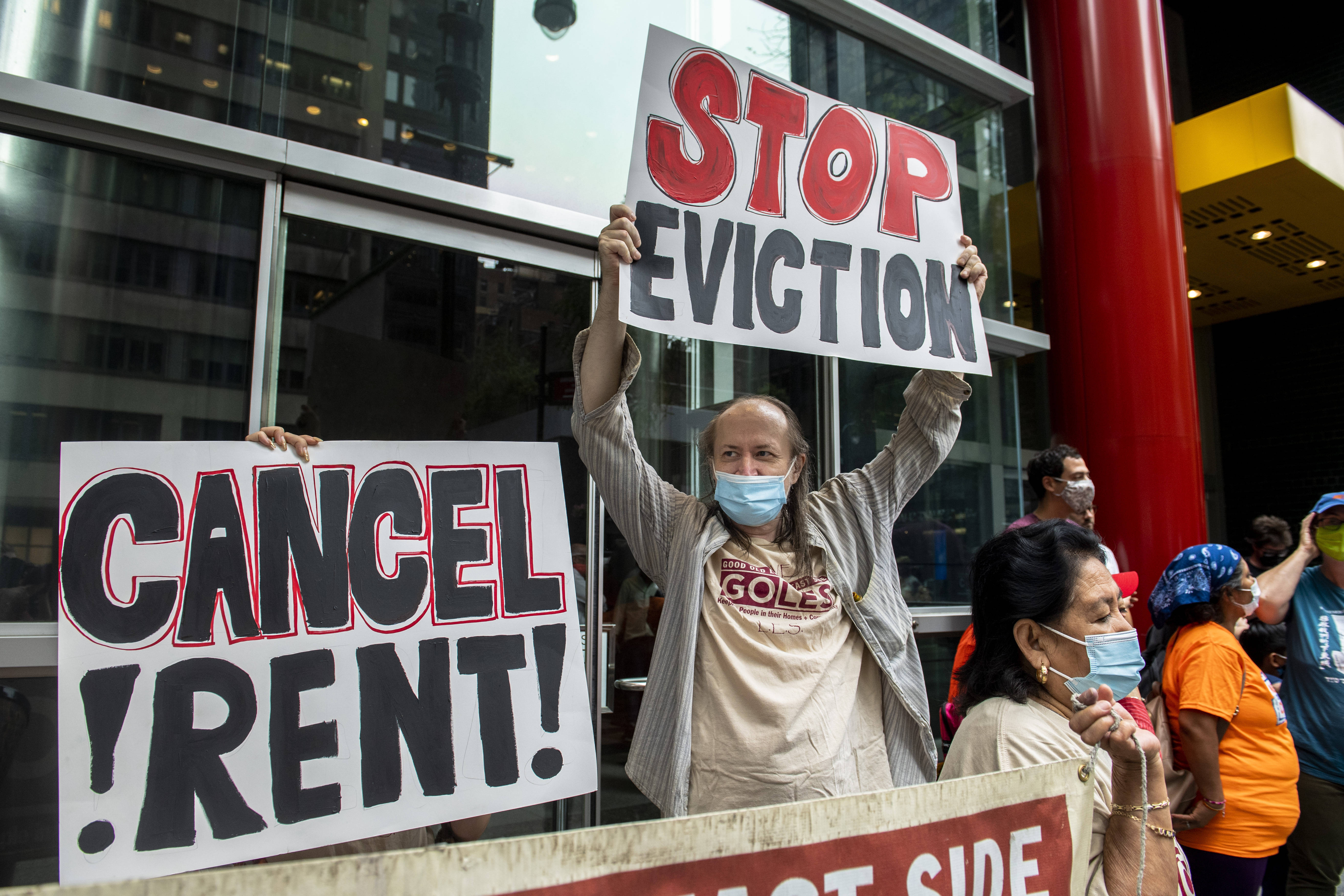 Housing advocates protest for extending the eviction moratorium earlier in August in New York. They just lost that fight. (Brittainy Newman/AP) | The argument against the ban is more nuanced. After a winding legal battle, a group of landlords successfully sued to end it. Why did the conservative members of the Supreme Court agree? Here is what they said: The government's eviction moratorium is based on a too-vague "what if." The whole reason the government banned evictions was to avoid the spread of coronavirus by putting people out on the streets. (The ancillary effect being protection for people who lost their income as the economy shut down.) The court's conservative justices argued that the Centers for Disease Control and Prevention stretched its ability to prevent the spread of coronavirus too far into the realm of probability. The Biden administration was using its power to regulate interstate commerce to ban evictions, arguing that an evicted tenant could move from one state to another while infected with covid-19. But the court wrote that that's too hypothetical a reason for the government to act. Letting the Biden administration just extend eviction bans is "a breathtaking amount of authority." The conservative justices wrote: "Could the CDC, for example, mandate free grocery delivery to the homes of the sick or vulnerable? Require manufacturers to provide free computers to enable people to work from home? Order telecommunications companies to provide free high-speed Internet service to facilitate remote work?" Even though the court's three liberal justices disagreed, the only way to continue an eviction ban would be for Congress to pass one for the remainder of the pandemic. Which would be a long shot. Lawmakers are getting heavy pressure from the left to protect renters from evictions. "The eviction moratorium has ended," a group of influential liberal Democrats wrote in a letter Friday to the Democratic leaders in Congress. "If we do not act, this will undoubtedly lead to the increased spread of COVID-19, more deaths, and community wide trauma." But Republicans argue that Congress has already approved billions of dollars to help people stay in their homes, and point out that only a fraction of that money has reached renters. | 




 Email
Email 


