| As I write this, a man who claimed to have a bomb has just surrendered to police outside the U.S. Capitol. Police spent the day negotiating with the man, who was parked on a sidewalk there. We don't know much more than that. Here is the latest. What Trump actually agreed to with the Taliban President Biden has said one of the reasons he decided to fully withdrawal from Afghanistan was because his predecessor, Donald Trump, put things in motion. As The Fix's Aaron Blake notes, Trump officials are scrambling to distance themselves from the former president's deal with the Taliban. So what actually happened? Let's get some background for the political fight that's looming over how the United States bungled the end of its involvement in the Afghanistan War. 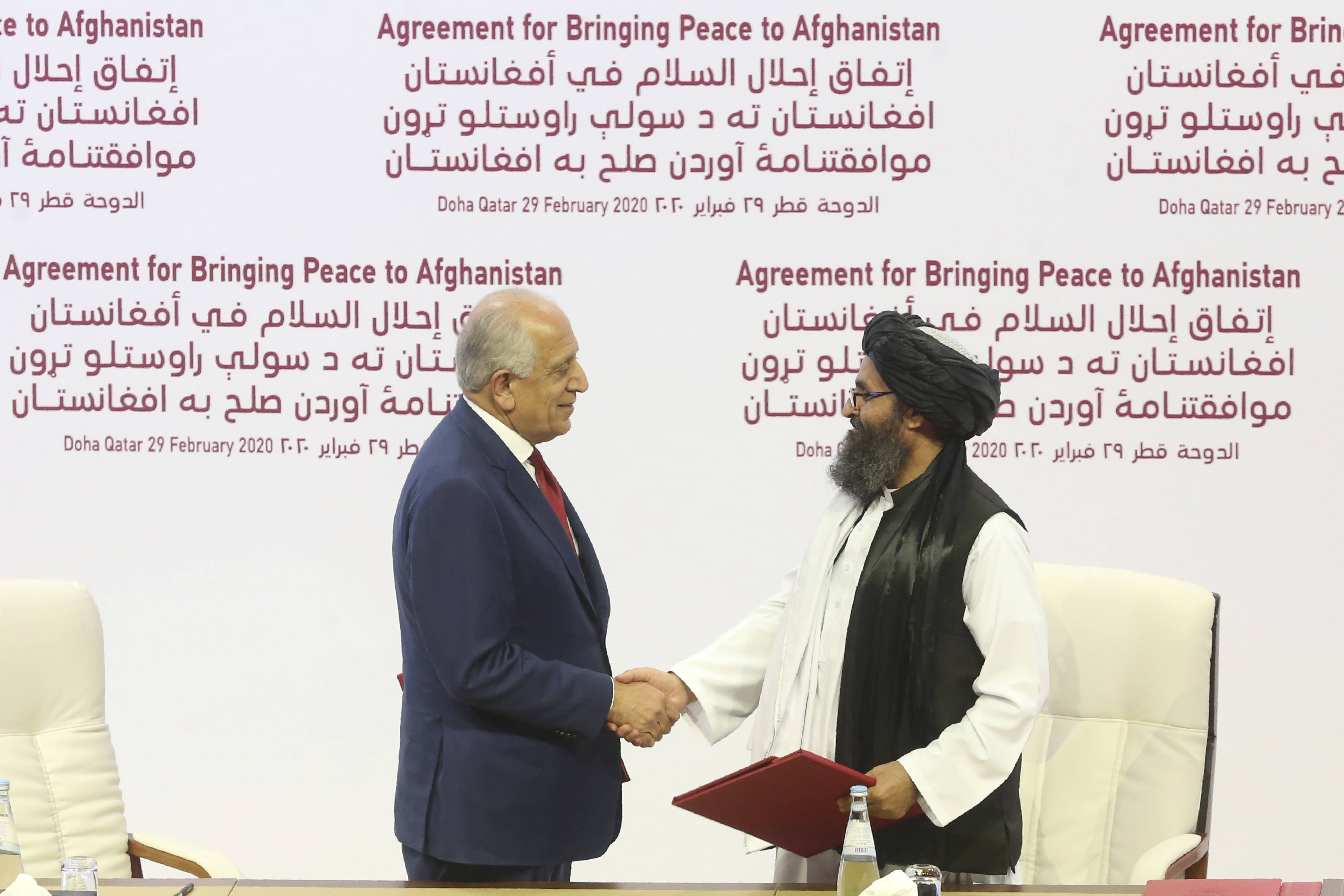 U.S. peace envoy Zalmay Khalilzad, left, and Mullah Abdul Ghani Baradar, of the Taliban shake hands in February 2020 as they sign a peace deal. (AP Photo/Hussein Sayed) | Trump didn't want to fight in Afghanistan, and he certainly didn't want to nation-build. He just wanted out. "Trump had no real sense of what was at stake in the war or why to stay," writes former Afghan vet and Georgetown professor Paul Miller in a digestible history of the 20-year war. So Trump took a swing at something his predecessors hadn't, a full-bore effort to strike a deal with the Taliban. In February 2020, Trump announced they had a deal that would have the U.S. get out of Afghanistan in about a year, and in exchange the Taliban agreed to not let Afghanistan harbor terrorists. One big problem with the deal, say scholars and even some officials in the Trump administration: It came with no enforcement mechanism. Some argue it was a naked desire by Trump to just end the war however he could. Miller writes that the Taliban negotiators basically had to sign a piece of paper saying they wouldn't harbor terrorists, and nowhere did they have to — nor did they choose to — denounce al-Qaeda, the terrorist group that launched the 9/11 attacks from Afghanistan. A few months later, the United Nations said it had evidence that the Taliban and al-Qaeda still had ties. Shortly after the deal was signed, the Taliban launched dozens of attacks in Afghanistan. But Trump chose to continue the drawdown, and he had bipartisan support for it. It's one of his few international agreements that Biden kept intact. A name in the news you should know: Lauren Boebert 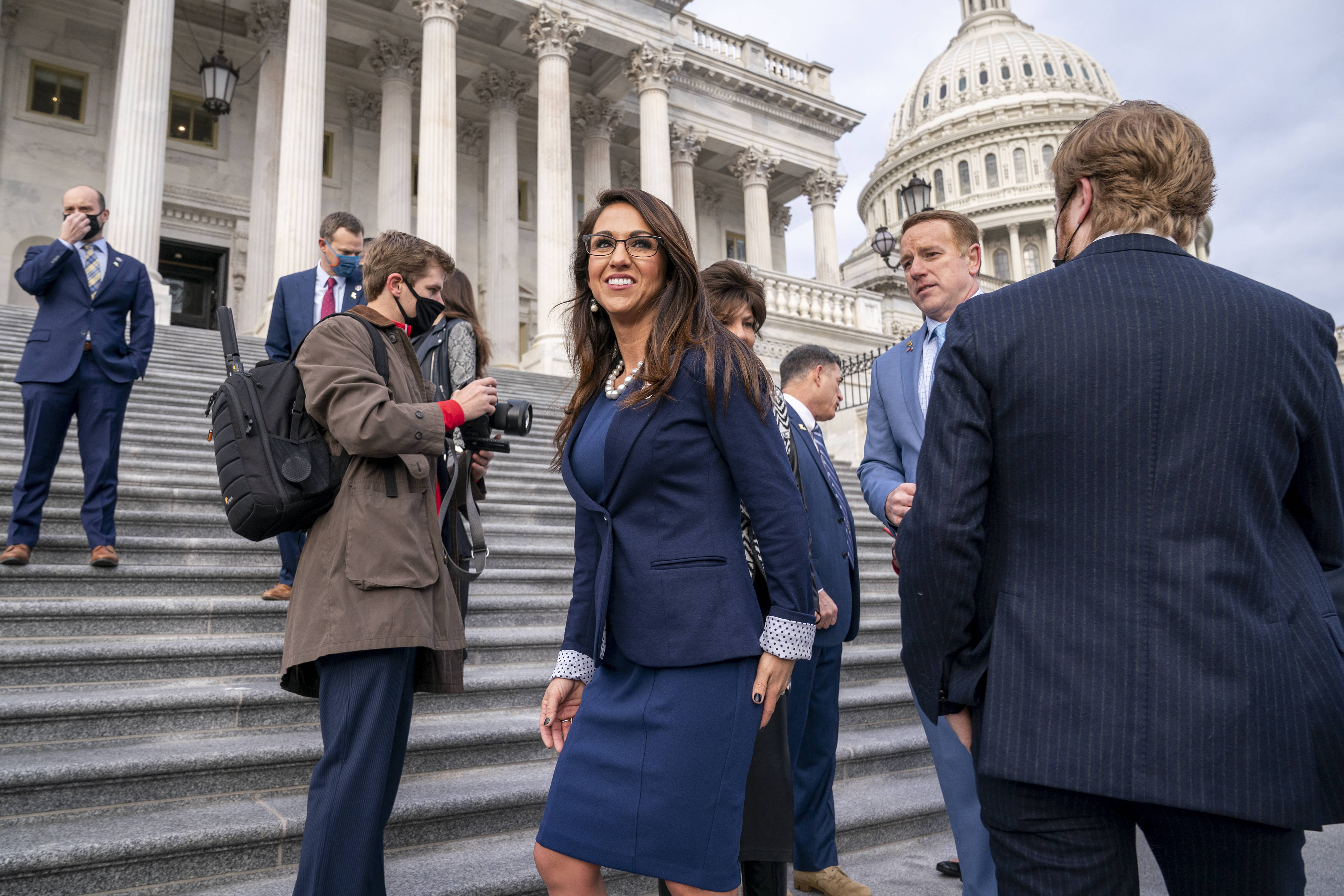 Rep. Lauren Boebert (R-Colo.). (AP Photo/J. Scott Applewhite) | Who she is: A new Republican congresswoman from Colorado who is a star on the right for her gun-wearing, in-your-face, conspiratorial politics. She appeared to try to bring a gun into the Capitol to vote after the Jan. 6 insurrection, has called masks "face muzzles," and has ties to the conspiracy theory QAnon. Why she's in the news: She may have some ethical, if not legal, troubles. The government is looking into how she used her campaign finances. And we just learned that she didn't report that her husband made nearly $1 million in energy consulting, reports The Post's Isaac Stanley-Becker. Members of Congress have to report, in very broad strokes, their income and their family's income for accountability. What happens next: We don't know. There could be an ethics investigation in Congress, which tend to lead to slaps on the wrists. But one ethics expert told The Post that if she purposefully hid her husband's income, it could be a crime. How Biden could pressure GOP governors on masks On Wednesday, Biden jumped head first in the political mask wars, which are primarily taking place in Texas, Florida and Arizona. GOP governors there want to ban mask mandates for schools, but a number of school districts are putting them in place, in accordance with federal guidelines. In response, these governors are threatening to withhold funding for schools. Biden got the federal government involved. He has called school officials in Florida and Arizona to cheer them on in their fights against the GOP governors. And now the Department of Education is looking into how it can "investigate" state policies that violate "the rights of every student to access public education equally." Read between the lines, and it looks like the Biden administration is considering suing states that ban mask mandates in schools, if it can find a way in. | 




 Email
Email 


