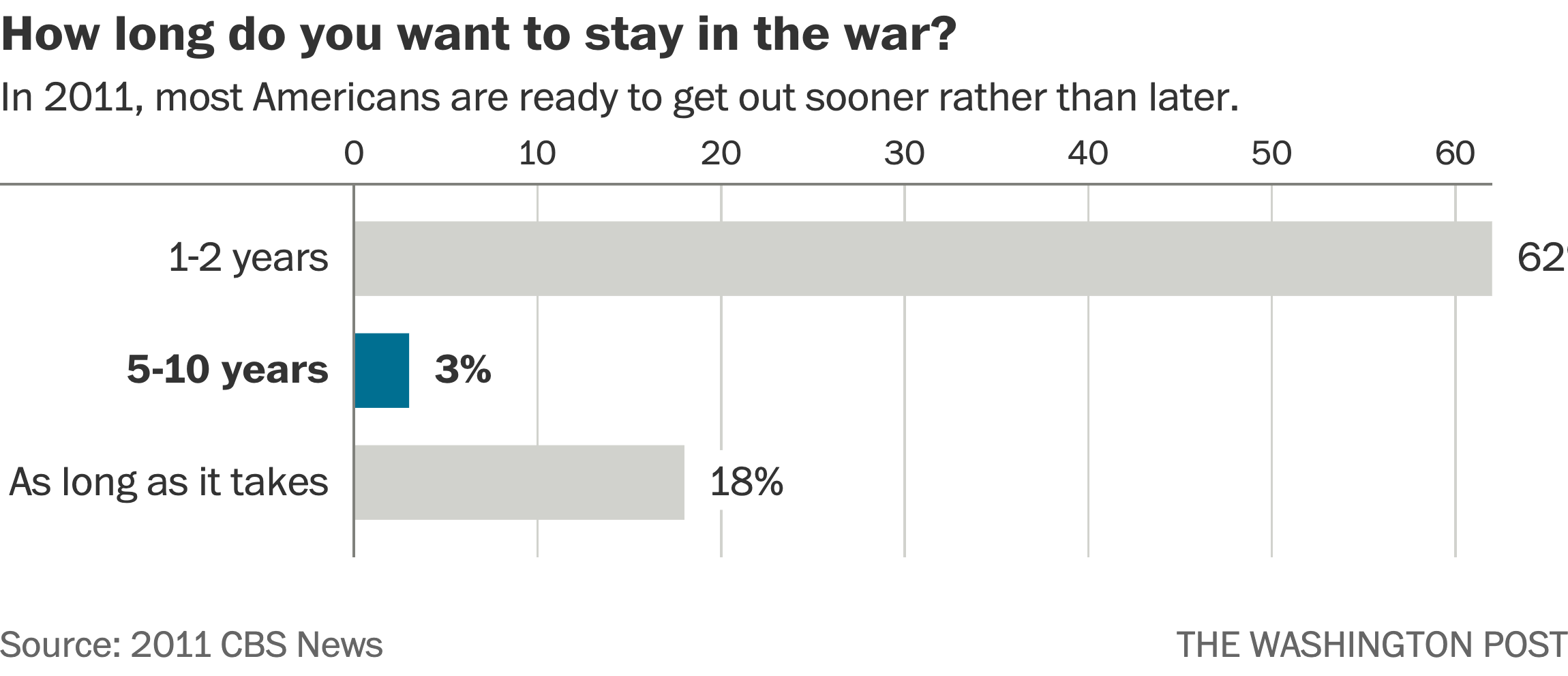
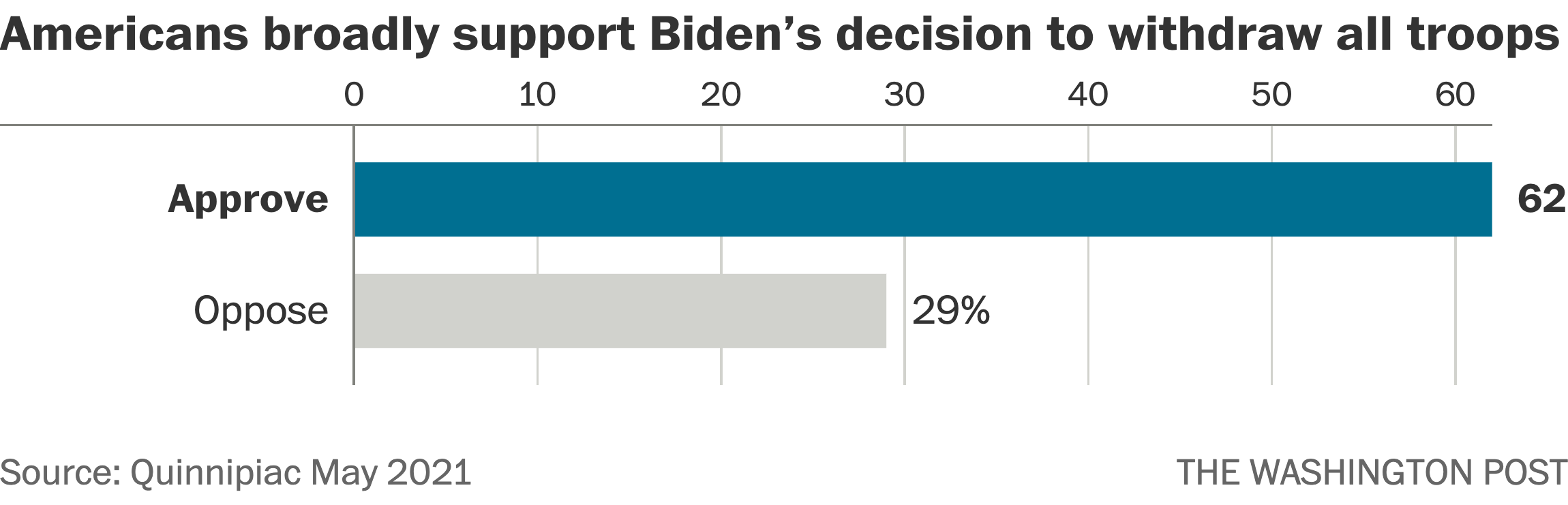
| As the world frets over what the future holds for a Taliban-led Afghanistan and whether Afghan allies of the United States can get out safely, let's take a look at just when Americans soured on the war. Americans weren't always opposed to war in Afghanistan. Twenty years ago, when it was launched in response to the Sept. 11 attacks, most U.S. citizens supported it, public opinions surveys show. But pockets of resistance began to form in the ensuing years, culminating in general distaste for the war by 2010. Here's a helpful timeline of how U.S. attitudes have changed since the war began. 2002: A year in, the Afghanistan war was really popular. In a Gallup poll, 93 percent of Americans said that getting into Afghanistan was not a mistake. At the time, the United States was having great success, quickly routing out al-Qaeda and the Taliban. 2004: Democrats started opposing the war, and their party would consistently question it the most. Gallup found that 41 percent of Democrats considered the war a mistake, compared with 9 percent of Republicans. | ADVERTISEMENT | | Content from Accenture | | Make the Leap, Take the Lead |  | During the pandemic, the rate of tech adoption has accelerated, but not equally. Our research shows that leaders have compressed digital transformation and moved even further ahead of the pack in innovation and growth. | |  | | | | 2010: As the war hit its 10th year, public opinion unequivocally turned against it. The public skepticism tracked with a tumultuous time for the war. Fighting spiked. Army Sgt. Bowe Bergdahl got captured by the Taliban in a case that would later lead to a high-profile prisoner swap with the Taliban. And American troops came under international criticism over mistreatment of Afghans. 2016: The war would never recover its popularity, and the United States would elect leaders to reflect that. The Iraq War had ended by this time, and Donald Trump talked openly about how to end the Afghanistan war effort. He ended up making a deal with the Taliban, and President Biden followed through on it. 2021: The public debate over whether to withdraw is over. Look at this poll from May. Now the debate turns to how badly the Biden administration bungled the evacuation effort. Why Biden's team didn't get people out sooner The Biden administration has given nine justifications for the slow evacuation of Afghan allies, reports The Fix's JM Rieger. And a big one seemed to be: We just thought we had more time. Hindsight is 20/20, but here's a quote from Gen. Mark Milley, chairman of the Joint Chiefs of Staff, in May that turned out to be remarkably wrong: "I think it's a bit early to really sound the alarm on getting everybody out just yet. That's my own personal opinion, but I think that's based on some pretty good knowledge of what's going on right now." The political mask wars are escalating 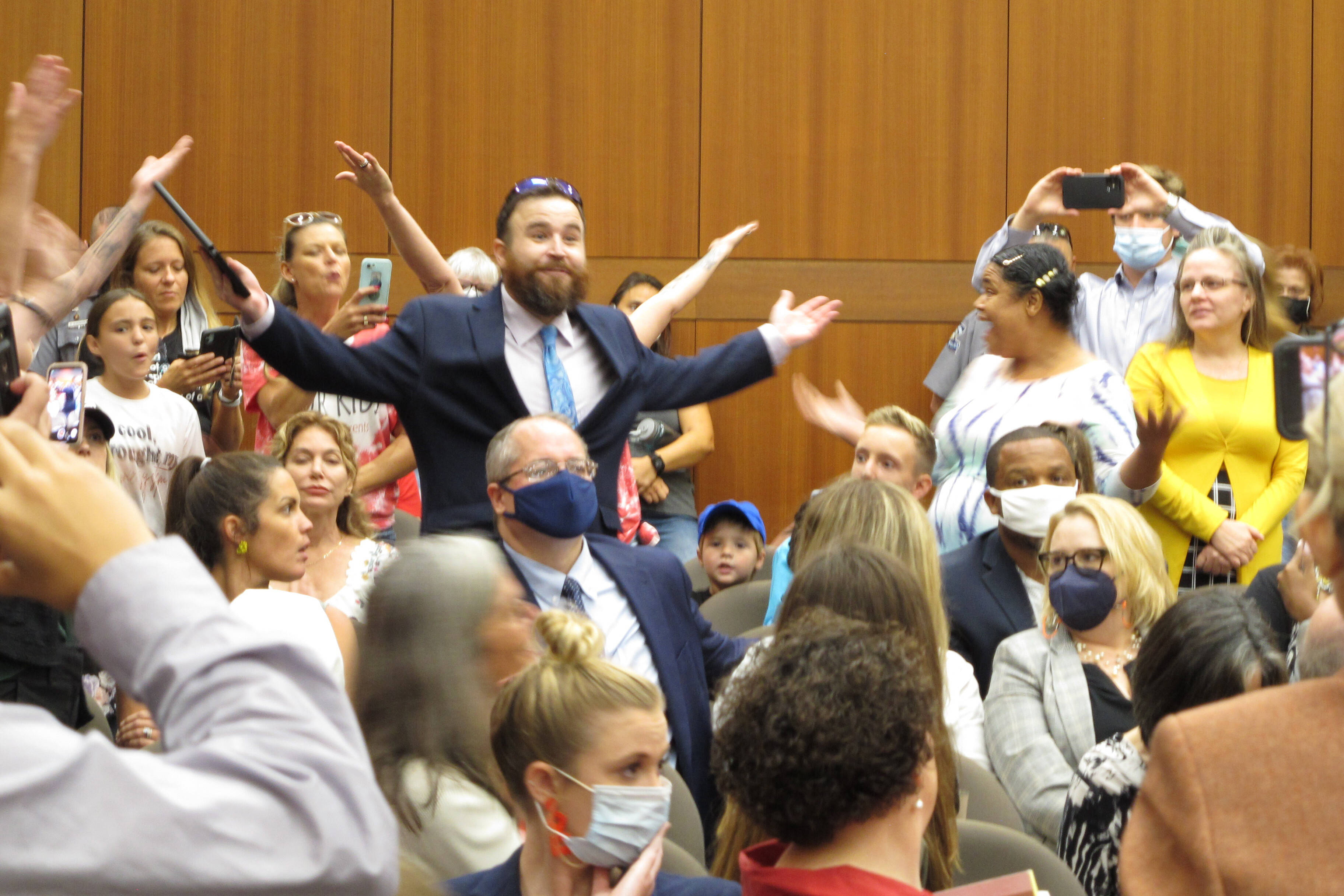 A crowd of angry, largely unmasked people objects to Louisiana Gov. John Bel Edwards's mask mandate for schools on Wednesday. | Govs. Greg Abbott of Texas and Ron DeSantis of Florida, both Republicans, have talked a big game about banning mask mandates. It's catchy with the political right. But are they willing to actually punish school districts that require students to wear masks? That's the riskier proposition these governors are facing as schools start opening and a notable number of districts in Florida and Texas require masks anyway. School officials point to rapidly filling pediatric hospital beds in their communities and a recommendation from the Centers for Disease Control and Prevention to mask up in schools. One Texas school district even wove masks into its dress code. DeSantis has threatened to withhold funds from school districts that defy him on masks. Now, he will have an opportunity to actually do that because the state's education board has voted to punish two districts in particular over masks. Abbott in Texas fought — and temporarily won — the mask argument in state court. (He also just tested positive for the coronavirus, a diagnosis that hasn't cowed other Republicans pushing against public-health standards.) He could punish defiant schools, too. But some Republicans in Congress are warning these governors against going too hard on mask-mandate bans, lest it backfire if more people get sick. In a new poll, a significant majority of Americans (69 percent) said they support mask mandates in schools. | 




 Email
Email