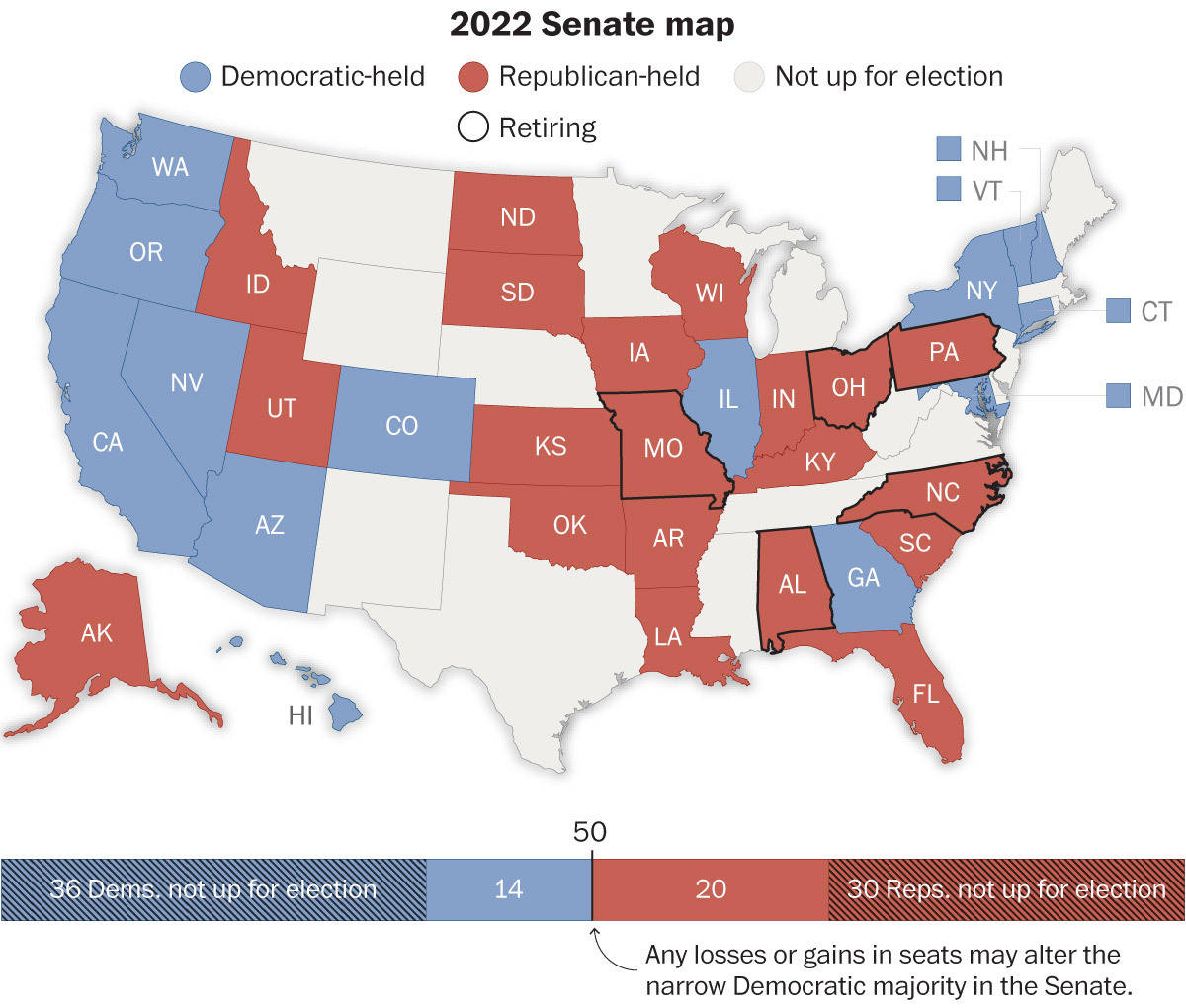
| Twelve U.S. service members were killed Thursday and 15 more were wounded in an Islamic State terrorist attack outside the airport in Kabul, the Pentagon said. Dozens of Afghan civilians also appear to be killed. President Biden is scheduled to deliver remarks on the terror attack at 5 p.m. The latest is here. Let's talk about the 2022 midterm elections. For the first time in a decade, Democrats control the main levers of power in Washington: The White House, the House of Representatives and the Senate. But that could be short-lived. Here's why Democrats are at risk of losing their majorities in Congress next year. First up, the House. The battle for the House of Representatives The lay of the land now: In 2020, as Americans voted to kick out a Republican president, they actually voted more Republicans into Congress. So the majority that Democrats won in 2018 narrowed. Now they only have four votes to spare. What that means for the 2022 midterms: Democrats are on the defensive. They have to hang on to seats in Republican-leaning districts in states like Iowa, Illinois and Arizona in an election cycle that's usually not kind to the party in power. (Democrats lost more than 60 seats in 2010, the first midterms when President Barack Obama was in office. That's an extreme example, but you get the point.) Redistricting plays a big role: This year, state legislatures across the nation will redraw congressional districts with the new 2020 census data. Republicans control that process in key states like Florida, Georgia and Texas. Some analysts estimate that Republicans could simply just redraw themselves into the majority without having to win any tough elections. (Without passing federal voting rights legislation that would ban gerrymandering, Democrats don't have many options to fight this.) It's not all bad for Democrats: The nonpartisan Cook Political Report estimates there are roughly 40 vulnerable Democrats and 40 vulnerable Republicans this year (those numbers will change after redistricting is done later this year), so Democrats also have opportunities to pick off Republicans and hang on to their majorities. Also, no one knows what the midterm landscape will look like without Donald Trump in office. He motivated Democrats and Republicans to vote. Might Republicans be less inclined to vote when he's not on the ballot, and there's a (comparatively) not-controversial Democratic president in office? (But Trump or no Trump, Republicans also tend to vote more regularly than Democrats in midterm elections.) The battle for the Senate 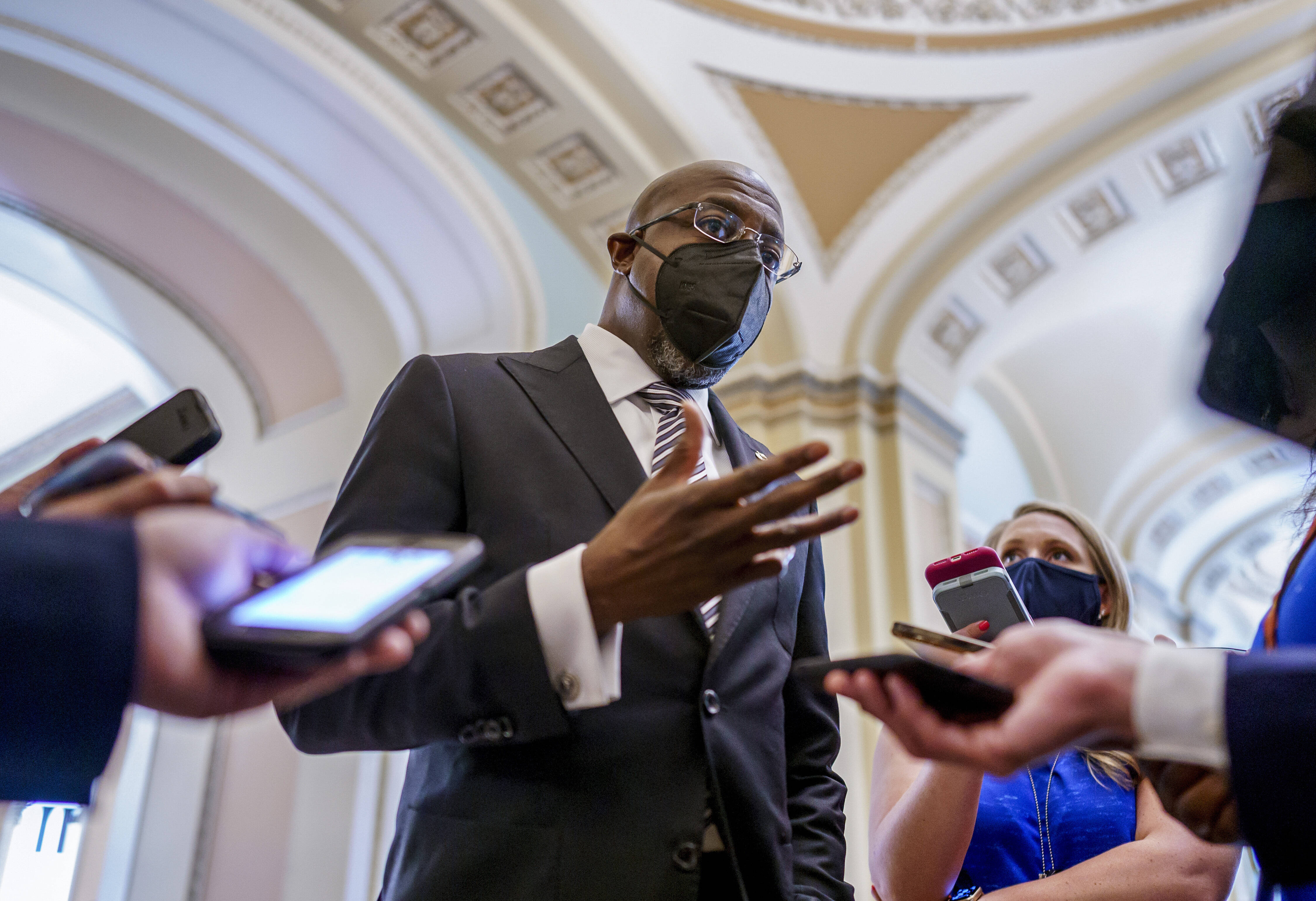 Sen. Raphael G. Warnock (D-Ga.) is particularly vulnerable. (AP Photo/J. Scott Applewhite) | The lay of the land now: It's split 50-50. Democrats have the majority now only because Vice President Harris (D) can, and has, cast tiebreaking votes. What that means for the 2022 midterms: Democrats are on the defensive. (Sense a theme?) If they lose a net of just one seat, Republicans will have the majority. Democrats are defending four seats that look vulnerable — Georgia, Arizona, Nevada and New Hampshire. One of the most vulnerable Senate Democrats is Sen. Raphael Warnock in Georgia. And Republican state lawmakers in Georgia just approved voting restrictions that voting-rights advocates say will make it harder for voters, especially those of color, to cast ballots. It's not all bad for Democrats: They have a chance to pick up as many Senate seats as they could lose, especially in Pennsylvania and North Carolina, where the GOP senators are retiring. (It's much easier to take an open seat than to knock off a sitting U.S. senator.) But the same caveats apply here as in the House: The party in power has historically lost seats in midterm elections. It's possible that in January 2023, Biden will be dealing with a Republican-controlled Congress. A behind-the-scenes look at Nancy Pelosi 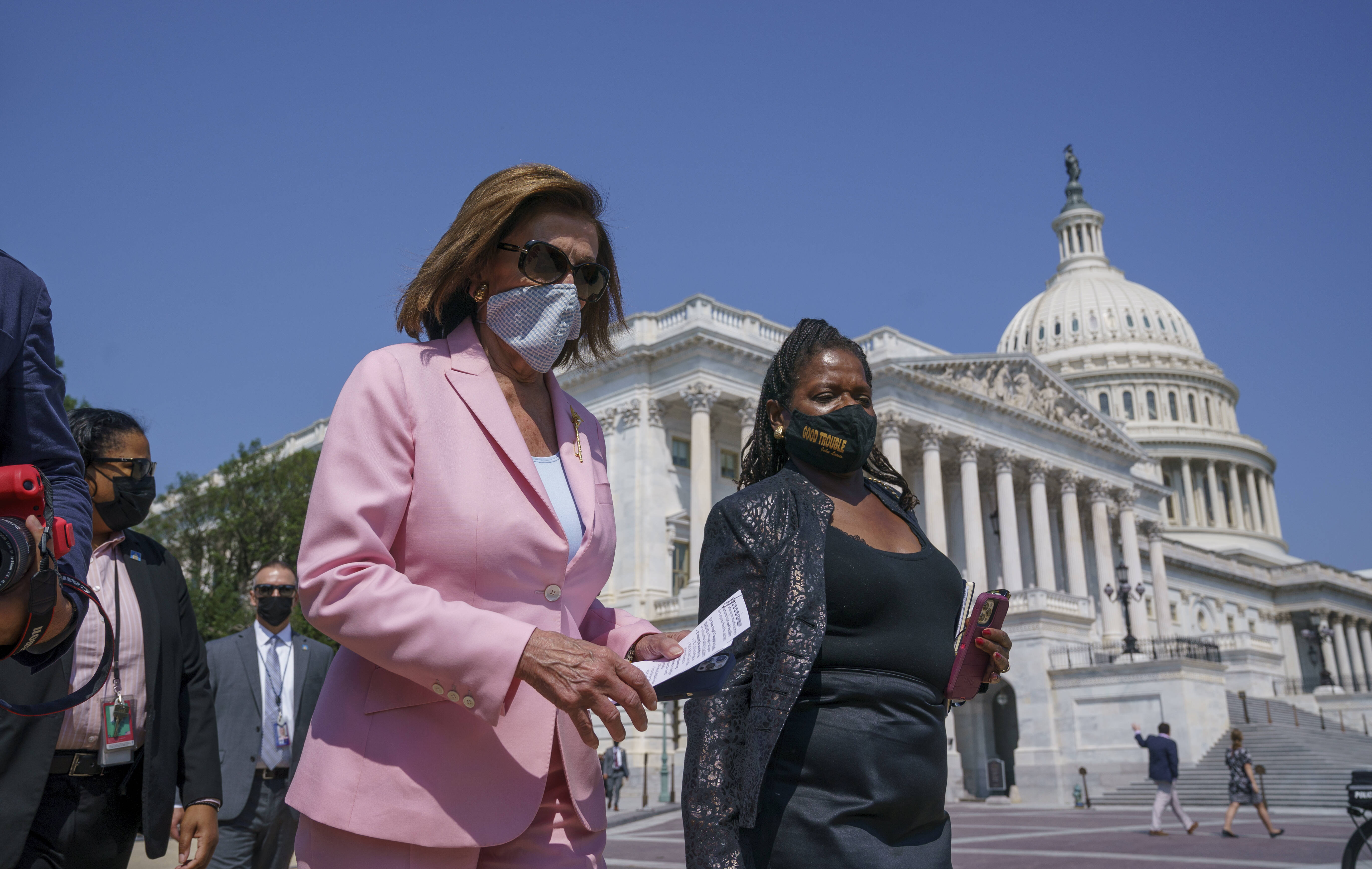 House Speaker Nancy Pelosi (D-Calif) is being celebrated in her party as an expert dealmaker. (AP Photo/J. Scott Applewhite) | The House speaker is being heralded by those in her party as "masterful" (Biden's words) this week after she negotiated a tenuous deal between House liberals and moderates for a $3.5 trillion budget plan and a $1 trillion infrastructure package. If both become law later this year, they will be big legislative wins for the Democratic Party. I recently looked at why she's being praised as such an effective leader. One behind-the-scenes moment from a former aide stuck out to me. This person, who has been in many negotiating rooms with her, said Pelosi is relentless in asking for more out of her opponents. "She never really agrees to anything until she knows the other side has no more to give," said the aide. "I have seen that before, where she is like, 'Oh, and one more thing' to [Senate Minority Leader Mitch] McConnell or [former GOP House speaker John] Boehner. There is always something else to ask for." | 




 Email
Email