| There is no doubt that climate change is fueled by human activities and is having increasingly dangerous effects on our world. That's been the scientific consensus for a while now, but what's new Monday is a report from the world's top scientists saying that human-caused climate change is unequivocal. Read: That is a fact that cannot be argued with. But has that message filtered through to politicians? Specifically to Republican lawmakers who have been largely skeptical of acting on climate change? Gone are the days when a senator throws a snowball on the Senate floor and argues it's evidence the world isn't warming. (That actually happened in 2015.) 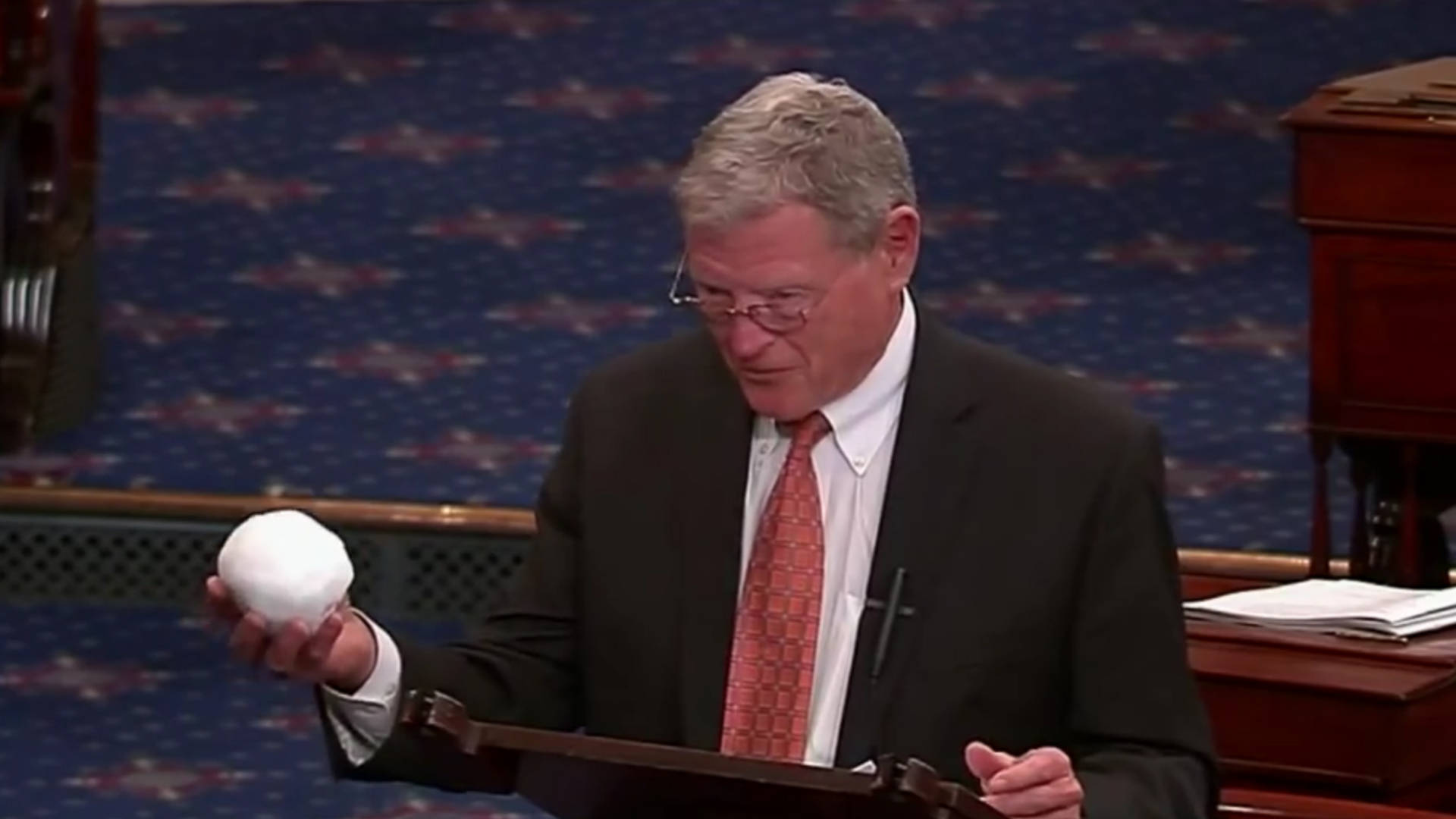 Sen. James M. Inhofe (R-Okla.) in 2015 threw a snowball on the Senate floor to argue climate change wasn't real. (C-SPAN) | That same year, the Senate voted to agree that climate change is real but divided on whether humans were causing it. At the end of Donald Trump's presidency, I wrote about how there are early signs that Republicans do want to do something about climate change. They were receiving warnings from conservative climate activists that "young people are leaving the Republican Party in droves over this issue." But this week, the biggest climate change proposals were left out of a bipartisan infrastructure bill to ensure it got enough votes from Republicans to pass in a bipartisan manner. And the GOP party's de facto leader, Trump, has said climate change is a "hoax." Others on the right feel like addressing climate change is giving into the left, writes The Post's Philip Bump. Instead, what seems more likely is that U.N. report could give Democrats more ammunition to go it alone on climate policy. Their first attempt to do that will be through an enormous spending bill introduced today that Republicans can't filibuster. Or maybe the party decides it's time to get rid of the filibuster entirely to act quickly on the environment.  A burned vehicle destroyed by the Dixie Fire in California, the second-largest fire in state history. Scientists say climate change is exacerbating these events. (David Odisho/Getty Images) | Why infrastructure, of all things, escaped the partisan mire By Tuesday morning, the Senate is expected to have approved a major infrastructure bill in a majorly bipartisan way. It's supported by 50 Democrats and nearly 20 Republicans. The House of Representatives still needs to approve it in the next few weeks, but it's expected to pass. It's a huge win for bipartisanship and, as I wrote in this newsletter last week, suggests more bipartisan work could come. Here are four specific ways this infrastructure debate escaped the partisan mire. More details here. 1. It's a popular idea. Seventy percent of Americans like the idea of new spending on roads, bridges and broadband, a Monmouth University poll finds. 2. It has no major enemies. Universal background checks for gun buyers is also very popular, but it has hardcore opposition. The only opponents to infrastructure spending were debt hawks, and they have waned in influence lately. 3. Trump's influence waned, too. The former president opposed the bill from his perch in Florida, but a number of Republicans either didn't hear him or didn't care. 4. It was the politically right time for both parties to compromise. Control of both chambers of Congress is up for grabs next year. While elections tend to make both retreat to partisan safety, there is also something to be said for campaigning on being able to break the gridlock in Washington. How cryptocurrency became a powerful force in Washington It's time, Washington has decided, to start putting regulations on the wild West investment known as cryptocurrency. This debate has become tied up in the infrastructure bill, and it's really just the beginning of one that can loosely be framed as liberal tech versus aging lawmakers who are struggling to understand it. As my Washington Post colleagues write, crypto is lobbying up to try to frame the early debate in their favor: Cryptocurrency firms today have nearly 60 registered lobbyists. Five years ago, they had one, according to the Center for Responsive Politics. They are also on track to spend more than $5 million on lobbying this year, twice the total from just last year. "They see the writing on the wall and they want to get ahead of regulations," said Casey Burgat, director of George Washington University's legislative affairs program. Also, today I learned that Wyoming has become a hub of cryptocurrency innovation. | 




 Email
Email 


