| Welcome to The Daily 202 newsletter! Tell your friends to sign up here. No "on this day" today, just a quick apology. I wrote yesterday that Kamala Harris would be the first sitting vice president to visit Vietnam. I should have said "… since the end of the war" or something like that. As an eagle-eyed reader pointed out, Hubert Humphrey zipped through Saigon, South Vietnam, in 1966. To understand President Biden's huge national security gamble in pulling out of what he once dubbed the "godforsaken landscape" of Afghanistan, look over the horizon, especially with the 20th anniversary of Sept. 11 just four weeks away. That's "over the horizon" as in the United States, newly deprived of some critical intelligence and Special Forces assets on the ground, maintaining the ability, from a suddenly far longer range, to deter or destroy would-be terrorist plotters. Questions about that ability now loom larger over the long haul than the immediate problems tied to the troop withdrawal. "Our only vital national interest in Afghanistan remains today what it has always been: preventing a terrorist attack on the American homeland," Biden said in remarks from the East Room on Monday to defend the troop withdrawal. 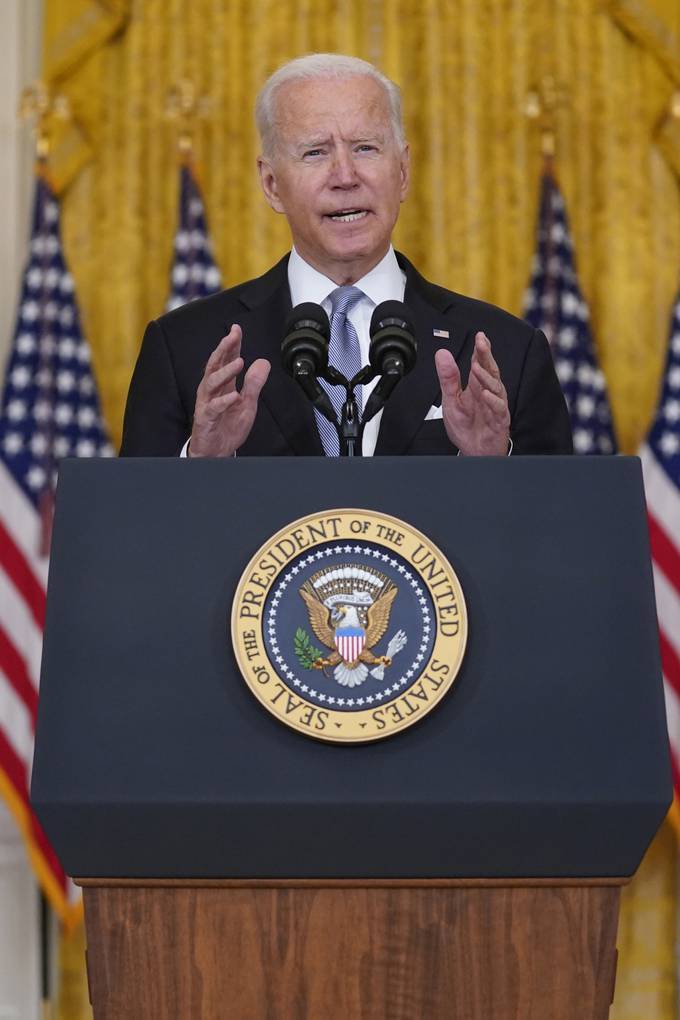 President Biden speaks about Afghanistan from the East Room of the White House on Aug. 16. (Evan Vucci/AP) | Sen. Lindsey O. Graham (R-S.C.) — who fiercely opposed the pullout — sounded the alarm after a Sunday briefing with administration officials on the unfolding scene in Afghanistan. He said officials "were revising their June assessment that the threat to the U.S. homeland from militant groups like al-Qaeda operating from Afghanistan was a medium risk and could begin in as few as two years." | ADVERTISEMENT | | Content from Accenture | | Make the Leap, Take the Lead |  | During the pandemic, the rate of tech adoption has accelerated, but not equally. Our research shows that leaders have compressed digital transformation and moved even further ahead of the pack in innovation and growth. | |  | | | | The president has acknowledged in the past, notably in May 28 remarks to service members and their families at Joint Base Langley-Eustis in Hampton, Va., that American boots on the ground in Afghanistan had stymied plans to strike the United States from there. Biden's withdrawal gamble, then, is that America can take steps — some diplomatic, some military — to ensure that, even without a military presence in Afghanistan, the war-racked country won't again become a terrorist safe haven. As policies go, it's a pretty big one. "We conduct effective counterterrorism missions against terrorist groups in multiple countries where we don't have a permanent military presence. If necessary, we will do the same in Afghanistan," the president argued Monday. (White House talking points distributed to congressional allies listed one of those countries as Syria, where, whoops, America still has hundreds of troops.) "We've developed counterterrorism over-the-horizon capability that will allow us to keep our eyes firmly fixed on any direct threats to the United States in the region and to act quickly and decisively if needed," he promised. The phrase has been a staple of Biden's rhetoric on the troop withdrawal, a policy that remains broadly popular with the U.S. public but faces some bipartisan criticism for wrongheaded assumptions about Afghan forces and hurried, even scattershot, implementation. It's in a July 8 speech laying out the drawdown: "But make no mistake: Our military and intelligence leaders are confident they have the capabilities to protect the homeland and our interests from any resurgent terrorist challenge emerging or emanating from Afghanistan.
"We are developing a counterterrorism over-the-horizon capability that will allow us to keep our eyes firmly fixed on any direct threats to the United States in the region, and act quickly and decisively if needed." It's in those May 28 remarks: "As we draw down, we're also going to focus on the urgent work of rebuilding over-the-horizon capabilities that'll allow us to take out al-Qaeda if they return to Afghanistan — but to focus on the threat that has metastasized.
"The greatest threat and likelihood of attack from al-Qaeda or ISIS is not going to be from Afghanistan; it's going to be from five other regions of the world that have significantly more presence of both al-Qaeda and organizational structures, including ISIS." It was in his April 29 speech to a joint session of Congress: "We will maintain an over-the-horizon capacity to suppress future threats to the homeland." And he used it in his April 14 announcement he would pull U.S. forces out of Afghanistan, delivered from the White House Treaty Room, from which President George W. Bush on Oct. 7, 2001, announced the start of the war. "We'll reorganize our counterterrorism capabilities and the substantial assets in the region to prevent reemergence of the threat to our homeland from over the horizon. We'll hold the Taliban accountable for its commitment not to allow any terrorists to threaten the United States or its allies from Afghan soil." It's understandably central to his argument that pulling out won't endanger the "only vital national interest." But there's some question as to whether he's right, as CIA Director William J. Burns suggested in April 14 testimony to Congress. Burns told the Senate Intelligence Committee the withdrawal came with a "significant risk" that groups like the Islamic State or al-Qaeda might try to build up their presence in Afghanistan and again plot attacks on U.S. interests. "Both al-Qaeda and ISIS in Afghanistan remain intent on recovering the ability to attack U.S. targets, whether it's in the region in the west or ultimately in the homeland," he said. "After years of sustained counterterrorism pressure, the reality is that neither of them have that capacity today." Still, "when the time comes for the U.S. military to withdraw, the U.S. government's ability to collect and act on threats will diminish, that's simply a fact," Burns testified at the annual hearing on worldwide threats. "But we will work very hard at CIA and with all of our partners to try to provide the kind of strategic warning to others in the U.S. government that enables them and us to address that threat if it starts to materialize," he promised. The United States no longer has bases in Central Asia, though it has reportedly been negotiating with some of Afghanistan's neighbors. Counterterrorism surveillance and strikes could be launched from places like Qatar or the United Arab Emirates, or from a submarine or aircraft carrier in the Arabian Sea. In April, my colleagues Missy Ryan and Karoun Demirjian reported Gen. Kenneth "Frank" McKenzie, commander of U.S. Central Command, told Congress the logistical challenges were daunting. "'I don't want to make that sound easy,' McKenzie said of the larger 'over the horizon' counterterrorism mission, as military officials call the effort to combat militants from afar. 'It's going to be extremely difficult to do it, but it will not be impossible.'" | | | What's happening now 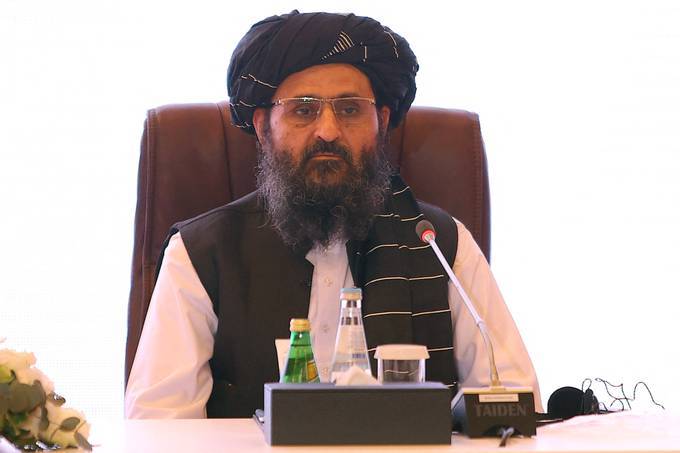 In this July photo, the leader of the Taliban negotiating team Mullah Abdul Ghani Baradar looks on the final declaration of the peace talks between the Afghan government and the Taliban is presented in Qatar's capital Doha. (Photo by KARIM JAAFAR / AFP) (Photo by KARIM JAAFAR/AFP via Getty Images) | Taliban co-founder and de facto leader, Abdul Ghani Baradar, arrived in Afghanistan today for the first time in more than a decade, Rachel Pannett, Jennifer Hassan, Katerina Ang and Erin Cunningham report. Kabul's airport is open and flights have resumed to evacuate Americans, Annie Linskey reports. To start your day with a full political briefing, sign up for our Power Up newsletter. | | | More on Afghanistan Pentagon spokesman John Kirby insisted that U.S. officials had "planned for almost every contingency" surrounding evacuations. - Kirby "rejected the notion that the administration was caught flat-footed by the disorder at the airport, explaining that U.S. officials has been 'planning for noncombatant evacuation operations' since May," Politico's Quint Forgey reports. "But as an old military maxim says, no plan survives first contact. So obviously, we had to adjust in the moment," he said.
As pressure builds on Biden to speed evacuations, Kirby also pledged the U.S. would meet its "moral and sacred obligations" to Afghans who provided assistance. - Kirby cited "plans for the military to remain on the ground there for a couple more weeks and house up to 22,000 refugees at U.S. bases," John Wagner reports. "We plan on being on the ground there in Afghanistan for the next couple of weeks," Kirby said during an appearance on ABC's "Good Morning America." "It's not just about moving out Americans. It is very much about meeting our moral and sacred obligations to those Afghans who helped us over the last 20 years, getting as many of them out as we can."
- "During the interview, Kirby also acknowledged that intelligence about reconstitution of terrorist activities based in Afghanistan would 'certainly be more difficult to discern going forward.' But, he said, 'it's not going to be impossible.'"
- "He declined to answer directly a question about whether Biden had overruled military leaders in deciding to withdraw U.S. troops. 'The commander in chief is the commander in chief,' Kirby said. 'It's not about overruling his military leaders or his other advisers. He is given options, he is given the pros and cons for each option, and then it is up to the commander in chief to decide. He was advised by the Defense Department. We have a seat at the table. We provided our advice and counsel. The president made his decision, and now we're in execution mode. That's the way it works.'"
- Former president George W. Bush urged Biden on Monday to "cut the red tape for refugees," saying that "the Afghans now at greatest risk are the same ones who have been on the forefront of progress inside their nation."
The Taliban announced a general amnesty for government officials and ordered its fighters to maintain discipline this morning. - "The Taliban's moves to assuage fears over its rapid ascent to power came just one day after thousands of Afghans swarmed the airport in Kabul in a desperate bid to flee the country, prompting U.S. forces to suspend operations," Rachel Pannett, Jennifer Hassan, Katerina Ang and Erin Cunningham report. This morning, "the United States and other nations said they had restarted military evacuation efforts for allied Afghans and other civilians. Media reports suggested, however, that access to the airport remained difficult for many residents seeking a way out."
- Taliban leaders "took to Twitter, appeared on international cable networks and planned a news conference — all to provide assurances that they would not engage in systemic retribution and to offer vague reassurances to women. Yet there were ominous signs that those promises did not match the situation on the ground," the New York Times reports. "Taliban fighters spread out across the streets of Kabul, the capital, riding motorbikes and driving police vehicles and Humvees that had been seized from government security forces. Armed fighters occupied Parliament, some visited the homes of government officials, confiscating possessions and vehicles, while others made a show of directing traffic."
- "In some areas of Afghanistan, women have been told not to leave home without being accompanied by a male relative, and girls' schools have been closed."
The U.S. mission in Afghanistan was a failure, according to a government watchdog report. - "The U.S. Special Inspector General for Afghanistan Reconstruction, or SIGAR, blasted successive U.S. administrations for lacking the 'necessary mindset, expertise, and resources to develop and manage the strategy to rebuild Afghanistan,' in its latest report released Tuesday," ABC News's Lauren Lantry reports. "The report, prepared before Kabul's fall, found that while the U.S. achieved some important successes for the Afghan people, those gains would be lost if the Taliban took control."
- "The U.S. government struggled to develop a coherent strategy, understand how long the reconstruction mission would take, ensure its projects were sustainable, staff the mission with trained professionals, account for the challenges posed by insecurity, tailor efforts to the Afghan context, and understand the impact of programs," the report said.
- "More than 140 pages long, the report details how 20 years and $145 billion of effort were often wasted because projects weren't tailored to the complex realities on the ground. Essentially, the U.S. government kept trying to force Afghanistan into a box that it didn't — and couldn't — fit into, the report found."
Secretary of State Antony Blinken is making a flurry of calls to his overseas counterparts, an apparent effort to defend the withdrawal. - "Mr. Blinken spoke to foreign ministers from nations including Britain, China, India, Pakistan, Russia and Turkey on Monday amid [the] Taliban takeover," the Times's Dan Bilefsky reports. "The State Department offered few details of the call between Mr. Blinken and China's foreign minister, Wang Yi, other than to say that the two had discussed security in Afghanistan and their respective efforts to get their citizens to safety."
- "But the Chinese government took the opportunity to criticize the United States. Its foreign ministry said in a statement that Mr. Yi had told Mr. Blinken that the hasty U.S. withdrawal had 'a serious negative impact' in Afghanistan."
Lawmakers on both sides of the aisle are urging the Biden administration to protect female Afghan leaders. - "More than 40 senators led by Jeanne Shaheen (D-N.H.), a senior member of the Senate Armed Services and Foreign Relations committees, and Sen. Robert Menendez (D-N.J.) asked [Blinken] and Homeland Security Secretary Alejandro Mayorkas to form a humanitarian parole category particularly for women who were activists, journalists, leaders, service women and more," Eugene Scott reports.
In Europe, officials reacted to the U.S. withdrawal with a mix of disbelief and a sense of betrayal. - "Even those who cheered Biden's election and believed he could ease the recent tensions in the transatlantic relationship said they regarded the withdrawal from Afghanistan as nothing short of a mistake of historic magnitude," Politico's Matthew Karnitschnig reports. "'I say this with a heavy heart and with horror over what is happening, but the early withdrawal was a serious and far-reaching miscalculation by the current administration,' said Norbert Röttgen, chairman of the German parliament's foreign relations committee. 'This does fundamental damage to the political and moral credibility of the West.'"
- Meanwhile, British Foreign Secretary Dominic Raab — who was on vacation when the Taliban took over — said that "no one saw" the takeover coming and that, if authorities had seen it, action would have been taken, Jennifer Hassan reports. Raab confirmed that Britain was considering a "bespoke arrangement" for Afghan refugees, largely aimed at helping and relocating women and girls.
- The head of the U. S-European NATO alliance blamed the leaders of Afghanistan for the government's abrupt collapse. "Ultimately, the Afghan political leadership failed to stand up to the Taliban and to achieve the peaceful solution that Afghans desperately wanted," said NATO Secretary General Jens Stoltenberg.
"Please don't leave us behind, we will be great Americans," said a U.S.-trained Afghan air force pilot. - In an interview with the Bulwark, the unnamed pilot, who is now hiding from the Taliban and hoping to be evacuated along other pilots, said they fear the Taliban will execute them if they can't escape. "I've been fighting for over fifteen years. We did not all just give up and quit. Yes, some did. Once the Americans left, we weren't ready to start doing all the logistics. The logistics, the maintenance, and corruption really hurt us," the pilot said. "I know people in the U.S. are upset that we didn't fight longer. But we've been fighting for decades — and some of us, even longer. When the U.S. left, it really affected morale, especially how quickly it happened. We woke up one day, then Bagram was gone. Everyone got scared. It got out of control."
- "I'm mad at many of the senior leaders who lined their pockets and simply vanished from the country. However, thousands of Afghan officers were not responsible for that. We were simply doing the best we could."
As Afghans scramble to escape the Taliban, Fox News hosts doubled down on their anti-refugee rhetoric. - "Hundreds of people tried to board a U.S. military aircraft in Kabul on Monday before those shut out ran alongside it, risking their lives in a desperate attempt to flee the country as the plane attempted to take off," Katie Shepherd reports. "'If history is any guide, and it's always a guide, we will see many refugees from Afghanistan resettle in our country, and over the next decade, that number may swell to the millions,'" Tucker Carlson said. "'So first we invade, and then we are invaded.'"
- "The Biden administration has committed to housing 2,500 refugees fleeing Afghanistan at a military base in Fort Lee, Va. Those people have already cleared the State Department's screening for special immigrant visas; many of them worked as interpreters for U.S. troops. … Another 4,000 people who have been partially screened will be evacuated and housed in other countries until they can be fully vetted."
- "Similarly, Fox News host Laura Ingraham called the withdrawal a 'catastrophic failure' and questioned whether it was necessary for the United States to follow through on promises made to Afghans eligible for refugee status in America. … Despite the rhetoric on refugees that has proliferated in conservative media, many Republican leaders are pushing for the Biden administration to remove roadblocks that could slow the evacuation of Afghan people who may be killed by the Taliban."
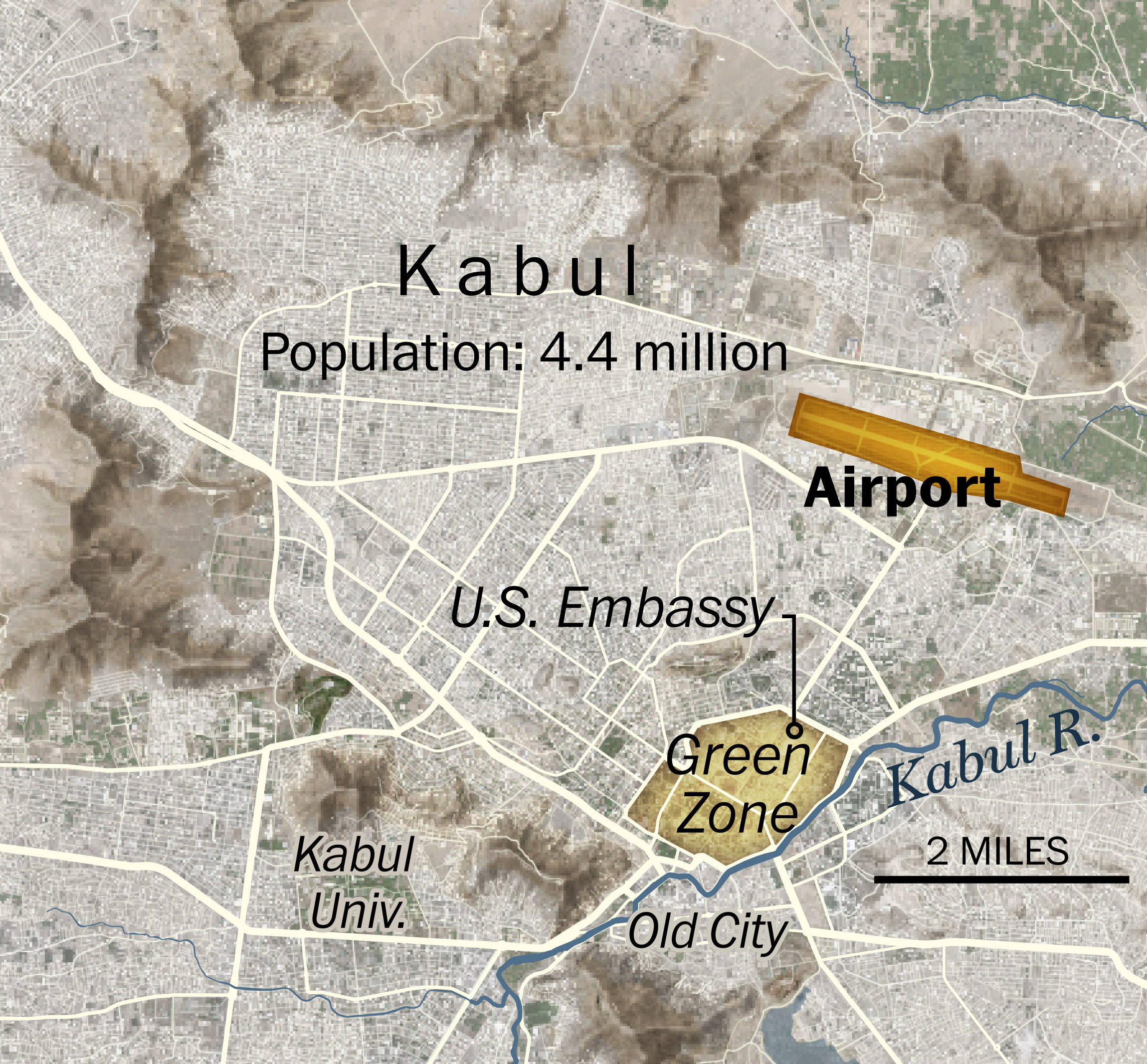
| | | Quote of the day "Right now it just does not look like we have our act together," said Leon Panetta, a longtime adviser to Democratic presidents who served as defense secretary under President Barack Obama. | | | Kabul airport, visualized Satellite photos taken late Monday morning illustrate the developing chaos on the ground at Hamid Karzai International Airport in Kabul shortly before Afghans clung to ascending planes in a desperate attempt to escape Afghanistan. | | | Lunchtime reads from The Post - "1 in 7 residents of the D.C. area moved during the pandemic, poll finds," by Luz Lazo and Emily Guskin: "One in 7 D.C.-area residents (15 percent) say they temporarily or permanently moved in the past year, according to data from a Washington Post-Schar School poll released this month, although most say their move was not related to the pandemic. Among all residents, 5 percent say they moved because of covid. Among those who moved, 37 percent say they moved for reasons related to the coronavirus pandemic."
- "Tropical storm complicates Haiti recovery efforts as heavy rains deluge devastated nation," by Paulina Firozi and Mary Beth Sheridan: "Heavy rains from the storm have already caused flooding across parts of Haiti and the Dominican Republic. Up to 10 inches of rain were expected to drench Haiti on Tuesday, according to the National Hurricane Center, with isolated areas seeing 15 inches. Flash flooding and mudslides were also anticipated, which could lead to further complications as rescue crews scramble to find and help victims of the 7.2-magnitude earthquake that struck Saturday, killing at least 1,419 people."
| | | … and beyond - "You can help Afghan refugees get resettled in the DC area," by Washingtonian's Andrew Beaujon: "Lutheran Social Services of the National Capital Area was already planning to help resettle a lot of Afghan people who'd worked alongside the US military and US government in Iraq before next month, but the fall of Kabul has added extra urgency. ... Lutheran Social Services had been looking for extra rooms in Washington-area houses to shelter folks temporarily ... but background checks and home visits take too much time right now, so she's looking for gift cards to hotels and sponsorships from hotels, particularly hotels that have suites for families."
- "Texas requests five mortuary trailers in anticipation of Covid deaths," by NBC News's Jonathan Allen and Laura Strickler: "The mortuary trailers from the Federal Emergency Management Agency will be stationed in San Antonio and sent around the state at the request of local officials. Department of State Health Services spokesperson Doug Loveday said the trailers were requested Aug. 4 after officials reviewed data about increasing deaths as a third wave of the coronavirus struck the state."
| | | Hot on the left Florida's Ron DeSantis may have already delivered the House to Republicans. "By stacking the Florida Supreme Court with ultraconservatives, the governor paved the way for an extreme new GOP gerrymander," writes Slate's Mark Joseph Stern. Though Florida voters "passed two constitutional amendments in 2010 that prohibit partisan gerrymandering of legislative and congressional districts," the state's ultraconservative 6-to-1 supermajority "has repeatedly disregarded precedents, laws, and constitutional commands that conflict with its political agenda. There is, therefore, good reason for Democrats to fear that it will refuse to enforce the anti-gerrymandering amendments." | | | Hot on the right Former vice president Mike Pence convened donors in the wealthy Jackson Hole, Wyo., as he eyes a 2024 run. "Pence held a donor retreat late last week benefiting his newly formed nonprofit group, Advancing American Freedom," Politico's Alex Isenstadt reports. The event was the first he has hosted since leaving the White House. "The retreat was invite-only, with attendees asked to contribute in the six- and seven-figure range, according to a person familiar with the matter. The two-day affair included activities like shooting and horseback riding with Pence. … Speakers at the conference included House Minority Leader Kevin McCarthy, former House Speaker Newt Gingrich and Arizona Gov. Doug Ducey, the Republican Governors Association chair and a Pence ally." | | | Today in Washington Biden is back at Camp David, where he will receive the daily brief. White House press secretary Jen Psaki and national security adviser Jake Sullivan will give a press briefing at 1:30 p.m. | | | In closing | Seth Meyers explained why the U.S. should expedite the evacuation of Afghan refugees:  | | | | | | |


 Email
Email