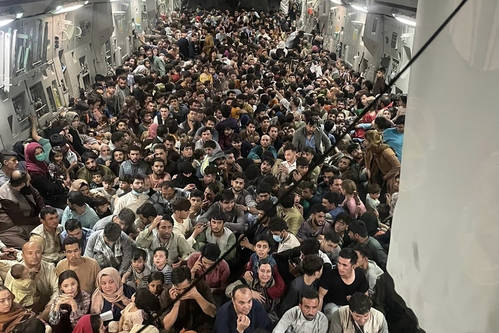
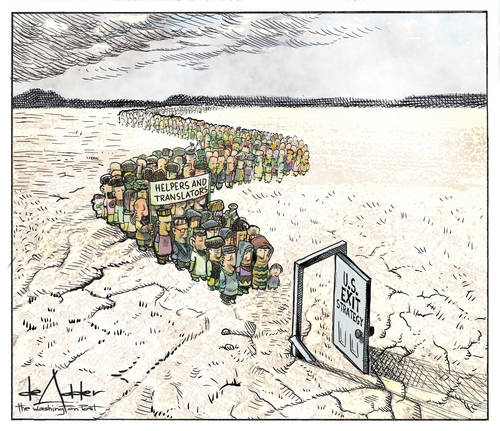
| Our columnist David Ignatius has visited Afghanistan many times since the start of the war 20 years ago; he has warned for months of the risks of withdrawing U.S. troops and the imperative to plan carefully for the aftermath of the U.S. departure. So, with the appallingly swift fall of Kabul and takeover by the Taliban, Ignatius used the occasion to look back on the dispiriting arc of U.S. involvement in Afghanistan. His piece, a travel back in time through his many trips to the region, examines the ways in which so many players — the military, politicians and policymakers, and even supposedly skeptical journalists — fell prey to the temptation to delude themselves into perceiving progress where it was illusory. "President Biden owns the final decision, for better or worse," Ignatius writes. "But the hard truth is that this failure is shared by a generation of military commanders and policymakers, who let occasional tactical successes in a counterterrorism mission become a proxy for a strategy that never was. And it was subtly abetted by journalists who were scratching our heads wondering if it would work, but let the senior officials continue their magical thinking. " Ignatius's piece is longer than usual, but I think you will find it compelling, if sobering, reading. | ADVERTISEMENT | | Content from Accenture | | Make the Leap, Take the Lead |  | During the pandemic, the rate of tech adoption has accelerated, but not equally. Our research shows that leaders have compressed digital transformation and moved even further ahead of the pack in innovation and growth. | |  | | | | 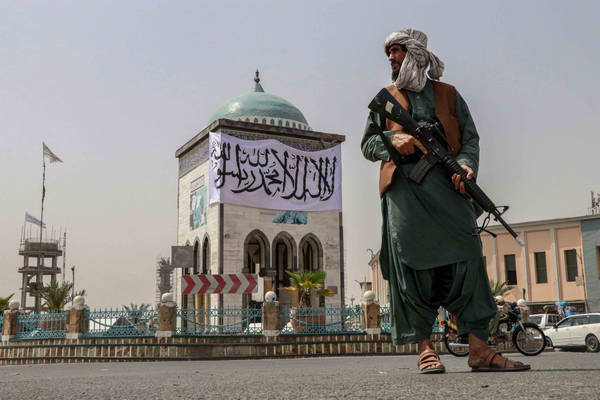 (EPA-EFE/Shutterstock) U.S. commanders kept convincing themselves they were making progress. But hope is not a strategy. By David Ignatius ● Read more » | | | | In the wake of Kabul's fall, a corrosive and deeply unfair narrative is emerging: to blame the Afghans for how it all ended. By Condoleezza Rice ● Read more » | | | | One Democratic candidate is trying to do just that. Why is this so rare? By Greg Sargent ● Read more » | | | | The executive branch is strengthening its clutch on the power of the purse. By Henry Olsen ● Read more » | | | | But even the saner ones seem primarily worried about not angering their most irresponsible constituents. By Paul Waldman ● Read more » | | | | As the solemn date looms, it is overshadowed by the Afghanistan tragedy and consequent blame game. By Gary Abernathy ● Read more » | | | Past evacuations by air suggest that the United States faces unique, and uniquely unfavorable, conditions. By Charles Lane ● Read more » | | | | The collapse of Afghanistan represents the failures of Democrats and Republicans — but failures of two natures. By Matt Bai ● Read more » | | | | In Iraq and Afghanistan, U.S. leaders have frequently projected what they want to believe onto others. By Kathleen Parker ● Read more » | | | | If the president had taken the Taliban more seriously, he would not own such a shameful outcome. By David Von Drehle ● Read more » | | | |




 Email
Email