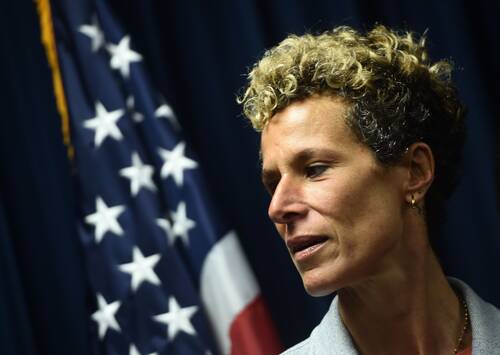
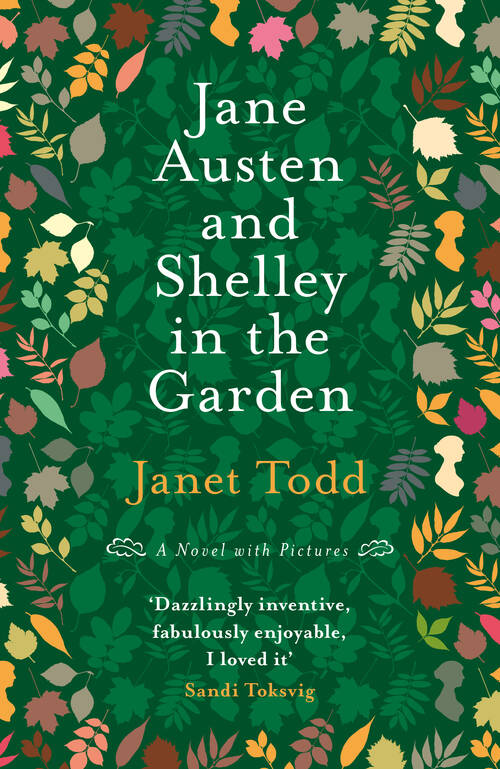
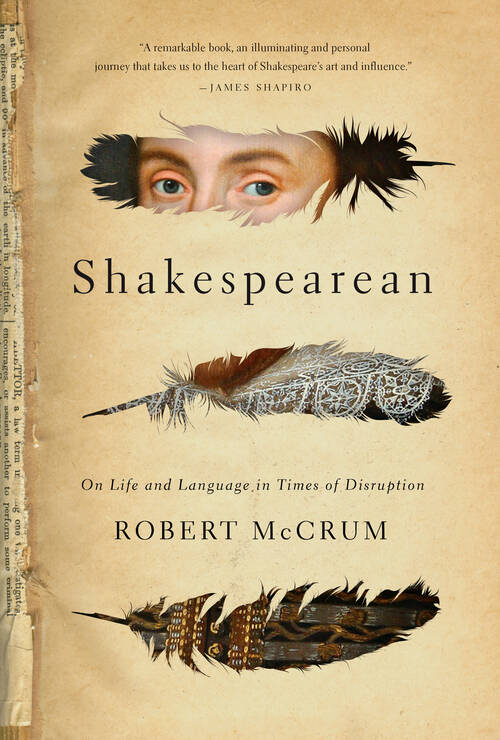
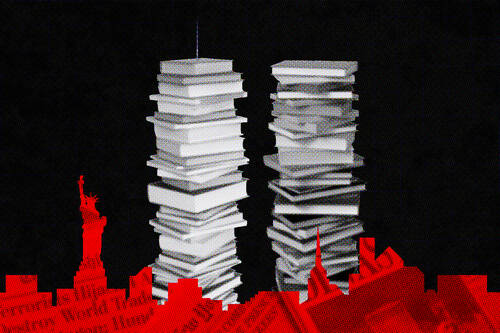
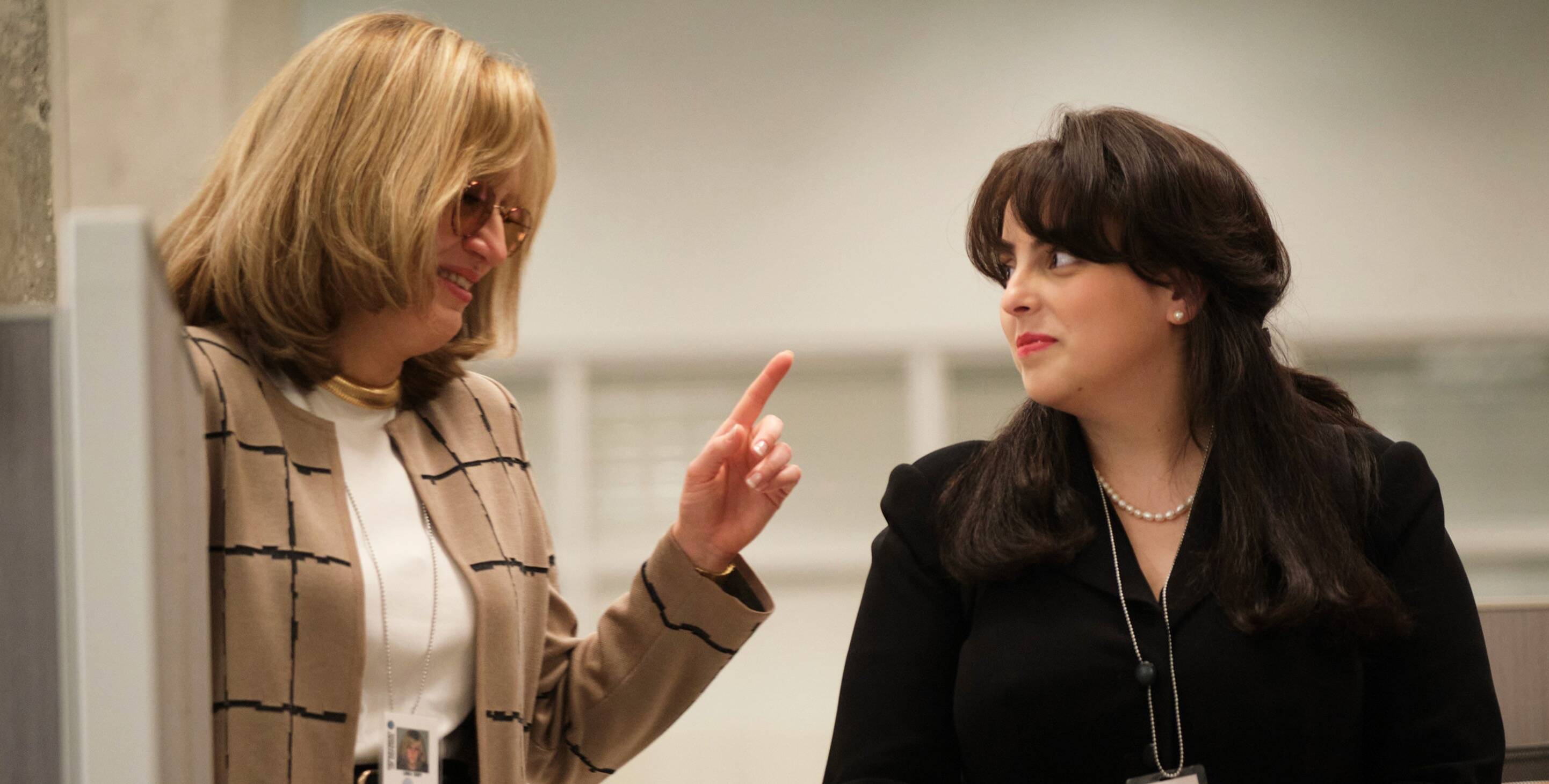
 Sarah Paulson, left, as Linda Tripp alongside Beanie Feldstein as Monica Lewinsky in "Impeachment: American Crime Story." (Tina Thorpe/FX) | "Someone told me that the best way to protect myself is to write a book." Armed with that cosmically bad advice, Linda Tripp sets in motion a scandal that will beat the pants off President Bill Clinton. Yes, I've been watching "Impeachment: American Crime Story," which started this week on FX. Sarah Paulson, tromping along under a fat suit, stars as White House secretary Linda Tripp, with Beanie Feldstein playing White House intern Monica Lewinsky (TV review). The series is based on "A Vast Conspiracy," by Jeffrey Toobin, who last year sparked his own solitary sex scandal. "Impeachment" is weirdly riveting, even though we already know everything — or think we do. I had forgotten, for instance, how much books factored into this imbroglio. There's a great moment set in 1996 when Tripp's literary agent, played with effortless perfection by Margo Martindale, tells Tripp she's too late to tell what she saw inside the Clinton White House: "Everyone's done their Clinton book — every staffer, every aide, every Appalachian broad in whom he deposited his genetic material. That genre alone could fill half a Barnes & Noble." In fact, the swell of Clinton books was just warming up. But the scandal's largest bestseller would initially skip Barnes & Noble — and every other bookstore. On Sept. 11, 1998, Congress posted "The Starr Report" online for free; some 20 million people clicked. And even that data dump couldn't satisfy Americans' lust for gossip. Three different publishers rushed hardcopies of "The Starr Report" to print; all three became bestsellers. The eye-popping level of sexual detail induced lots of heavy breathing. Phrases that had never appeared in newspapers were suddenly the focus of a national orgy of explication de sexte. Style guides had to be revised on the fly. At the Christian Science Monitor, where I was a book critic, the editors finally decided to say the presidential stain on the blue dress had been caused by "a residue." But all that was just foreplay ahead of the real publishing climax. Six months later, Lewinsky, dancing around an immunity agreement with Starr, arrived with "Monica's Story," written by Princess Di's biographer Andrew Morton. In March 1999, it debuted at No. 1. In his review for The Post, David Streitfeld warns readers, "You think you know sleaze? You don't know sleaze." Reading through The Post's archives now, I'm a little baffled by the frenzied fascination with this biography. We ran items about the book contract, the dust jacket, the book tour, the cancellation of the book tour, the biographer, the TV interviews — on and on until we started running stories in which writers seemed to blame Lewinsky for all the stories about Lewinsky. Along the way, older books were briefly drawn into the maelstrom. We learned that Lewinsky had given Clinton a copy of Nicholson Baker's phone-sex novel, "Vox." (In a particularly deflating review, Jonathan Yardley called it "a stroke book masquerading as serious commentary on The Way We Live Now.") Then came news that Clinton had given Monica and Hillary their own editions of "Leaves of Grass." Barbara Walters held up a copy during a TV interview with the former intern in front of 70 million viewers; sales of Whitman's poetry soared. Over the roofs of the world, Americans yawped, "I believe in the flesh and the appetites!" Tripp, the would-be author who goaded all this scribbling, died last year at the age of 70 (profile). A few months later, a small right-wing publisher released "A Basket of Deplorables: What I Saw Inside the Clinton White House," by Linda Tripp with Dennis Carstens. In every sense, it was too late. 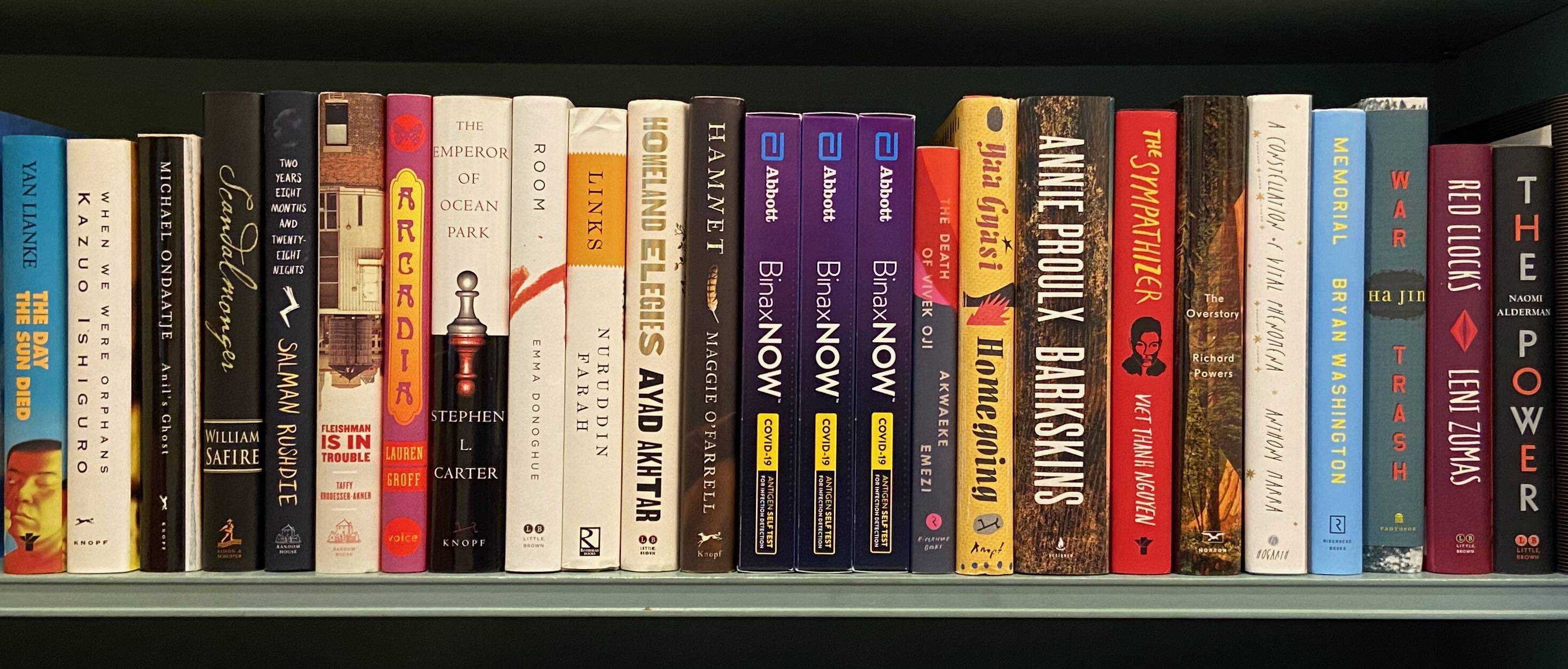 (Photo by Ron Charles/The Washington Post) | Read any good Covid tests lately? If you live in Ohio, your public librarian can help out. An innovative program funded by the Ohio Department of Health is offering Abbott BinaxNOW home covid tests for free through the state's libraries. In August, 246 library locations gave away more than 53,000 tests. This sounds incredible to me. (I've paid about $24 a piece for Abbott BinaxNOW test kits at CVS.) The program has the enthusiastic support of Republican Gov. Mike DeWine. (Delaware and D.C. have similar programs with their public library systems.) Mission creep? For Ohio Library Council executive director Michelle Francis, distributing covid tests is nothing out of the ordinary. "This is just someone checking something out," she tells me. "The only thing is they're not returning it." The program reflects how broadly librarians interpret their role. "Libraries do so much more than books," Francis says. "Yes, books are still extremely important, and literacy is at the core of what we do, but we are prepared to be the center of the community." (Are at-home covid tests accurate?) Ohio librarians have been hearing from teens who want to go on college visits, musicians who want to get together to play, actors who want to go to auditions, family members who want to visit relatives undergoing cancer treatment — all kinds of people who need a negative covid test. "Our libraries, they're doing what they do best: providing a community resource," Francis says. Using the library to distribute these home tests has all kinds of advantages over other methods. People may not have transportation to the local health department or even know where it is. And some are too afraid to ask for a test. "Well," Francis says, "they're not afraid to ask our libraries because they trust us." 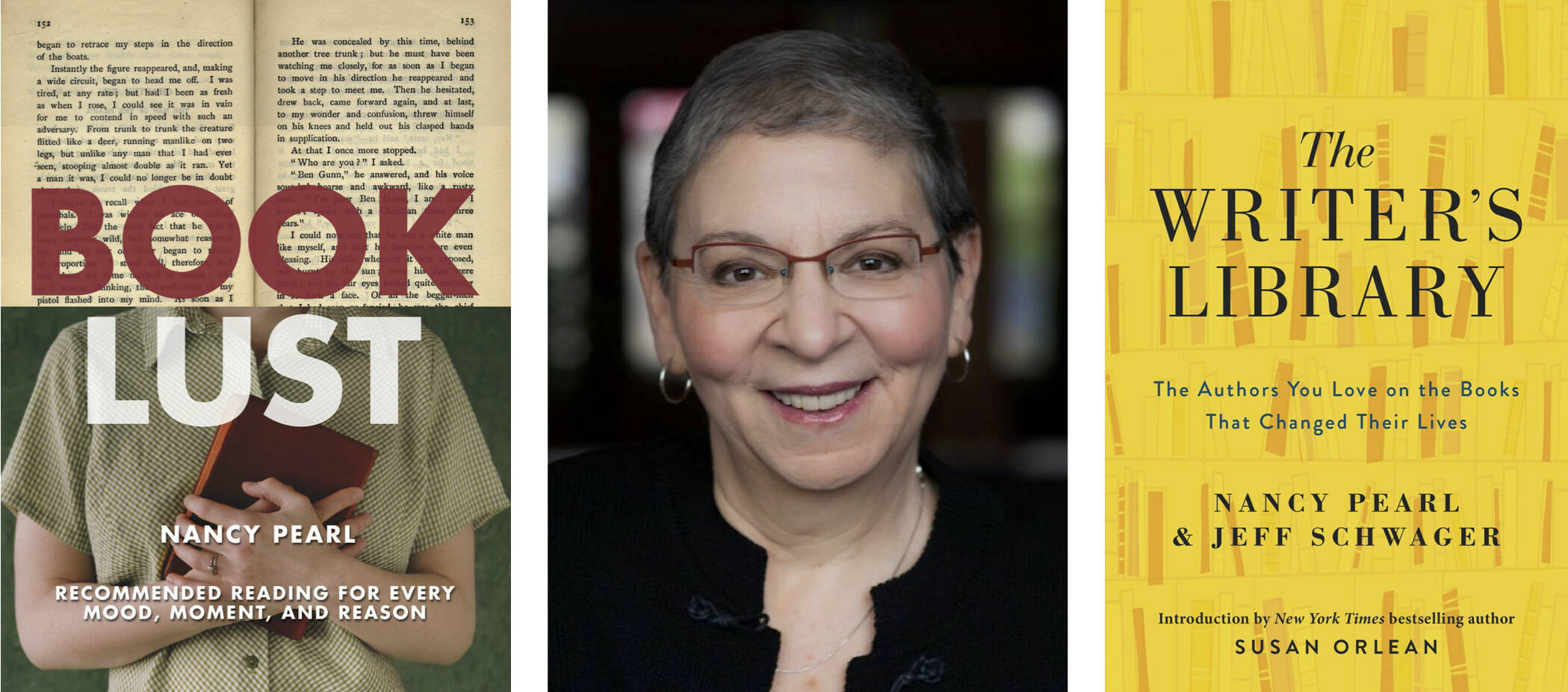 Sasquatch Books; Nancy Pearl (Courtesy of the National Book Foundation); HarperOne | Speaking of librarians you can trust, Nancy Pearl has been named winner of the Literarian Award for Outstanding Service to the American Literary Community. This $10,000 honor, conferred annually by the National Book Foundation, recognizes "an individual or organization for a lifetime of achievement in expanding the audience for books and reading." Pearl worked for decades in public library systems in Detroit, Tulsa and Seattle, where she served as executive director of the Washington Center for the Book. There she founded a program called "If All Seattle Read the Same Book," which has inspired the creation of One Book, One City programs across the world. In 2011, Library Journal named her Librarian of the Year. A frequent voice on NPR and an engaging literary critic, Pearl is also the author of several popular reading guides, such as "Book Lust," and a novel called "George & Lizzie" (review). Last fall, she and Jeff Schwager published "The Writer's Library," a collection of interviews with "the authors you love on the books that changed their lives." Full disclosure: I'll be presenting the Literarian Award to Pearl at the National Book Awards ceremony in New York on Nov. 17. And yes, I'll bring my red-caped Librarian Action Figure, inspired by the intrepid reader herself.  John Steinbeck's Sag Harbor, N.Y., cottage is for sale. (Photo courtesy of TopTenRealEstateDeals.com) | In "The Grapes of Wrath," the price of peaches drops so low that they're not worth picking anymore. Deflation of a different sort appears to be affecting John Steinbeck's former cottage on Sag Harbor, N.Y. Listed in February for $17.9 million, the home of the Nobel Prize winner is now just $16.75 million (Hurry!). I'm sure that's a bargain, but I'm holding out for $15 million. (Don't tell Dawn; I want it to be a surprise.) The house — "cozy," according to the real estate agent — sits on almost two acres with more than 500 feet of waterfront. The property also includes a small guest house and an octagonal writing retreat where Steinbeck wrote "The Winter of Our Discontent" and "Travels with Charley." (Review of recent Steinbeck biography.) Above the living room in the cottage, there's a library loft. The listing by Sotheby's International Realty notes, "The next owner will be able to sit in the writer's hut rereading Steinbeck's novels that were penciled on a yellow pad while sitting in this very spot." The novelist, who died in 1968, called the place "Eden." Howard Stern's mansion is not too far away. Sounds like the start of a great novel. 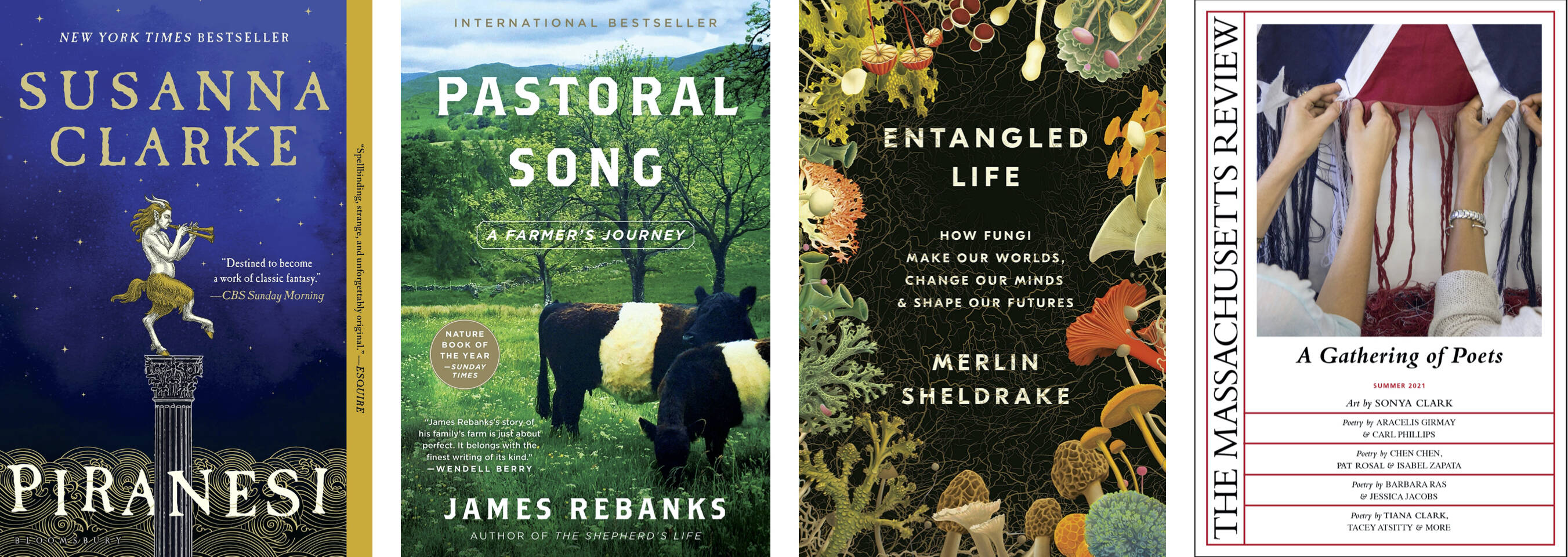 Bloomsbury; Custom House; Random House; the Massachusetts Review | More literary awards and honors this week: "Piranesi," by Susanna Clarke, has won the Women's Prize. The annual U.K. award, previously called the Orange Prize, is worth about $41,000 and honors the year's best novel written in English by a woman of any nationality. "Piranesi" is a hypnotic story about a man who lives alone in a vast, watery palace filled with statues (review and video). Clarke is also the author of one of my favorite fantasy novels, "Jonathan Strange & Mr. Norrell" (review). The U.K. Wainwright Prizes honor nature writing in the spirit of Alfred Wainwright (1907-1991), a prolific British guidebook author. The prizes are conferred in two categories: - U.K. Nature Writing: "Pastoral Song: A Farmer's Journey," by James Rebanks, who The Post recently called "Britain's rock-star shepherd" (profile).
- Global Conservation and Climate Change: "Entangled Life: How Fungi Make Our Worlds, Change Our Minds & Shape Our Futures," by Merlin Sheldrake, producer of the world's most delightfully strange book promotion video (watch).
So much of our literary culture is incubated in small magazines and online journals that need your support. But how can you find them? The Whiting Literary Magazine Prizes honor America's best. Here are this year's winners, along with the prize amount and a note from the judges: - The Massachusetts Review ($60,000), "a trove of finely written and imaginative stories from around the globe."
- Bellevue Literary Review ($30,000), "a unique venue for exploring writing about medicine and the body in illness and health."
- The Arkansas International ($15,000), "exceptional fiction, beautiful design, commitment to translation, and an oasis for literary culture in the American heartland."
- Latin American Literature Today ($30,000), "an essential literary bridge across the Americas distinguished by its fully multilingual issues."
- Full Stop ($9,000), "an eclectic platform for book criticism, untethered to the zeitgeist but fearlessly contemporary." (I want a T-shirt with that phrase on it.)
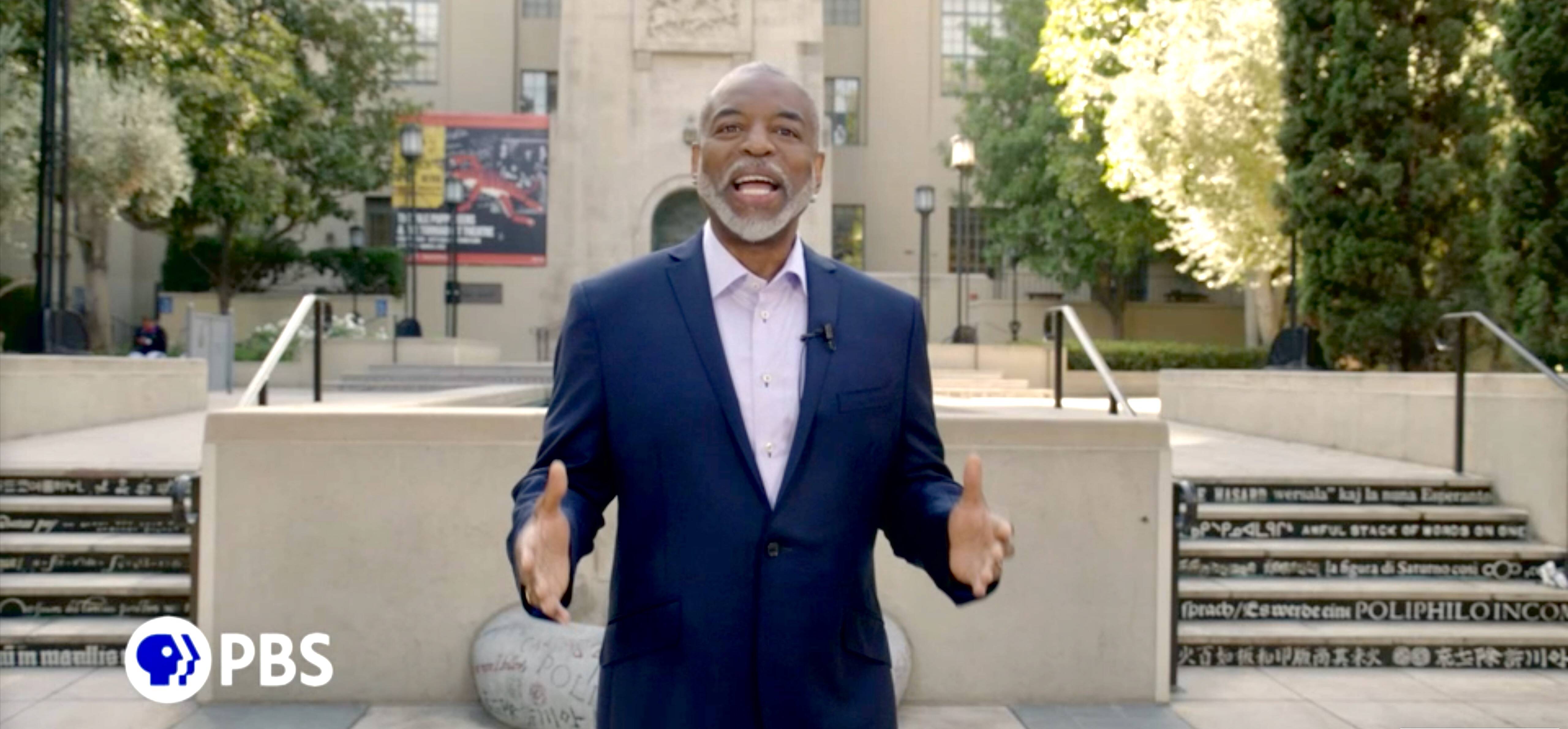 LeVar Burton will host "Open a Book, Open the World: The Library of Congress National Book Festival" on PBS on Sunday, Sept. 12 (Courtesy of PBS). | I'll have lots more information about the National Book Festival next Friday when it starts, but here are a few things you should know now: - On Sunday, Sept. 12, a TV special called "Open a Book, Open the World: The Library of Congress National Book Festival" will premiere on PBS (check local listings). The program, hosted by LeVar Burton, features 20 of the festival authors, including Tana French, Annette Gordon-Reed, Amanda Gorman, Kazuo Ishiguro and Viet Thanh Nguyen.
- Teachers should check out a webinar from the Library of Congress (watch). Around 20:00, school librarian Rebecca Newland talks about using the National Book Festival videos with students.
- You can join National Book Festival watch parties, community conversations, story walks, poetry slams and book club meetings in your state (schedule).
 (Courtesy of And Other Stories) | When I'm not fantasizing about owning a bookstore, I'm daydreaming about running my own publishing house. (Honestly, given my full schedule of reverie, it's hard to believe I get anything else done.) Stefan Tobler has been living the dream. This month, his quirky British press, a nonprofit called And Other Stories, is celebrating its 10-year anniversary. It was a bold idea born of frustration with the industry. "Around 2008, the credit crunch came along," Tobler tells me from his office in Sheffield. "Publishers got very scared of publishing books that were not particularly simple and easy." But Tobler thought there was still an audience for challenging books and works in translation. The first year, he published four books, including Juan Pablo Villalobos's "Down the Rabbit Hole" and Deborah Levy's "Swimming Home" (review), which was shortlisted for the 2012 Man Booker Prize — suggesting he was off to a pretty good start. Now, And Other Stories has eight employees, and this month, they're releasing their 100th title: an anthology called "Three Novels," by Mexican writer Yuri Herrera. One of the special qualities of this small press is the way it engages with readers. And Other Stories encourages interested folks to join reading groups to discuss foreign-language books and make recommendations about which titles the press should publish in English. (You don't have to speak a foreign language; the publisher commissions sample English translations.) Most important, the press is supported by about 1,500 subscribers — a quarter of them in the U.S. They pay $100 to receive six new books a year. (English major holiday-gift alert!) "That subscriber support makes a massive difference," Tobler says. "It's really kept us afloat" (details). Tobler gently tries to disabuse me of my romantic impressions of his business. Apparently, it's not all discovering the next Virginia Woolf. "There's a lot of the grunt stuff," he says, "like checking your cash flow for the next couple of years and finding out why the shipment has not got where it's supposed to go or why the shipment's been sent back and has to be sent again or why this bit of the website that worked yesterday doesn't work anymore." Still, he's not complaining. "It's been an absolute privilege to be able to bring such brilliant writers to people's attention." 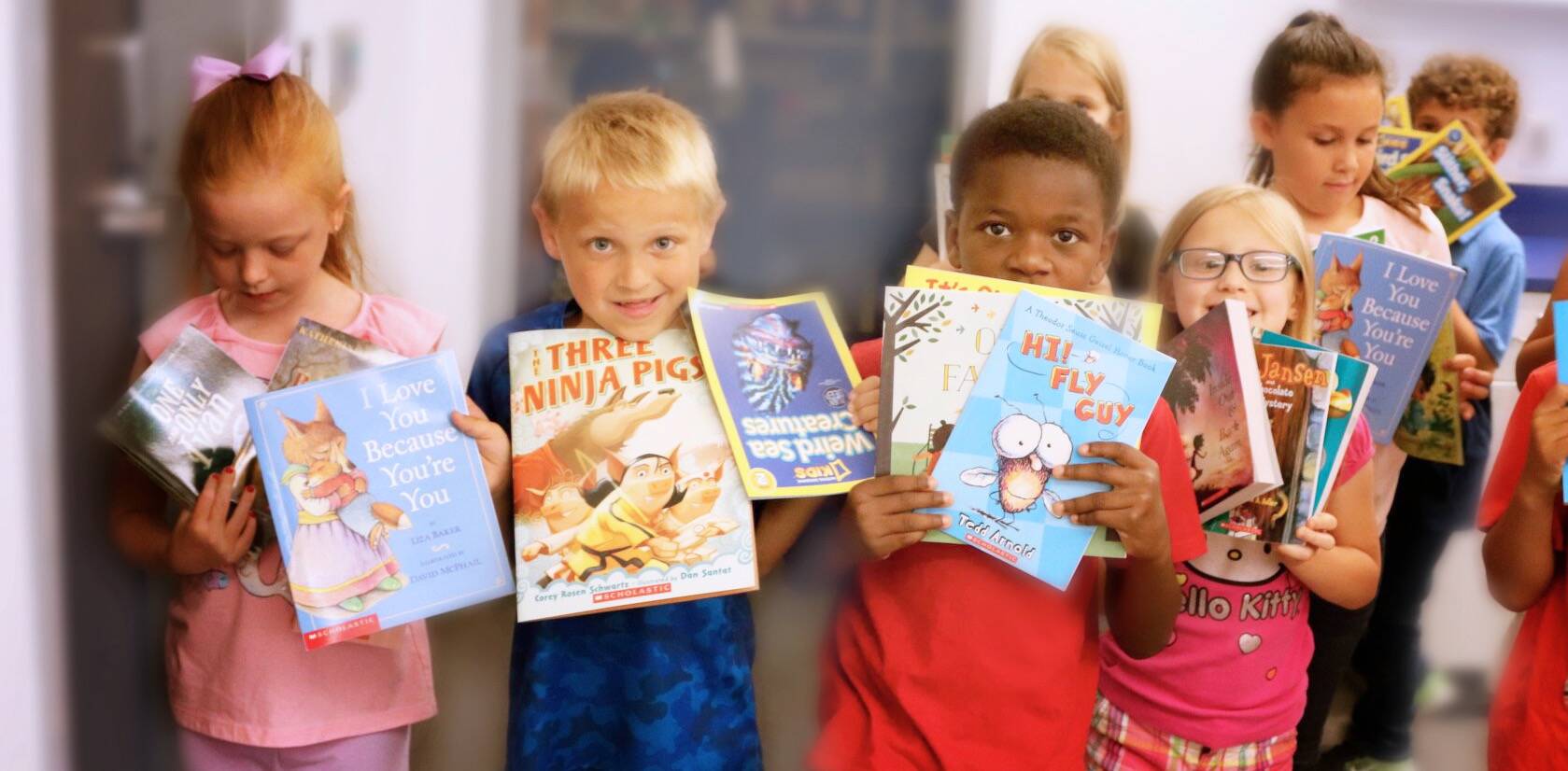 (Photo courtesy of Reading Is Fundamental) | Don't feel too smug about reading a book a month — or even a book a week. Reading Is Fundamental is challenging kids to devour 100 books by the end of February. That ambitious six-month goal is part of RIF's new initiative to help children restart the school year with gusto. Attention parents and teachers: The free "Rally to Read 100" program includes read-along videos with LeVar Burton, Philippe Cousteau Jr. and others; age-appropriate book recommendations; and educational activities like writing a book review (Look where that got me, kids!). One hundred randomly selected schools will receive 100 books each. And the first 500 teachers who respond will receive free program kits that include posters, bookmarks and more (details). Since its founding in 1966, Reading Is Fundamental has provided more than 420 million books to over 100 million kids. In 2018, RIF won the $150,000 David M. Rubenstein Prize from the Library of Congress. (Amazon is a promotional partner of RIF; Amazon founder Jeff Bezos owns The Washington Post.)  (Melville House) | On Sept. 10, 2001, book blogger Dennis Johnson was thrilled: Yahoo had named his MobyLives the "website of the week." But the next day changed everything. Walking around Hoboken, N.J. in a daze, Johnson and his partner, Valerie Merians, saw posters for missing people – and poems, thousands of poems. "Poetry was suddenly meaningful in the public sphere in a way it hadn't been for a long time," Johnson said. He and Merians decided to put out the word and create a collection in response to the attacks. "Before we were quite conscious of it, we were not only publishing a book but starting a company." Melville House was born, and its first title was "Poetry After 9/11." This poem by Kimiko Hahn is one of many in the collection that reflects on the horror of that day in a wholly surprising and disorienting way. Mortal Remains Who could have guessed, attention glued
to John Travolta hustling his ass off
in polyester and sweat
inside the 2001 Space Odyssey —
that that image of prime sexuality
from the era when even I turned the heads —
at least those of hard hats
who wore bumper stickers on their gear —
love it or leave it —
that I would recall his image
while reading in The Daily News
about Moira Smith, wife, mother, officer
and dead at age thirty-nine on September II, 2001
at ground zero — who, it turns out,
was no aspiring ingenue
but in her Our Lady of Angels uniform
appears for a few seconds playing handball
behind Travolta borrowing his friend's car.
There is no connection otherwise
between that Tuesday and Saturday Night Fever.
And my sorrow for her is incongruous
with grieving for that galaxy called youth.
(Were any of us once so hard and thin?) I am sorry
to even make this odd association. And the journalist
continued to state that her mortal remains
were conveyed from the WTC site
by fellow officers and that thirty police motorcycles
escorted her hearse to Our Lady of Lourdes Church
in Queens Village. I wish I could believe that
someone's remains might be mortal remains.
It sounds poetic and immortal
More immortal than the movies.
She leaves behind a small daughter. "Mortal Remains," by Kimiko Hahn, from "Poetry After 9/11: An Anthology of New York Poets," edited by Dennis Johnson and Valerie Merians (Melville House). Reprinted with permission.  (Ron Charles/The Washington Post) | This week marks my third anniversary of writing the Book Club newsletter. When my editor asked me to take on this project, I thought it sounded depressingly old fashioned. "Email?" I thought. "What's next – call subscribers and leave book recommendations on their answering machines?" But, in fact, it's been a blast to write to you each week. (And now that there are Substack millionaires, I see that I was wrong yet again!) So thanks for helping an old book critic start a new chapter. I'm deeply grateful to you for subscribing — and even reading all the way down here to the end. Meanwhile, send any questions or comments about our book coverage to ron.charles@washpost.com. You can read last week's issue here. And if you know friends who might enjoy this newsletter, please forward it to them and remind them it's free! To subscribe, click here.
Interested in advertising in our bookish newsletter? Contact Michael King at michael.king@washpost.com. |





 Email
Email