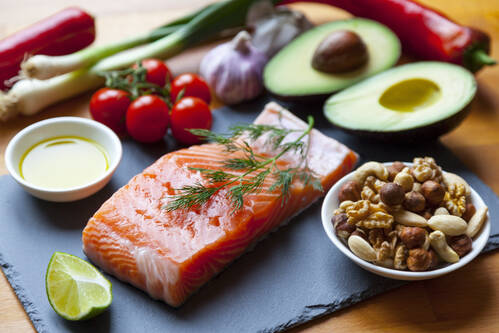
| This week, dietitian Cara Rosenbloom writes about the Mediterranean diet, which American and European health experts have been promoting (with journalists' help) as the healthiest way to eat for years -- without considering the fact that it relies on foods not widely available in or perhaps even appealing to non-Eurocentric cultures. Healthy eating is not restricted to one area of the world, and the pattern set out in the "Mediterranean diet" can be adapted to any cuisine, as long as the focus is on vegetables and legumes and whole grains, Cara writes. This prompted me to think about how I'd modify the diet with Asian foods, which brought me to a familiar concern: white rice. When I met my husband several decades ago, I learned that he ate rice at every dinner, a reflection of his upbringing in a Chinese American household in Hawaii. I was used to more variety in my starches -- sometimes rice, sometimes potatoes, sometimes noodles – but was happy to go along with his tradition. Our daughters had come along by the time I realized that white rice, which we were buying in 20-pound bags, isn't particularly healthy. A three-quarter-cup serving of our favorite, Kokuho Rose, a Japanese medium-grain rice, has 150 calories, 35 grams of carbohydrates, 0 grams of fat, 3 grams of protein, 1 gram of fiber and no vitamins or minerals except for 38 mg of potassium. The problem isn't just that white rice it isn't especially nutritious, I learned; the carbs in white rice turn into blood sugar more quickly than carbs from brown rice or other whole grains. And, higher intakes of white rice increase the risk of developing type 2 diabetes. (Cooled and reheated rice has more resistant starch and less of an impact on blood sugar; thankfully, we eat a lot of leftover rice.) My attempts to switch us to slightly- more-nutritious brown rice over the years haven't really stuck, so, I was really interested to see how Cara's column would address this white rice conundrum. The answer, according to one of her experts, is to eat beans alongside the rice, because the fiber in the beans helps counteract the potential blood sugar spike. Unfortunately, this suggestion was not much help to me; my family's recipe repertoire and tastes lean more toward green beans than fiber-rich varieties such as black beans. I needed to do some serious reevaluation. We do love edamame, or young soy beans (mao dou in Mandarin), which have lots of fiber and nutrients and can be seasoned infinite ways, though we usually cook and serve them in the pod – more like an appetizer. So, I started Googling around for a dish that might combine shelled edamame and rice, a la Latino black beans and rice, and stumbled upon a recipe from Hawaii. Called simply edamame rice, it combines the grains and beans with two Japanese condiments: nametake (bottled seasoned mushrooms) and a certain kind of furikake, a dry rice seasoning. I could only find a Chinese version of the mushrooms in chili oil, so when I tried the recipe, it was a bit spicy for me, but my husband liked it. I'm planning to tinker more. I have my fingers crossed that this recipe will join our frequent rotation, and Cara's column will have helped make at least one family healthier. I hope her article will prompt some fun rethinking for other readers, whether your family traditions lie outside the Mediterranean – or within. Take care. |





 Email
Email