| Could the government shut down next week, for the third time in three years? It's a possibility as Congress nears a deadline to keep the government open and doesn't appear to have enough votes to do it. Here's why, and what would happen if there's a shutdown. A government shutdown, in one sentence: It's what happens when Congress fails to enact the annual spending bills on time and government agencies run out of money to pay their employees and perform duties for the American people. The deadline for Congress to approve more funds is next week, on Sept. 30. 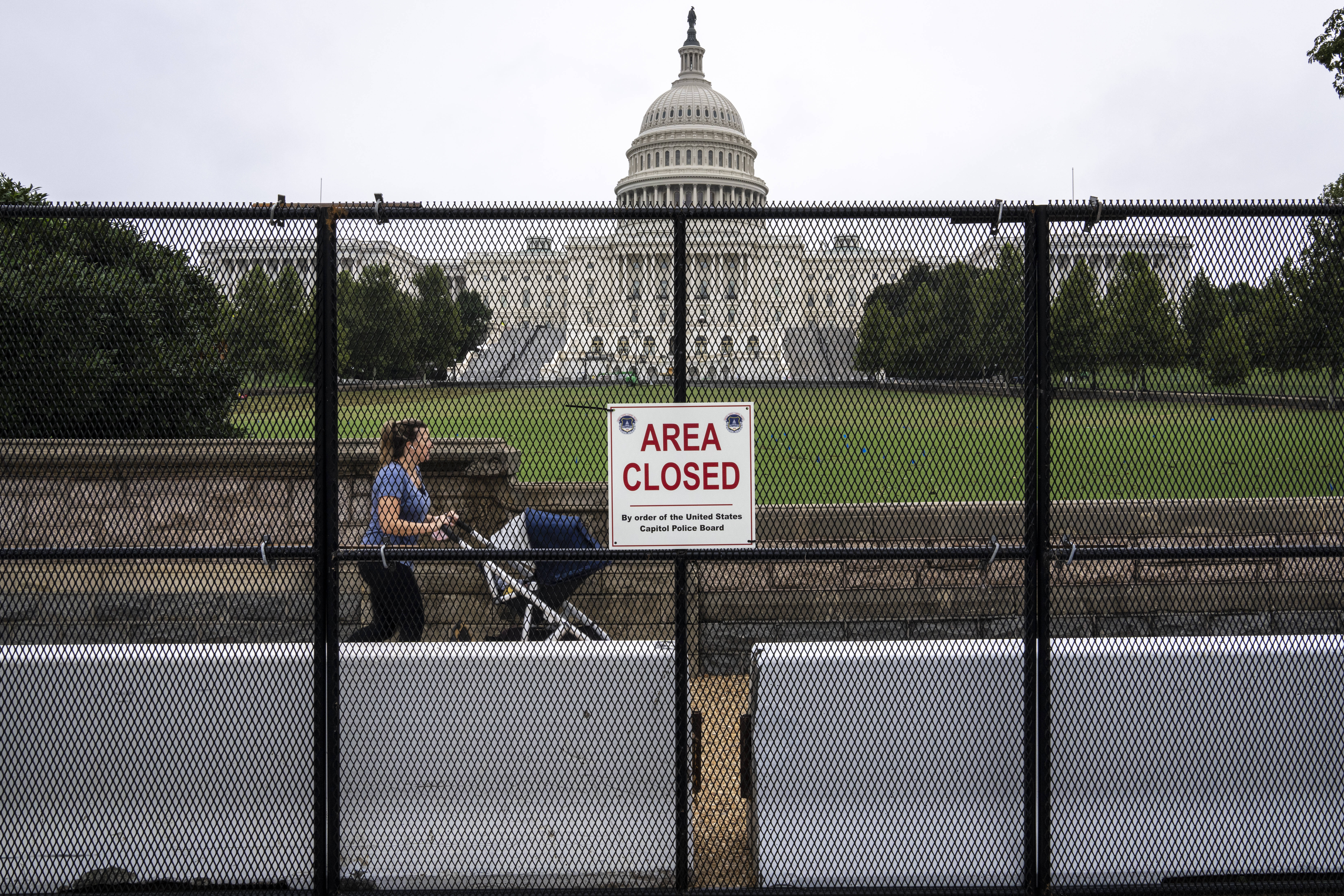 The government could shut down next week, for the third time in three years. (Drew Angerer/Getty Images) | So will there be a government shutdown? Maybe. The Democratic-controlled House of Representatives passed a bill to keep the government open through November, but all Republicans voted against it. We expect most Senate Republicans to vote against this spending bill in the Senate, too. This bill includes raising the debt ceiling, and Republicans have decided they're not going to vote for that (despite it being a bipartisan vote in the past). We covered the debt-ceiling fight in yesterday's newsletter, and I have more here. Whatever the reason for a shutdown, many federal agencies wouldn't have money to do much of their regular programming. That would manifest itself in a variety of ways: - Many federal employees would be furloughed, meaning they don't go to work and their pay is suspended. Government employees have drained their savings in past shutdowns to stay afloat.
- Law enforcement, national security officials and the military would probably still work, but they wouldn't get paid. (Members of Congress still get paid.) It would be up to the Biden administration to decide who is and isn't an essential or nonessential government worker.
- It would be difficult to do any number of things that require the federal government, like process home or small-business loan applications, apply for a passport or conduct immigration court proceedings. Depending how long this goes on, the federal safety net — like food stamps and free lunches in schools and even Social Security checks — could be affected. Food safety inspections could stop.
- The government would probably find ways to continue its covid response and get people vaccinated, but it would still make things harder. "The worst time in the world we want to shut down the government is in the middle of a pandemic where we have 140,000 people a day getting infected and 2,000 people a day dying," Anthony S. Fauci, the president's chief medical adviser, told The Washington Post.
One way for Democrats to get out of this is to remove the debt ceiling issue from the spending bill. But that means they would have to raise the debt ceiling by a special budget maneuver known as reconciliation to dodge a Republican filibuster, and that would be cutting it very close to avoid economic disaster.  A mobile vaccine clinic in California. (AP Photo/Jae C. Hong) | Trump's lawsuit against the New York Times and Mary Trump is an uphill battle This week, former president Donald Trump sued the New York Times and his niece, Mary Trump, for reporting on taxes and financial history he had kept private — until Mary Trump found a way to hand some of those documents over to the Times. He might not have much luck, for a few reasons. - He's a public figure, so the courts are more likely to side with journalists on the newsworthiness of these documents.
- He has a little-known lawyer whose resume includes being general counsel for a parking garage, report The Post's David Fahrenthold and Alice Crites. (Interestingly, over the past three weeks three high-profile attorneys have withdrawn from cases representing Trump and his family, for unknown reasons.)
- Trump may not be in it to win it anyway, write The Post's Paul Farhi and Sarah Ellison. A lawsuit against the New York Times can serve to reinforce "his long-standing refrain that he is a victim of 'fake news,' bolstering his political standing and ginning up donations from supporters."
 A rally outside the Capitol recently in support of Jan. 6 defendants. (AP Photo/Jose Luis Magana) | Did Trump and members of Congress encourage insurrectionists? That's THE question that a special, bipartisan committee in Congress investigating the Jan. 6 attacks is trying to answer. To do that, it has asked the federal government for tons of documents. Trump is trying to fight them by claiming executive privilege. I looked into whether he can do this: Short answer is he can drag out the fights, but it's ultimately up to President Biden to decide whether to hand over the information that Trump objects to. And new reporting from The Post suggests Biden is inclined to do just that. |





 Email
Email 


