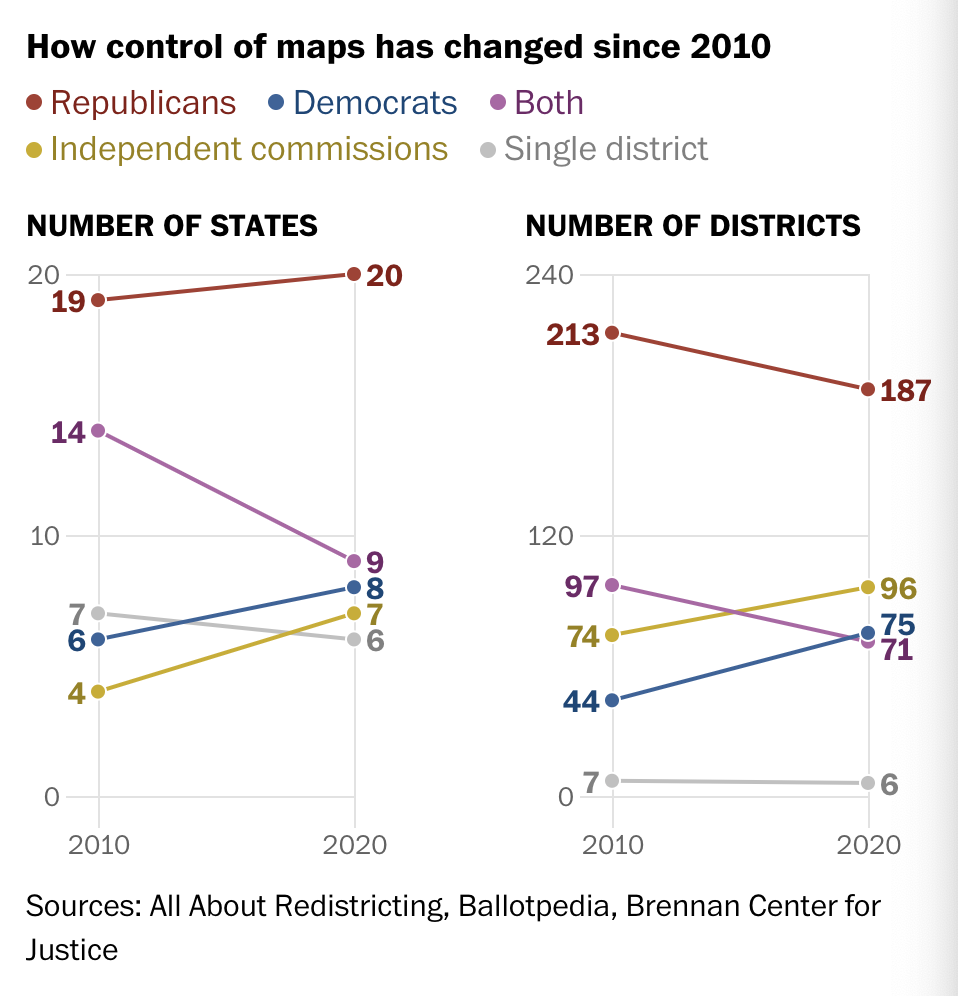
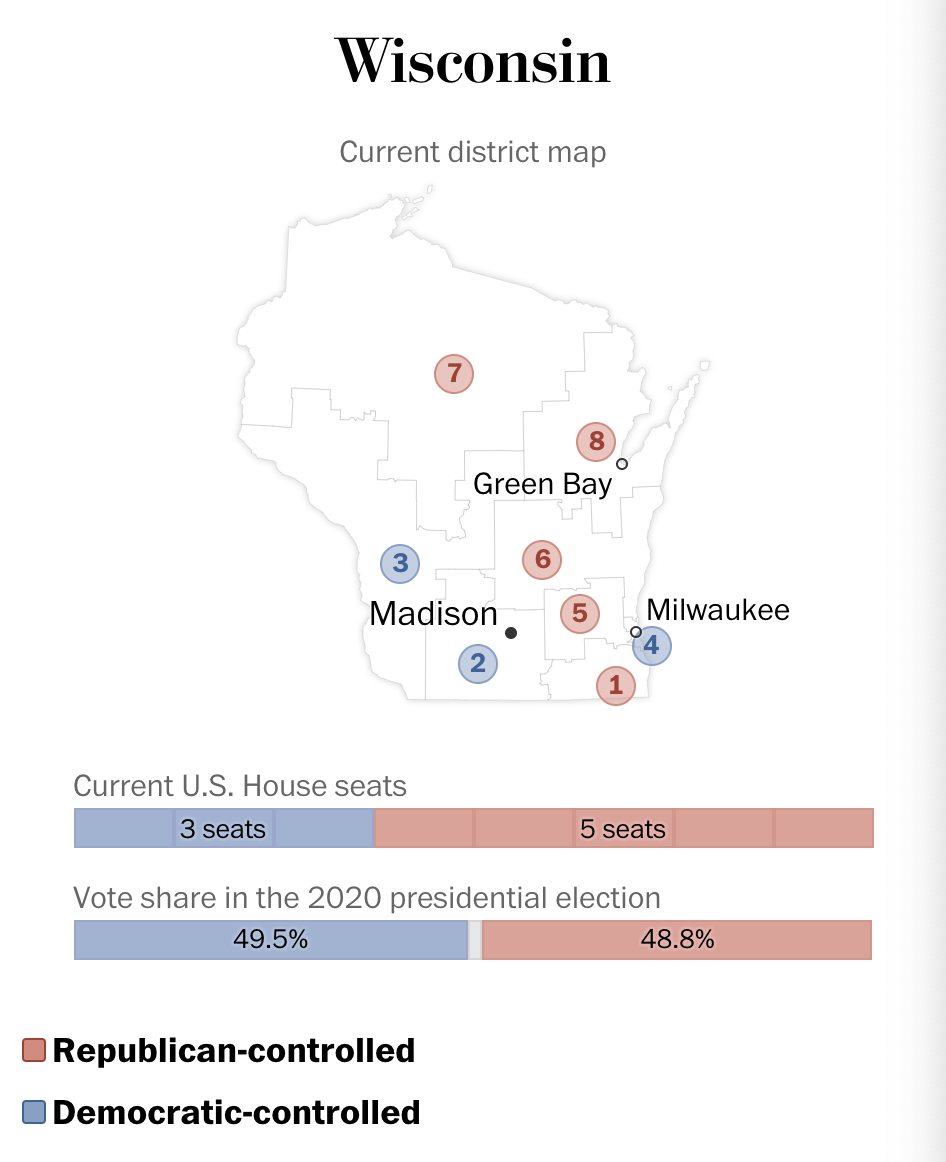
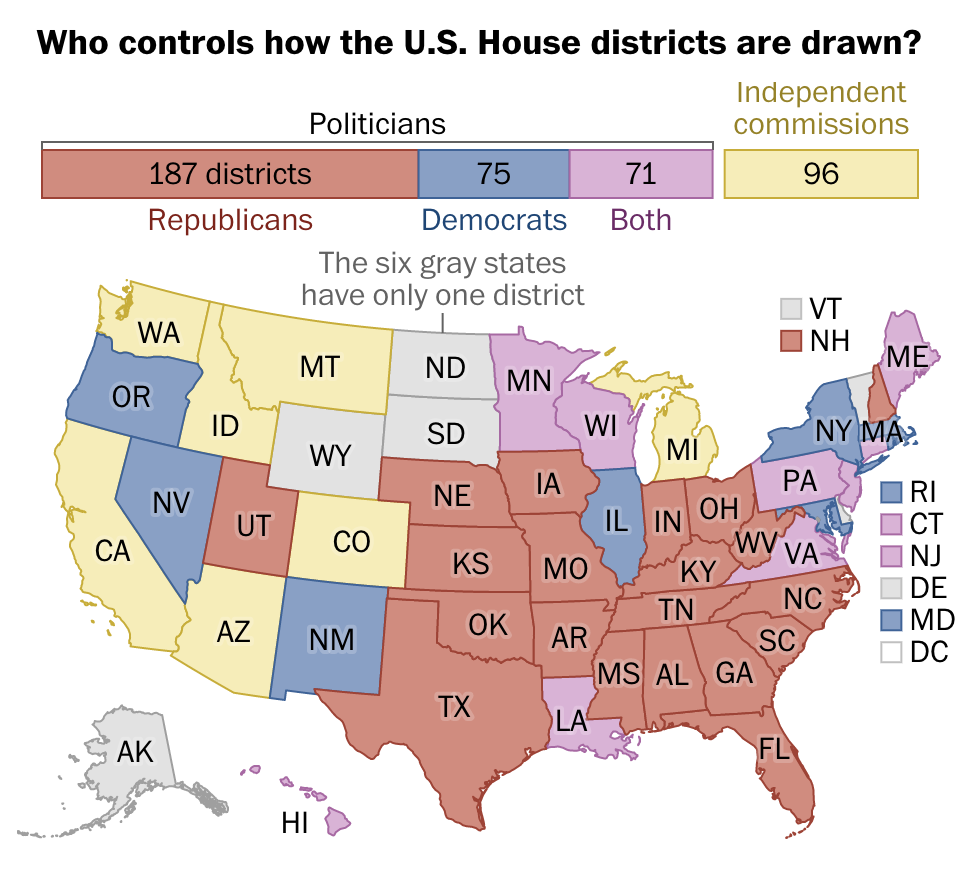
| Okay, you ready to get into something really nitty-gritty about politics, but super important? Redistricting. You are hearing a lot about it because it's happening right now across the country, and it will shape which party controls the House, potentially for the next decade. Let's learn more about it. What redistricting is, in one sentence: A federally mandated, once-in-a-decade redraw of congressional and state legislative districts based on new census data. Why it's happening now: Because new census data just came out this summer. It revealed that for the first time basically ever, the White population is declining. The politically important suburbs are where much of the new, racially diverse growth is happening. How redistricting works: In most states, state lawmakers control the redraw process. The redistricting process works a little bit like passing a law. State lawmakers draw the maps, debate it, and the governor can sign it into law or veto the new maps. As my colleagues explain here, most states have some guidelines they have to abide by, such as the districts have to be contiguous. But it's a common practice for lawmakers to cut and slice districts up to benefit their political party. That's known as gerrymandering. As redistricting has gotten more attention, a growing trend is to hand this process over to independent commissions with a mandate to draw nonpartisan maps. Seven states have such a process in place. (Both sides gerrymander, though Democrats have become slightly more vocal in recent years about supporting independent commissions to draw fairer lines.) States have to get their maps drawn sometime between the end of this year and mid-2022, which means these new lines will be in place for the 2022 congressional midterm elections. Why redistricting is so politically important: A decade ago, Republicans saw the value in investing in state legislative races to control this redistricting process And it's worked. Republicans have been in the majority in the House of Representatives for four of the past six congresses, despite the fact Democrats have won more total votes in four of the six past midterm elections. Look at the lopsided representation in the state of Wisconsin. Red and blue votes are evenly divided, but Republicans control a consistent majority of congressional districts, and they have a majority in the state legislature to keep that power going. Democrats have the majority now in the House, but it could be short-lived. The party in power typically loses seats in midterm elections, and Republicans may not even need to win competitive races to win back the majority. They could just redistrict themselves into power. For this 2021 redistricting cycle, Republicans control the state legislatures and the governor's mansion in more than 20 states, which means they have near-total control over the redistricting process in politically important states like Florida and Texas and Georgia. Compare that to Democrats having total mapmaking authority in eight states. Republicans only need to redraw themselves into five Democratic congressional districts to take back the majority. Learn more about it each state's redistricting process here. What Democrats can do: They tried to win back state legislative races last year to counteract Republicans' advantage in this process, but Republicans ended up picking up seats. — Democrats could file lawsuits to challenge maps they think are unfairly drawn. They've had some success at doing that in state courts. (The Supreme Court said federal judges can't chime in on partisan gerrymandering, though it regularly strikes down racially motivated gerrymandering). But the legal process takes a while and could come too late for the 2022 midterm elections. — Or, Democrats in Congress could pass a voting reform law that bans partisan gerrymandering, which would make much of Republicans' advantage moot. But they'd need to get rid of the filibuster in the Senate to do it, and they'd have to do it quickly. Republicans across the country are drawing their maps now. | 




 Email
Email