| Is the U.S. Supreme Court politically motivated? Liberal and conservative justices are trying to defend themselves from such an attack, levied by Democrats who are threatening to pack the conservative-majority court with more members. - Justice Clarence Thomas, one of the court's most conservative members, Thursday warned against "destroying our institutions because they don't give us what we want, when we want it."
- We're not "junior league politicians," Justice Stephen G. Breyer, a liberal justice, said recently.
- "My goal today is to convince you that this court is not composed of a bunch of partisan hacks," Justice Amy Coney Barrett, a Donald Trump appointee, recently said — after being introduced by Senate Minority Leader Mitch McConnell (R-Ky.) at a building named after him.
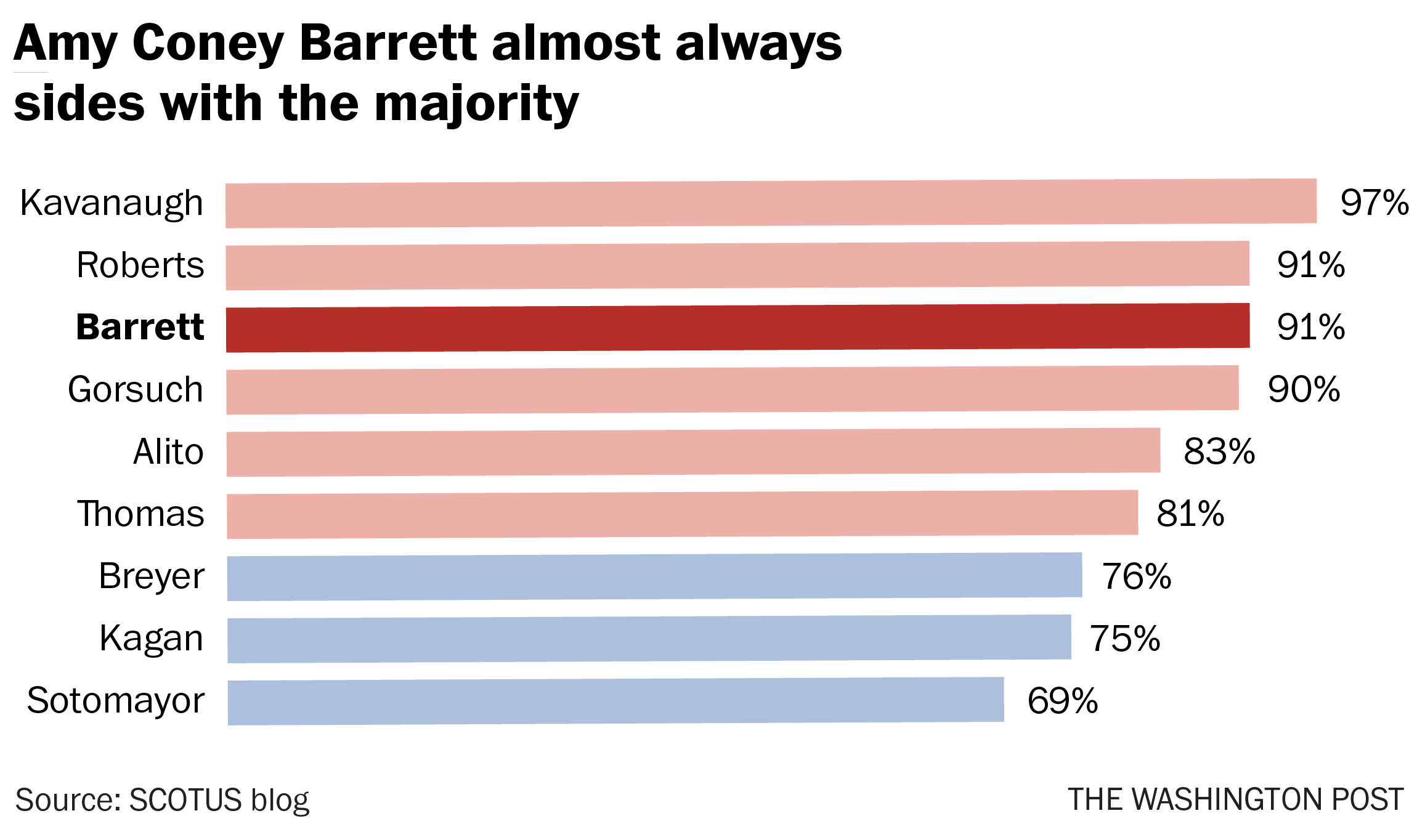
It's no secret Democrats have been dismayed by the conservative-majority court. And a growing number of Americans shares that discontent. Disapproval of the Supreme Court is among the highest it's been in years; a July Gallup survey found 44 percent of Americans disapprove of the job it's doing, compared with 29 percent disapproval in 2000. We can see why. As America gets more diverse, the Supreme Court, tilted so strongly conservative as it is, has made some recent decisions that are in line with conservative viewpoints but at odds with a majority of public opinion — most recently declining to block a strict Texas abortion ban that is pretty clearly unconstitutional. 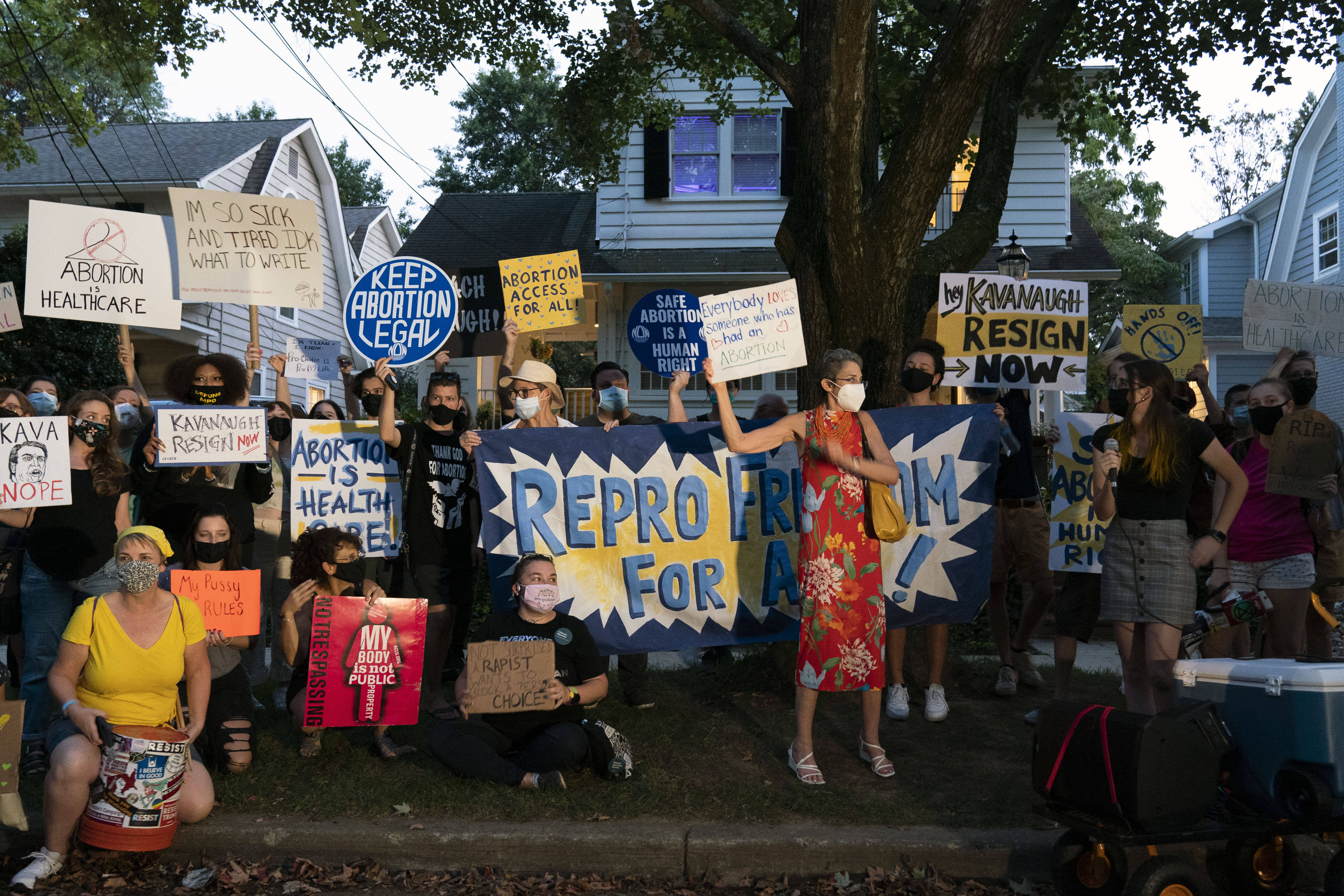 Abortion rights demonstrators rally outside the home of Supreme Court Justice Brett M. Kavanaugh on Monday. (Jose Luis Magana/AP) | The justices argue it's not their job to consider public opinion when they're making decisions. But the connection between conservative justices and conservative politics — and liberal justices and liberal politics — is getting more attention than in recent memory. Trust in institutions is eroding, and the Supreme Court isn't immune. A growing number of liberals are characterizing the court as yet another anti-democratic institution, alongside the electoral college and the Senate filibuster. Barrett almost always goes with the majority  President Donald Trump and Justice Amy Coney Barrett stand outside the White House shortly after she was confirmed to the court. (Jabin Botsford/The Washington Post) | How has the newest Supreme Court justice managed her first term in office? Despite being a contentious figure for the left, Barrett did not jump out in front of her colleagues. She decided with the majority almost all the time. That majority happens to be conservative, and so is she. But she also made some surprising decisions. Among them: She upheld the Affordable Care Act Democrats predicted the entire law could fall with Barrett on the court. The justices had a case before them from Texas on whether to knock down the entire law. In June, she and six other justices decided to reject the case without even hearing it. She sided with liberal and conservative justices on upholding freedom of religion Can a government force a religious agency to accept same-sex couples as foster parents? The court actually unanimously decided no, not in a specific case in Philadelphia. It was a surprise unanimous decision, observers said, more notable for the fact that liberals joined conservatives such as Barrett. But she did not join other conservative justices in arguing that the court should go further and consider even stronger religious freedom protections. (A little under half of the cases this term were decided unanimously, by the way, which makes it difficult to fully understand how conservative of a justice is Barrett.) But she decided with conservative justices to keep restrictive voting laws in place This is a case that really irked liberals. She and the court's other conservative justices upheld two Arizona GOP voting restriction laws that other, lower courts said restricted the rights of minorities to vote. Liberal Justice Elena Kagan was just as livid as liberal politicians on this one. She accused the conservative majority of basically ignoring the law to fit their world views: "The majority writes its own set of rules," she wrote. And she decided to keep in place that Texas abortion ban The liberal justices were just as incensed at their conservative colleagues, Barrett included, when the court decided to keep the Texas abortion ban in place. The majority's decision to change laws without hearing full arguments of its constitutionality "every day becomes more unreasoned, inconsistent, and impossible to defend," Kagan wrote. (The Supreme Court could decide later to hear a challenge about whether it's unconstitutional.) She didn't take up 2020 election fraud cases What Barrett is most notable for, says The Post's Supreme Court reporter Robert Barnes, is what she didn't do: She did not urge the court to take up cases from Trump allies about the 2020 election. And they didn't. The very real threats that may be keeping Republicans in line with Trump 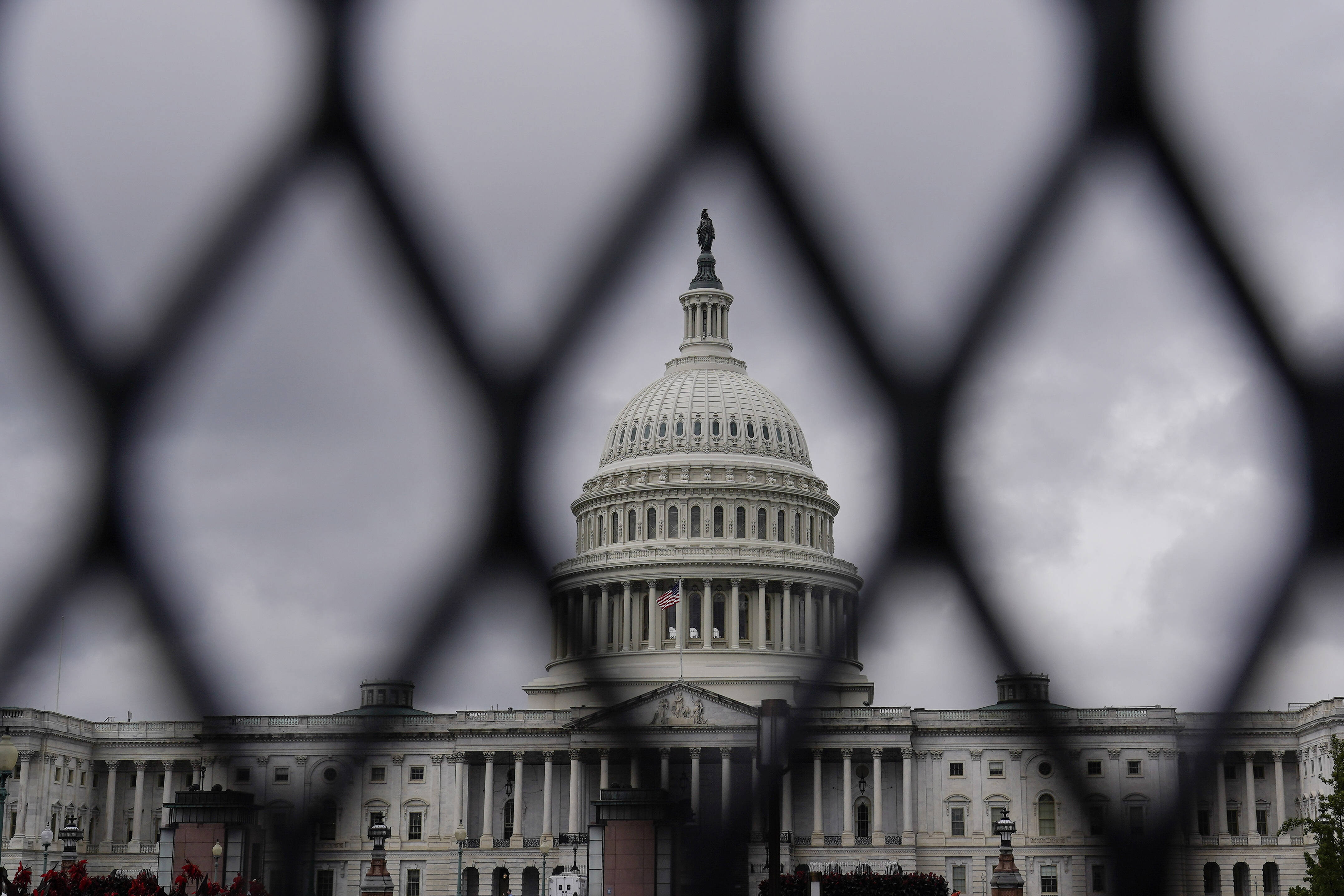 The U.S. Capitol is fenced off ahead of a rally Saturday in support of jailed Jan. 6 defendants. (Brynn Anderson/AP) | Let's keep it serious on a Friday. A House Republican who was one of 10 GOP lawmakers to vote for Trump's second impeachment is retiring. Rep. Anthony Gonzalez, of Ohio, said this week he's retiring in large part because of a toxic culture inside his own party. But there's something else. He told the New York Times that after that impeachment vote, officers had to escort him at the airport in Cleveland: "That's one of those moments where you say, 'Is this really what I want for my family when they travel, to have my wife and kids escorted through the airport.' " He's not the only Republican politician who has hinted — or outright said — he's worried for his safety after crossing the base, notes The Fix's Aaron Blake. Trump supporters don't have a monopoly on political threats or violence. But, "...[I]'s become evident that this threatening behavior has registered significantly with Trump's critics," Blake wrote, adding: " ... it's perhaps one of the biggest and most undersold stories of our time." | 




 Email
Email