| Floods, hurricanes, droughts, wildfires, heat domes. A Washington Post analysis found nearly 1 in 3 Americans lived through a weather-related disaster this summer. Dealing with climate change is now part of a politician's job description, whether or not they campaign on it. 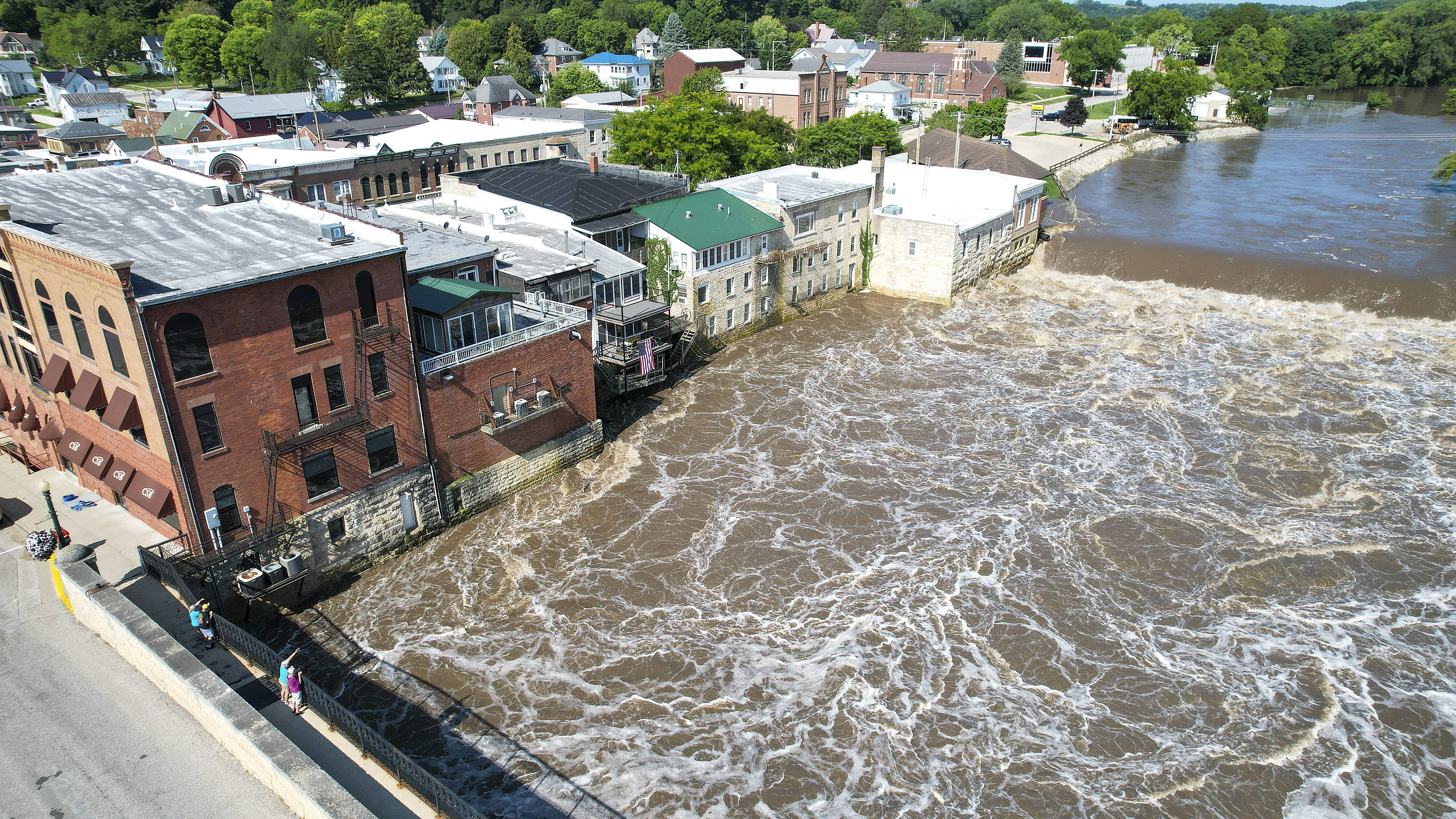 Recent flooding in Elkader, Iowa. (Dave Kettering/Telegraph Herald via AP) | I called Bill McKibben, a prominent author and environmentalist, to talk about this. McKibben — who founded the climate group 350.org — said there are a few things that politicians don't yet understand about climate change. Here are some excerpts from our call. On what needs to change in our political culture to deal with climate change: "There are two big parts at this point to dealing with climate change. One is adapting to that which we failed to prevent, and the other is preventing what there is no hope of adapting to. On how we try to protect people now that there are bad things in play....politicians are capable of figuring out and working on [it]. The other half of it has always been a huge problem, doing the work to slow down the rise in temperatures. It involves doing the thing that politicians hate the most, which is saying no and standing up to powerful vested interests. You don't have to do that to build a sea wall, but you do have to do that to shut down coal and oil and gas on the schedule scientists have told us is required." On the political debate about climate change: "We're past the point where having people proclaim global warming is real is much of a help. At this point, everybody with a set of eyeballs is quite aware it's real. The water is rising out your window, or you're looking at smoke in the sky. Now we need people to say 'It's real, and we are going to really have to stop burning stuff and do it fast.' " 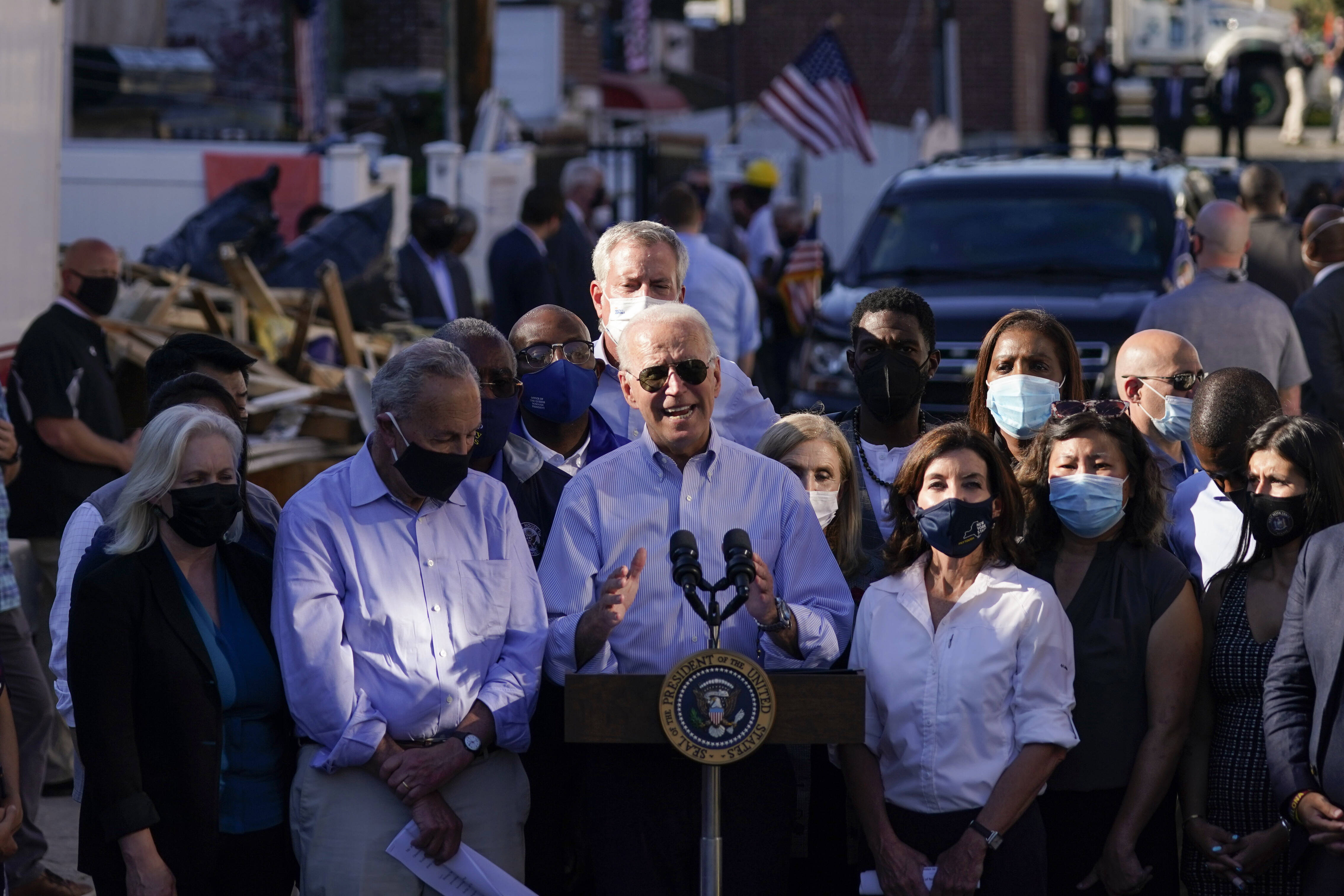 In New York on Tuesday, touring flooded areas, President Biden said the United States is in a "code red" moment on climate. (Evan Vucci/AP) | What even well-meaning politicians just can't quite grasp: "While there is a deep division between Republicans and Democrats, the real deep division that's playing out is between human beings and [the climate]. It's a very difficult fight to win, because physics doesn't believe in compromise. And that's the thing politicians have a very hard time wrapping their heads around, because they are, for good reason, much more comfortable with the idea of meeting in the middle. It's just physics won't do that." Can a Texan be sued for getting an abortion out of state? The Washington Post's Supreme Court reporter Robert Barnes, gender reporter Caroline Kitchener, and I hosted a live chat today about the Texas abortion ban. Here are some interesting excerpts; the full chat is here. Does the Texas law prohibit someone from going out of state for an abortion? Caroline: It does not. Patients can travel out of state for an abortion with no legal repercussions for anyone involved. It's important to note that this option will not be available to many (and maybe most) people who need abortions. Since Texas is such a large state, getting out can be extremely expensive...I've spoken to a lot of clinic staff members since I got to Texas who have been referring callers out of state. Some of their patients will make the trip, the clinic staff told me. But for some patients who call, they said, they might as well be telling them to go to the moon. 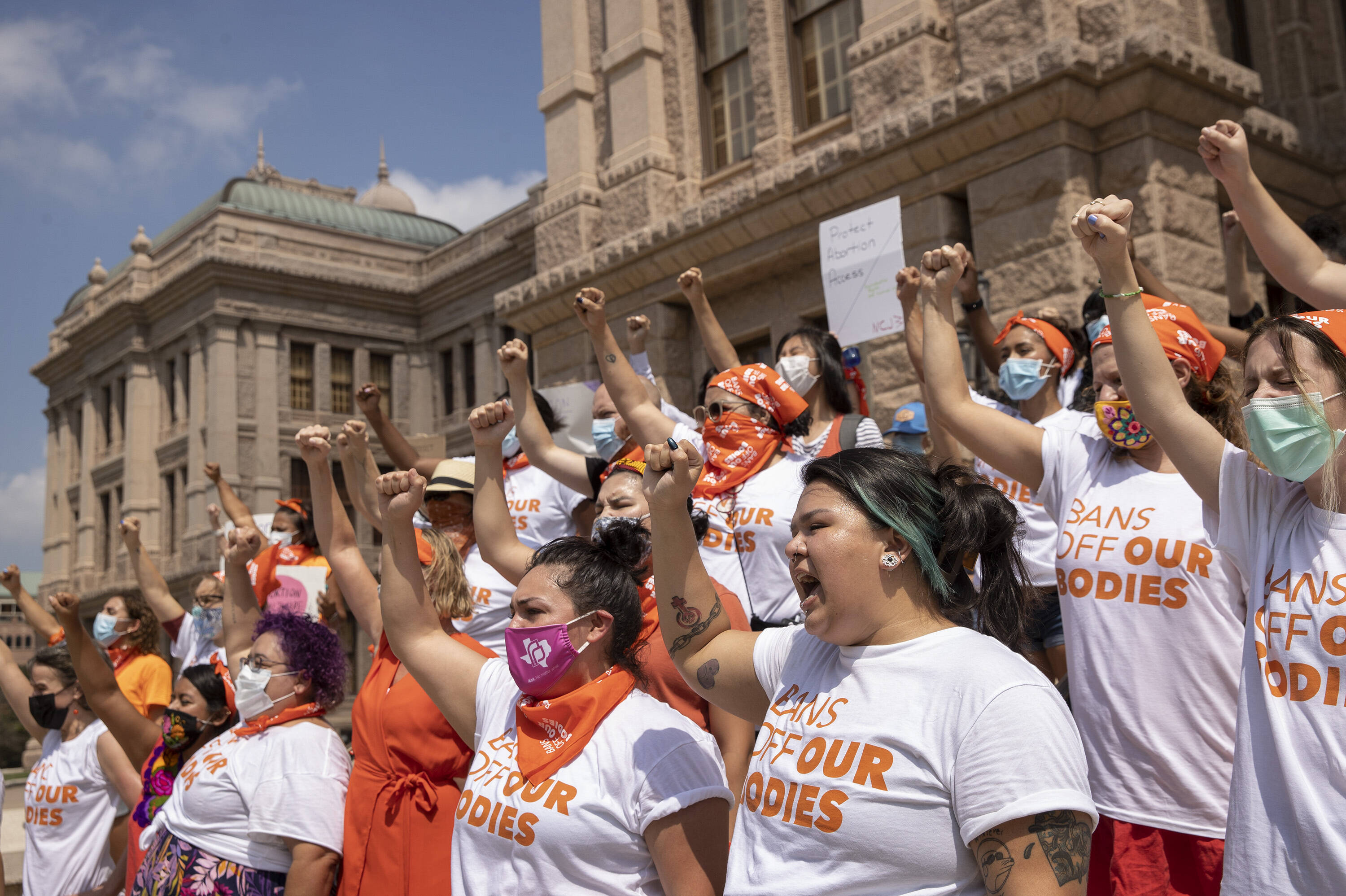 Abortion rights protesters outside the Texas Capitol last week. (Jay Janner/Austin American-Statesman via AP) | Do the majority of the citizens of Texas support this legislation? Amber: There hasn't been any polling I've seen yet asking specifically about this law. But in March, a University of Texas/Texas Tribune survey indicated that a majority of Texans do not support this law. Just 13 percent said that abortion should never be permitted, while 38 percent said a woman should have the right to obtain an abortion. The rest were somewhere in the middle, such as allowing exceptions for case of rape or incest (which this Texas law doesn't). Is there any talk among abortion rights activists to challenge the law by intentionally getting sued, which would then give them someone to take to court? Caroline: Yes. This is something that abortion rights lawyers have started to talk about. The idea is to find someone who is willing to perform an illegal abortion, and someone else who is willing to sue them over it. The tricky part is finding the right plaintiff and defendant. If abortion rights advocates do ultimately choose to go this route, that could take some time. State officials passed this law and set up the mechanism to enforce it, so why can't they be sued? Bob: While we often say the court has struck down a law, really it has told government officials they cannot enforce it. This law was designed to avoid that, so that it would be more difficult to stop it before it went into effect. So because, to use your examples, the governor and legislature cannot bring these lawsuits to enforce the law, they cannot be enjoined by the court. That, at least, is the theory accepted by five members of the court. Dissenters said it didn't matter because limiting abortions to six weeks of pregnancy violated the court's precedents about states placing undue burdens on a woman's right to an abortion. | 




 Email
Email