| One of the most interesting state political dramas of the year is coming to a close this week: whether Californians will oust their relatively popular Democratic governor and replace him with a conservative, Trump-supporting Republican. The effort to recall Gov. Gavin Newsom ends tomorrow, and it's certainly possible Newsom loses his job to radio host Larry Elder — even though Newsom will probably get more votes. Here's what you should know to follow along. 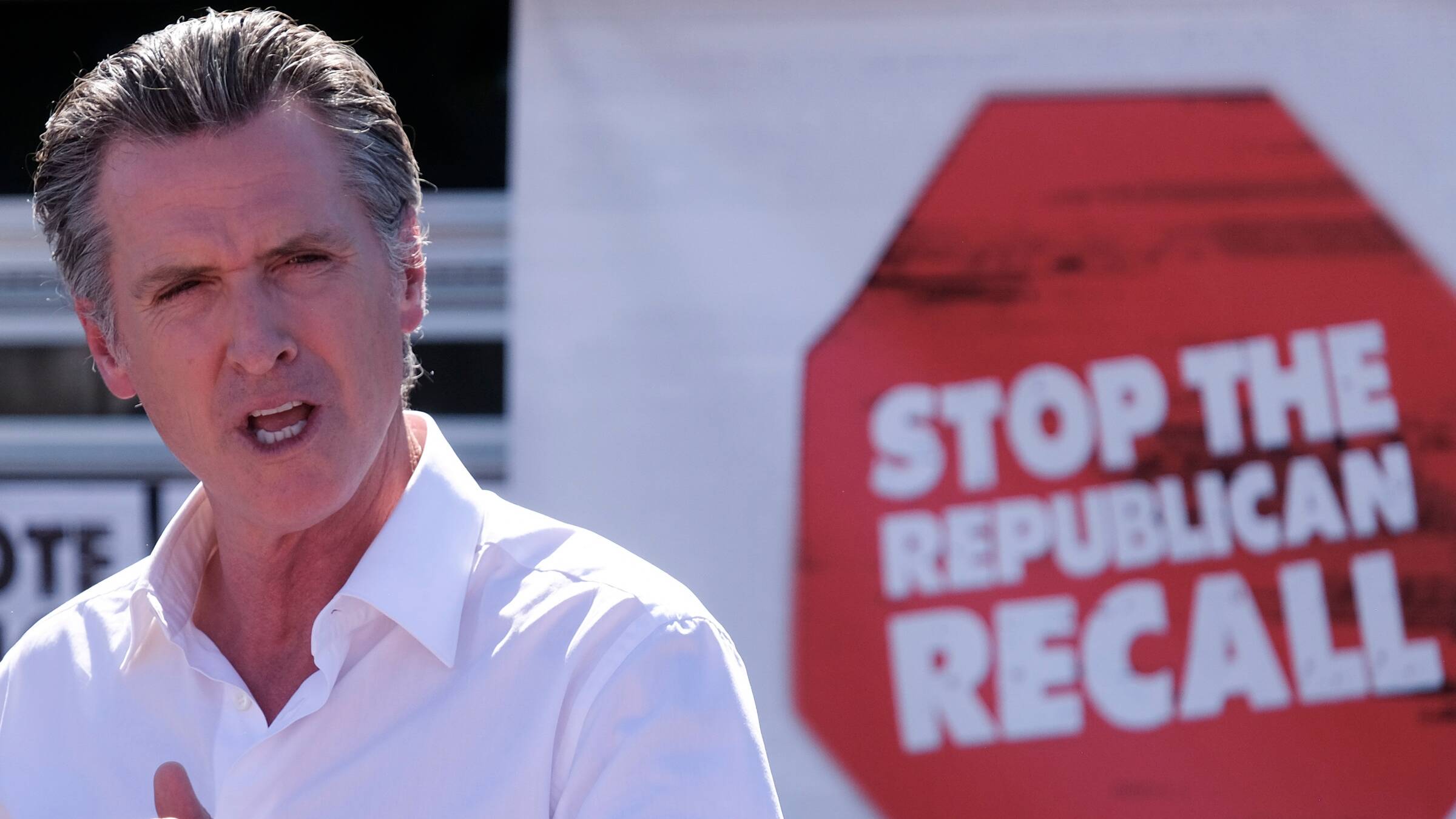 California Gov. Gavin Newsom (D) (Ringo H.W. Chiu/AP) | The recall is the result of a grass-roots conservative effort. It gained traction last year as the state shut down over coronavirus restrictions. It mostly circulated in conservative circles. Then, as Newsom was publicly harping on public safety measures in the fall, he was caught having dinner at the famously swanky French Laundry restaurant without a mask, and the effort took off. "It feeds into everything Californians already thought about him," said Loyola University law professor Jessica Levinson, of why that was such a big moment for the recall. "That he's an elitist, he's out of touch, he's hypocritical." This ballot is set up so Newsom could get a majority of votes but lose to someone who gets much fewer. The recall ballot has two questions. Voters must answer: - Do you want to recall Governor Newsom?
- If the governor is recalled, who do you want to replace him?
If a majority votes no on the first question, then he stays governor. If a majority votes yes, Newsom is recalled. Whoever gets the most votes on the second question wins and becomes governor. There are 46 candidates running to replace Newsom, most of them Republicans. That means Newsom could receive more votes than anyone else in the race — polls estimate 47 percent on the low end — but still lose his job to someone for whom only a fraction of Californians voted. The lead Republican candidate is Larry Elder, a conservative talk radio host. 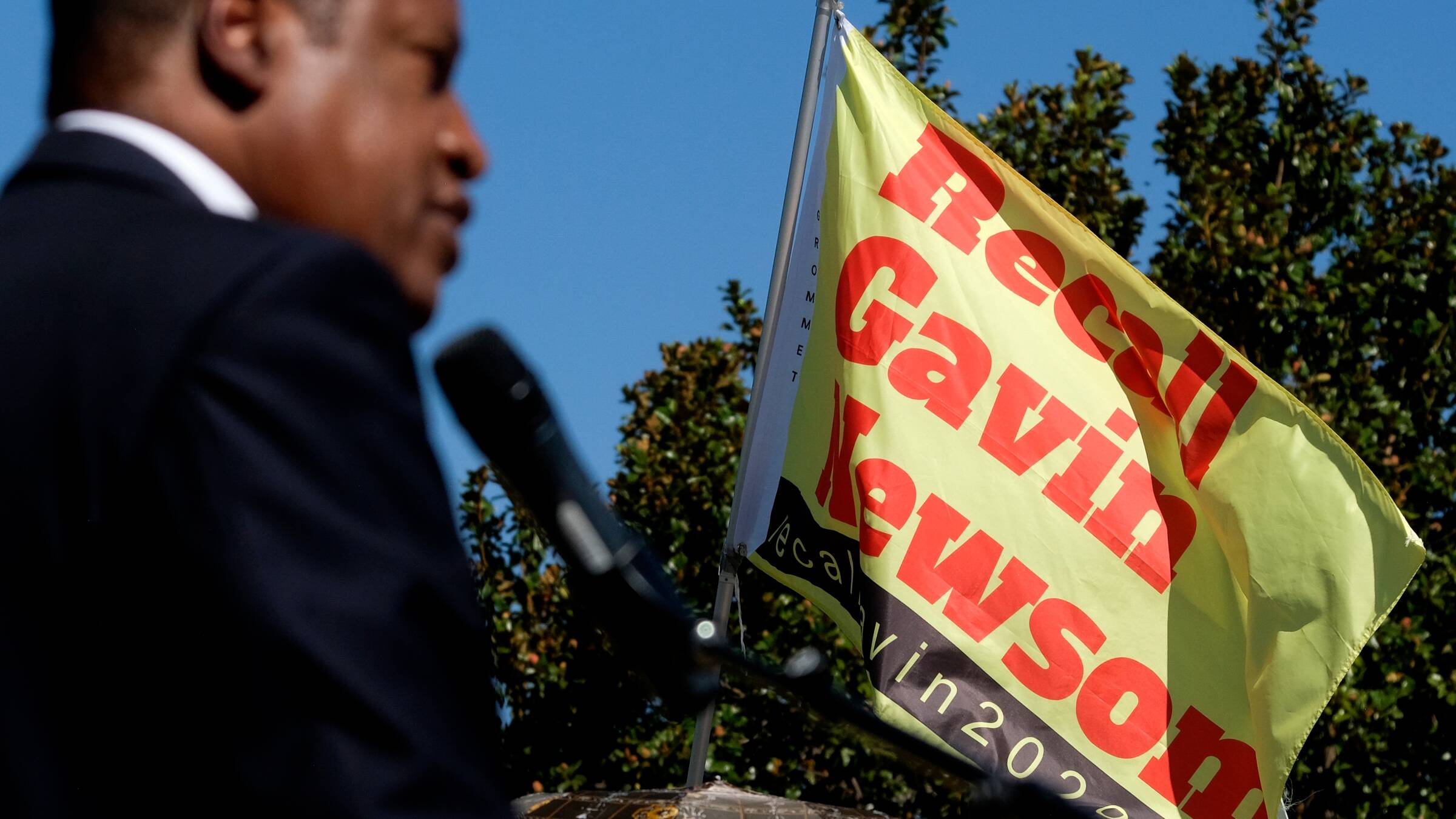 Republican conservative radio show host Larry Elder speaks at a rally as he tries to become California's next governor. (Ringo H.W. Chiu/AP) | California law is set up to launch recalls pretty easily. That has Democrats worried that a hardcore group of Republicans is taking advantage of this law to drive their partisan interests. On the other side, here's what Randy Economy, a former spokesman for the recall, told me: "It's not a bad thing having to make sure politicians are always on their toes." Nineteen states have processes to recall their governors. After a scare for Newsom, there's evidence that Democratic voters will turn in ballots in enough numbers to keep him in office. We should get results later this week. Then he faces reelection next year. Many more of your questions about the recall — including how a previous recall led to Arnold Schwarzenegger becoming governor in California — are here. Putting covid in kids in perspective as schools start up again 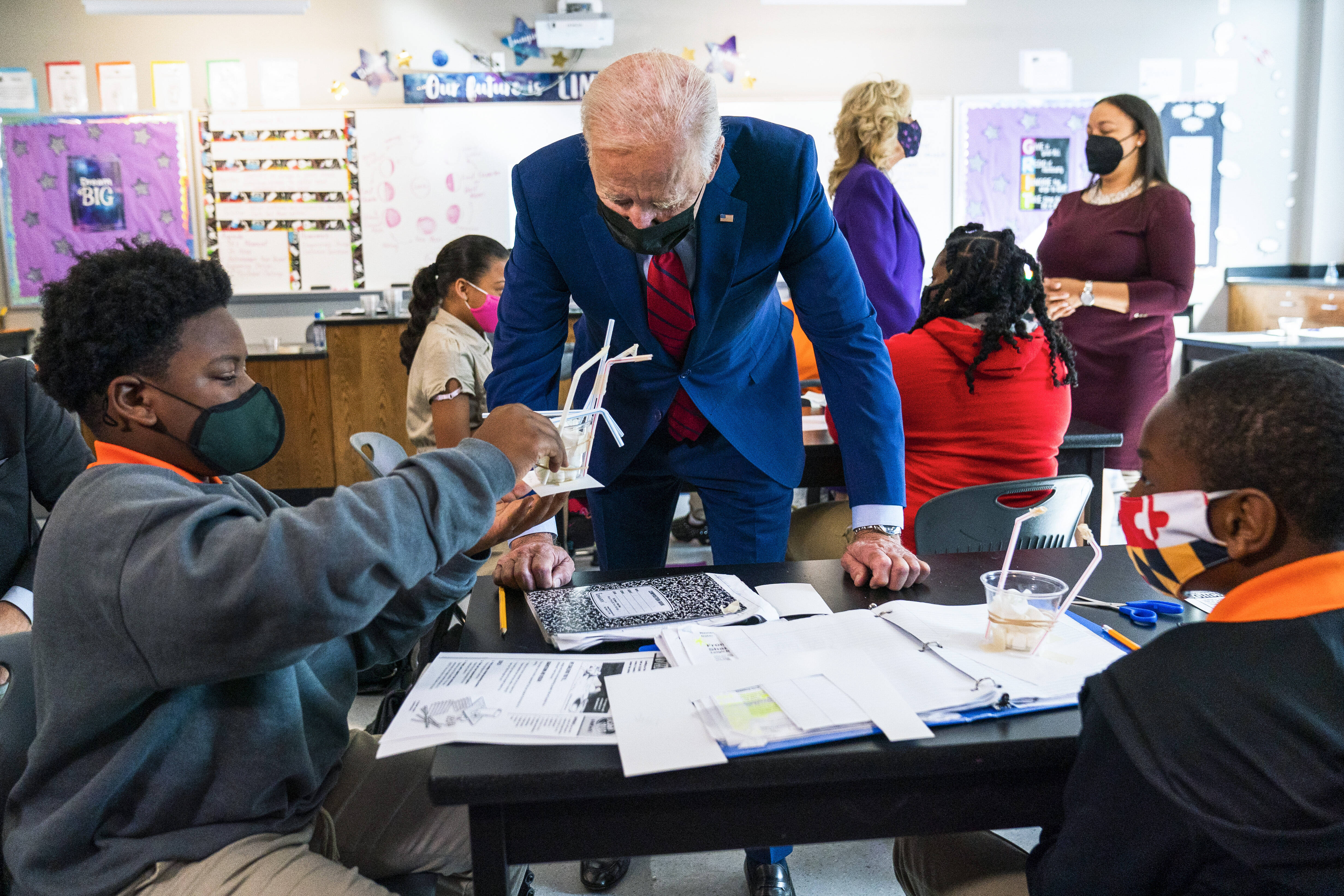 President Biden and first lady Jill Biden visits Brookland Middle School on Friday. (Manuel Balce Ceneta/AP) | Most school districts are full speed ahead with in-person learning this year. Yes, the delta variant is more contagious for children (and, basically everyone) than the version of the virus circulating during the last academic year. But it's still rare for children to get seriously ill from covid-19 — and tolerance for virtual leaning has waned. President Biden wants children in schools. He recently visited a classroom to drive home that point. Deaths among children under age 12 (who aren't yet eligible for vaccines) make up just .01 percent of the population, according to government data. Armed with that reassurance, his government recommends students mask up to keep themselves safe and schools open. "If you really follow all the guidance to a 't,' you can open schools and keep them open," one medical official told my colleagues. But are schools making tough decisions they might need to for that to happen? One-quarter of 200 large school districts across the country don't require masks, my colleagues report. And a Washington Post survey of the nation's 20 largest school districts found that just four are asking students regular questions to find those who are asymptomatic but still spreading the virus. It's not just the schools that are struggling to implement safeguards. The Centers for Disease Control and Prevention has no metrics — none — for when schools or classrooms should shut down, leaving each district to figure it out on its own. A White House official acknowledged a lack of specific guidelines, but said revisions are in the works. "There is not a really clear kind of trigger point here around … what level of spread would be a cause to change course," the official told our colleagues. | 




 Email
Email 


