| Welcome to The Daily 202! Tell your friends to sign up here. On this day in 2001, President George W. Bush visited the Islamic Center of Washington, D.C., and declared "Islam is peace." He warned against reprisals against Muslim Americans after the Sept. 11 attacks. "That should not, and that will not, stand in America." | | |  | The big idea | | Hubbub over Milley tests America's civilian-military divide | 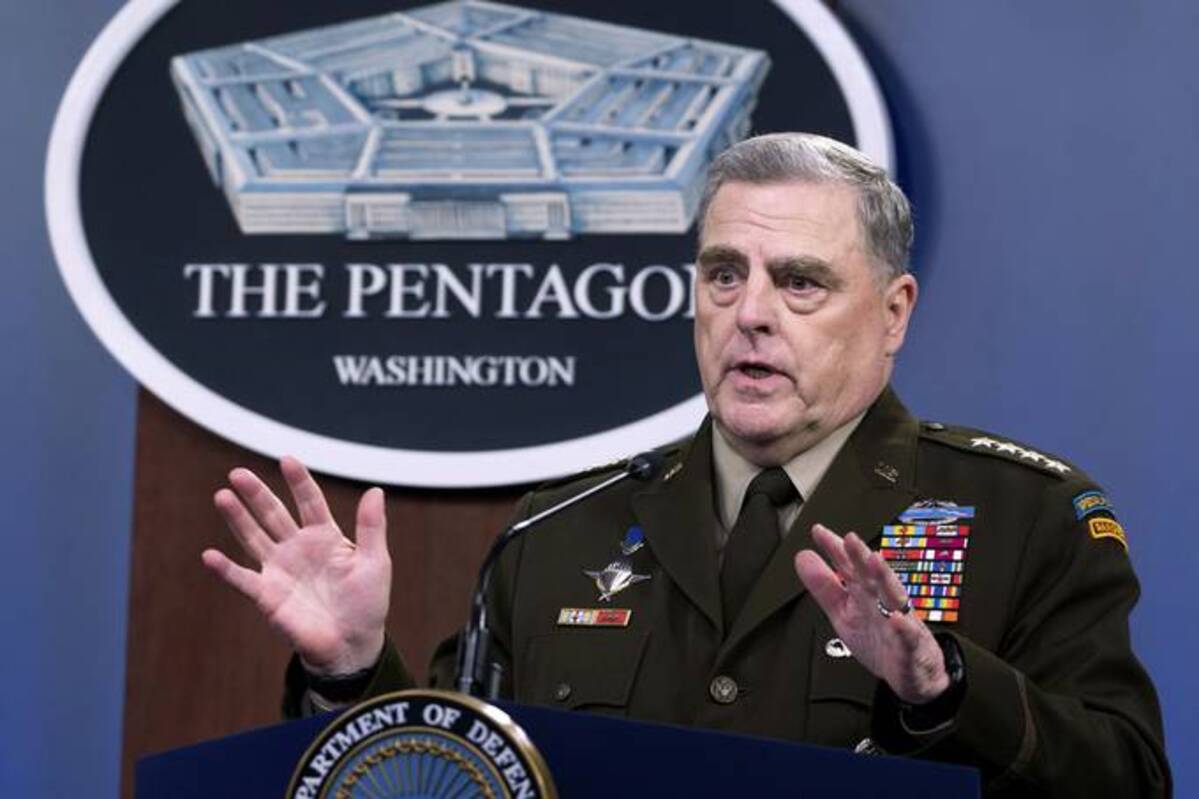 Joint Chiefs Chairman Gen. Mark A. Milley speaks at a media briefing at the Pentagon in Washington, July 21, 2021. (Kevin Wolf/AP) | | | A wave of reporting about Gen. Mark A. Milley's supposed efforts to rein in former president Donald Trump is testing America's faith in two bedrock principles: The belief in civilian control of the military and, relatedly, that active duty personnel must stay out of partisan politics. Behind-the-scenes accounts of Milley phoning up his Chinese counterpart to avert potential conflict, or telling senior military officers to loop him in before following orders from the White House, or comparing Trump to Adolf Hitler, have cast the joint chiefs chairman in an awkward role. My colleague Missy Ryan reports in a story out this morning: "New revelations showing how [Milley], the nation's top military officer, quietly maneuvered to check [Trump] reveal the lengths that top officials went to prevent potentially rash action, but the disclosures also threaten to thrust the military deeper into the partisan fray, former officials said. … "Kori Schake, a scholar at the American Enterprise Institute, said the revelations that Milley covertly acted to counter his commander in chief are 'bad for the military as an institution.' | | 'It encourages people to do what Americans are already doing, which is viewing the military as they view the Supreme Court: apolitical when they agree with them, partisan when they don't,' she said." Milley has denied acting improperly. | | Still, it's at least the second time in President Biden's young administration that experts in civilian-military relations are watching developments worriedly. The first was the nomination of Lloyd Austin to be defense secretary. Despite bipartisan congressional queasiness, Austin required, and received, a waiver of the rule requiring him to have been retired at least seven years to be eligible for the job. The Pentagon is now led by someone plausibly seen as one of its own. Civilian-military affairs experts worry about the potential impact on policy — will he listen more to advisers in uniform than to those wearing business suits, for example. And they fret about the message his confirmation sends to officers, who might plausibly consider a future political appointment as the culmination of their career, and shape their advice or decisions with a confirmation vote in mind. | Life and death consequences | | It's not a new story. These concerns have existed for as long as the Republic has. Trump worried Pentagon brass with talk of "my generals" and "my military" and musing about possibly deploying armed forces in the streets. But it's also not an academic debate — or at least not a sterile one. The relationship between military and civilian leaders shapes real-world policy, with literal life-or-death consequences. | | Look at Afghanistan. Over at the New York Times, Jessica D. Blankshain and Max Z. Margulies argued this week that the "yawning gap" between the public's trust in the military and skepticism about civilian leaders helped fuel the war's longevity — that civilian leaders felt hemmed in by a Pentagon that was always asking for more troops and more time. "Military expertise has an important place in sound policymaking," they wrote. "But in a democracy, it cannot be substituted for value judgments made on behalf of society by their elected leaders." (Tangent: A similar argument could be made about the trade-offs of pandemic response. Scientists stand in for the military: More knowledgeable about disease, but unelected. But ultimately governors, representing the will of the voters, take the tough decisions.) There's another danger, as highlighted by Schake, who has held a number of positions at the State Department, the Pentagon, and the National Security Council: The more the military is seen as a partisan political actor, the more public trust in the institution risks eroding. "The relentless politicization of our military is a terrible thing, both for our democracy and for the relationship between the military and the rest of our society," Kori told The Daily 202. "I'm actually amazed the military's buffered itself as well as it has, given the ferocity of partisanship we're living through." | | Kori Schake, American Enterprise Institute | "The relentless politicization of our military is a terrible thing, both for our democracy and for the relationship between the military and the rest of our society." | | | | | | | | Milley's roller-coaster journey through super-polarized politics over the past year has taken him from being the target of liberal rage last summer to Trump accusing him of "TREASON" on Tuesday. Here's Missy again: "Perhaps the most searing moment of Milley's tenure occurred in June 2020, as Trump mounted an aggressive response to protests over the police killing of George Floyd. Milley, dressed in fatigues, joined the president as he walked across Lafayette Square outside the White House, which authorities had forcibly cleared of protesters moments before, for a photo op. Pictures of that event appeared to suggest Milley was a willing supporter of Trump's heavy-handed approach. "People who know Milley said he was deeply affected by the barrage of criticism he received from respected former senior officers, and considered resigning. Days later, he issued a rare public apology. | | "In the months after, Milley appeared to be attempting to atone for what happened at Lafayette Square." But, as Missy notes, Milley has also "appeared to go out of his way to wade into politically charged matters." The general drew fire from the right wing after a June congressional hearing in which he defended having officers learn about critical race theory, which scrutinizes the way social structures feed racism. And it'll be harder to argue he's immune to political considerations if he turns out to have been a significant source for reporting that casts him as resisting Trump. We should know more soon. Milley is scheduled to face Congress later this month. | | |  | What's happening now | | | FDA advisers are meeting to decide on the highly charged issue of whether to recommend coronavirus vaccine boosters. "In an all-day meeting, the agency's outside experts will hear from representatives of the U.S. and Israeli governments and Pfizer," Carolyn Y. Johnson, Laurie McGinley, Laurie McGinley, Lena H. Sun and Joel Achenbach report. "The FDA's vaccine advisory committee will vote at the end of the day on whether the agency should clear a third dose of the shot by Pfizer and its partner BioNTech for the public. The companies want the agency to approve boosters for people at least 16 years old who finished their immunizations six months earlier." | | |  | Lunchtime reads from The Post | |  The Russian opposition politician Alexei Navalny's Smart Voting app is seen on a phone. (Shamil Zhumatov/Reuters) | | - The founder of the Oath Keepers is drawing scrutiny from federal officials and followers. To federal prosecutors, Stewart Rhodes "is 'Person One,' which is how he is referenced in court filings for roughly 22 Oath Keepers associates charged in connection with the Capitol attack," Hannah Allam and Spencer Hsu report. "Still, Rhodes stayed outside the building. And for all his fiery words, there is no public evidence that shows him giving direct orders for Oath Keepers to enter. Eight months later, he remains free and uncharged."
- Russian opposition leader Alexei Navalny's app disappeared from Apple and Google stores as Russia's voting begins. The two tech giants, under pressure from government censors, took down the app that encouraged voters to cast ballots against President Vladimir Putin, Taylor Telford, Robyn Dixon and Craig Timberg report.
| - The House committee investigating the Jan. 6 insurrection had hundreds of documents sent to Trump's team to review. The National Archives and Record Administration sent the documents requested by the committee to the former president's team, Politico's Betsy Woodruff Swan reports. "That move kicks off a process that will result in some tough decisions for Biden's White House counsel, both politically and legally. That's because the office will have to decide whether to sign off on any efforts from Team Trump to keep sensitive White House communications from becoming public."
- Facebook hobbled Mark Zuckerberg's bid to get America vaccinated. Zuckerberg "wanted his company to use its formidable resources to push 50 million people toward Covid-19 vaccines," write the Wall Street Journal's Sam Schechner, Jeff Horwitz and Emily Glazer. "For more than a month, Facebook researchers warned that comments on vaccine-related posts—often factual posts of the sort Facebook sought to promote—were filled with antivaccine rhetoric aimed at undermining their message … The wave of negative comments worried global health institutions, including the World Health Organization and Unicef, the documents say. … [Another] memo said initial testing concluded that roughly 41% of comments on English-language vaccine-related posts risked discouraging vaccinations."
- Troll farms reached 140 million Americans a month on Facebook before the 2020 election, an internal report shows. "The report, written in October 2019 and obtained by MIT Technology Review from a former Facebook employee not involved in researching it, found that after the 2016 election, Facebook failed to prioritize fundamental changes to how its platform promotes and distributes information," the Review's Karen Hao writes.
| | |  | The Biden agenda | | Biden holds virtual climate talks at White House | 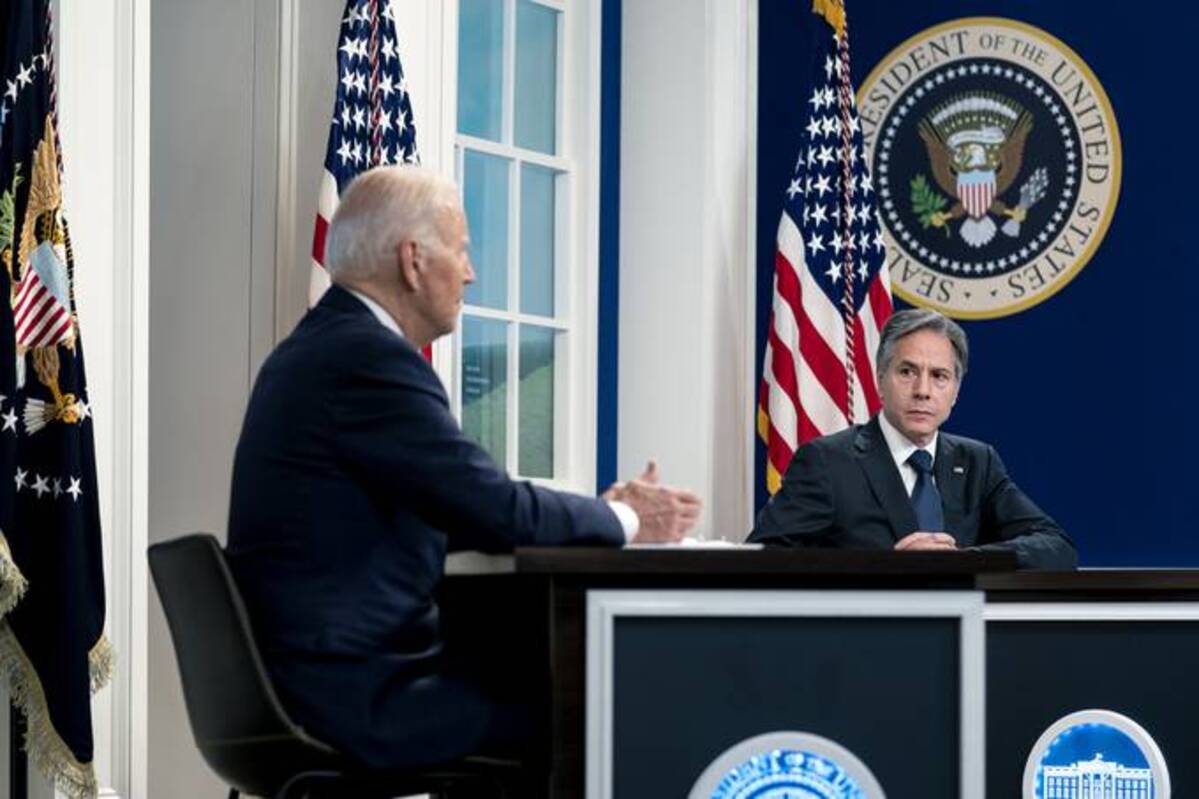 Antony Blinken, secretary of state, listens as President Biden, right, speaks during a virtual discussion about climate change with world leaders. (Stefani Reynolds/Bloomberg News) | | | Biden convened a virtual global meeting on climate and energy issues this morning. | - Warning that "we don't have a lot of time," Biden urged global leaders to sign onto the Global Methane Pledge, which aims to cut global methane emissions by about a third by 2030, Tyler Pager and John Wagner report.
- "A European official familiar with the discussions said this week that the E.U. and the United States recently reached the deal to reduce methane emissions by 30 percent below 2020 levels by the end of the decade. The official … said the two sides are focused on convincing other countries to join the effort."
| | Biden's submarine accord with Australia angered both France and China. | - "The French Embassy in Washington promptly canceled a Friday night gala commemorating the country's naval assistance to American forces during the Revolutionary War. In what Paris clearly saw as an added insult, Britain is also part of the U.S.-Australian deal," Karen DeYoung, Michael Miller and Lily Kuo report.
- "White House press secretary Jen Psaki said that France was 'aware in advance' of the new agreement, although [Secretary of State Antony Blinken] indicated that awareness came only in the past day or two. A French official said Paris learned of the decision, which was negotiated for months among the three participants, through media reports."
- Australian Prime Minister Scott Morrison this morning rejected Chinese criticism of the U.S.-Australian alliance s and said he doesn't mind that Biden might have forgotten his name. "Everything we've done with the United States is consistent with the partnerships and relationships and alliances we've already had with the United States," Morrison said, per the AP.
| | Thousands of Haitian migrants are waiting under a bridge in South Texas after a mass border crossing. | - "Authorities in Del Rio say more than 10,000 migrants have arrived at the impromptu camp, and they are expecting more in the coming days," Arelis Hernández and Nick Miroff report.
- "They have trekked through the jungles of Panama's Darien Gap, navigated migrant camps and criminal gangs in Central America, and dodged border guards and troops along the highways of southern Mexico. Some say the economic toll of the pandemic pushed them to leave, while others see a more welcoming U.S. administration offering them a fleeting opportunity to reach the United States."
| | Most Americans agree that the U.S. had to leave Afghanistan, even if many think the actual withdrawal was badly mishandled. | - That is according to a new Monmouth University poll, which also found that few Americans believe that postponing the withdrawal would have improved the situation.
- "Americans are divided over whether Biden seriously mishandled the withdrawal of U.S. forces from Afghanistan (48%) or if he did the best he could in a bad situation (49%)."
- "At the same time, only 29% believe the current Afghan situation would have been better if the U.S. had postponed the withdrawal deadline until later in the year. Most Americans (62%) say the situation there would be the same no matter when we withdrew."
| | |  | Saturday's D.C. street closures, visualized | | | Started Thursday, several streets in Washington are closing as officials put up fencing ahead of a rally on Saturday where demonstrators plan to gather in support of those arrested during the Jan. 6 insurrection by a pro-Trump mob. Check what streets are closed to traffic. | | |  | Hot on the left | | | The man behind this weekend's pro-Trump rally once praised a far-right assassin, reports Mother Jones's David Corn. Matthew Braynard, who's behind the protest supporting the Jan. 6 rioters, also tried to overturn the 2020 election. As part of his MFA coursework in 2017, he "created a literary magazine called Otoya, which was billed as a 'Literary Journal of the New Nationalism.' The publication, Braynard explained in a brief editor's note, was titled in honor of Otoya Yamaguchi, whose name may not be familiar to people outside of Japan. In 1960, Yamaguchi, a 17-year-old right-wing ultranationalist in Japan, brutally murdered Inejirō Asanuma, a legislator and chairman of the Japan Socialist Party." | | |  | Hot on the right | | | Rep. Anthony Gonzalez (R-Ohio), one of ten Republicans who supported Trump's second impeachment, is retiring. That's a dark omen for our politics, writes the Bulwark's Tim Miller. "It might be a Trump era cliché to say that 'this is not normal' but a 36-year-old congressman in his second term doesn't just retire. That is the start of one's career, not the finish. Moreover, a 36-year-old Republican congressman sure as s--t doesn't retire because he is scared Republican voters might hurt his family. That is not normal. At all. It is a flashing siren about just how dangerous the Republican party has become." | | Trump, in a statement, celebrated Gonzalez's departure: | 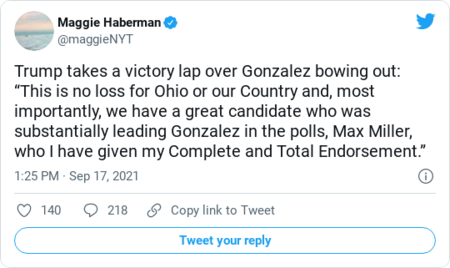 | | | | | |  | Today in Washington | | | Biden is traveling to Rehoboth Beach this evening, where he will spend the weekend. | | |  | In closing | | | Coronavirus in the zoo: Six African lions, a Sumatran tiger and two Amur tigers at the National Zoo tested presumptive positive for covid-19: | 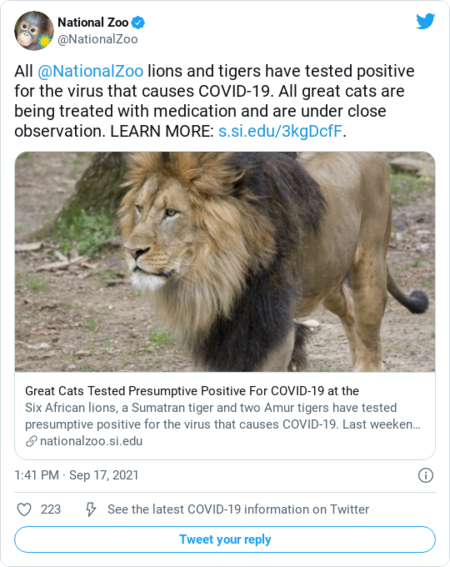 A vaccine for zoo animals has been developed. The zoo said it will become available in the coming months. | |  A spotted lanternfly, shown at a Pennsylvania vineyard, appeared in a boy's bug collection at the Kansas State Fair. The invasive insect, not previously known to be in Kansas, can damage trees and crops. (Matt Rourke/AP) | | | Thanks for reading. See you tomorrow. | | |