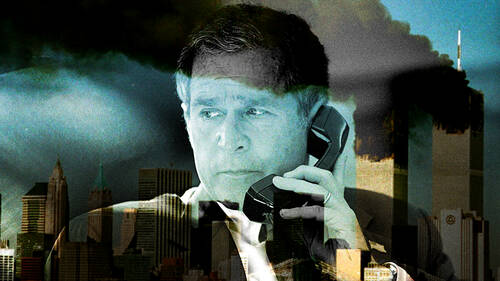
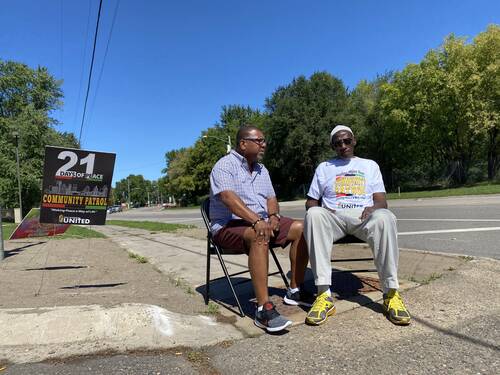
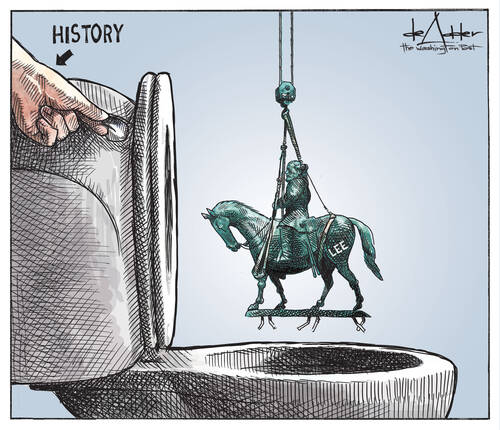
| As the 20th anniversary of 9/11 approaches, you already have plenty of options for what to read or watch commemorating that calamitous day. But you might like to also consider this affecting op-ed by Roya Hakakian, who had fled Iran 15 years earlier and then found herself on Sept. 11, 2001, weeping in New York City, mourning "the loss of the impenetrable fortress I thought I had entered when I arrived in the United States." She knew about public grieving — in Iran, she writes, "every national tragedy had turned into a perennial national sorrow," with coffins carried through the streets, followed by mourners "howling, at times beating themselves." But she was unprepared for how her adopted home, after honoring the dead, turned its focus to the future, with an electrifying zest for life that could be unsettling for an immigrant. Soon, though, she came to understand: "I saw clearly that there were two Americas: America the country, the vulnerable place that came under attack. But also America the idea, the imperfect repository of hope and vitality, from which, without fanfare, so many anonymous phoenixes rose to show that misery need not be the destiny after tragedy." 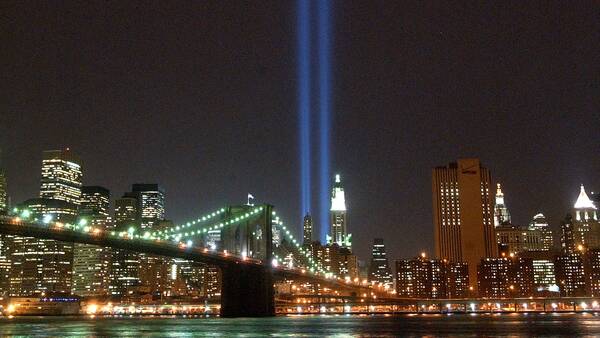 (Spencer Platt/Getty Images) I saw New Yorkers mourning and vulnerable, but also how misery was not the only destiny after tragedy. By Roya Hakakian ● Read more » | | | | Let's move past the hubris that made us think we could remake the world by force. By E.J. Dionne ● Read more » | | | Conspiracy theories blaming George W. Bush for the Sept. 11 terrorist attacks have been debunked, yet millions of Americans still believe them. What does this say about U.S. society today? Video ● By Kate Woodsome and David Byler ● Read more » | | | | An interview with a senior member of the 9/11 commission. By Greg Sargent ● Read more » | | | | Just as he feared, telling the truth about the "big lie" derailed a promising political career. By James Hohmann ● Read more » | | | | This roadside memorial about the internment of Japanese Americans in World War II is just one pebble in a mountain of evidence refuting accusations that Americans are too calloused or squeamish to redeem their nation's honor by confronting departures from it. By George F. Will ● Read more » | | | Despite social-justice signaling after George Floyd's murder, big companies still fund two groups targeting judges with misleading 'soft on crime' ads. By Radley Balko ● Read more » | | | | In Richmond, the statue of Robert E. Lee comes down at last. By Paul Waldman ● Read more » | | | | A South Carolina parable about power. By Kathleen Parker ● Read more » | | | | Our democratic allies elections provide some needed context for controversial new rules put in place in Georgia and Texas. By Henry Olsen ● Read more » | | | After the shooting of three children in the spring, a coalition of concerned citizens asserted its right to a peaceful neighborhood with the simple act of sitting on a chair at one of the city's most dangerous street corners. By Louis King and Jerry McAfee ● Read more » | | | | There are limits to what you can say in an installment meant to make millions. By Alyssa Rosenberg ● Read more » | | | |




 Email
Email