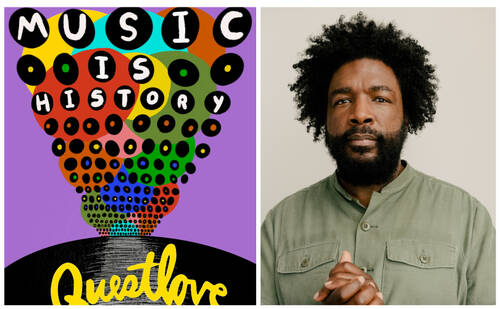
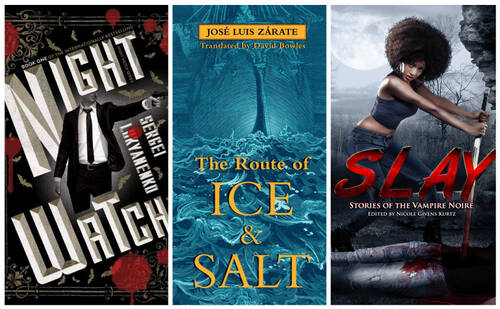
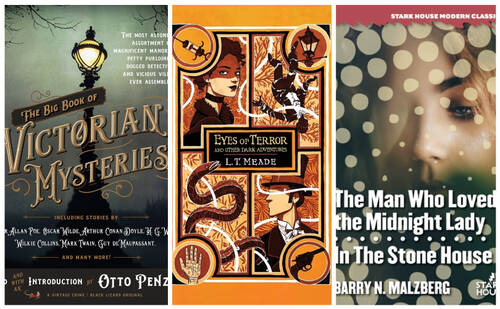
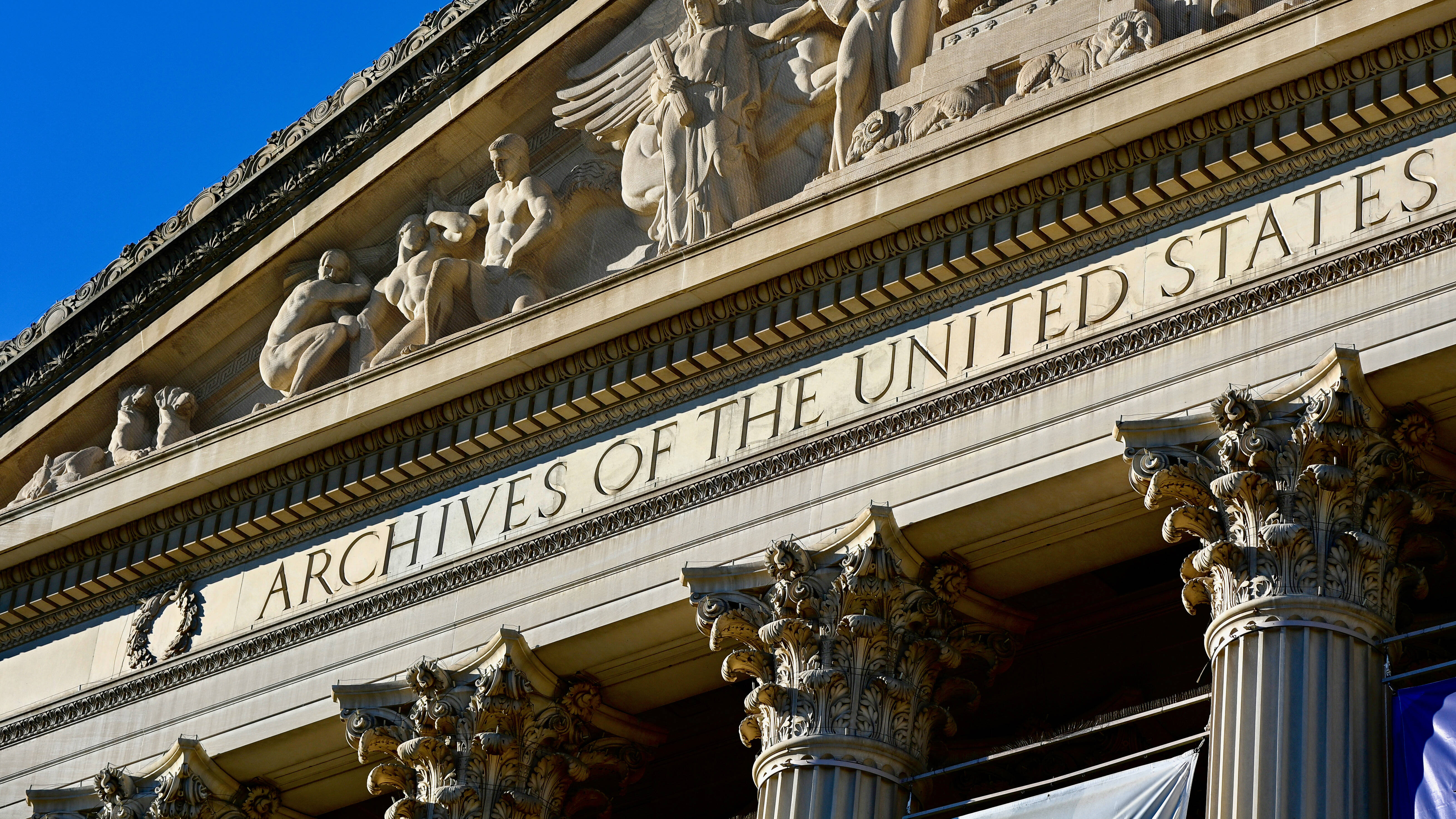
 The National Archives of the United States in Washington is hiring. (Photo by Jonathan Newton/The Washington Post) | HELP WANTED. Uncle Sam is looking for an archivist to oversee the Donald J. Trump Presidential Library. This is not a joke. It's a bigly government job at the National Archives. Duties include organizing and preserving Trump's records in all media formats, including his tweets over the cyber, his correspondence with bad hombres in Nambia and his Sharpie doodles. The salary could be as high as $134,798 per year. The Donald J. Trump Presidential Library website actually launched back on Jan. 20, and this is an awkward week to begin advertising for a supervisory archivist. On Monday, the former president filed suit against the National Archives (story). Trump hopes to thwart Congress from seeing records about what he was up to on Jan. 6 when his thugs stormed the Capitol chanting, "Hang Mike Pence!" What we commonly call presidential libraries are strange hybrid creations — a mixture of historical research and shameless hagiography, public property and private sycophancy. The records of a presidential administration are owned by the U.S. government and managed by the National Archives. If a president wants a federal shrine to celebrate his legacy, a private organization must raise millions of dollars to construct a library — and then transfer it to the National Archives to operate and maintain (story). Curiously, the Barack Obama Presidential Center, which finally broke ground in Chicago last month, is taking a different approach. It won't house the president's papers, and it won't become part of the federal presidential library system, giving Obama more freedom to memorialize himself however he'd like. As several observers have noted, this innovative private model could be attractive to a Very Stable Genius determined to manufacture his own history. But even as the government looks for an archivist to manage Trump's presidential records, the master of Mar-a-Lago is focused on launching his own pre-satirized online platform, Truth Social (story). If you're an archivist who'd like to dive into this flaming cesspool of political contention, apply here. May the covfefe be with you! 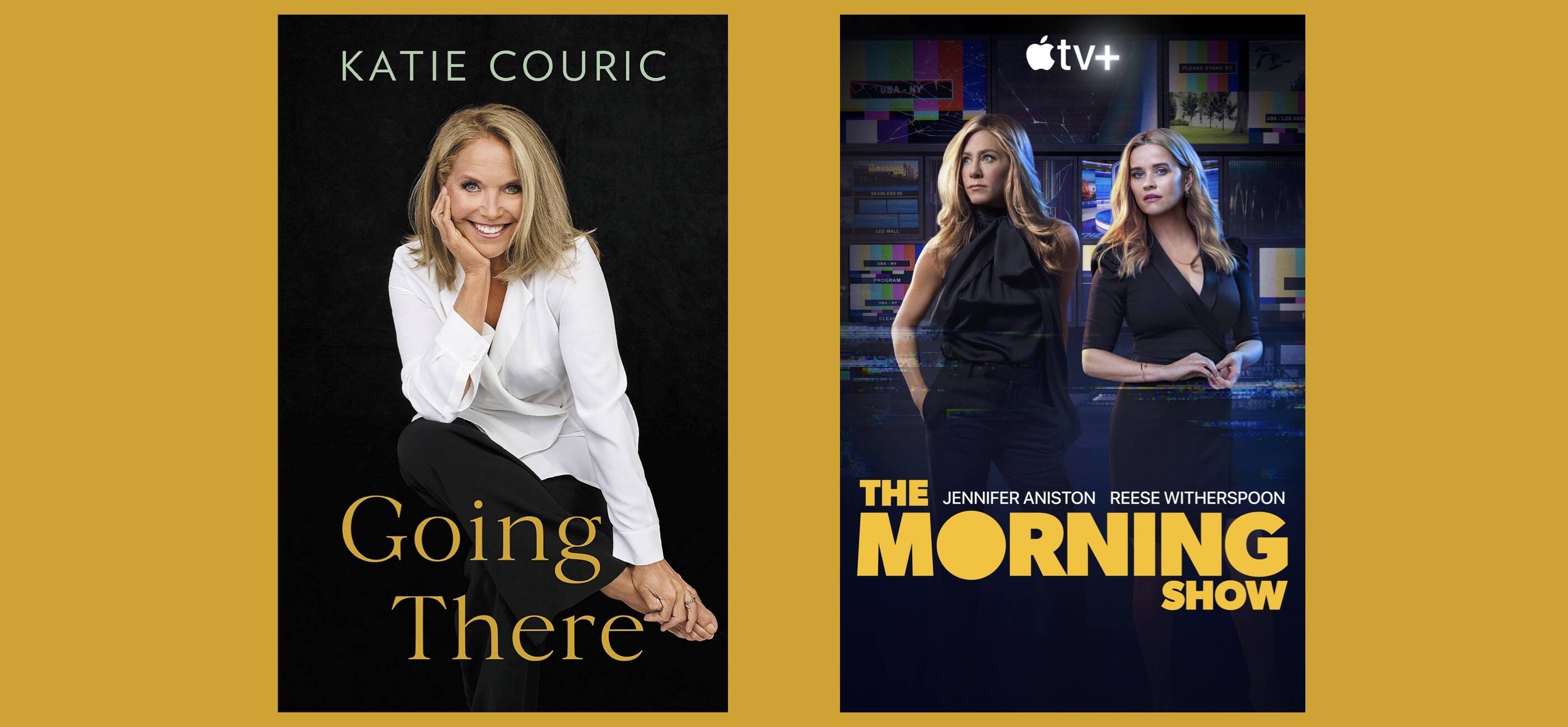 Katie Couric's memoir "Going There" will be released Oct. 26, at least a week after we've learned everything about it (Little, Brown); "The Morning Show," starring Jennifer Aniston and Reese Witherspoon, is currently in its second season (Apple TV Plus). | Entre nous. In her upcoming memoir, "Going There," Katie Couric reportedly distances herself from former "Today" show co-host Matt Lauer, who was fired by NBC in 2017 for "inappropriate sexual behavior." Although her book won't be released until next Tuesday, you can already read the juiciest parts here. I've never actually seen the "Today" show, but I'm enjoying the corporate intrigue and creepy behavior by watching "The Morning Show," a fictional version that our TV critic hates. Jennifer Aniston and Steve Carell co-star as the hosts of a popular news program rocked by allegations of inappropriate sexual behavior. The show is not in any way based on Couric and Lauer, so don't even think that! But coincidentally, the current season revolves around the imminent release of an exposé titled "The Wrong Side of the Bed," which may reveal compromising details about a relationship between the "Morning Show" anchor played by Aniston and her disgraced former colleague played by Carell. So desperate is Aniston's character to see an early copy of this exposé that she shrieks at her friends and enemies: "You just gotta get me that book! What's in the book? Tell me what's in the book!" Much of "The Morning Show" — like Aniston herself — is not humanly possible. But publishers do sometimes keep the content of a buzzy book secret until it's released. Or at least they try. To "embargo" a book is an arduous process. In the most high-profile cases — like a presidential exposé or Will Smith's upcoming memoir — copies of the manuscript might be limited to just the editor, the copy editor, the head of the publishing house and a lawyer. No advance copies are sent to reviewers, or copies are only sent to a few who sign nondisclosure agreements. (This year, I received an embargoed book with my name printed in large letters diagonally across the text of every page. It was an eye-crossing and weirdly narcissistic reading experience.) Staff at the printing plant are sworn to secrecy and might work under video surveillance. Final copies are shipped in boxes that forbid opening or displaying the books before publication date. Bookstore owners violate those terms on pain of getting cut off by the publisher. And yet how many times — as with Couric's memoir — do news outlets manage to post the shocking parts of a hot book before its publication date? In my experience, almost every time. Conveniently for journalists, there's always a careless "friend" of the author, a distracted clerk at an airport bookstore, a used bookstore owner who hates corporate publishers or, yes, a publicist engineering "an accidental leak" to drum up early excitement. I don't know what will happen on "The Morning Show" — future episodes are embargoed (irony alert!). But if the TV writers know anything about the parasitic relationship between publishing and journalism, salacious details from "The Wrong Side of the Bed" will slip out before the book's official publication.  Timothée Chalamet and Rebecca Ferguson in the new movie adaptation of Frank Herbert's "Dune." (Chia Bella James/Warner Bros. Pictures/Legendary Pictures) | Denis Villeneuve's movie adaptation of "Dune" bursts into the open today like a giant sandworm. Washington Post book critic Michael Dirda can remember meeting Frank Herbert back in 1984 and going to the preview of David Lynch's "Dune" at the Kennedy Center. "There were some polite if strained attempts at praise," he says, "but most people felt the film was confusing, overlong, too kinky and generally a mess." This week, Dirda went to see a preview of the new movie, starring Timothée Chalamet, and he puts the whole universe in perspective here. "Dune" has long been the No. 1 best-selling mass market paperback — and a bargain at $10.99. Signed first editions of Herbert's 1965 novel are now offered for thousands — even tens of thousands — of dollars. For something beautiful but still relatively affordable, consider the fine edition of "Dune" published by the Folio Society. It's illustrated by Sam Weber with an afterword by Herbert's son Brian and an introduction by Michael Dirda. I love all this excitement about the old classic, but I'm wary of seeing the new movie. When I was in college, I took a date to see Lynch's adaptation of "Dune," thinking I would impress her with my sci-fi erudition (yes, I was quite the player). But Kenneth McMillan's performance as the grotesque Baron Harkonnen quickly made me nauseous, and when he ripped out a slave's heart, I had to run from the theater. Fortunately, my date came after me, and later we got married. Ever since then, "Dune" has been my own private trigger of Thanatos and Eros. 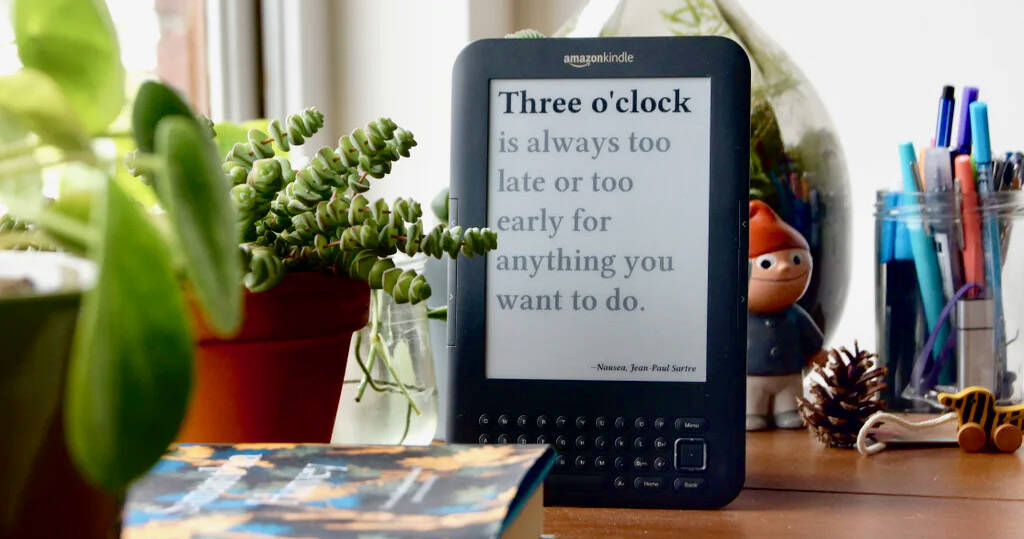 Jaap Meijers reengineered an old Kindle to tell the time with quotations from works of literature. (Photo courtesy of Jaap Meijers) | It's about time. Last week, I mentioned a Kickstarter campaign for the Author Clock, which shows a minute-specific quotation from a work of fiction for each of the 1,440 minutes in a day. So far, the campaign has raised more than half a million dollars. The engineers are already thinking about improving their design so the clock can receive updated quotations from future works of literature. Author Clocks are expected to start shipping in April. If, like me, you can't wait, there's a web-based version you can access immediately — for free! Johannes Enevoldsen, in Denmark, maintains a website called the Literature Clock that displays a relevant literary quotation every minute (try it). I've got it bookmarked on my browser and find myself compulsively checking in when I should be doing literally anything else. If you've got a moment, consider this: Jaap Meijers wanted to get his girlfriend a clock. She's an English teacher in the Netherlands who loves books. "So instead of buying a clock," Meijers says, "I figured that making something out of an e-reader would be more fun." I get the feeling that Meijers is the kind of guy who would build his own microwave oven. Using a file of quotations compiled several years ago by the Guardian, Meijers jerry-rigged an old Kindle e-reader to make it display a timely quotation for each minute of the day. He missed his girlfriend's birthday by a month, but she still found his one-of-a-kind literary clock "a grand romantic gesture." "I'm convinced by the idea that everything is possible," Meijers tells me. It helps that he teaches an electronics workshop at the Royal Academy of Art in the Hague. He's sure I could make a literary clock from an old e-reader, too, but he's being overly optimistic. It took me 15 minutes just to figure out how to dial his international phone number. But if you're game — and you don't mind voiding your Kindle warranty — Meijers has posted his instructions here. 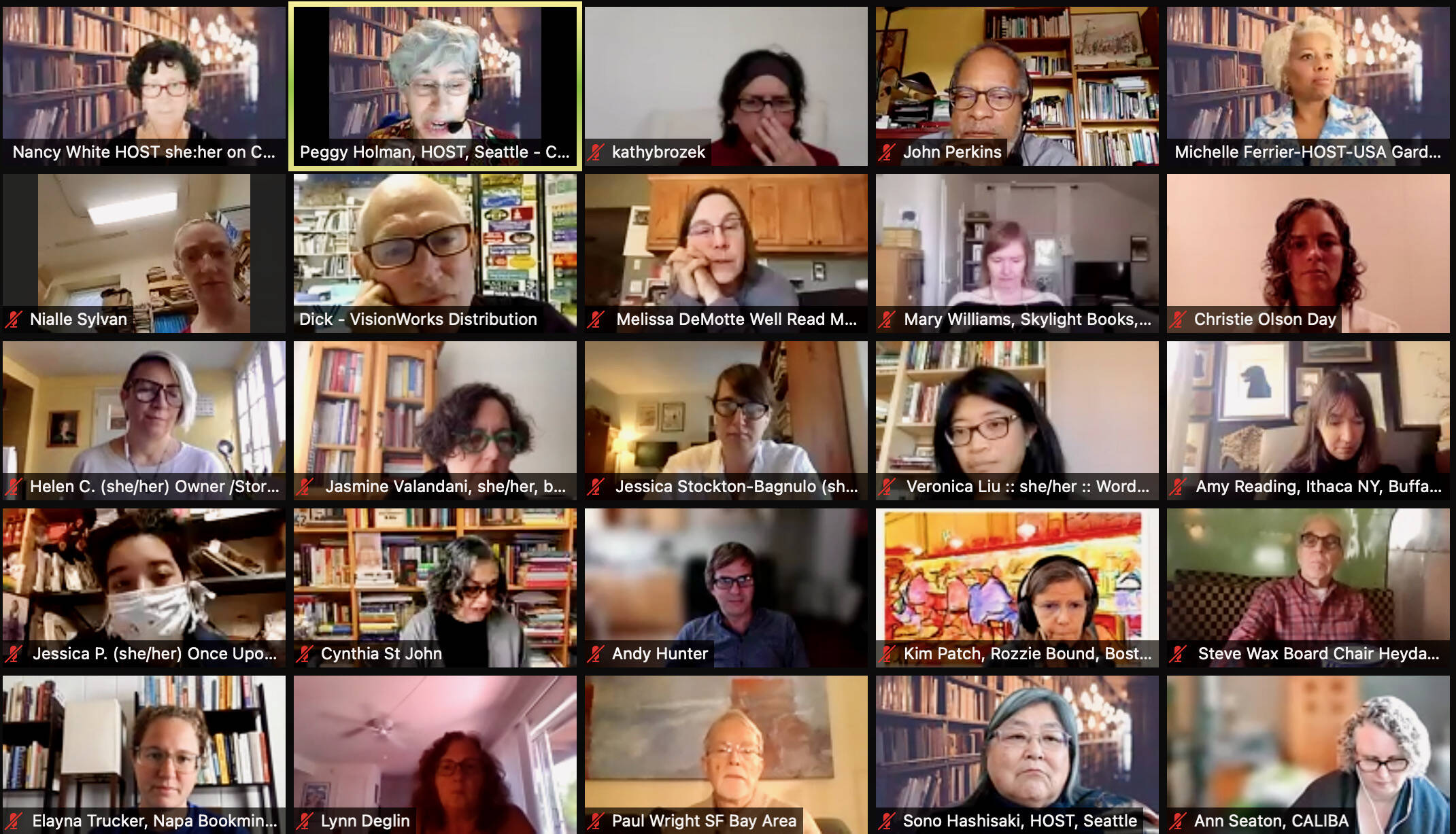 Some of the hundreds of participants in the virtual Reimagining Bookstores conference on Oct. 18 and 19, 2021. (Screen shot) | For independent bookstore owners, it's the best of times and the worst of times. That's my contradictory conclusion after spending two days with Reimagining Bookstores — a virtual meeting of about 300 booksellers, authors and publishers. They had been called together by Praveen Madan, the CEO of Kepler's Books & Magazines in Menlo Park, Calif. Listening to them over six hours, I appreciated as never before that indie bookstore folks are tremendously thoughtful people, wholly devoted to the most optimistic literary pursuit, but by necessity they're also clear-eyed, penny-pinching business owners fighting for their economic survival — like poets in a leaky boat. It was difficult for me to harmonize their cheery affirmations with their cries of existential despair. They're trapped in a business model that does not allow them to monetize their actual value to readers and publishers. Some of the problems stem from irrevocable changes in the way we shop. Accounting for about 10 percent of the nation's book sales, indie bookstores are now like bakers or butchers, stand-alone businesses few of us patronize anymore. But indies provide the most effective platform for discovering books in many genres, including fiction, poetry, children's books and serious nonfiction. If they vanish — crushed by rising rents and labor costs — we'll be left with the bestsellers at Target and whatever the Amazon algorithms want to show us. (Amazon founder Jeff Bezos owns The Washington Post.) Morgan Entrekin, the publisher of Grove/Atlantic, lamented the reluctance of big New York publishing houses to nourish the businesses that are the lifeblood of their work. "We've got this incredible ecosystem of indie bookstores," he said, "and we need to help them in whatever way we can." Maybe, as one bookseller added, the big publishers should spend less of their cash buying each other and more of it supporting the stores that sell their products. Ironically, even as the nation's little booksellers battle a hegemonic online retailer, they're forbidden by anti-trust regulations from working together. That's nuts. Indie bookstores need to be able to share information on prices, discounts, advertising and other costs, and they need to be able to negotiate collectively with publishers and consider group action against suppliers that abuse them. The Justice Department or Congress needs to fix this while there's still an ecosystem of bookstores to save. What indies really need, though, is much more support from customers. Remember that every book purchase you make contributes — positively or negatively — to the kind of literary culture we'll have in this country. 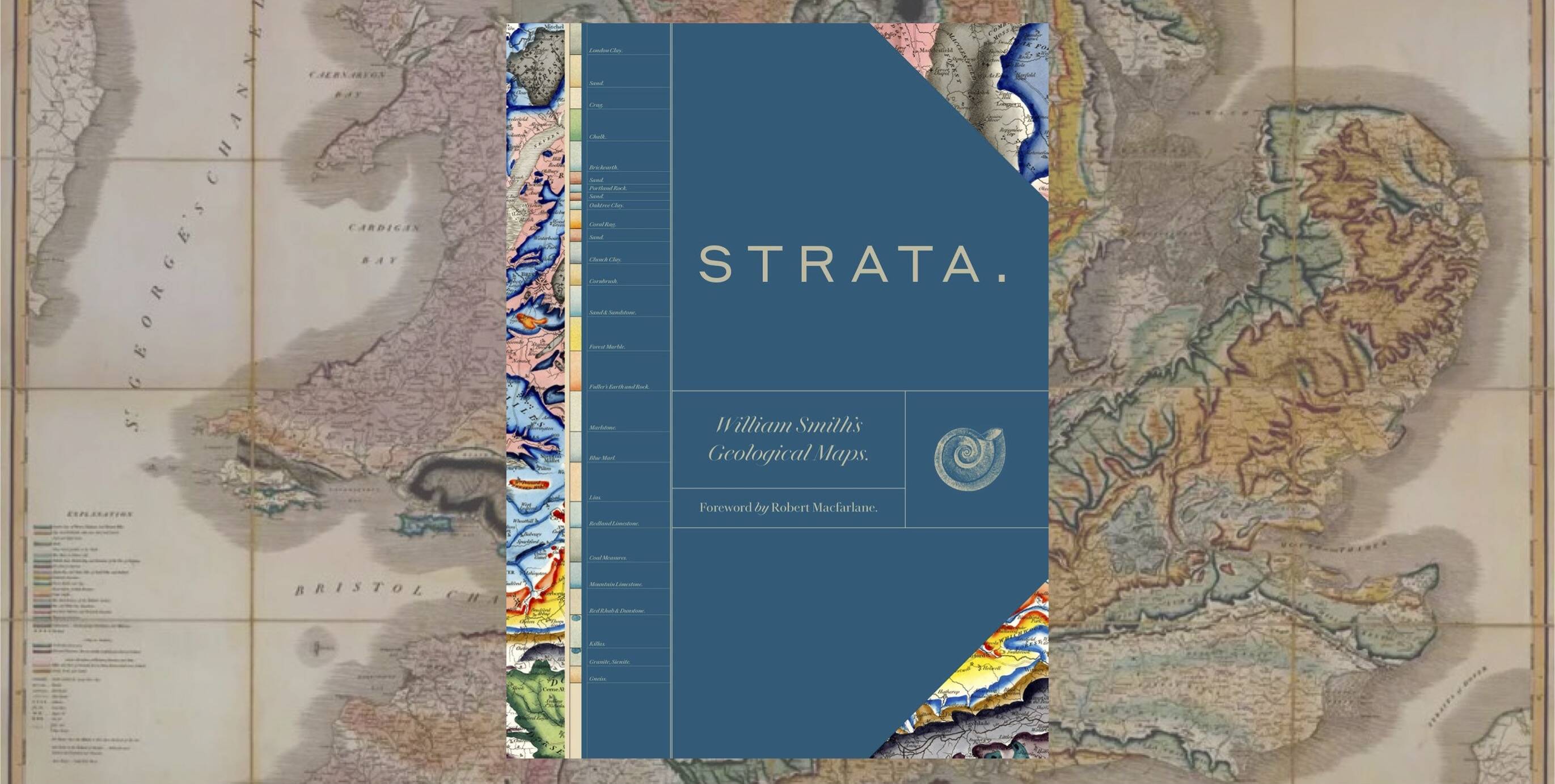 (The University of Chicago Press; background map courtesy of the Library Foundation, Buffalo and Erie County Public Library) | Book lovers know a beautiful book is more than just words; it's a nexus of ideas, text and design in perfect harmony. Since 2013, the Alice Award has celebrated "the lasting values of the well-made illustrated book." This year's winner of the $25,000 Alice Award is "Strata: William Smith's Geological Maps." Published by the University of Chicago Press, "Strata" sounds as dry as a chunk of basalt, but it's as visually dazzling as a gem field. Bursting with full-color maps, illustrations and photographs, it presents the work of William Smith (1769-1839), who created the first geological map of England at a time when most people still believed the planet was just a few thousand years old. (Alas, many Americans still believe that.) In his foreword, Robert MacFarlane describes Smith as "a terranaut . . . who learnt how to read what Charles Dickens once called 'The Great Stone Book' of Earth history, with strata its pages and fossils its words." The book is structured around Smith's famous 1815 map of Great Britain, which MacFarlane says gives "readers trilobite-eyes, allowing them to see back into ancient Earth history and glimpse something of how profoundly this buried past shapes the surface world." If you know a geology nerd — or anyone interested in British history or fine books — "Strata" will make a spectacular gift (and at just $65, it's a shockingly good deal). You can hear more about this remarkable book at the Alice Award ceremony, which will be streamed from the Strand Book Store on Monday, Oct. 25, at 7:00 p.m. ET. (details) 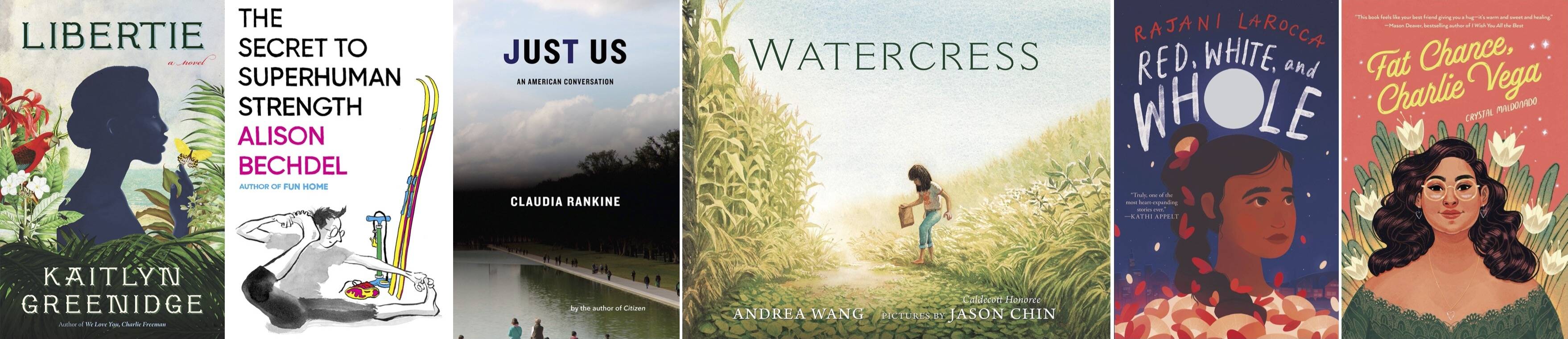 Algonquin Books; Mariner Books; Graywolf Press; Neal Porter Books; Quill Tree Books; Holiday House | More literary honors: The New England Book Awards were announced last night during a virtual ceremony. The contest is sponsored by an association of indie booksellers throughout New England. To be eligible, titles must be about New England, set in New England or by an author who lives in New England. - Fiction: "Libertie," by Kaitlyn Greenidge (10 books to read)
- Nonfiction: "The Secret to Superhuman Strength," by Alison Bechdel (interview)
- Poetry: "Just Us," by Claudia Rankine (essay)
- Children's: "Watercress," written by Andrea Wang and illustrated by Jason Chin
- Middle Grade: "Red, White, and Whole," by Rajani LaRocca
- Young Adult: "Fat Chance, Charlie Vega," by Crystal Maldonado
Review ● By Silvia Moreno-Garcia and Lavie Tidhar ● Read more » | | | 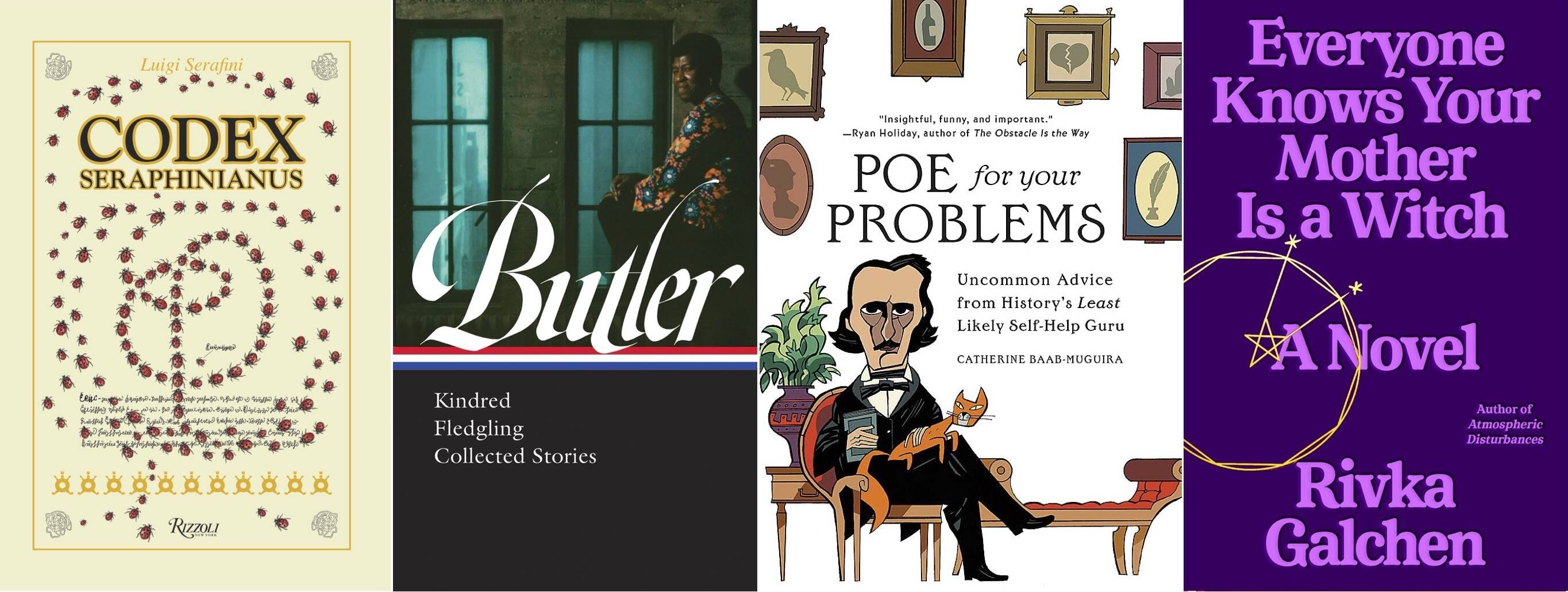 Rizzoli; Library of America; Running Press; Farrar Straus Giroux | Here are a few spell-binding literary trick-or-treats for your favorite ghoul: - "Codex Seraphinianus" is the perfect book to drive a reader mad with delight and frustration. Created by Italian artist Luigi Serafini, it's a vast compendium of surreal illustrations annotated in a made-up language. The infinitely bizarre diagrams – a horse with a caterpillar rear end, umbrellas walking on human legs, a machine extruding people – make "Codex" impossible to put down or comprehend. It feels like a biology textbook designed by Salvador Dalí on acid. The giant new 40th anniversary edition from Rizzoli includes 15 fresh drawings. To see it once is to be enchanted forever.
- The Library of America offers an elegant collection of Octavia Butler's work, edited by Nisi Shawl and Gerry Canavan. This first volume includes a selection of stories and essays along with Butler's classic novel "Kindred" and her final vampire novel, "Fledgling" (review).
- "Poe for Your Problems," by Catherine Baab-Muguira, contains "uncommon advice from history's least likely self-help guru." Say nevermore to your troubles! The lessons in this Poe-sitive thinking guide include "Embracing Your Inner Neurotic" and "Thriving Through Self-Sabotage." It turns out that the author of "The Cask of Amontillado" is the perfect therapist for folks who've been walled up indoors for 18 months.
- "Everyone Knows Your Mother Is a Witch," by Rivka Galchen, reimagines the real-life witchcraft trial of Johannes Kepler's mother. Yes, while revolutionizing the science of astronomy, Kepler was also trying to keep his mom from being executed for turning herself into a blackbird. A brilliant reflection on the challenges faced by smart, witty women then and now (review).
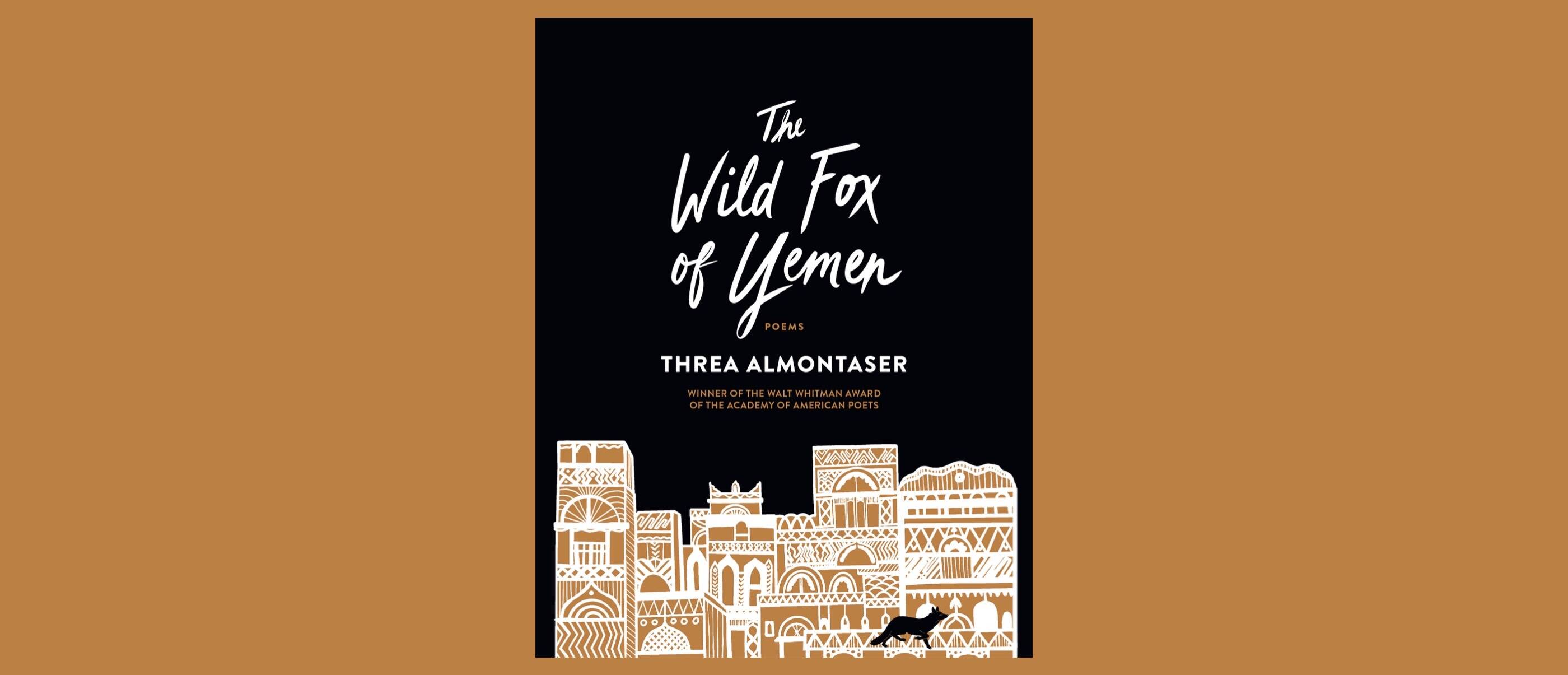 Graywolf Press | Threa Almontaser won the inaugural Maya Angelou Book Award on Wednesday for her debut poetry collection, "The Wild Fox of Yemen." The Maya Angelou Book Award is a new national prize established by the Kansas City Public Library and six Missouri universities in honor of the St. Louis-born poet and memoirist. The annual $10,000 award will alternate between works of fiction and poetry that focus on social justice and inclusion. Almontaser is a Yemeni American writer who was born in New York and teaches English to immigrants and refugees. In a statement acknowledging the Angelou prize, she said, "I feel a responsibility toward the Yemeni community now more than ever to write, not just about our survival but our joys, too. . . . I'm influenced to write about both cultural differences and different cultures." "The Wild Fox of Yemen" was also longlisted this year for a National Book Award. Etymology of Hair The OG of hair was unbound & coil thick, without
violence. Back at the start, every head was a sun
entering into fistfuls of curls you could lose
a hand in, curls you could cry into. Now, a girl's hair can shield her & turn her
into a wasp at once. The etymology of hair
is nest, from the Arabic, from my father's trimmer, glistening
& bulked like a filled beehive. I refused
to straighten. No mother on Steinway
knew what to do with hair fending for itself— afraid to touch their daughters, the parts of them
left undomesticated. & so I am sheared without
ceremony. Hush, it's easier to manage this way. The strands fly over
skyscrapers, sticking to everyone like pollen.
Ode to my Gordian knots, twisted solid
with shea, stringing with beads & fish spines, fence chains & forks. I'm ugly, God tells me, & I
believe him. I miss brown water from hair playing in mud. I miss
our fights—one wild thing encountering another, swaddled
in frizz, extension of my blood. &
the carpenters! When one got too close,
wings against scalp, the panicked tangle of us. I pet the cactus. Wish my head were a blinding
white bulb, a giant sunflower with extra sun.
I twist phantom braids in my sleep. "Etymology of Hair" from "The Wild Fox of Yemen." Copyright © 2021 by Threa Almontaser. Used with the permission of Graywolf Press, Minneapolis, Minn. 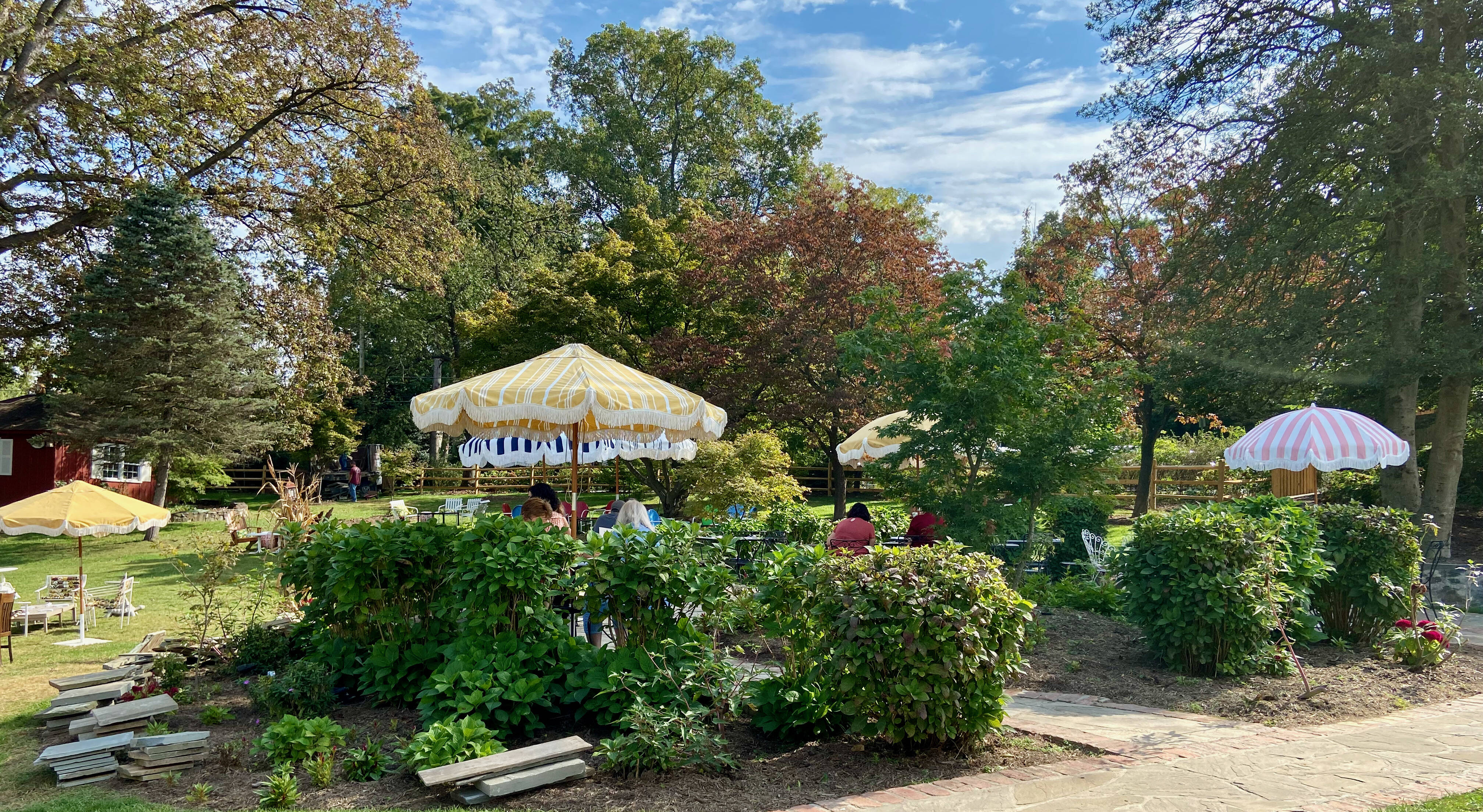 The Book World staff met for an outdoor lunch at Zinnia in Silver Spring, Md., on Oct. 15. (Ron Charles/The Washington Post) | Book World editor Steph Merry invited the department staff to lunch recently at an outdoor restaurant. It was the first time we'd all been together in 18 months. I was so happy to see everybody I practically wept into my arugula. Of course, our office manager, Becky Meloan, brought along a heavy bag of upcoming books from her house, which has been transformed by more than a year of serving as our receiving dock. Dawn and I have essentially given up on that front. Now, the books that arrive here each day are just added to the coral reef of paper that runs through the house, rising up on every table, covering every chest and sideboard, creating a precarious maze of literary towers in every room. Next weekend, we might just dim the lights, play some scary music and call our house The Haunted Library. It wouldn't be far off. Meanwhile, send any questions or comments about our book coverage to ron.charles@washpost.com. You can read last week's issue here. And if you know friends who might enjoy this newsletter, please forward it to them and remind them it's free! To subscribe, click here.
Interested in advertising in our bookish newsletter? Contact Michael King at michael.king@washpost.com. | 




 Email
Email