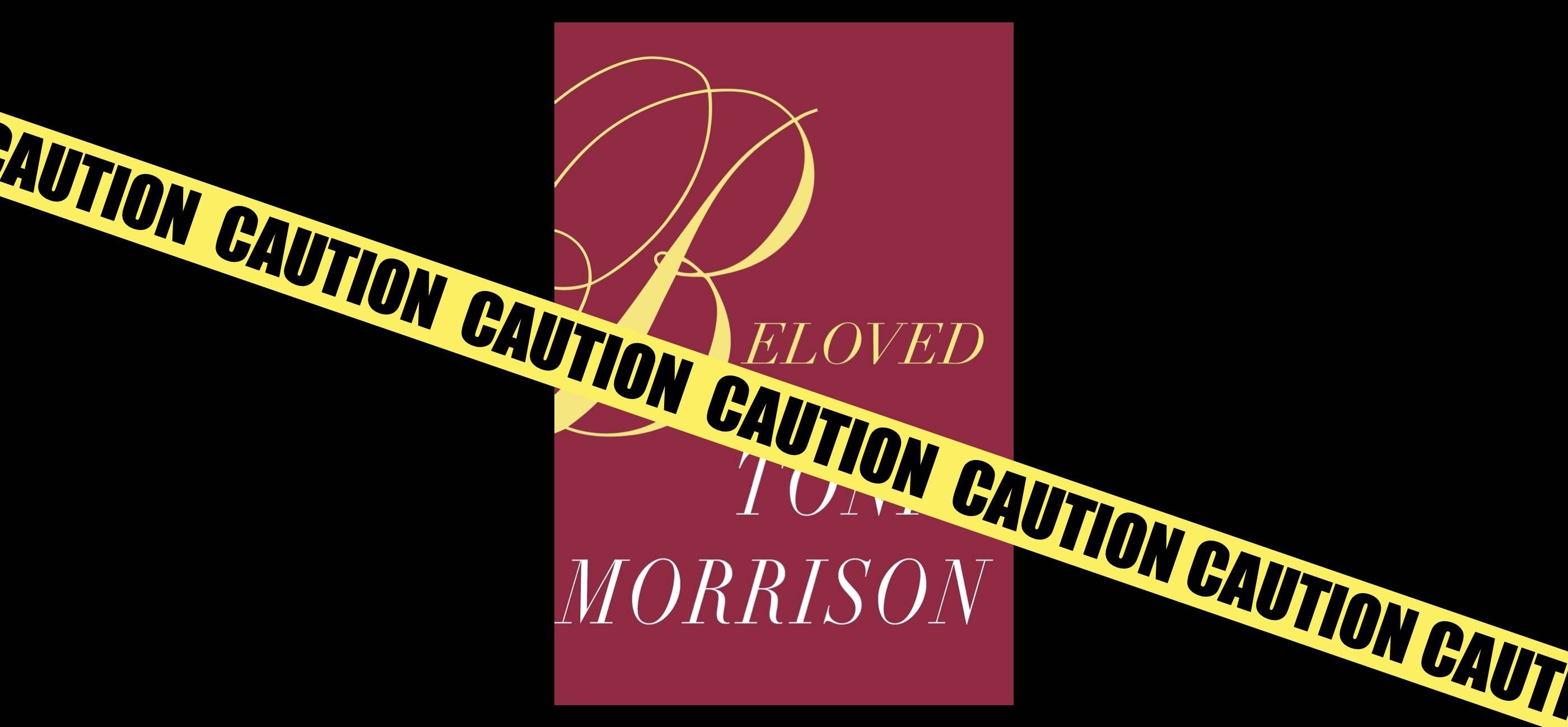
 Knopf; photo illustration by Ron Charles/The Washington Post | Just in time for Halloween, the Virginia governor's race is swirling around issues of literary merit, educational standards and Toni Morrison's genre-shattering ghost story "Beloved." Republican candidate Glenn Youngkin has staked his campaign on protecting students from books like that classic by the Nobel Prize winner. At a gubernatorial debate on Sept. 28, Youngkin castigated his opponent, former Gov. Terry McAuliffe, for vetoing the so-called "Beloved bill," which would have required K-12 teachers to notify parents of classroom materials with "sexually explicit content" (story). Under that legislation, parents of more than a million Virginia students would have been empowered to demand alternative assignments for any text that pricked their sensibilities. Virginians have been trying to exorcise "Beloved" for years. In 2013, Laura Murphy complained that her son, a high school senior taking Advanced Placement English, had nightmares after reading Morrison's novel. In the grand tradition of moral panics stretching back through rock music, comic books and girls wearing pants, Murphy got the Virginia General Assembly to write legislation enshrining her vision of a parent-sanitized curriculum for each student. Fortunately, McAuliffe vetoed the "Beloved bill" in 2016 and again in 2017. But this week, Murphy is back doing her best Anthony Comstock imitation in a political ad sponsored by Youngkin. Sitting in a living room, she says, "When my son showed me his reading assignment, my heart sunk. It was some of the most explicit material you can imagine." Bright flames in the fireplace behind her remind us where that filth deserves to go. "I met with lawmakers," Murphy says. "They couldn't believe what I was showing them. Their faces turned bright red with embarrassment." Her insidious argument is the same one used this fall by other Virginia parents objecting to celebrated young adult novels by Jonathan Evison and Maia Kobabe (story). Such efforts always rest on stripping away artistic and moral context, reducing a book to a few isolated passages and then encouraging listeners to make a visceral, uninformed judgment. The fact is, no great work of art can endure being drawn and quartered for a polemical purity ritual. And how tragic that Murphy, Youngkin and their fellow Republicans are echoing 19th-century White readers who demanded that stories about slavery defer to their delicate tastes. Young men and women old enough to drive their cars past statues honoring Confederate generals are old enough to read "Beloved." (My full rant here.) "A Mouthful of Air," starring Amanda Seyfried, opens today. The movie about a new mother dealing with depression is based on Amy Koppelman's debut novel from almost 20 years ago. In an unusual arrangement, Koppelman wrote, directed and produced the film adaptation for Sony. She illustrated and animated parts of the film, too. Two Dollar Radio, a small indie press in Columbus, Ohio, has reissued "A Mouthful of Air" with an afterword by Adrienne Miller. "So much in society is organized around the perfection of the mother-child bond," Miller writes, "yet many of the messages about the mythology of child-bearing and child-rearing are simply untrue for a great many women." She notes that Koppelman's novel feels like a modern-day sister to Charlotte Perkins Gilman's story "The Yellow Wall-Paper." This week, I've been thinking about that feminist classic and another from the same period, Kate Chopin's "The Awakening." I just reviewed a scathingly candid novel by Claire Vaye Watkins called "I Love You But I've Chosen Darkness." It's about the crush of conflicted feelings a baby inspires — particularly for a woman who regards the nursery as a place where ambition, freedom and sex die. I recommend it with equal parts excitement and trepidation (rave). 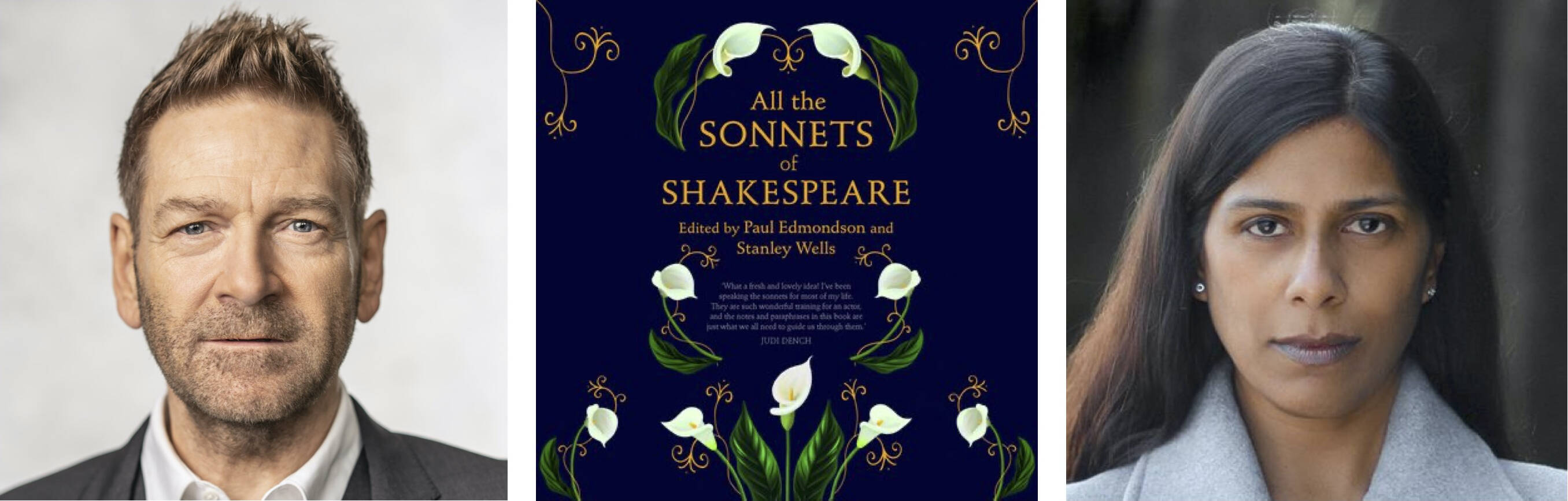 Kenneth Branagh (Photo by Johan Persson); Cambridge University Press; Lolita Chakrabarti (Photo by Maruska Mason) | I'm skeptical of claims about Shakespeare's bisexuality. But last year, two knowledgeable scholars — Paul Edmondson and Stanley Wells — made a big splash with their speculation in "All the Sonnets of Shakespeare." I was more curious about the way their book included additional sonnets from Shakespeare's plays and then rearranged all 182 poems to reflect the likely order of composition. That might sound merely secretarial, but it's actually hugely revealing. The audiobook version of "All the Sonnets of Shakespeare" was finally released yesterday, and it offers two great reasons to listen up: Kenneth Branagh and Lolita Chakrabarti are the narrators — nay, performers. If you're an English teacher or just want to savor the sonnets delivered with rich perfection, this is a consummation devoutly to be wished. Last Sunday, Luke Kennard's "Notes on the Sonnets" won a U.K. Forward Poetry Prize, worth about $14,000. The book is a collection of prose poems, narrated by a guy at a house party, responding to Shakespeare's sonnets. It doesn't feel like poetry to me — I'm hopelessly out of step when it comes to prose poems — but each seductive soliloquy offers a fresh, tangential take on Shakespeare's themes. Alack, you'll have to order a copy from abroad because there's no U.S. publisher. (Can you fix that, Graywolf Press?) And finally, I know a bank where the wild thyme blows. I've been having a blast this week listening to audio versions of Shakespeare's plays from "Play On Podcasts." These elaborately produced radio dramas are based on new translations commissioned by the Oregon Shakespeare Festival and published by ACMRS Press. The translations — that's not quite the right word — are guided by one overriding principle: Do no harm. If you need a Shakespeare script that's not cloaked with Renaissance arcana nor slathered with modern slang, try these editions. "A Midsummer Night's Dream," translated by Tony Award winner Jeffrey Whitty, was just published, and it's delightful. "I resolved to meet Shakespeare's meaning line-for-line, rhyme-for-rhyme," Whitty says. "I'd keep his original language whenever possible and make the rest flow with ease (to the best of my ability)." But you've got to hear the symphonic audio version of "A Midsummer Night's Dream" to really appreciate the magic that Whitty and the "Play On Podcast" folks have conjured up. It's such a hilarious, romantic story enhanced by a soundscape lush with fairies' sighs and forest cries (listen). 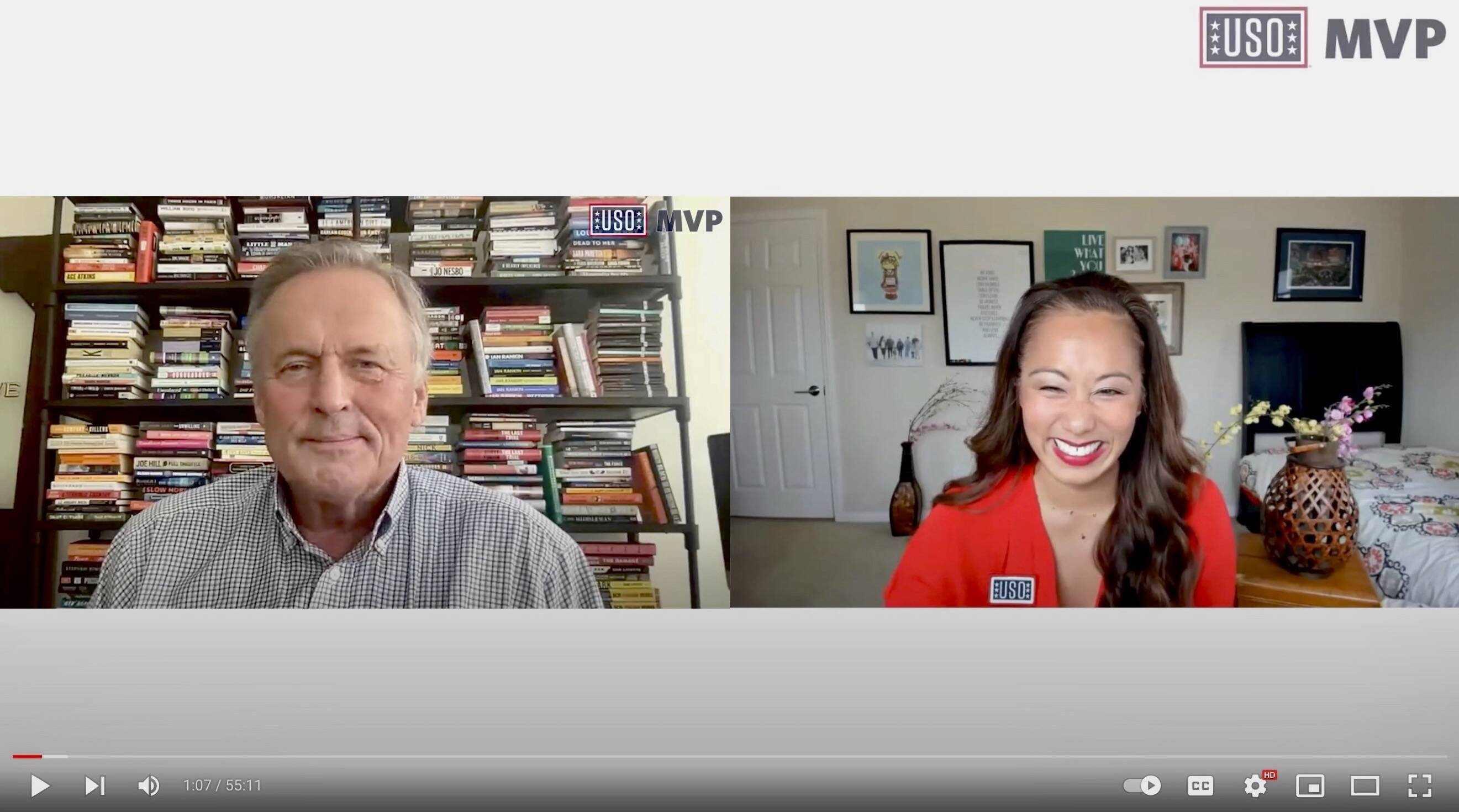 John Grisham talks with the USO on Aug. 17, 2021 (Screen shot) | "He never rests," John Steinbeck wrote, "and he has been doing this ever since the war started. His energy is boundless." The famous novelist was talking about the famous comedian Bob Hope in the middle of World War II. Fresh off a Pulitzer Prize for "The Grapes of Wrath," Steinbeck was working as a war correspondent for the New York Herald Tribune. In 1943, he watched with amazement and admiration as Hope performed for thousands of American troops month after month. These days, Steinbeck would be entertaining the troops himself. When the covid pandemic forced the USO to go virtual, the 80-year-old organization started enlisting popular writers to talk online. So far, the program has held seven author events for service members and their families at military locations all over the world. The writers have included mega-bestsellers like Gillian Flynn, Nicholas Sparks and Kristin Hannah (You can watch Hannah's appearance here.) The authors do this for free — and eagerly. Jennifer Wahlquist, VP of Global Entertainment for the USO, tells me, "James Patterson concluded his first session and immediately booked a second session. Authors just keep coming." When John Grisham spoke, one of the women listening had decorated her whole living room with his novels. "People do really get creative and try to have a lot of fun with it," Wahlquist says. "It's sort of the same jittery experience you might imagine as meeting a celebrity in person." Next week, the USO is hosting Julia Quinn, author of the phenomenally popular "Bridgerton" novels. (How 'Bridgerton' flipped the script on 'The Duke and I') When service members can't participate live — because of time differences or work duties — they can submit questions beforehand in writing or via video. "It's certainly something we see as sustainable," Wahlquist says of the program, "and we have a global audience for it." Let's hear it for conquering the world with happy book talk! 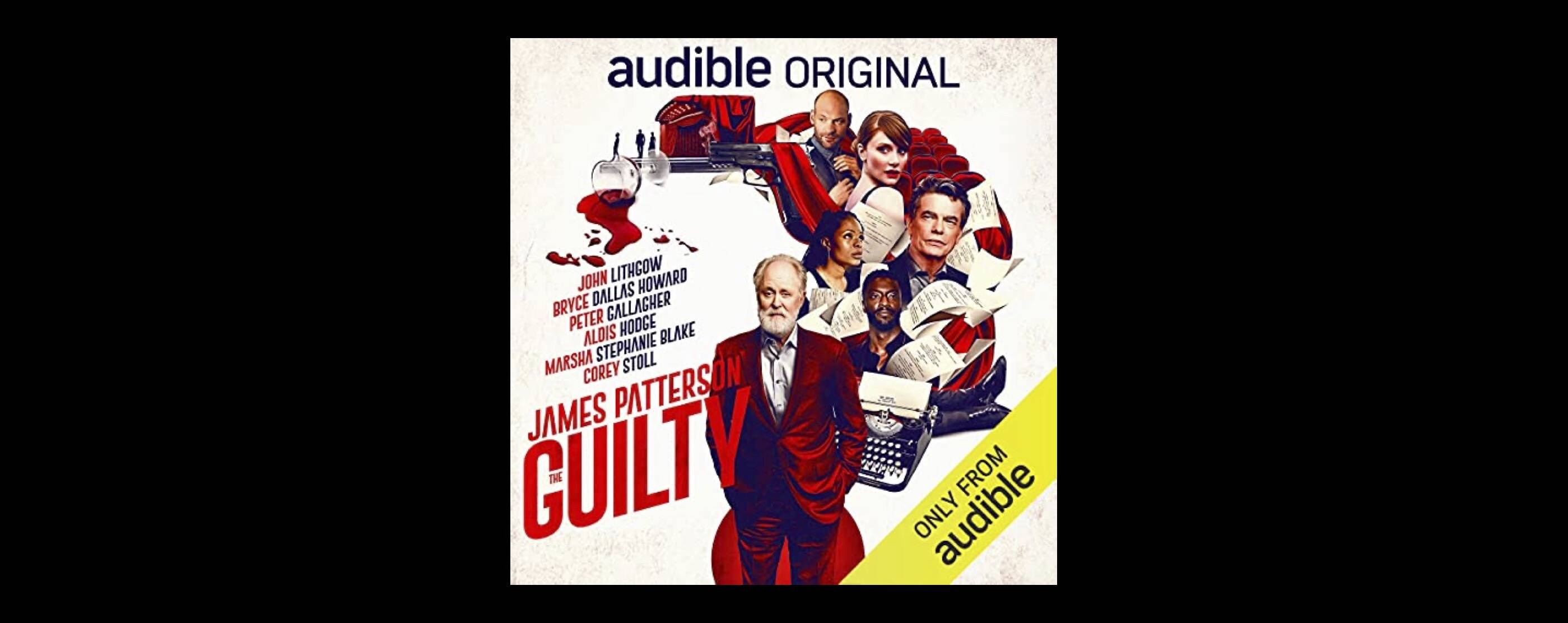 (Audible) | Timing is everything. Yesterday, Audible released "The Guilty," an audiobook written by James Patterson and Duane Swierczynski. (Audible is owned by Amazon, whose founder, Jeff Bezos, owns The Washington Post.) This deliciously arch drama stars John Lithgow, Bryce Dallas Howard, Peter Gallagher, Aldis Hodge and more. The story takes place opening night at a theater on Broadway when legendary egomaniac Osmond Box (played with atomic flamboyance by Lithgow) stages his most ingenious thriller ever: Before a live audience, Box invites three famous actors to the stage and serves them dinner. By the end of the evening, someone will be dead. It's all great fun with one nested surprise after another — like a noir version of "Death Trap." But unfortunately, the plot revolves around a gun on the set that might or might not be real. All the business about who put the gun on stage and whether it contains blanks or bullets bears an uncomfortable resemblance to the shooting death of Halyna Hutchins during a rehearsal for Alec Baldwin's movie "Rust" (latest). Given that "The Guilty" was in the works for more than a year, delaying its release for a few weeks might have been in order. 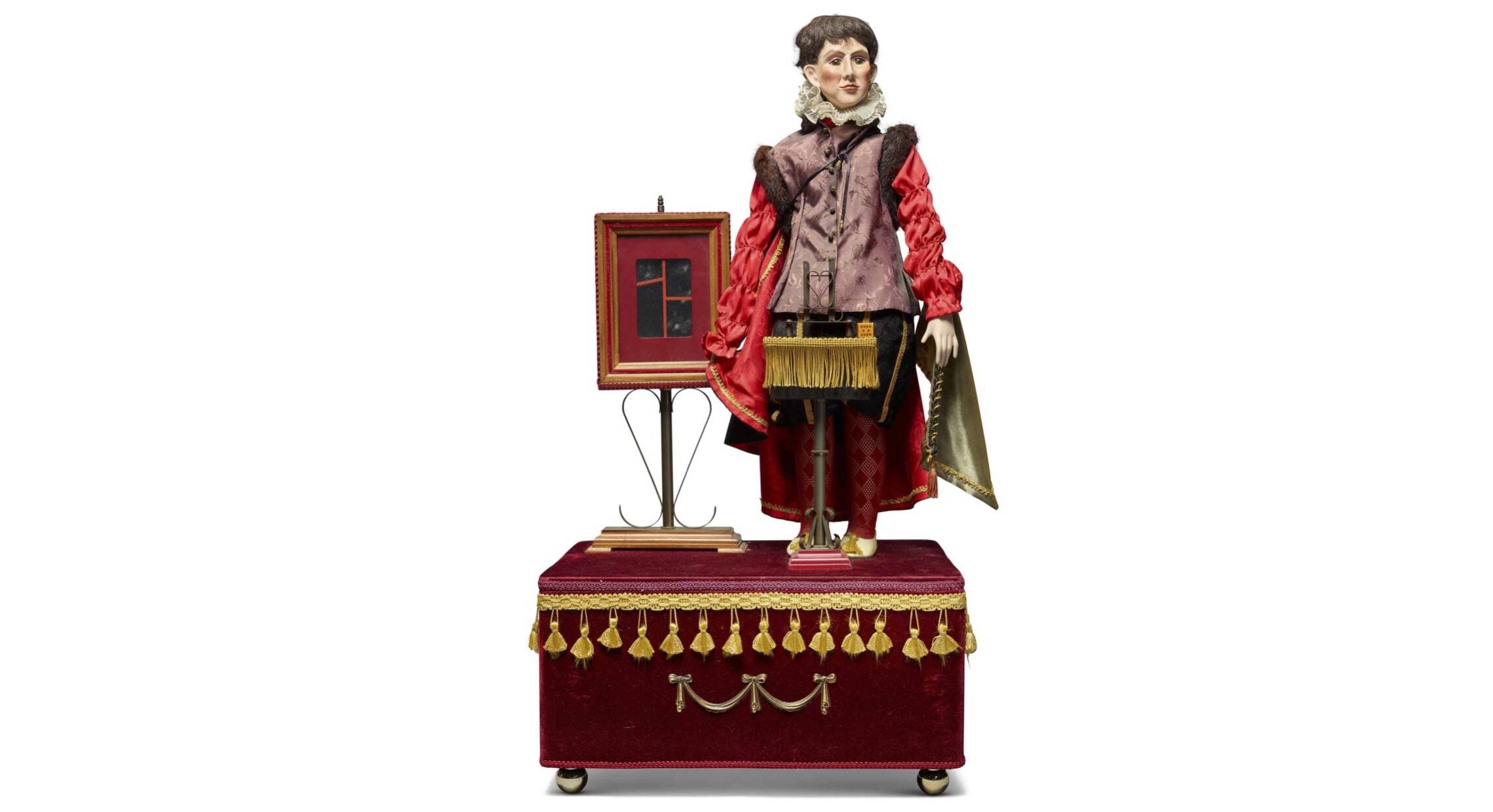 Neppy, Ricky Jay's bespoke automaton, appeared in hundreds of performances around the world. (Photo courtesy of Sotheby's) | Well-heeled witches and warlocks were poring over Sotheby's this week. An extraordinary collection of magic books and memorabilia once owned by the late Ricky Jay went up for auction Wednesday and Thursday (story). The sale raised $3.8 million, with bidders swooping in from 12 countries and, presumably, the underworld. Jay, who died in 2018, was an actor and renowned magician who spent decades collecting thousands of items related to the history of illusions. A first edition of Harry Houdini's "The Unmasking of Robert-Houdin" (1908), sold for $25,200. A poster showing Houdini upside down in the Water Torture Cell went for $151,200 – more than twice its high estimate and an auction record for a magic poster. And Jay's automaton, nicknamed Neppy, sold for $201,600, an auction record for a contemporary automaton. The book I particularly wanted was a first edition of Reginald Scot's "The Discoverie of Witchcraft," published in London in 1584. Scot was a member of Parliament who boldly set out to debunk the effects of magic – more than a century before the madness in Salem, Mass. He effectively demonstrated that accusations of witchcraft were just the result of ignorance, irritation or prejudice against, say, "a doting old woman's imagined wrongs." (Review: "Everyone Knows Your Mother Is a Witch.") By explaining away the supposed wonders of sorcery, Scot produced the first English book on magic tricks. Alas, yesterday "The Discoverie of Witchcraft" sold for $100,800, so buying it would have required actual magic on my part. If such financial hocus pocus is beyond you, consider buying a copy of "David Copperfield's History of Magic," which suddenly appeared this week for a mere $35. A teenager just getting into the dark arts will love it. This large, well illustrated book, written by Copperfield, Richard Wiseman and David Britland, opens with a discussion of Scot's 16th-century exposé. Other chapters provide entertaining introductions to about two dozen magicians and their most astounding feats and illusions. But nothing can beat the magic of David Copperfield's hair. 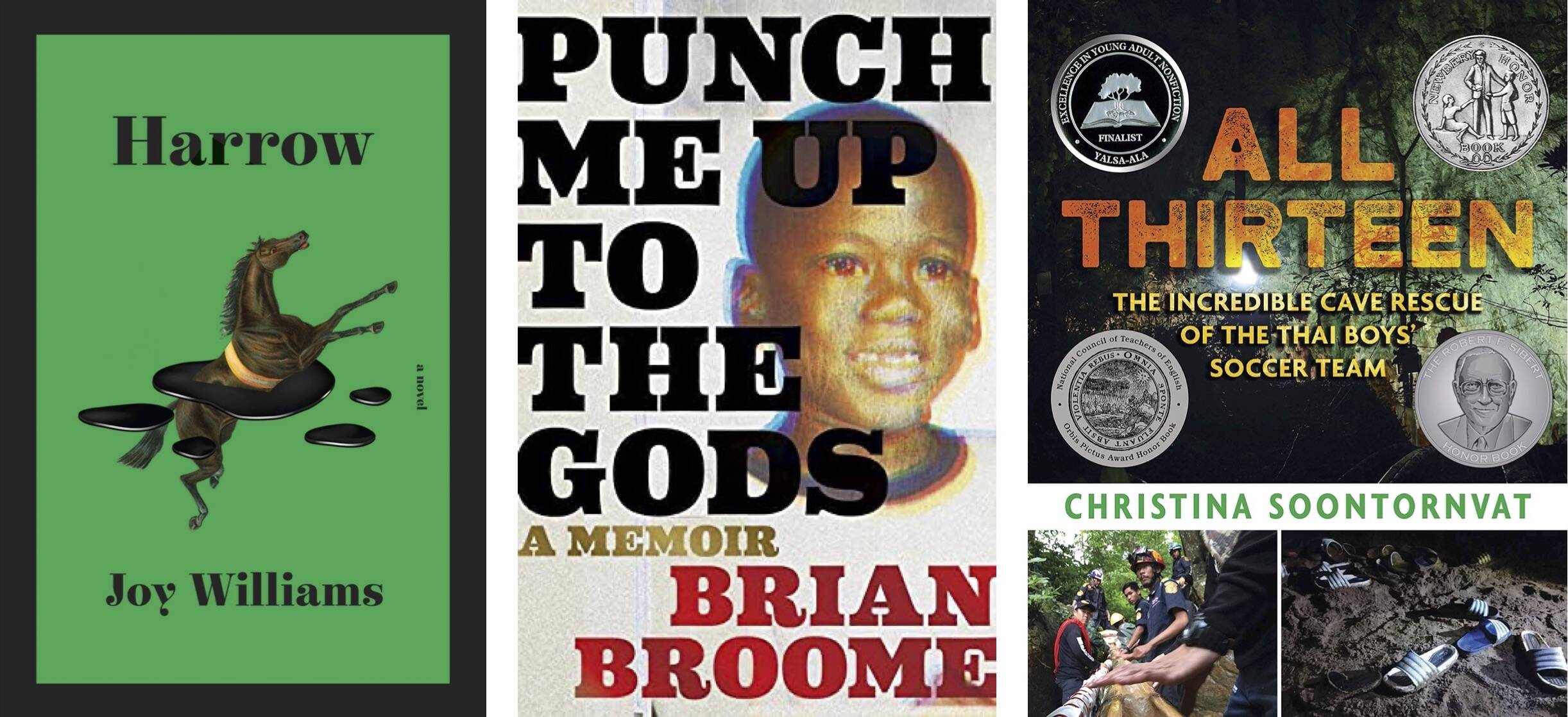 Knopf; Mariner Books; Candlewick | The Kirkus Award winners were announced last night in a virtual ceremony. The contest, now in its eighth year, begins the fall season of literary prizes. Each Kirkus winner received $50,000. - Fiction: "Harrow," a post-apocalyptic novel by Joy Williams (review).
- Nonfiction: "Punch Me Up to the Gods: A Memoir," by Brian Broome, who recently wrote this powerful essay for The Post: "Dave Chappelle cannot erase me."
- Young Readers' Literature: "All Thirteen: The Incredible Cave Rescue of the Thai Boys' Soccer Team," by Christina Soontornvat. This is the first time the Kirkus YA prize has been conferred on a work of nonfiction. (Fiction or nonfiction? What kids really like to read.)
More than 1,500 titles that received starred reviews from Kirkus were eligible. The judges for this year's prize were novelist Rumaan Alam, critic Elsbeth Lindner, bookseller Ikwo Ntekim and Kirkus fiction editor Laurie Muchnick. 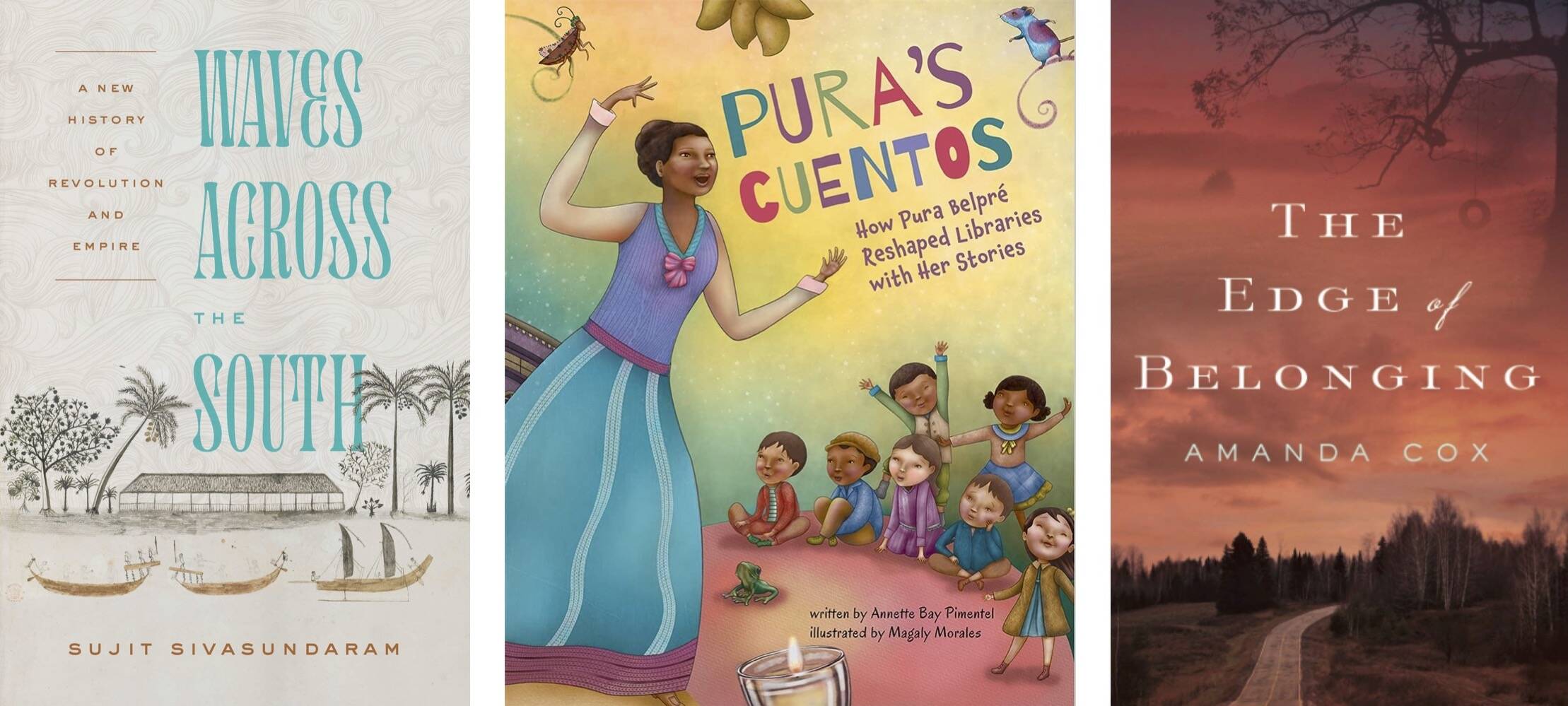 University of Chicago Press; Harry N. Abrams; Revell | More literary honors and awards this week: - The British Academy Book Prize for Global Cultural Understanding was awarded to "Waves Across the South: A New History of Revolution and Empire," by Sujit Sivasundaram. In their announcement of the prize — worth about $34,000 — the judges said the book is "a riot of ingenuity, a truly powerful and new history of revolutions and empires, re-imagined through the environmental lens of the sea."
- "Pura's Cuentos: How Pura Belpré Reshaped Libraries with Her Stories," written by Annette Bay Pimentel and illustrated by Magaly Morales, won the Youth Book Prize for Social Justice from Goddard Riverside and the Children's Book Council. This picture book (ages 4 to 8) tells the real-life story of Pura Belpré, a Puerto Rican-born author who became the first Latina librarian in New York City.
- Last night, "The Edge of Belonging," by Amanda Cox, was named Best First Novel and Book of the Year at the Christy Awards, sponsored by the Evangelical Christian Publishers Association. Cox's novel is about a young woman who returns to her hometown to settle her grandmother's estate and, a quarter century earlier, a homeless man who discovers an abandoned baby.
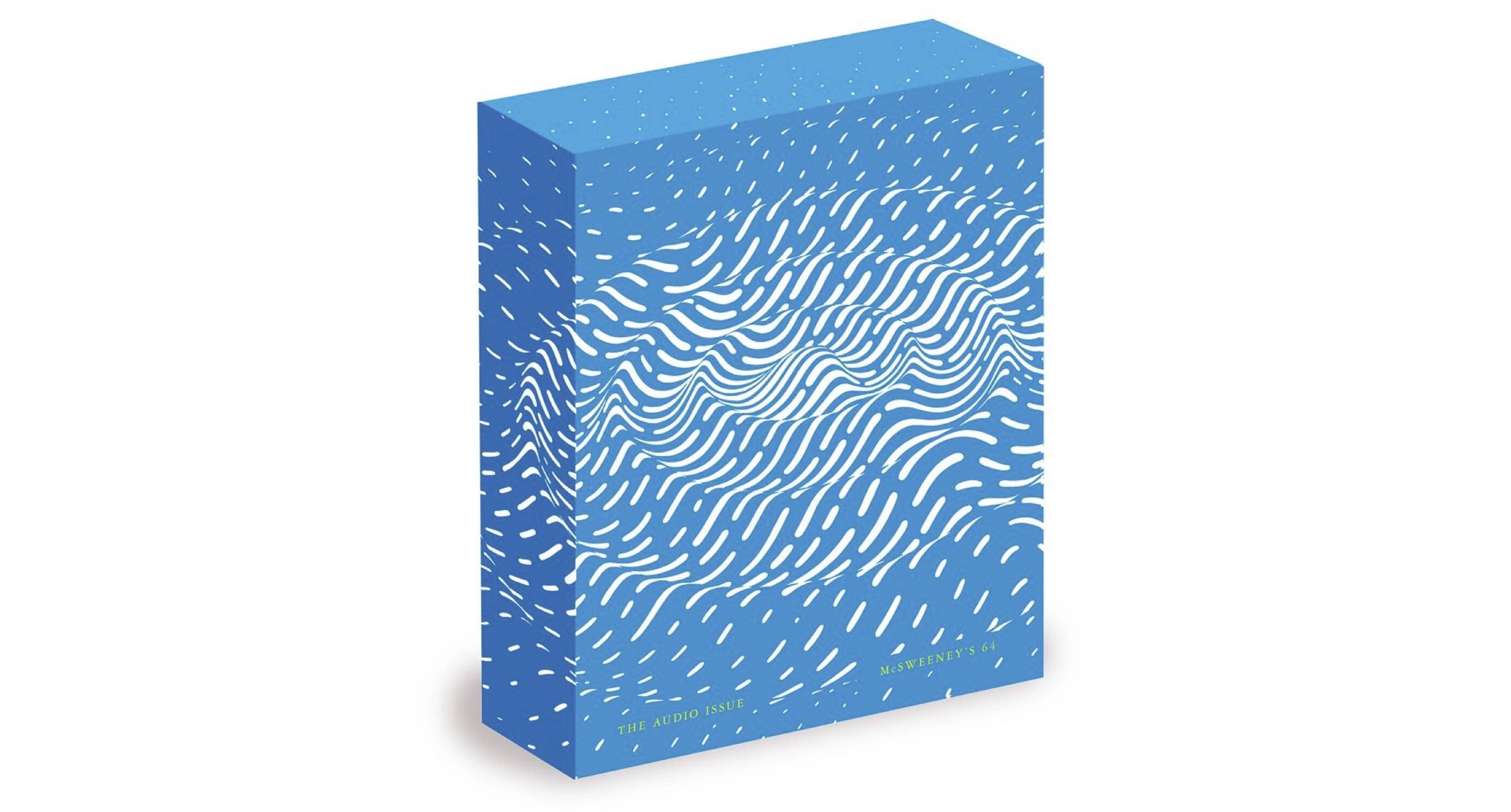 McSweeney's 64: The Audio Issue, coproduced with Radiotopia (Photo by McSweeney's Publishing) | The clever folks who publish Timothy McSweeney's Quarterly Concern never fail to surprise and delight. Every issue is an innovative act of storytelling and bookmaking. (Three years ago, they printed short stories on party balloons — boy, did that blow up!) The latest issue, No. 64, may be their most radically creative one ever. It's an assorted collection of printed matter that arrives in a linen-covered box. Inside are several small books, a poster, a catalogue of children's toys, a little newspaper and an 8-foot-long illustrated scroll that comes with a viewing box. But that's only half of what's going on here: This issue of McSweeney's is co-produced with the podcast network Radiotopia. Each of the literary objects in the box is to be experienced while listening to a related audio component online. It's like a radical magazine crossed with a piece of absurdist theater — frequently witty, often unnerving, sometimes tedious. - "Get on Board," by Yvette Janine Jackson, is a funny satire of billionaires' outer space marketing stunts.
- The scroll titled "Douteflower," written and performed by Karinne Keithley Syers, is part of a haunting multimedia reflection on the value of an individual human life.
- An installation guide for ClearVoice, created by Kate Soper, allows users to start receiving intracranial messages. "You won't even feel your mind being rewired," the narrator says. "Once you're able to commune with others in this new way, you will no longer be tormented by the distrust, paranoia and loneliness that so often impede our business and personal relationships." It's a brilliant parody of Slack and social media.
- A poster accompanies a subtle monologue, written by Aliya Pabani and performed by Chris Creighton-Kelly, about an abortion doctor forced out of his job.
I could go on and on — I'm still exploring the various parts. Other contributors include Rick Moody, Aimee Bender, Kelli Jo Ford and Jason Reynolds. Obviously, it's not for everybody, but I bet there's a geek in your life who would love this remarkable issue (details). 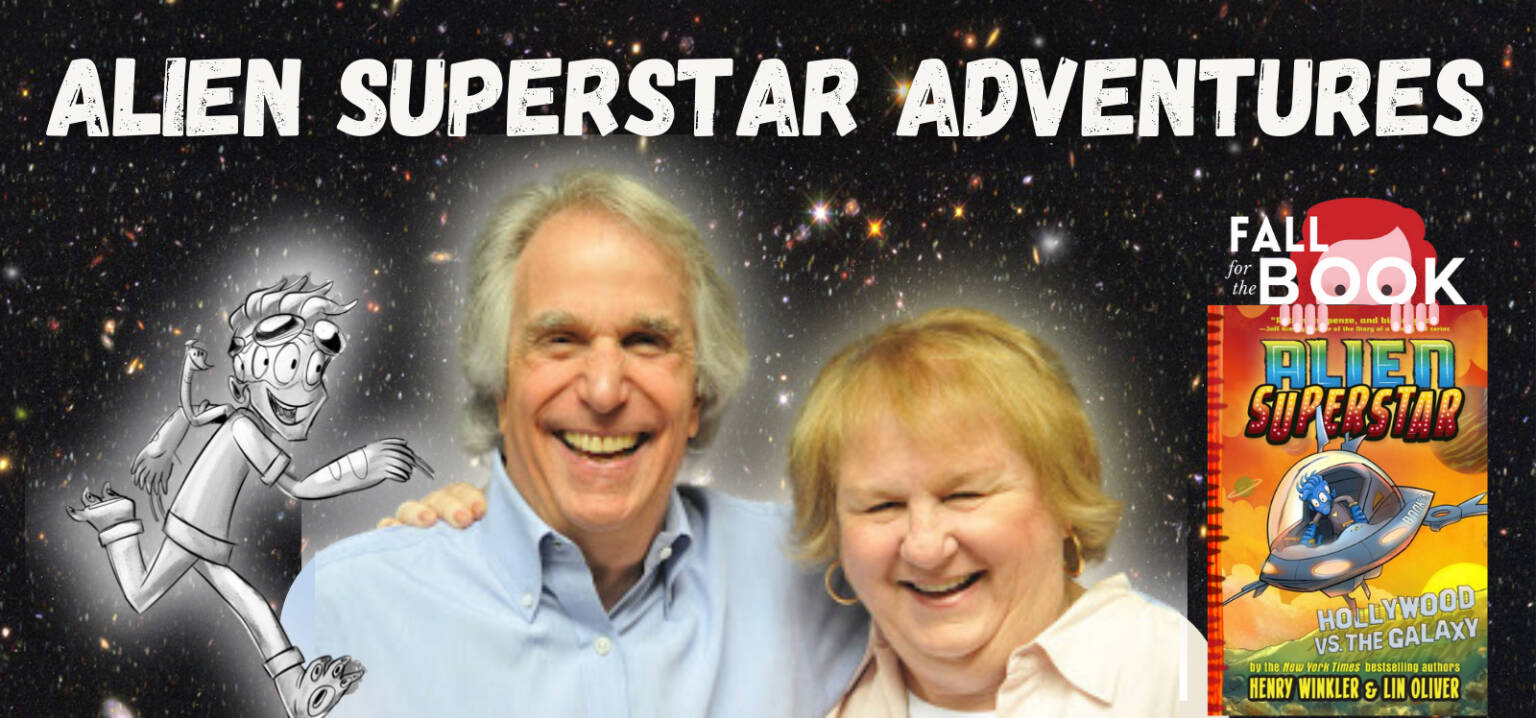 Courtesy of Fall for the Book | Virtual literary events to check out no matter where you live: - The F. Scott Fitzgerald Literary Festival begins tonight with a tribute to John Edgar Wideman. Tomorrow's activities include writing workshops, a conversation about the art of fiction with Wideman and Walton Muyumba, and a keynote talk by Washington Post book critic Michael Dirda (more information).
- The Mark Twain House & Museum will stream its annual gala on Nov. 4. Special guests will include David Baldacci, Kevin Kwan, Adriana Trigiani, Larry Wilmore and more (details).
- This afternoon at 1:30 p.m. ET, I'll be talking with Henry Winkler (yes!) and Lin Oliver about their new children's book "Hollywood vs. The Galaxy" (ages 8-12). This event is part of the Fall for the Book festival, which runs through Halloween (register to watch).
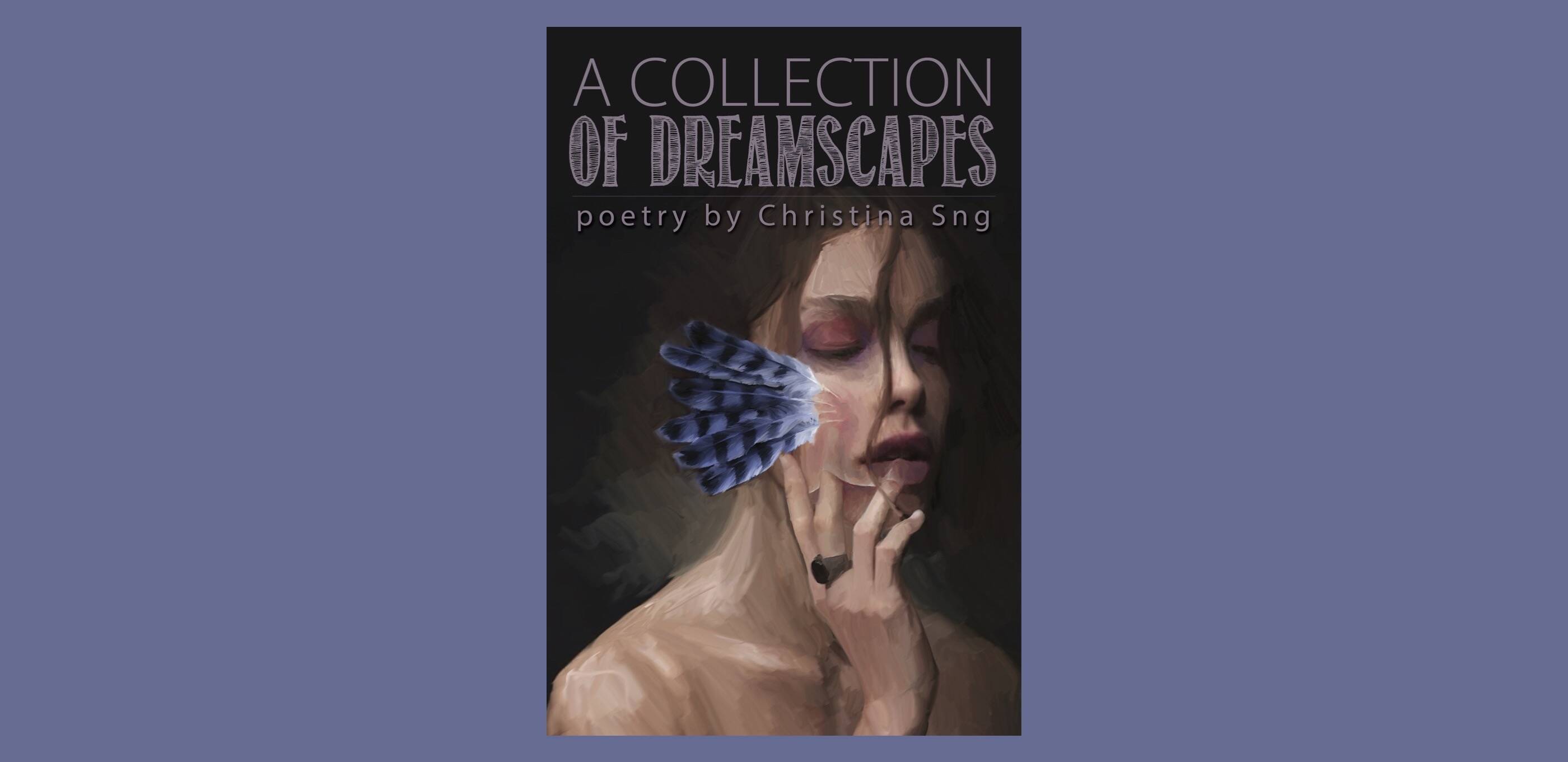 Raw Dog Screaming Press | The first year we were married, Dawn and I watched two shows on our little black-and-white television: "The MacNeil/Lehrer NewsHour" and a gothic soap opera called "Dark Shadows." That may have given us a somewhat peculiar impression of the world. But it cemented our love of vampires. (We're currently staked to a miniseries called "Midnight Mass," starring Hamish Linklater, who's so good I suspect Satanic intervention.) "A Collection of Dreamscapes," by Christina Sng, won this year's Bram Stoker Award for poetry. Her collection ranges from fantasy to fairy tales to gothic horror. This witty, macabre poem is good for boys and ghouls of any age: Concepts Monsters are not real,
I tell my son constantly
Despite his older cousin
Saying otherwise. The devil is a concept,
Something someone made up
A long time ago, to frighten
Others into submission. Don't say devil, he cries.
It is a concept, I gently
Remind him, just like unicorns
And drakes, phoenixes and dragons, The tooth fairy, even old Santa,
Whom you know now is not real,
All wonderful concepts we made up
To make life more interesting. I tuck him in, safe and tight,
Stroke and kiss his chilly skin.
He looks at me with wide eyes,
Momma, are humans real? I laugh. Of course, my son.
They are our food, our lifeline.
When you are 12, I will teach you
How to hunt and how to feed. Till then, only sweet dreams
Of warm blood and the moon.
I kiss his forehead
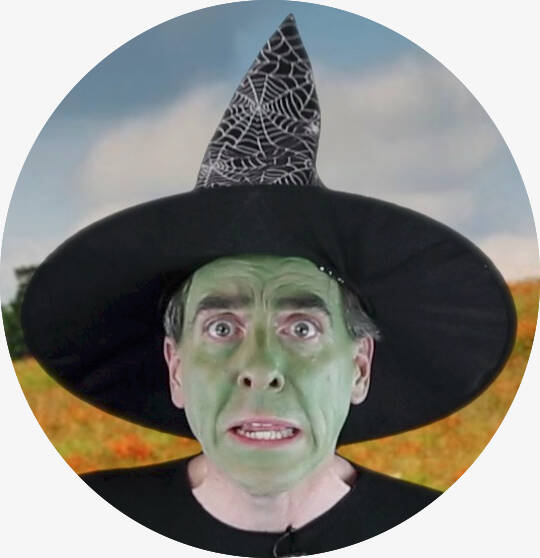
And gently close the coffin. "Concepts" from "A Collection of Dreamscapes" © 2020 by Christina Sng. Published by Raw Dog Screaming Press. Reprinted with permission. 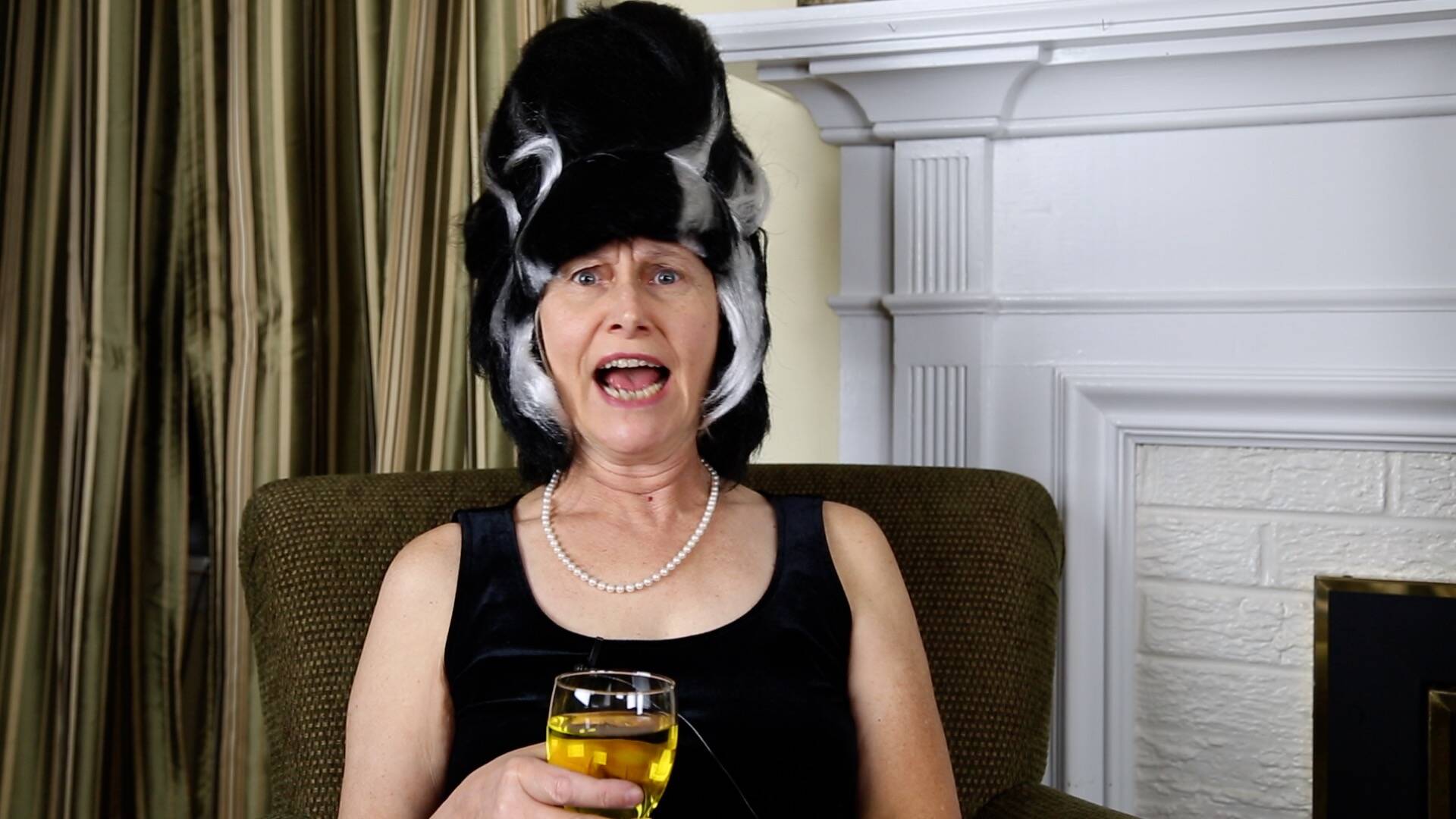 Dawn Charles as Frankenstein's Bride (Ron Charles/The Washington Post) | Today the teachers in my wife's English department have dressed up as literary villains and outcasts. Among the characters gathered are Macbeth, Viola Swamp, Bertha Mason and Miss Havisham. What a dinner party! Dawn is going as the Bride of Frankenstein, which we know is a literary stretch, but it reprises her role in our demented review of Jeanette Winterson's novel "Frankissstein" (video). Nobody on our street has gone overboard with the decorations (like this), but my neighbor Super Dad is throwing a block party tomorrow night that should be spooky fun. After months of isolation, I'm grateful for a chance to crawl out of the ground and socialize with old fiends. Wherever you are, I hope your Halloween is creepy and kooky. Meanwhile, send any questions or comments about our book coverage to ron.charles@washpost.com. You can read last week's issue here. And if you know friends who might enjoy this newsletter, please forward it to them and remind them it's free! To subscribe, click here.
Interested in advertising in our bookish newsletter? Contact Michael King at michael.king@washpost.com. |




 Email
Email