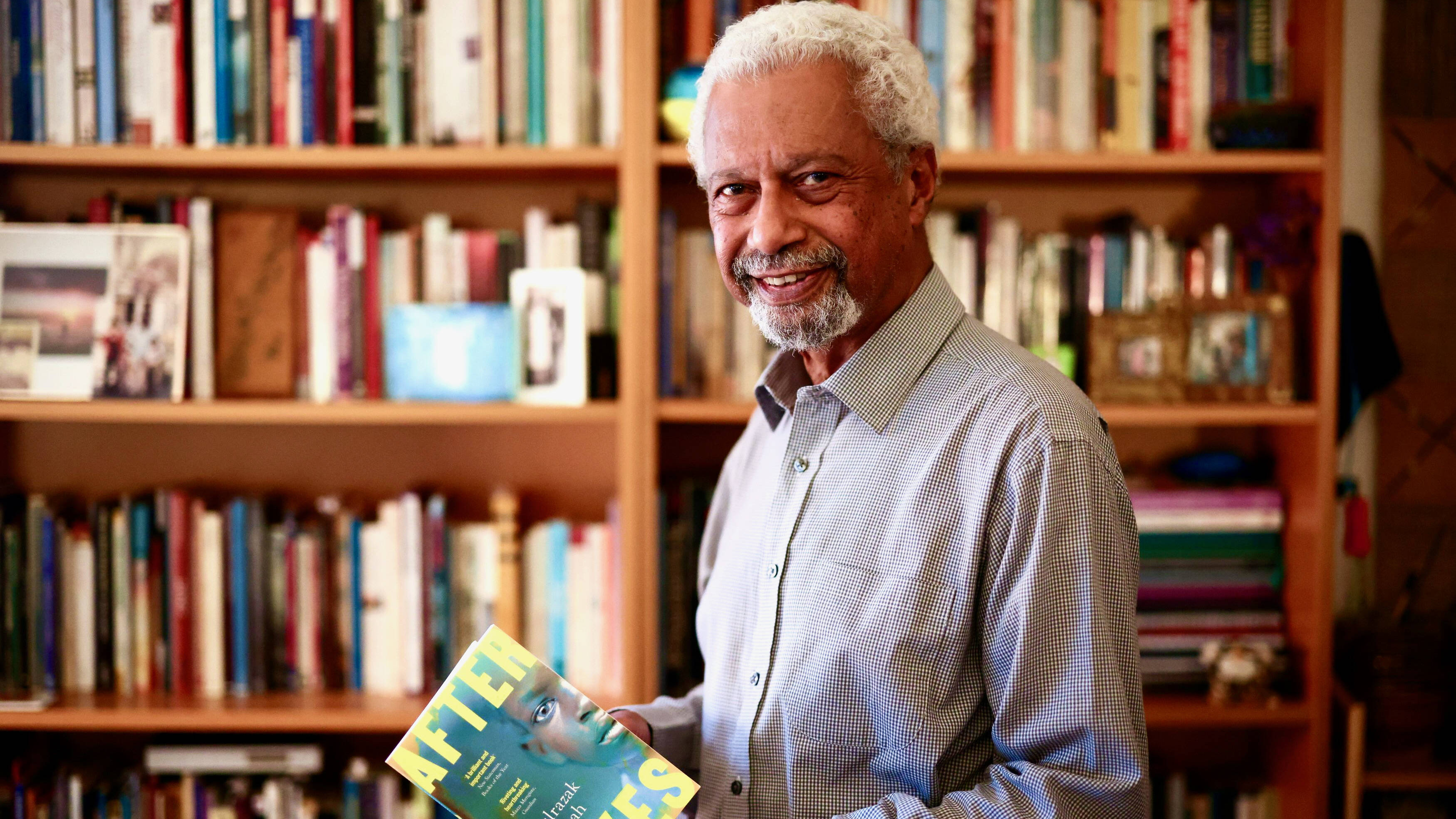
 Tanzanian novelist Abdulrazak Gurnah, winner of the 2021 Nobel Prize in literature, at his home in Canterbury, England, Oct. 7, 2021. (Reuters/Henry Nicholls) | Tanzanian novelist Abdulrazak Gurnah won the Nobel Prize in literature yesterday. The 73-year-old writer, who arrived in England as a refugee in the 1960s, is the first person from Tanzania ever to be awarded a Nobel (story). The Swedish Academy commended Gurnah's "uncompromising and compassionate penetration of the effects of colonialism and the fate of the refugee in the gulf between cultures and continents." Gurnah's 1994 novel "Paradise" was shortlisted for the Booker Prize and the Whitbread Prize, but it would be fair to say that the Nobel news came as a surprise. Gurnah was not among the names that British oddsmakers were betting on. A witty survey of contenders in the New Republic mentioned scores of writers — from Margaret Atwood to Ngũgĩ wa Thiong'o — but not this week's winner. Although Gurnah has published 10 novels, including "Afterlives" just last year, The Washington Post has not reviewed him for two decades. And yesterday, my informal survey of Washington-area booksellers found only one copy of one title by Gurnah. This creates an exciting opportunity to discover a celebrated novelist most Americans don't know, but it also creates an emergency for brick-and-mortar bookstores and Gurnah's publisher, Bloomsbury US. Although the Nobel generates intensely valuable publicity, sales are very dependent on having stock on hand. At the moment, many of Gurnah's books are sold out or unavailable, though some have e-book editions. Yesterday afternoon a Bloomsbury US spokesperson told me that the publisher has commissioned paperback editions of "The Last Gift" and "Gravel Heart" and is exploring the possibility of more editions "across Abdulrazak Gurnah's catalogue as well." The punishment for not paying attention earlier is having to wait now. But by all accounts, Gurnah is worth it, so give your bookseller some business and be patient. 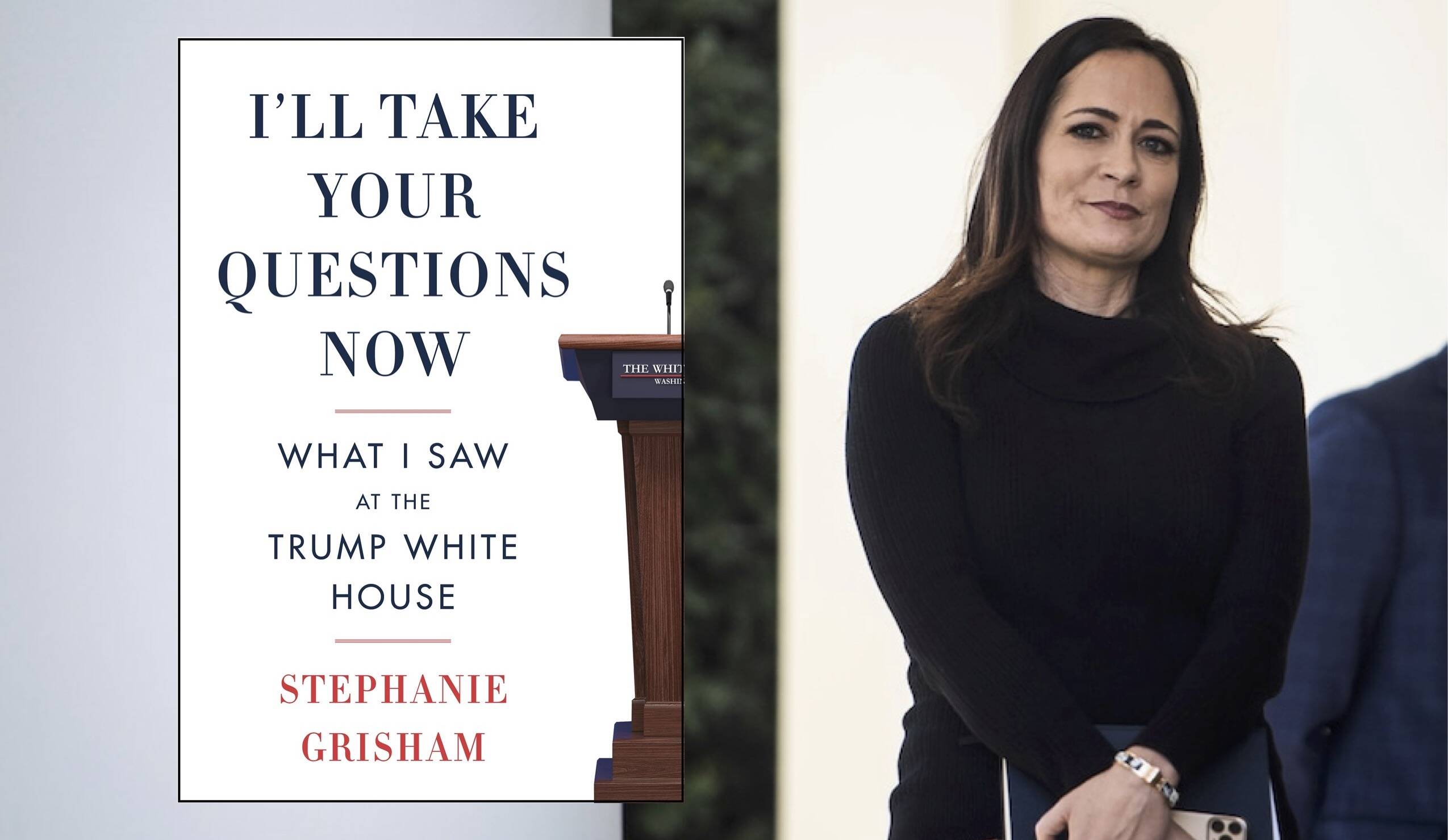 Former White House press secretary Stephanie Grisham in the Rose Garden in 2019. (Jabin Botsford/The Washington Post); Harper | Halloween came early this year for Donald and Melania Trump. Another one of their former sycophants, Stephanie Grisham, has been temporarily possessed by a spirit of disclosure. ("Vade retro, Satana!") On Tuesday, the former White House press secretary who never held a press conference released a tell-finally memoir called "I'll Take Your Questions Now" (review). Last week, after the book's lurid details (like these) leaked out, Trump issued his requisite denunciation, decrying Grisham as a "very angry and bitter" woman. "Now, like everyone else, she gets paid by a radical left-leaning publisher to say bad and untrue things." (Incidentally, that "radical left-leaning publisher" is Harper, which is owned by Rupert Murdoch's NewsCorp, purveyor of such Bolshevist rags as the Wall Street Journal.) Trump makes it sound easy, but, in fact, this late in the game, it's a challenge to disclose fresh horrors about his time in the White House. Half the country doesn't want to hear anything more about the former president, and the other half is too doped up on ivermectin to care. In a total coincidence, on the official release day of "I'll Take Your Questions Now," Grisham published an op-ed in The Washington Post, accusing the Trumps of not caring that she had been physically abused by another White House staffer whom she was dating. Before the day was over, former White House aide Max Miller filed suit against Grisham for defamation (story). Book publicity gets more and more complicated. 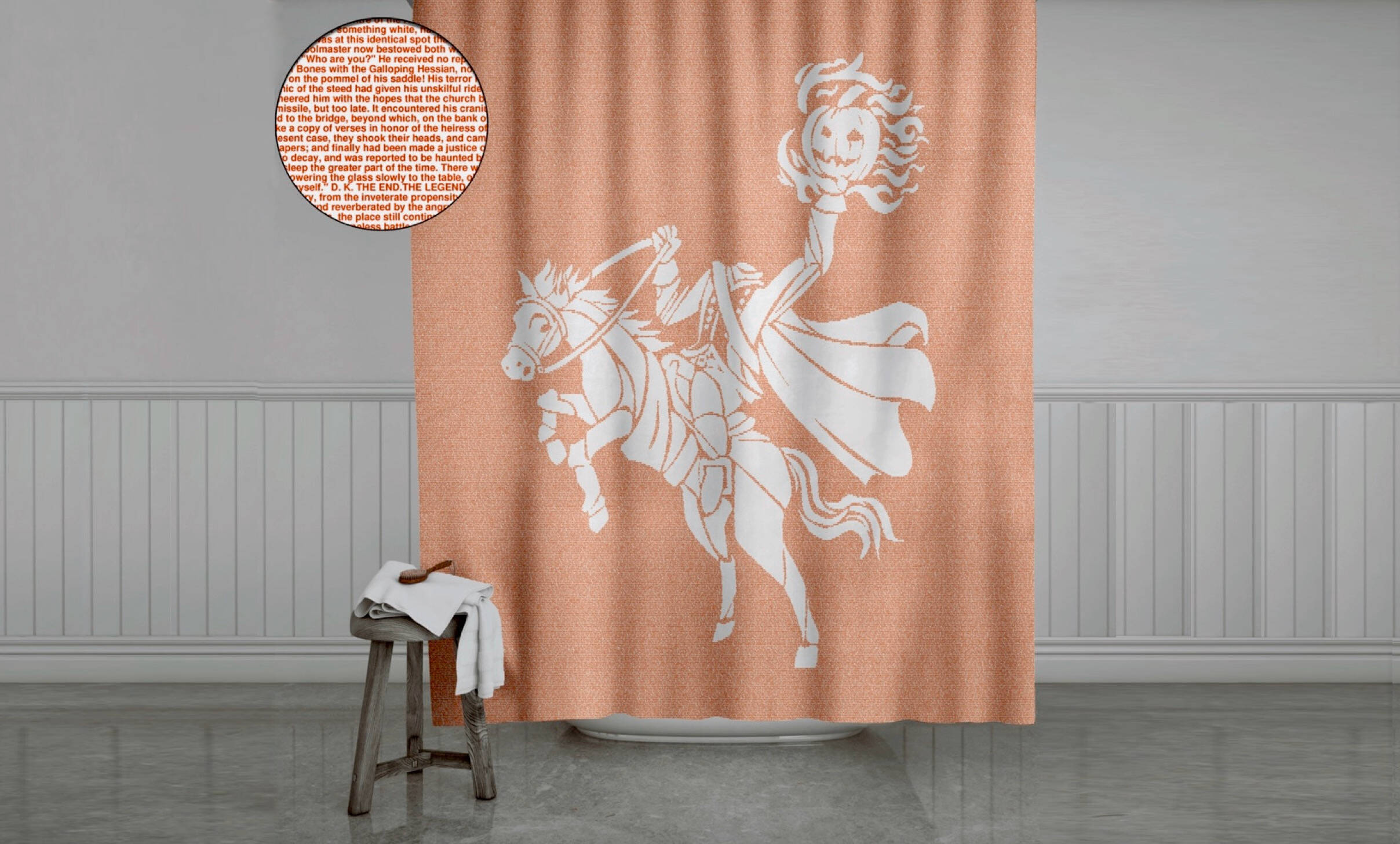 "The Legend of Sleepy Hollow" shower curtain (Litographs, $72). | Given the supply chain backlog and Postmaster General DeJoy's scheme to slow the U.S. mail, you need to order your Halloween gifts now. Here are a few bookish suggestions I've dug up to rattle your bones into action: - Litographs offers a shower curtain printed with the text of Washington Irving's "The Legend of Sleepy Hollow" and an image of the demonic horseman. Suggested shampoo: Headless & Shoulders (details).
- Open Book Chocolates is concocting a new chocolate bar inspired by H.P. Lovecraft's "The Call of Cthulhu." Ingredients include nori seaweed and candied ginger in dark chocolate. The owner, G.E. Gallas, is offering the Call of Cthulhu bar as part of a Kickstarter campaign to make the packaging on all her literary sweets eco-friendly (details).
- Get Fictional offers a soy candle scented with frankincense and labeled with a passage from "Frankenstein" (details).
- Factory Hollow Press publishes a deck of Emily Dickinson tarot cards. "I'm Nobody! Who are you?" Now you can divine the answer to that question (details).
- The Unemployed Philosophers Guild sells a mug featuring Edgar Allan Poe's face and creepy phrases from his poems and stories. It's perfect for telling family members, "Use my mug, oh nevermore!" (details).
 © 2021 by Booky Call LLC Inc. | Having found true love in my teens during a previous century, I've been spared from ever using a dating app. But colleagues assure me that algorithms are now Cupid's best friend. As in matters of the heart, discovery is the central challenge when it comes to finding your next perfect book. Entering a Barnes & Noble full of unknown titles feels like walking into a bar full of strangers. (I'm speculating here; I've never actually been in a bar either.) Brant Menswar, a former musician who had a bad experience trying to promote his own book, thought there had to be a better way to match readers with their hearts' desires. That's when he noticed that millions of people are on dating apps. "Why aren't we using that technology to match people with books?" he wondered. And so, he founded Booky Call (details). It's a brand new app that offers "really innovative book reviews in the form of dating profiles to get people emotionally connected to a book," he tells me. Finally, you can stop listening to those snooty professional critics! Booky Call makes discovering your next steamy read just as reliable and satisfying as landing your next hook-up on Tinder. Every Wednesday and Saturday, you'll get a Booky Call in the middle of the night that asks, "You up?" and presents three hot book profiles like this one: "I'm from the South but no Southern Belle. I'm more of a 'strike from the hip,' use-no-filter kind. I'm old-fashioned, too. Want a ride in my carriage?" That's a come-on from William Faulkner's "As I Lay Dying," which may be the worst lay possible. Now it's your turn to swipe left or swipe right. As Booky Call learns what kinds of reading experiences you're down for, the algorithm gets better at showing you additional titles that will turn you on. If you don't want to wait for the nighttime call, you can open the app anytime and start swiping. The books' extended profiles — written by a team of 14 scribes — answer additional questions like "What are my most attractive traits?" and "What will we eat/drink on our first date?" The app contains a library of about 5,000 books — classics and new titles in several genres of fiction and nonfiction. From the app, you can buy the e-book, the audiobook or the print edition. Booky Call is free to use; the company makes money from affiliate relationships with Libro.fm, Bookshop.org and Amazon. (Amazon founder Jeff Bezos owns The Washington Post.) All I ask is that when you find true love, you invite me to the wedding. 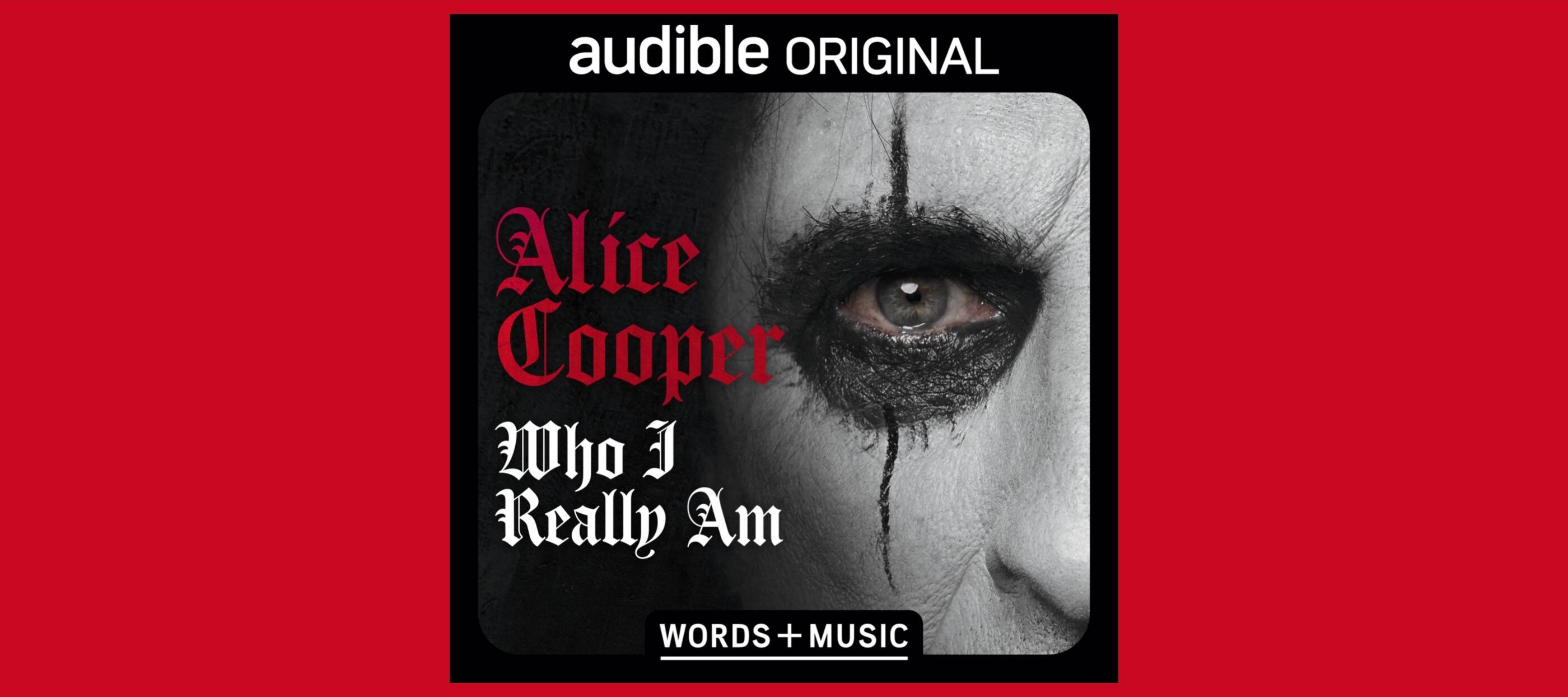 Audible is owned by Amazon, whose founder, Jeff Bezos, owns The Washington Post. | Welcome to my nightmare. Alice Cooper is 73 years old — how old does that make you feel? Yesterday, the Godfather of Shock Rock released an entertaining audio memoir called "Who I Really Am: Diary of a Vampire." It's the latest in Audible's "Words + Music" series, which blends narration and music. Interspersed with Cooper's life story, you can hear recordings of his hits "I'm Eighteen," "School's Out" and "Poison," all of which now sound a lot more nostalgic than shocking. Cooper starts off his memoir with a horrific traffic accident that could easily have killed the band before they even reached Los Angeles. The group's early years were rough — little or no money, squatting with friends, but brushing up against legends like Pink Floyd before anybody else in America knew who they were. At one point, Cooper and his bandmates were so desperate for attention that they wore clear plastic pants with no underwear in hopes of getting arrested. Though the plan failed, the guys eventually figured out other ways to generate publicity — lots of it. But Cooper's life was harrowing even before his legendary antics on stage began. As a child, he barely survived a case of appendicitis that kept him in the hospital for more than two months. His uncle was a gangster. His grandfather performed exorcisms. How funny is it that the musician who terrified a generation of parents once ran out of a theater showing "Creature from the Black Lagoon"? Cooper admits, "It was way too much for me!" Now Cooper is a cleaned-up, happy grandpa with a career that's still going strong. "I've never been in a better place," he says. He signs off his memoir describing a sweet scene in the dressing room with his wife as they put on makeup for a show. "Sheryl mentions to me that tonight when I slit her throat to make sure that the gleam of the knife catches the light so the audience can see it." That's love. Libraries don't fear change, but more and more of them don't want it anymore. I'm talking about your nickels and dimes. About 300 library systems in the U.S. have reduced or eliminated fines for late books. The shift has been driven by a growing acknowledgement that overdue fines run counter to the public library's basic goals. Those fees exercise a disproportionate impact on low-income people and children, discouraging them from coming back to the library. The fine-free movement got a huge boost this week: New York City's three public library systems have eliminated fines on overdue material. Some 400,000 New Yorkers — about a third of them children or teens — had accrued $15 or more in fines, which blocked them from using their library cards. A statement from the NYPL notes that the old system of assessing fines for late books "wasn't incentivizing returns," though it was "creating barriers to access for many, including the most vulnerable New Yorkers." American Library Association president Patty Wong applauds the New York librarians. "Kudos for them," she tells me. "I think they will inspire a lot of their neighboring libraries who may or may not have actually gone in that direction yet to think twice about it." "Fines don't serve the core mission of our contemporary library, which is to provide stronger access to all," Wong says. And fines reportedly don't do what they're supposed to do. "We know already through lots and lots of studies that fines are not an effective tool for getting people to return books. Regular reminders are." New York library patrons are still responsible for paying to replace books they lose, of course, but the days of slapping fines on people and turning off their library cards are numbered. That's a long overdue change. 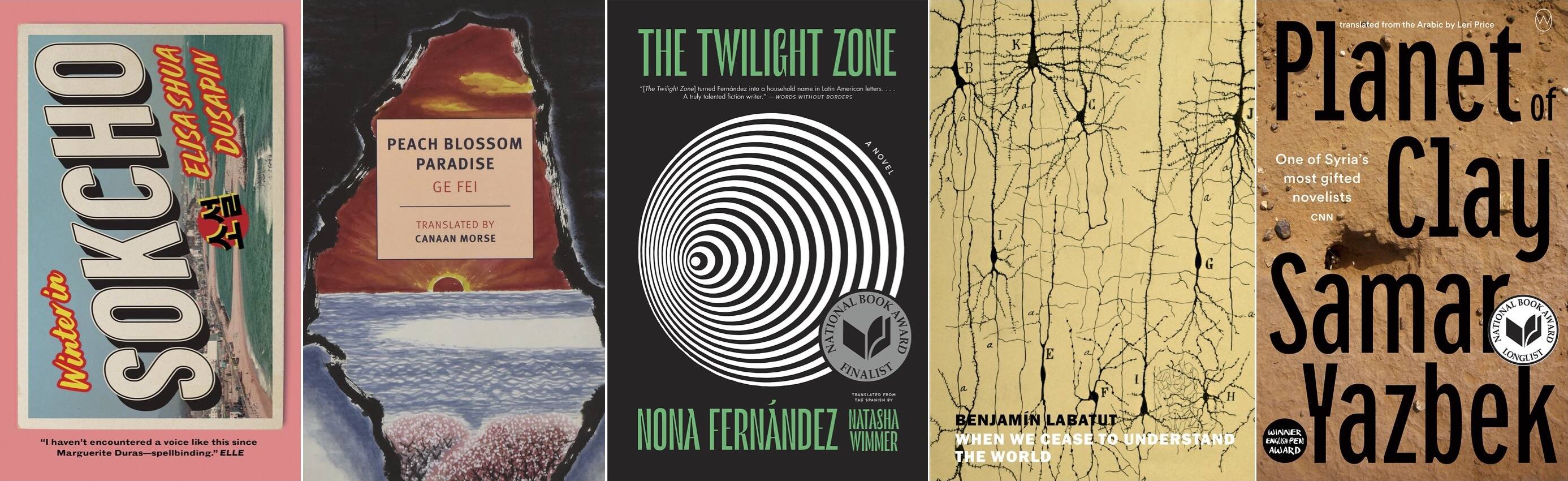 Open Letter; NYRB Classics; Graywolf; New York Review Books; World Editions | Literary translators are malade et fatigué of being slighted. For years, their names have been relegated to fine print or buried on the copyright pages of the books they've translated. They're not going to tolerate such incidental credit anymore. In an open letter, translator Jennifer Croft and novelist Mark Haddon write, "Translators are the life-blood of both the literary world and the book trade which sustains it. They should be properly recognized, celebrated and rewarded for this." Croft and Haddon have called upon their colleagues to insist that translators' names appear on the front covers of the books they translate. So far, more than 1,700 authors have signed the letter, including Tracy Chevalier, Bernardine Evaristo, Sebastian Faulks, Lauren Groff, Jhumpa Lahiri, Philip Pullman and Simon Schama. (If you're a published writer, you can add your name.) In that spirit, here are the finalists for this year's National Book Award in the Translated Literature category: - "Winter in Sokcho," by Elisa Shua Dusapin, translated from the French by Aneesa Abbas Higgins, is about a guesthouse receptionist in a town on the border of South and North Korea.
- "Peach Blossom Paradise," by Ge Fei, translated from the Chinese by Canaan Morse, is about the struggle to reform China at the end of the 19th century.
- "The Twilight Zone," by Nona Fernández, translated from the Spanish by Natasha Wimmer, is about the terrifying shadow cast by the Pinochet dictatorship.
- "When We Cease to Understand the World," by Benjamín Labatut, translated from the Spanish by Adrian Nathan West, is inspired by real-life scientists whose work changed the world. (President Obama included this book on his list of summer reading recommendations, too.)
- "Planet of Clay," by Samar Yazbek, translated from the Arabic by Leri Price, is about a girl caught in the horrors of the Syrian civil war.
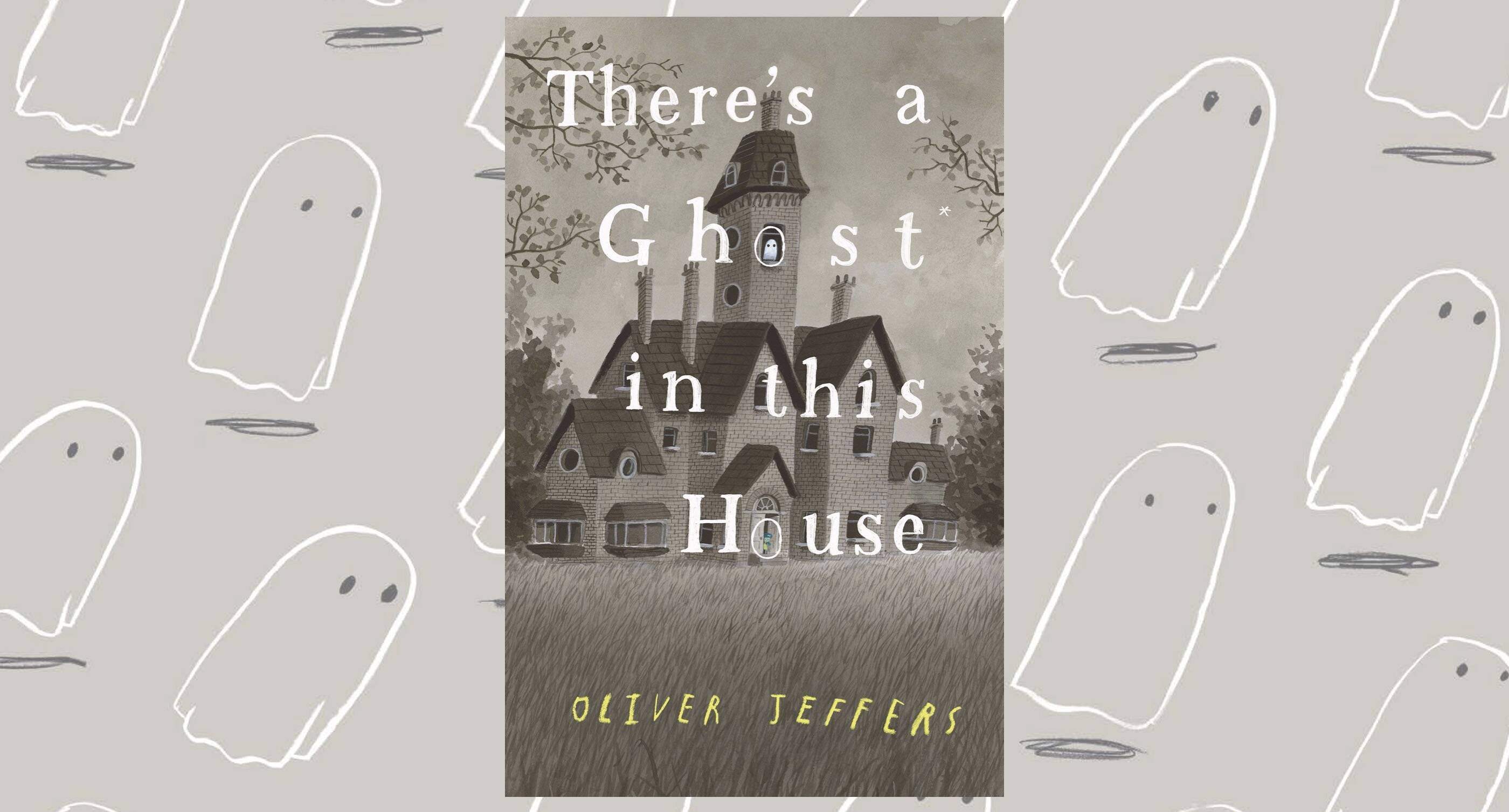 Philomel Books | All across the world, blood is being sucked out of supply chains. Washington Post reporter David J. Lynch warns, "The commercial pipeline that each year brings $1 trillion worth of toys, clothing, electronics and furniture from Asia to the United States is clogged and no one knows how to unclog it" (story). Caught in the massive backup are Bibles, photography books and children's books — texts that require four-color printing or complicated construction. That grim and ghastly quagmire now haunts my house, too. I just discovered that I can't get a copy of Oliver Jeffers's spooky new kids book in time for Halloween. Jeffers is the genius behind such classics as "Stuck" and "This Moose Belongs to Me." I've read "Once Upon an Alphabet" to my kids for years. His new book, "There's a Ghost in This House," tells the witty story of a girl who can't find any specters as she walks from room to room, but translucent pages that overlay the illustrations bring the ghosts out. It's fiendishly clever. Originally scheduled to materialize in mid-September, copies of "There's a Ghost in This House" first got delayed to Oct. 5. But now they won't swoop into bookstores till . . . Nov. 2. (Trust in the sincerity of the Great Pumpkin and order a copy anyhow!) One Halloween book arriving after Oct. 31 is grave enough. Now consider the economic shades gathering around our December holidays. We could be looking at a real monster mash. 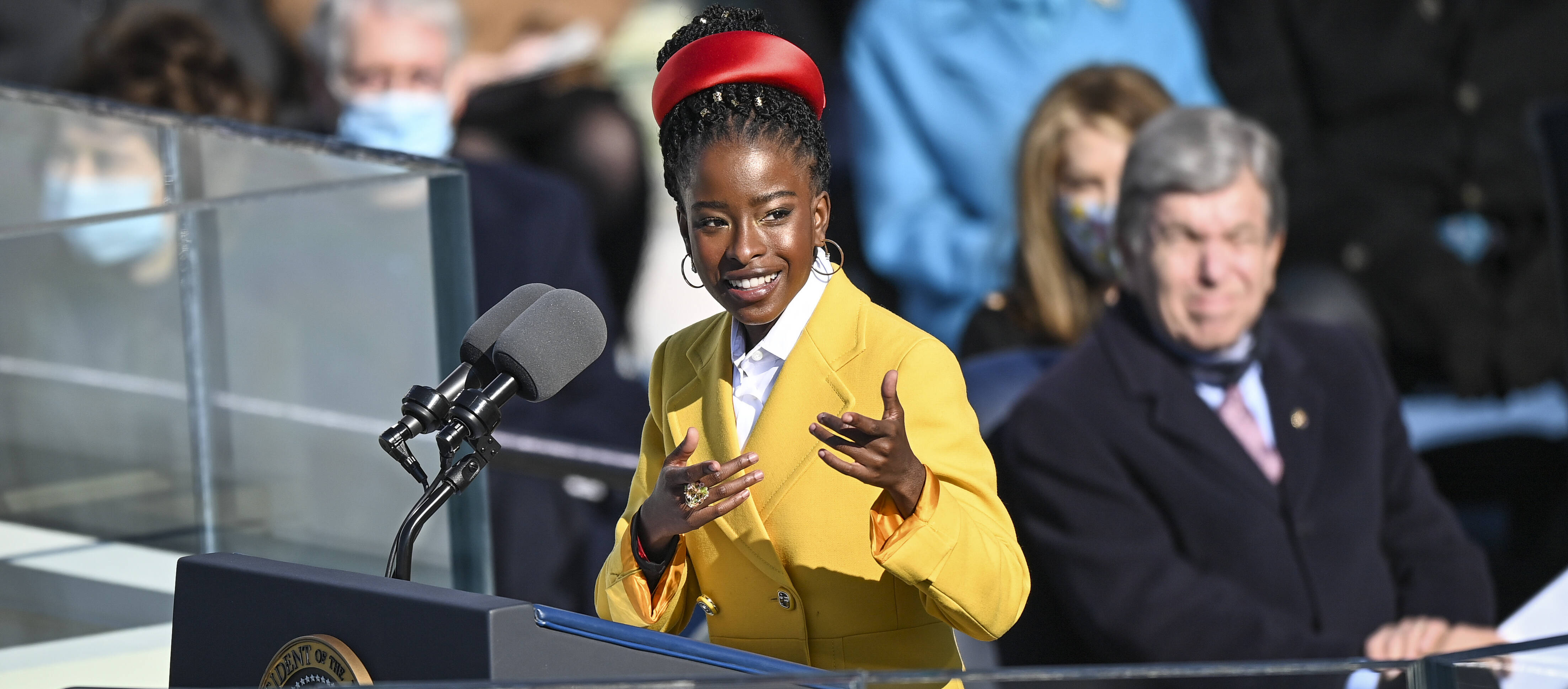 Amanda Gorman speaks before Joe Biden is sworn in as 46th President of the United States. (Photo by Jonathan Newton/The Washington Post) | Nine months after she captured the world's attention at Joe Biden's inauguration, Amanda Gorman is still inspiring young poets in practical ways. Penguin Random House and We Need Diverse Books have launched a new contest for public high school seniors called the Amanda Gorman Award for Poetry. The prize for the best poem written in English is a $10,000 college scholarship. This new poetry prize joins other PRH Creative Writing Awards for fiction/drama, personal essay/memoir and the Maya Angelou Award for spoken-word. High school English teachers: Tell your students about this opportunity! Entries will be accepted until Feb. 1, 2022, or until 1,000 applications have been received (details). Amanda Gorman's first collection of poetry, "Call Us What We Carry," will be released on Dec. 7. (Amanda Gorman clearly has talent. But there's more to her meteoric rise.) 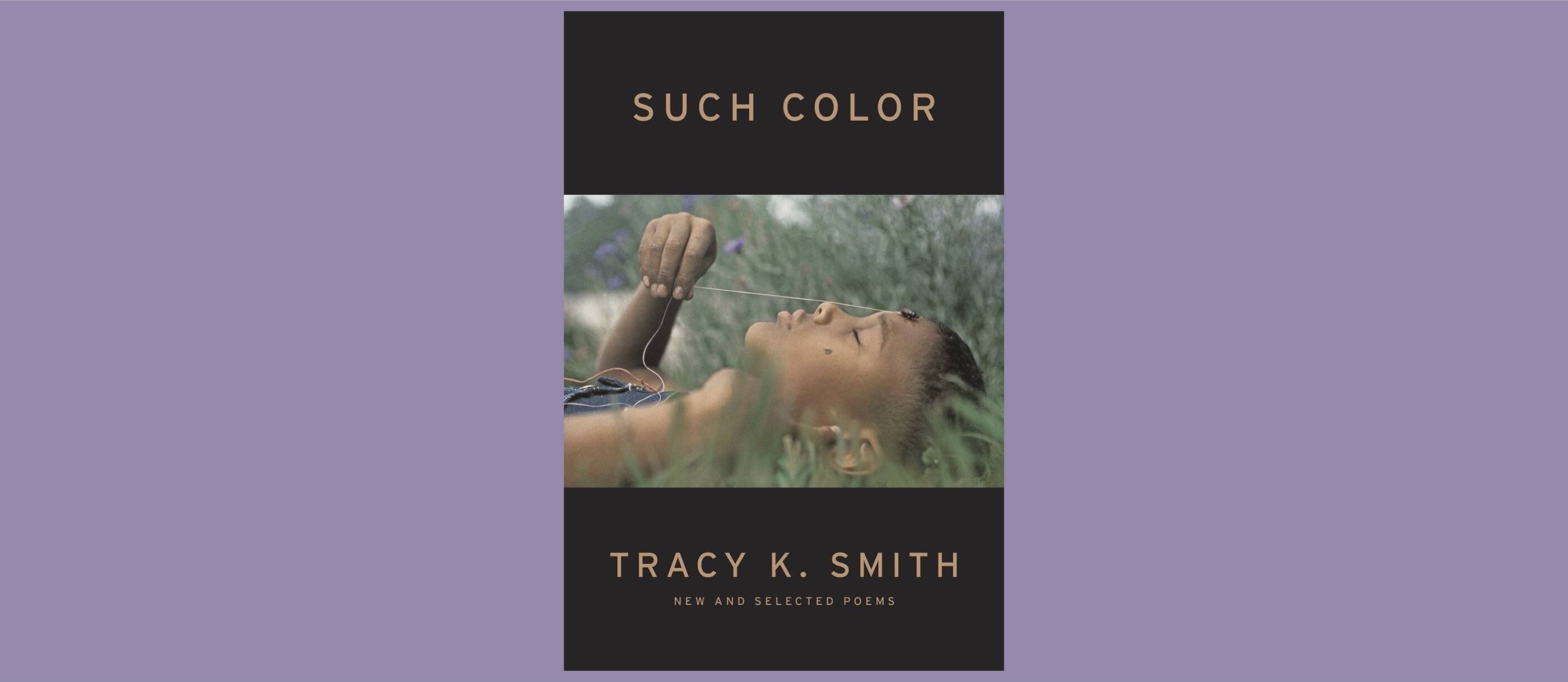 Graywolf | My wife has been doing erasure poems with her students. It's a curious form in which the writer takes a printed text and blots out most of the words so that the remaining ones form a poem. This week, former U.S. Poet Laureate Tracy K. Smith published "Such Color." It contains selections from her four previous collections — including "Life on Mars," which won a Pulitzer Prize — and 18 new poems. (Watch Smith at the Library of Congress.) One of her new pieces is an erasure poem created from the text of a fawning essay that Woodrow Wilson wrote about Confederate Gen. Robert E. Lee. It was cringe-inducing statements such as this that last year moved the Princeton trustees to announce, "Wilson's racist thinking and policies make him an inappropriate namesake for a school whose scholars, students, and alumni must be firmly committed to combating the scourge of racism in all its forms" (story). By strategically editing Wilson's praise for a Southern traitor, Smith creates a whole new text that captures the nested ironies of America's racial history. (Let's get real about Robert E. Lee and slavery.) Found Poem On the removal of Woodrow Wilson's name from Princeton University's School of Public and International Affairs
— June 26, 2020 It is not necessary
to recount his achievements— those things done not done
in order to serve a simple end. I think it says something
that it should have taken so short a time for the whole nation to see
the true measure of this man's life. If you love a country
that does not does not
was conceived not to want you I want
to remind you: We live—
We live— Turn your faces and
your hands likewise to the task of life. Deep color
ardor of blood. "Found Poem" from "Such Color: New and Selected Poems." Copyright © 2021 by Tracy K. Smith. Used with the permission of Graywolf Press, Minneapolis, Minn. 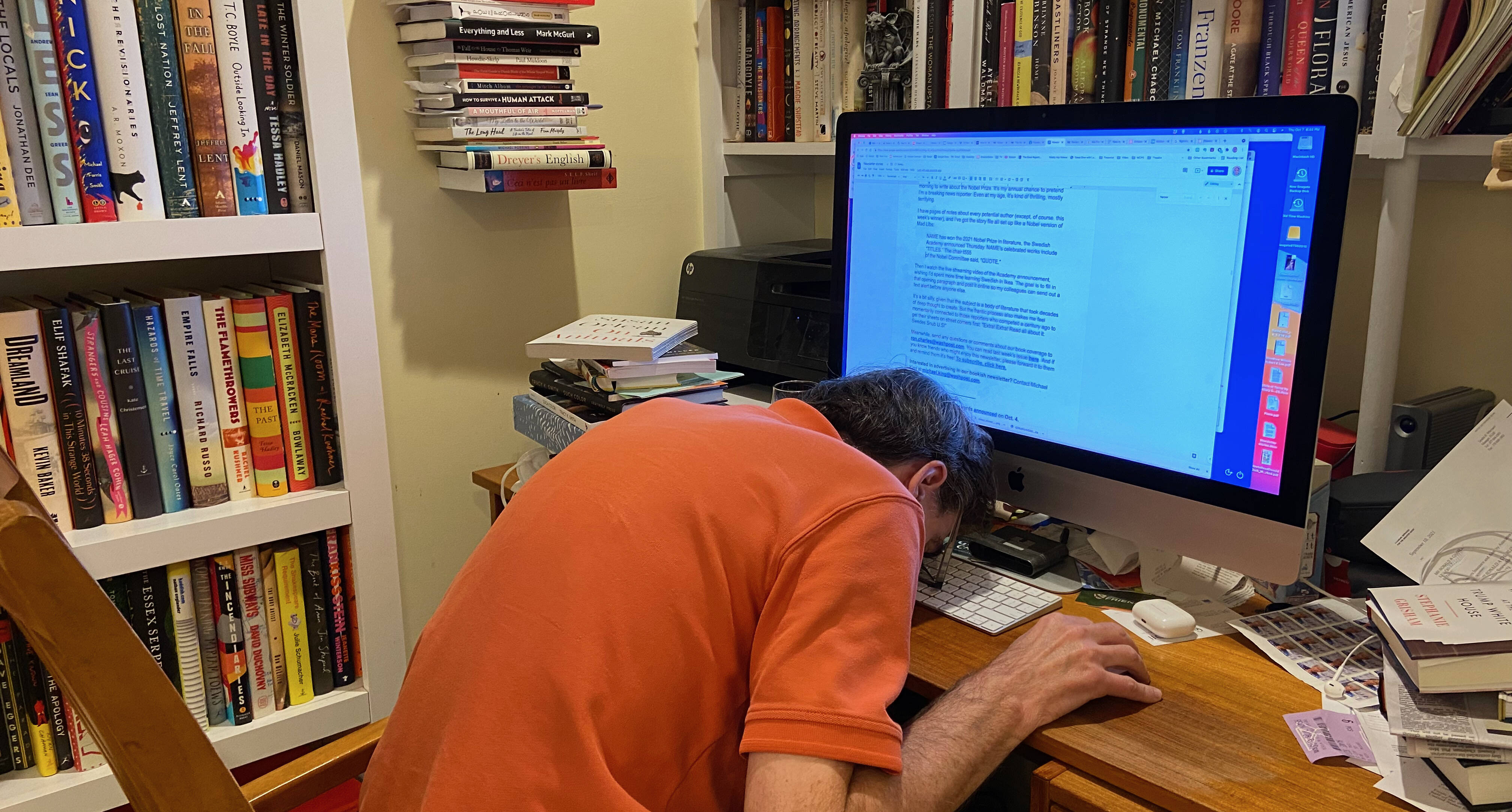 Deep in thought. (Photo by Dawn Charles) | If I fall asleep, just give me a nudge. It's been one of those weeks. Two 600-page novels down, one to go. And yesterday, I was up at 5:30 in the morning to write about the Nobel Prize. It's my annual chance to pretend I'm a breaking news reporter. Even at my age, it's kind of thrilling, mostly terrifying. To prepare, I have pages of notes about every potential winner (except, of course, this week's winner), and I've got the story file set up like a Nobel version of Mad Libs: NAME has won the 2021 Nobel Prize in literature, the Swedish Academy announced Thursday. NAME's celebrated works include "TITLES." The chair of the Nobel Committee said, "QUOTE." Then I watch the live streaming video of the Academy announcement, wishing I'd spent more time learning Swedish in Ikea. The goal is to fill in that opening paragraph and post it online as quickly as possible so my colleagues can send out a text alert before anyone else. It's a bit silly, given that the subject is a body of literature that took decades of deep thought to create. But the frantic process also makes me feel momentarily connected to those reporters who competed a century ago to get their penny sheets on street corners first: "Extra! Extra! Read all about it: Swedes Snub U.S!" I hope to be more rested next week. Meanwhile, send any questions or comments about our book coverage to ron.charles@washpost.com. You can read last week's issue here. And if you know friends who might enjoy this newsletter, please forward it to them and remind them it's free and worth every penny. To subscribe, click here.
Interested in advertising in our bookish newsletter? Contact Michael King at michael.king@washpost.com. | 




 Email
Email