 Uzo Aduba will host the upcoming Netflix Book Club. (Courtesy of Netflix) | On Wednesday, Netflix announced the launch of its own book club. In the olden days, this would have sounded like Philip Morris launching its own health club, but the symbiotic relationship between TV and literature has never been stronger. The Netflix Book Club will be hosted by three-time Emmy winner Uzo Aduba, who's a great choice, especially since she co-starred in "Orange Is the New Black," one of the network's many successful series drawn from a book (Piper Kerman's 2010 memoir). Each month, Aduba plans to announce a new title that's being adapted by Netflix – an ambitious schedule that indicates just how committed the network is to books. She'll talk with the cast and (when possible) the author about "how a beloved story goes from page to screen." Netflix is partnering with Starbucks to promote Aduba's conversations on YouTube and Facebook (more details). The club's first selection will be "Passing," a 1929 novel by Harlem Renaissance writer Nella Larsen. W.E.B. Du Bois's Crisis magazine called "Passing" one of the year's most important books by a Black author. But by the time Larsen died in 1964, she had long given up writing and was essentially forgotten. (Review: "In Search of Nella Larsen") Academic interest eventually began reviving her reputation, a process that's accelerated recently in popular culture. In 2020, the new Penguin Vitae series launched with a handsome hardback edition of "Passing," Brit Bennett's blockbuster "The Vanishing Half" (rave) inspired many references to the Harlem Renaissance classic, and Larsen appeared on a U.S. postage stamp. Netflix's movie adaptation of "Passing," starring Tessa Thompson and Ruth Negga, will debut on Nov. 10. If the effect of "The Queen's Gambit" and "Bridgerton" series is any guide, Netflix's "Passing" will send thousands of new readers to Larsen's novel. Caveat emptor: Larsen let her copyright expire, which allowed "Passing" to fall into the public domain. That means you'll find indie-published versions for sale online alongside editions from Penguin, Norton and Rutgers University Press. Choose wisely. 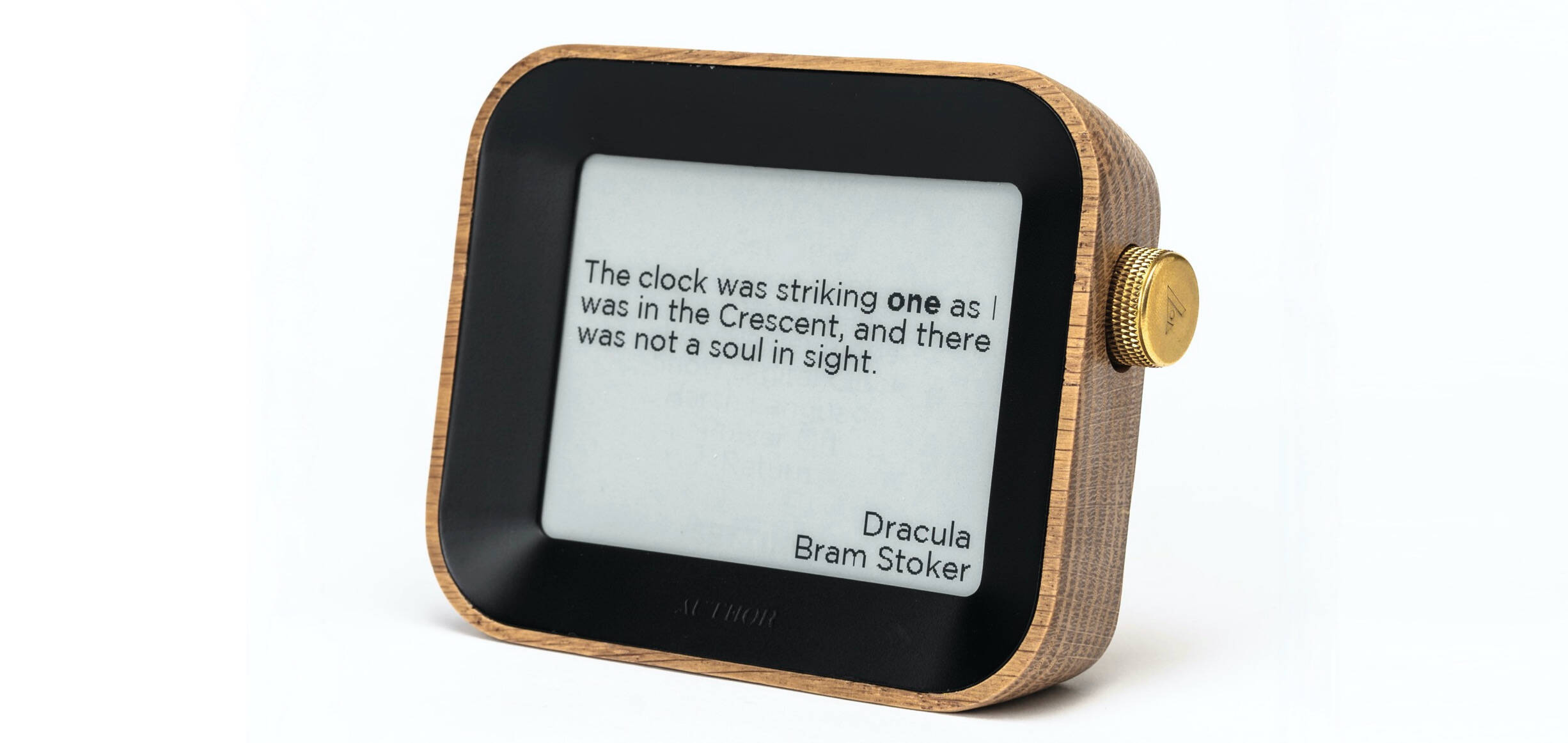 The Author Clock, a novel idea in time-keeping. (© 2021, Mechanical Design Labs) | In "Ratner's Star," an early book by Don DeLillo, a character complains that digital clocks tell time "too bluntly." Finally, there's a novel solution: the Author Clock. It tells the time — minute by minute — by displaying precisely relevant quotations from works of literature. 6:45: "'Gregor,' somebody called — it was his mother — 'it's quarter to seven. Didn't you want to go somewhere?'" 9:00: "At nine o'clock, one morning late in July, Gatsby's gorgeous car lurched up the rocky drive to my door and gave out a burst of melody from its three-noted horn." You get the idea: a different quotation for each of the 1,440 minutes throughout the day. It's no exaggeration to say that the Author Clock is the coolest thing I've ever seen, and if I don't get one, I will die. A lot of people apparently think so, too. The Kickstarter campaign to fund development of the Author Clock hoped to raise $20,000. In 36 hours, more than $300,000 had been pledged — and there are still 27 days to go. The genius behind the Author Clock is Jose Cardona, an engineering consultant in Pasadena, Calif. Several years ago, he was inspired by a 24-hour video montage by Christian Marclay called "The Clock" composed entirely of scenes from films that show clocks. Cardona's literary version draws on a vast database of quotations written over the last 600 years around the world. Popular times — such as midnight and noon — will randomly select from several different quotations. (Jules Verne gets 8:43 all to himself.) Of course, our minute-specific consciousness of time is a relatively modern invention, driven largely by the development of trains and factory work. Cardona notes that the quotations displayed by the Author Clock reflect that historical development. "With the advent of the detective novel, we got a ton of time-obsessed detectives," he tells me. He thinks Agatha Christie may be his clock's most frequently quoted author. "As people began to write novels around military operations, you get people who mention the time all the time." The Author Clock — expected to ship in April — comes in two sizes ($149 and $349). Discounts are available for early sponsors (details). Cardona is already enjoying the prototype on his desk. "Sometimes," he says, "you'll read a quote on the clock, and it's so compelling or interesting that you're inclined to find that book and read it!" That's a good time. 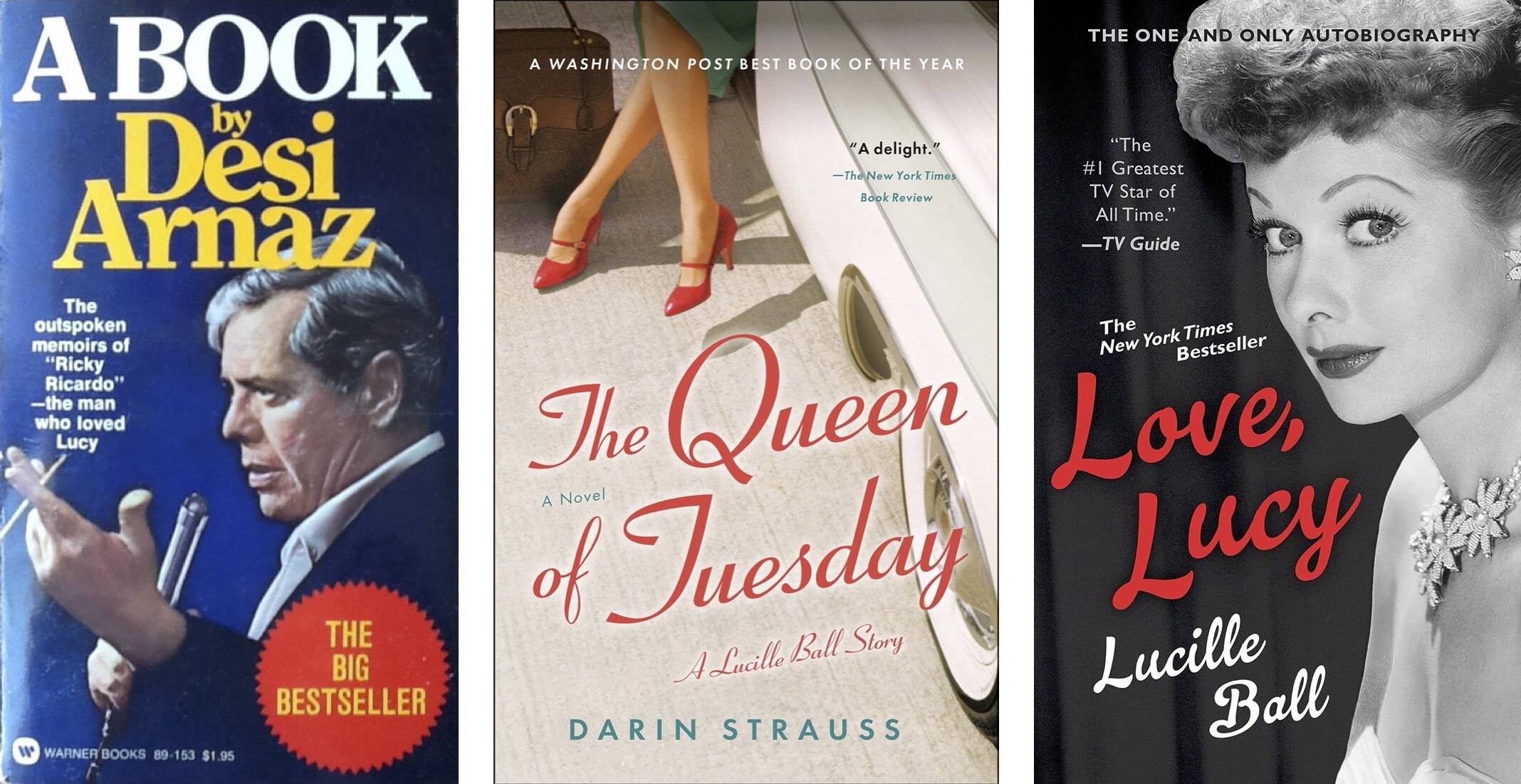 Warner Books; Random House; Berkley | "Do you pop out at parties? Are you unpoopular?" Today is the 70th anniversary of the debut of "I Love Lucy." But the show that essentially created television comedy almost didn't happen. CBS assumed Americans wouldn't accept a "mixed-race" couple, and the Arnazes' insistence on filming in California (instead of New York) made the show much more expensive to produce. Fortunately, those challenges were overcome, and now Lucy in the chocolate factory feels as iconic as a scene from Shakespeare. Indeed, "I Love Lucy" presents a 20th-century reimagining of "The Taming of the Shrew," and it's easy to draw a line from Lucy's antics to the mechanicals in "A Midsummer Night's Dream." (100 years later, we still "love" Lucille Ball.) But despite how much was said about them, Desi and Lucy were reluctant memoirists. Irritated by the task of writing and frustrated with all the suggestions from his publisher, in 1976 Arnaz titled his autobiography simply "A Book." (It's out of print, but the audiobook is still available.) Lucy held out even longer. After she died in 1989, her lawyer discovered a 300-page manuscript and more than 20 hours of recorded reminiscences. Apparently, in the early 1960s Norman Vincent Peale convinced Lucy to tell her life story, and she began working with a writer. But the legendary star eventually grew nervous about the project and stopped. By the time of her death, no one in the family knew anything about the abandoned memoir. In 1996, her two children, Lucie and Desi Jr., published it as "Love, Lucy." For a fresh reimagining of Lucille Ball and the culture she contended with, try "The Queen of Tuesday," a novel published last year by Darin Strauss (review). It's a poignant mixture of celebrity gossip, national history and black-and-white hilarity — the next best thing to binge-watching Lucy herself. 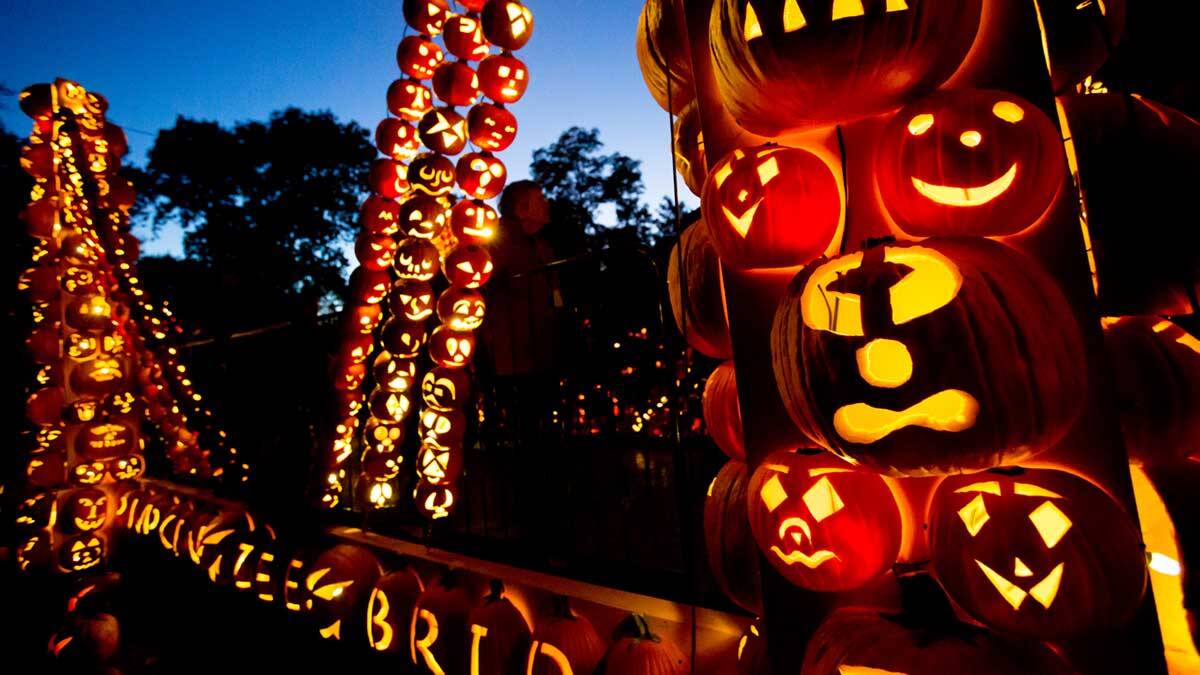 The Great Jack O'Lantern Blaze in Croton-on-Hudson, N.Y. (Photo courtesy of Historic Hudson Valley) | What we do in the shadows: Years ago, I wanted to write a Halloween story about the villa in Switzerland where Byron and his friends wrote their famous spooky tales, including "Frankenstein" and "The Vampyre." I called a hotel on Lake Geneva and asked, "Is this the place where Lord Byron, Percy Shelley and Mary Shelley once stayed?" The concierge replied, "I'm sorry, sir, I'm not able to release any information about our guests." I admire his discretion, but fortunately other haunted literary spots are eager for visitors, spectral and corporeal: - Salem, Mass., always gives off an ectoplasmic aroma, but this time of year it's a gingerbread house of colonial trauma slathered with orange funfetti frosting. The annual Haunted Happenings festival offers all kinds of spine-chilling events, attractions and exhibits flying through Halloween night. At the Peabody Essex Museum, visitors can explore the Salem witch trials, immortalized in Arthur Miller's "The Crucible," and the House of the Seven Gables offers a chance to explore the setting of Nathaniel Hawthorne's witchy novel. Kate Fox, executive director of the city's tourism office, tells me, "We're seeing higher numbers than we've ever seen. There's a huge pent-up demand. The hotels have been sold out for months." If you can, use public transportation to get there. Fox says, "The scariest part of Halloween in Salem is the traffic" (information).
- The Edgar Allan Poe House & Museum in Baltimore, Md., is open for visitors who want to wander, weak and weary, through the quaint and curious rooms where Poe once lived with his aunt and cousins — one of whom he married when she was 13 (information).
- Covid has somewhat curtailed activities in Sleepy Hollow, N.Y., but the headless horseman will endure no further pruning. Visitors can still enjoy storytelling in the spirit of Washington Irving and cemetery tours by lantern light. Alas, tickets to the Hudson Valley Great Jack O'Lantern Blaze featuring more than 7,000 hand-carved pumpkins are sold out for October, but tickets are still available for the Long Island Blaze (information).
- New Orleans is brewing its 33rd annual Anne Rice Vampire Ball for Oct. 30. Ladies and ghouls are required to dress in formal wear "or anything fabulous." The cover price includes dinner and undead music. A silent auction will raise money for Save Our Cemeteries. No word yet on whether Lestat will be flying in (information).
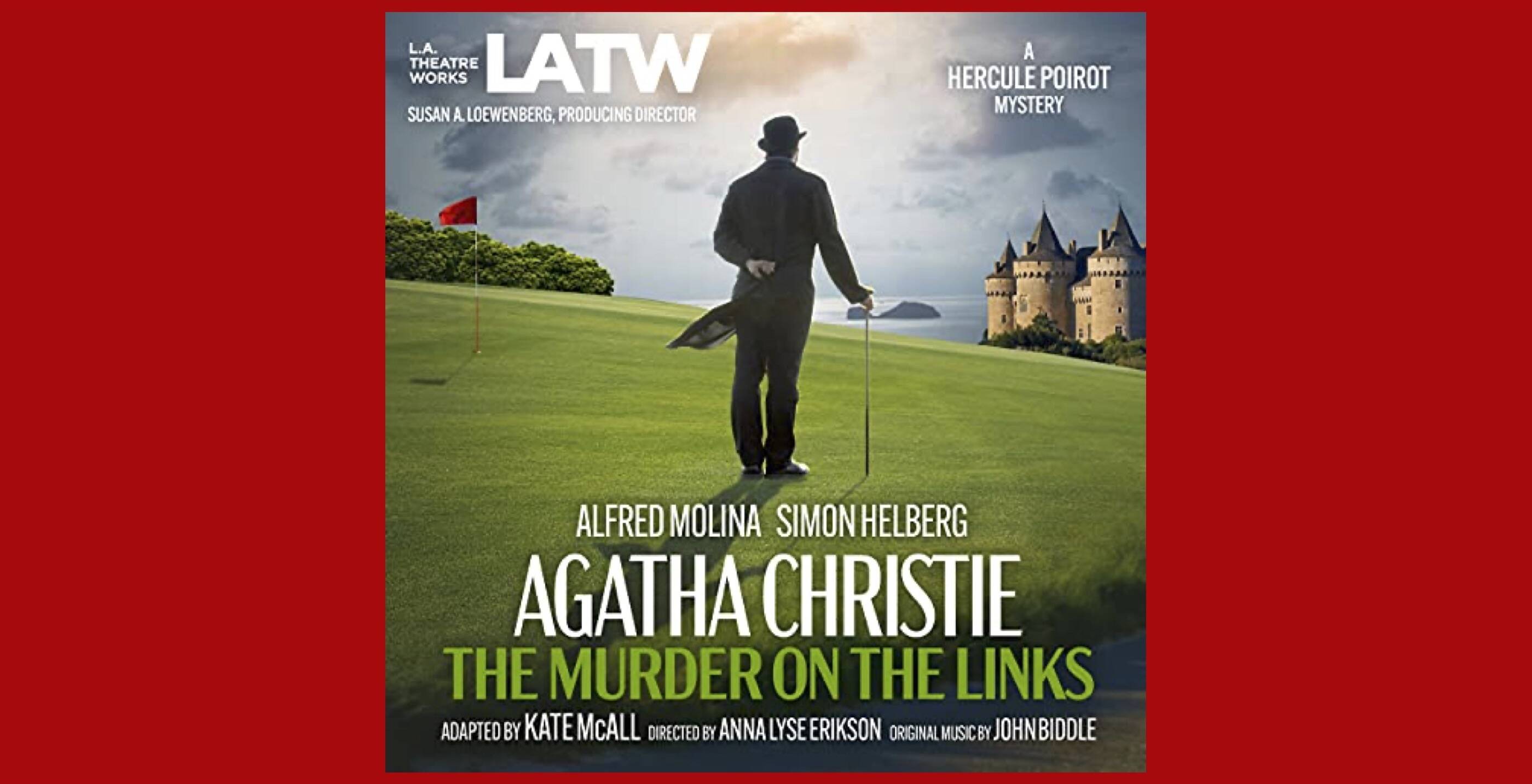 (L.A. Theatre Works) | Mon ami, concentrate your grey cells. If you're looking for a fun way to kill an hour and 38 minutes, I highly recommend the new audio adaptation of Agatha Christie's "The Murder on the Links." Presented by L.A. Theatre Works, this isn't just a regular audiobook; it's a full-blown audio play starring Alfred Molina as Detective Hercule Poirot and Simon Helberg as his perpetually gobsmacked sidekick, Arthur Hastings. "The Murder on the Links" is a very early Christie novel — her third — published in 1923. Trouble begins when Poirot receives a panicked letter from a wealthy man who fears for his life. Alas, before Poirot and Hastings can reach the man's villa in France, he's stabbed in the back with his wife's letter opener. The body is discovered near a new golf course. Talk about a good walk spoiled! Can the fastidious detective unravel this dastardly complex case? Can Hastings stop mooning over pretty strangers long enough to be any help? The clues are tricky, the solutions ingenious, and this superbly produced show will leave you nostalgic for the glory days of radio drama. 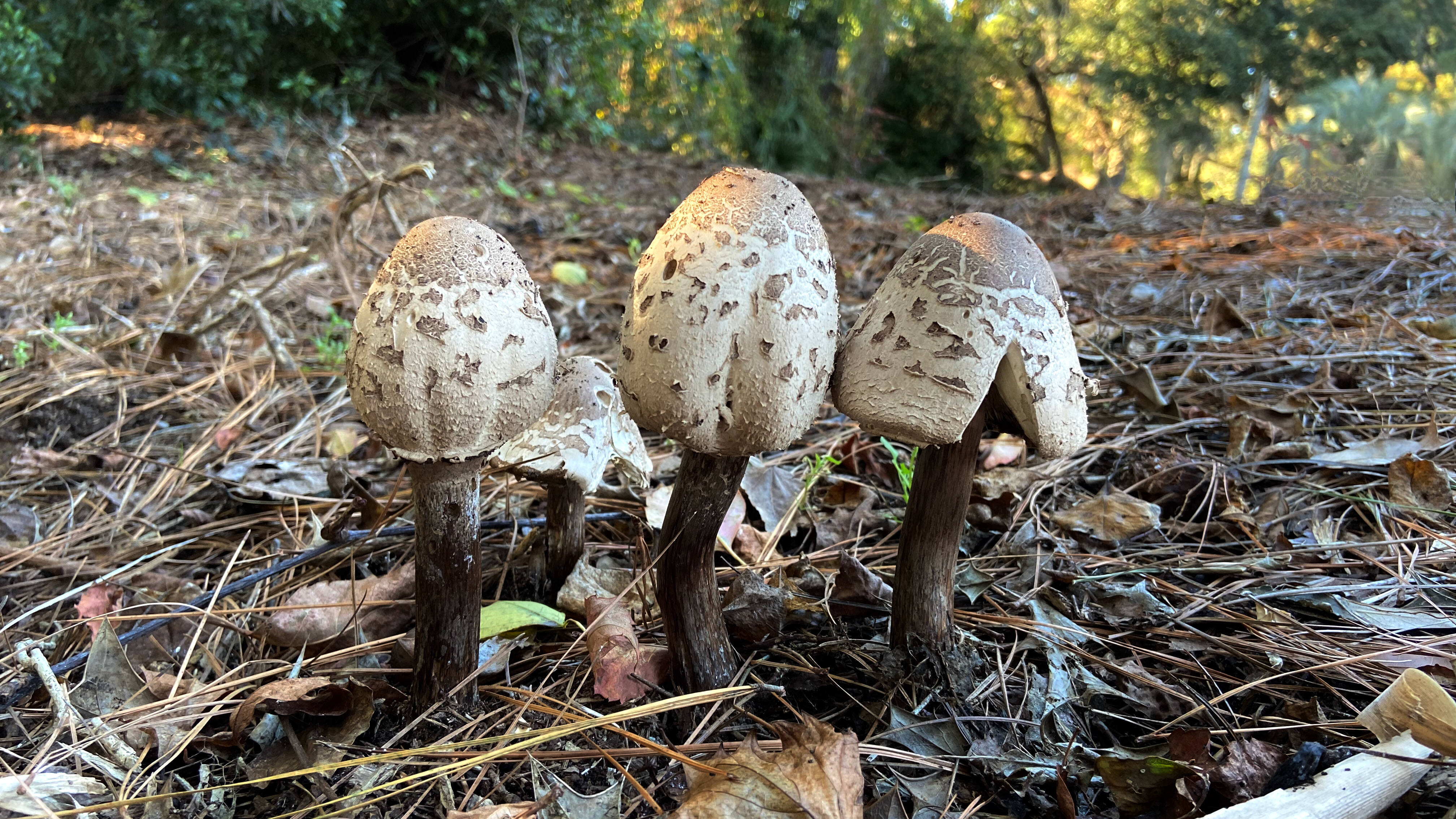 Mushrooms growing on Hilton Head Island, S.C. (Ron Charles/The Washington Post) | Holy shiitake — it's National Mushroom Day! That should boost your morel. (See what a fun-guy I am?) Weirdly, literature turned me off mushrooms for at least 40 years. You may recall that in "The Story of Babar," the King of the elephants eats a bad mushroom. "It poisoned him and he became ill," writes Jean De Brunhoff, "so ill that he died. This was a great calamity." Indeed. As a child, it was somehow obvious to me that elephants don't drive or wear green suits, but I took the mushroom death of the Elephant King as gospel. Is there an erroneous lesson that you learned from literature as a child? Please tell me about it with this simple form. After decades of Babar-induced anxiety, I've slowly learned to enjoy eating mushrooms raw and sautéed. And a couple of recent books demonstrate just how fascinating these infinitely strange organisms are: - "The Secret Life of Fungi: Discoveries from a Hidden World," by Aliya Whiteley, offers a delightful exploration of how fungi have infected literature, altered history and may hold the spores to our survival on Mars. (She also includes recipes!)
- "Entangled Life: How Fungi Make Our Worlds, Change Our Minds & Shape Our Futures," by Merlin Sheldrake, has become a surprise bestseller, and it recently won a U.K. Wainwright Prize. Sheldrake has also produced the most delightfully strange video about his book (watch).
- Incidentally, "National Audubon Society Field Guide to North American Mushrooms" is now 40 years old, but I'm told that an updated, expanded and large-format edition is currently being prepared for tentative publication in the spring of 2023.
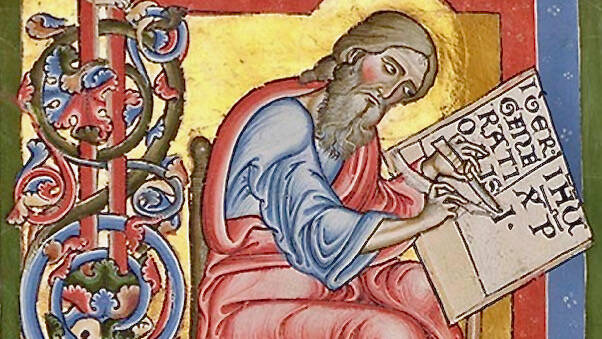 "Heiningen Gospels" (fragment), in Latin, Germany, Hamersleben, ca. 1180–1200. Morgan Library & Museum, MS M.565, fols. 13v–14r, Purchased by J. Pierpont Morgan, 1905. | Three literary organizations in New York are offering exhibits you can enjoy in person and online: - Today the Morgan Library and Museum opens a show called "Imperial Splendor: The Art of the Book in the Holy Roman Empire." Years in the making, this exhibit includes about 70 rarely seen illuminated manuscripts from the Middle Ages, beginning with Charlemagne's era and ending with the invention of the printing press. I watched a preview presentation yesterday and can attest that these are truly among the most spectacular literary objects ever created (details).
- National Hispanic Heritage Month officially ends today, but the Grolier Club is celebrating through Dec. 18 with a show called "Treasures from the Hispanic Society Library." The exhibit includes dozens of Spanish, Portuguese and Latin American books and manuscripts, along with letters, maps and other literary treasures detailing the history and culture of Spain and the Americas (details).
- The New York Public Library has opened the Polonsky Exhibition of Treasures, a dazzlingly eclectic display of highlights drawn from the library's collection of 56 million items. You can see Thomas Jefferson's copy of the Declaration of Independence, Maya Angelou's manuscript of "I Know Why the Caged Bird Sings," Christopher Robin's stuffed animals and so much more. As Pooh says, "Think it over, think it under" (details).
 (Courtesy of the Antiquarian Booksellers' Association of America) | The difference between collecting and hoarding is sometimes subtle, but if, like me, you have to push aside a precarious stalagmite of books just to eat breakfast, you have a problem. Fortunately, there are organizations dedicated to leading young booklovers toward the light. Every year, the Antiquarian Booksellers' Association of America, the Fellowship of American Bibliophilic Societies, the Grolier Club and the Library of Congress sponsor a National Collegiate Book Collecting Contest. Today at 3 p.m. ET, you can hear from the winners in a conversation with Mark Dimunation, Chief of Rare Books and Special Collections at the Library of Congress. (Free, but you must register for the Zoom meeting here.) These are young people so intentional about their home libraries that their collections actually have titles: - First Prize ($2,500): Jessica Camille Jordan, Stanford University, "Six Decades of Leo and Diane Dillon."
- Second Prize ($1,000): Read W. Brown, New York University, "The Serious Business of Fun: A Collection of Books on the Video Game Industry."
- Third Prize ($500): Shannon D. Bohle, Johns Hopkins University, "Life through Space and Time: A Personal Journey through Modern Science, Collecting Hand-signed Autographs, Manuscripts, and First Editions."
- Essay Award ($500): Joseph E. Hiller, Duke University, for his essay "Como un detective salvaje: Gathering Small Press, Experimental, and Untranslated Latin American Literature."
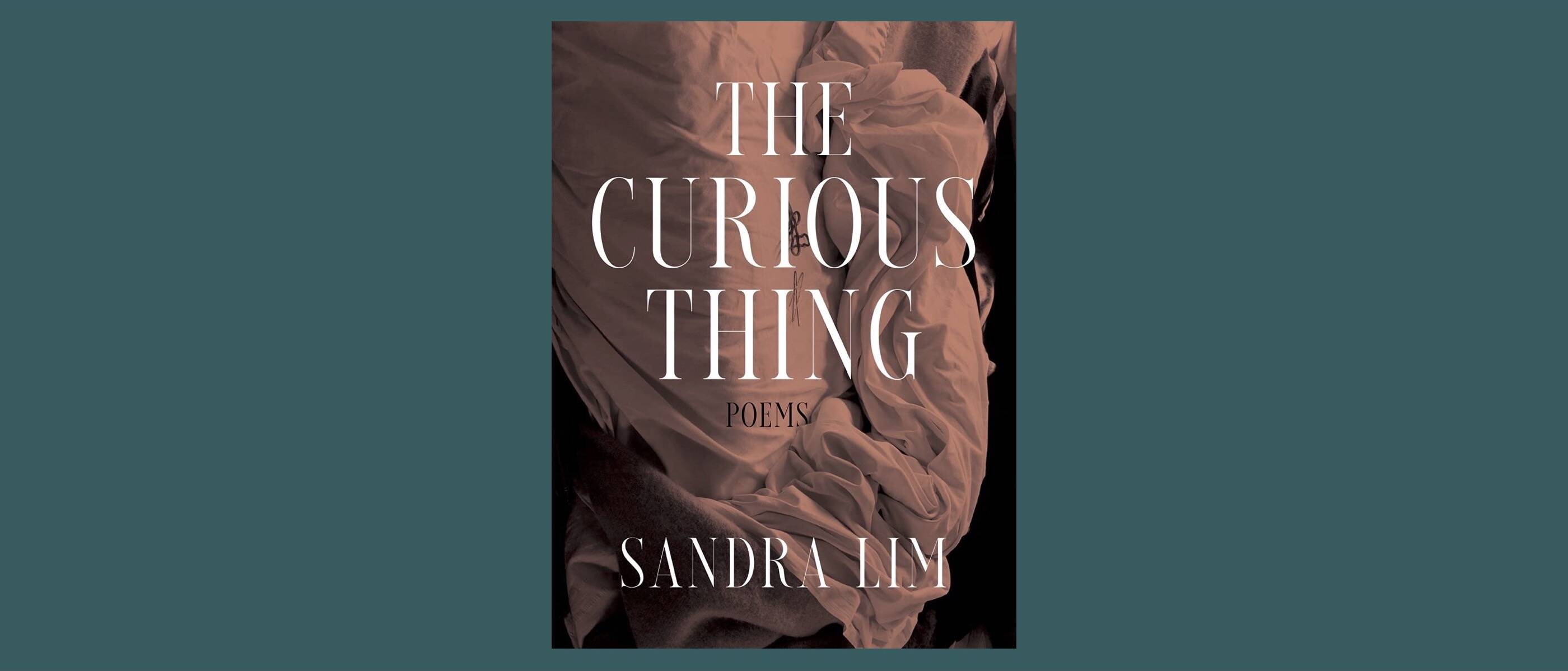 W.W. Norton | Sandra Lim's new poetry collection, "The Curious Thing," presents a simmering mixture of anger, affection and wit. "I saw my friends fall in love," she writes. "I pictured myself eating dirt." This is a woman mercilessly stripping away the illusions of middle age. Even when responding to long gone authors — Jean Rhys, Goethe, Spinoza — she's always intensely personal and strikingly relatable. "I like the angry pinch of an insight," Lim says. There are many in this collection. The Beginning of Spring All winter our house was warm and deaf.
I could just see the few white flowers
outside the window. A true happiness occurred.
Don't stand there now asking to be loved. We could feel the thawing in the river,
low and guilty. I was still learning her particularity,
all the beautiful colors in her face, even as my arms
loosened dreamlike from around her. It all happened as my premonition told me it would.
I loved her, but I'm not sure she loved me back.
I know that many times I misspent
her hope: it was flowering, and it was finite. Then again, maybe I'll want a young wife
in my old age. A bad man is the sort of man
who admires innocence. It's a theme that breaks her heart,
but not the one that's particularly unbearable. I could touch her at any time. All the while
she was thinking of the work she wanted to do, despite
her absolute, unreasoning devotion to me. How life surprises you.
I had never been here before and yet I thought I understood it all. What happens to old love, tell me if you know. From "The Curious Thing: Poems," by Sandra Lim. Copyright © 2021 by Sandra Lim. Excerpted by permission of W.W. Norton & Co. 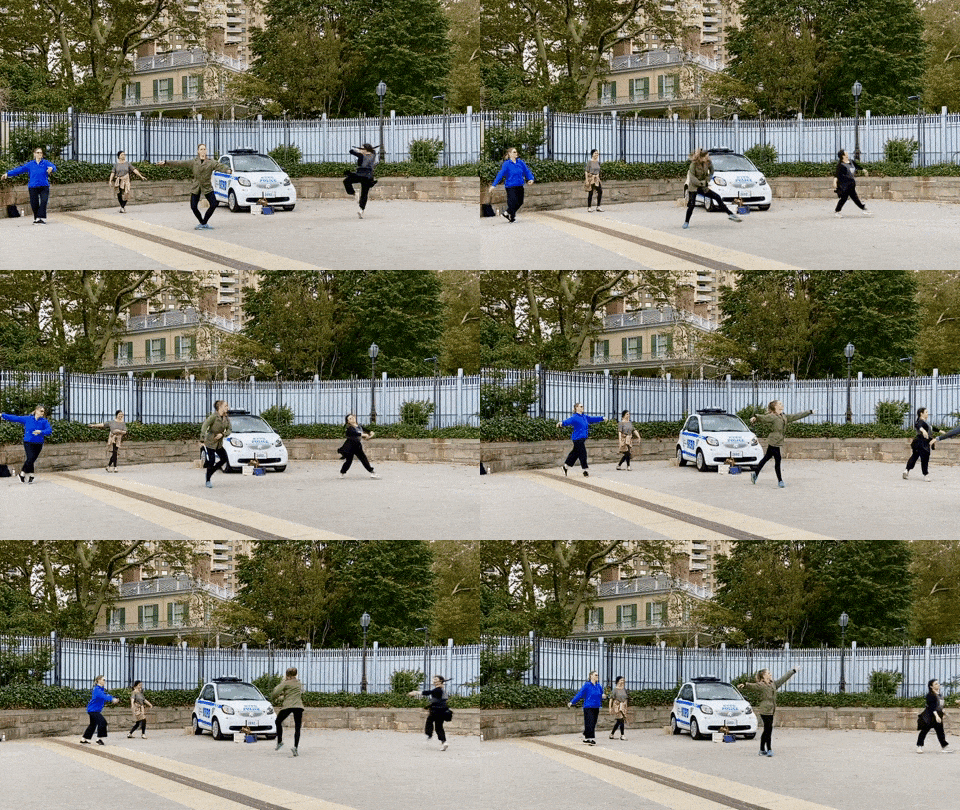 Dawn Charles (left) and Madeline Charles (center) dancing in Carl Schurz Park, N.Y. on Oct. 9, 2021 (Ron Charles/The Washington Post) | Last Friday, knowing we were about to endure another weekend of self-pitying drudgery, my wife threw me in the car and drove us to New York City. We had no plans and no schedules. We just wandered around with my younger daughter and ate ice cream. It was heaven. I thought the old musicals were exaggerating, but people in New York really do just start dancing. My wife and daughter spent more than an hour with a little ballet group led by Dianna Warren in Carl Schurz Park overlooking the East River. I would have joined in, but somebody had to take the photos. Meanwhile, send any questions or comments about our book coverage to ron.charles@washpost.com. You can read last week's newsletter here. And if you know friends who might enjoy our Books newsletter, please forward it to them and remind them it's free! To subscribe, click here.
Interested in advertising in our bookish newsletter? Contact Michael King at michael.king@washpost.com. |





 Email
Email