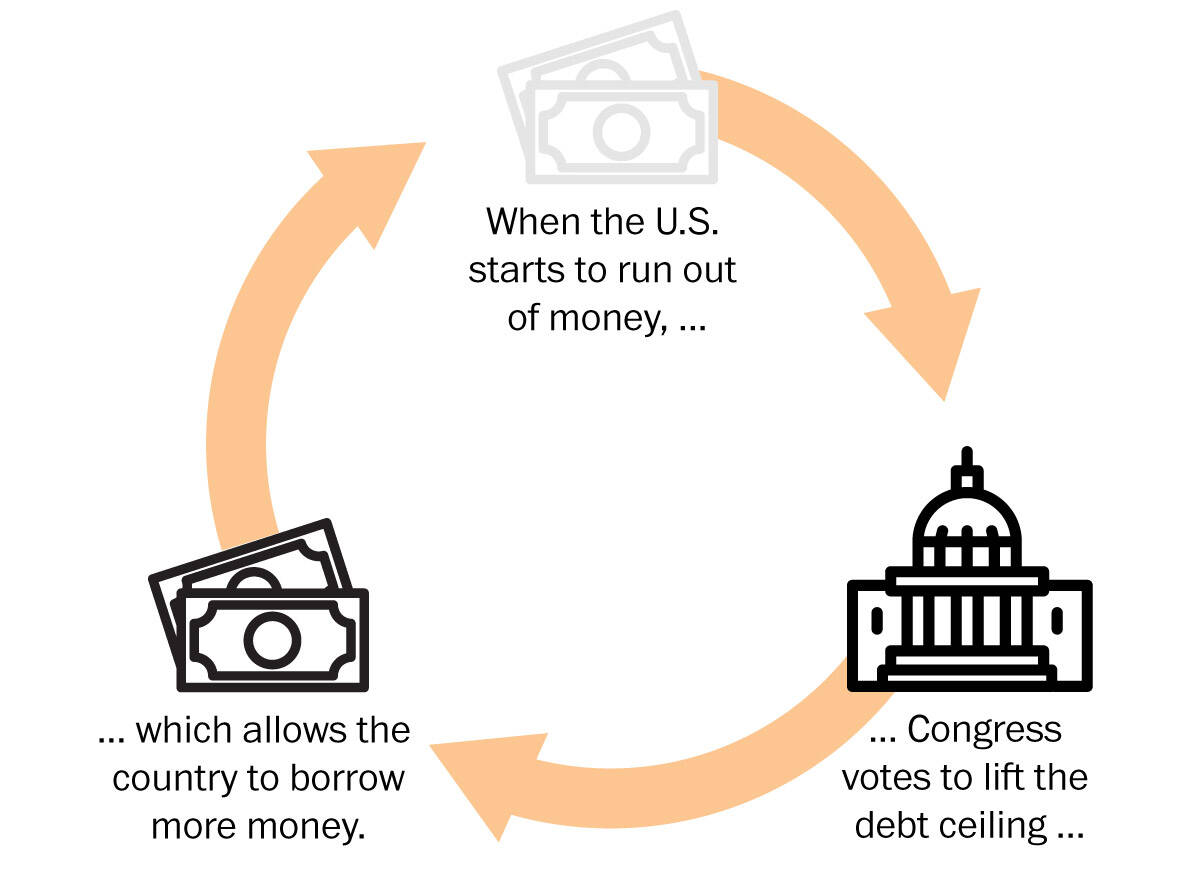
| At the beginning of this week, Congress had a big to-do list. At the end of this week, Congress has a big to-do list. Here's a quick recap of what it had to do and still has to or wants to do. Avoid a shutdown: Lawmakers narrowly did that, but only by buying themselves more time with a temporary spending bill that runs out in early December. Congress still needs to pass individual funding bills to fund federal agencies for the next year. Avert a default by raising the debt ceiling: This is the big one it has yet to get done. The Treasury Department says it runs out of all money to pay its bills on Oct. 18, and if Congress doesn't pass a law allowing it to borrow more money, the U.S. will default on its loans, potentially plunging the country. into an immediate recession and harming its credit for a generation. Here's exactly how the debt ceiling works. Republicans are blocking Democratic attempts to raise it. A default is unlikely, because the U.S. never has done it, but Republicans are particularly intransigent and Democrats are cutting it awfully close to figure out a way around them. A reader question on this: Could Democrats just change the filibuster rules for the debt ceiling to raise it over Republican objections? Maybe, but Republicans would try to block it. This week, Senate Minority Leader Mitch McConnell (R-Ky.) actually stopped an effort by Democrats to raise the debt ceiling with just Democratic votes. That's after Republicans filibustered Democrats' attempts to raise the debt ceiling in a spending bill. Pass a bipartisan infrastructure bill: $1 trillion for new roads, bridges and broadband passed the Senate with Democratic and Republican votes. President Biden wants to sign it. But it's held up in the Democratic House of Representatives, where liberal Democrats say they won't vote for it until there's a deal on another bill. House Speaker Nancy Pelosi (D-Calif.) promised moderates she would have a vote on this by Thursday, and she had to break that promise because there weren't enough votes for it to pass the Democratic House. A reader question on this: What's exactly in this infrastructure bill? Here's exactly what's in it. A prominent economist estimates it could create 660,000 jobs in the next few years. Get a deal on a $3.5 trillion social safety net/climate change legislation: This is a purely Democratic endeavor to dramatically expand the government safety net, from universal prekindergarten to expanded Medicare for seniors. Liberals are skeptical that centrist Democrats in the Senate will support this — and with good reason, since Sen. Joe Manchin III (D-W. Va.) said he wants it to cost about $1.5 trillion. So House liberals held up the infrastructure bill this week until they get what they want. It's such a stalemate that Biden stopped what he was doing Friday to go talk to House Democrats. How much is this hurting Democrats politically? 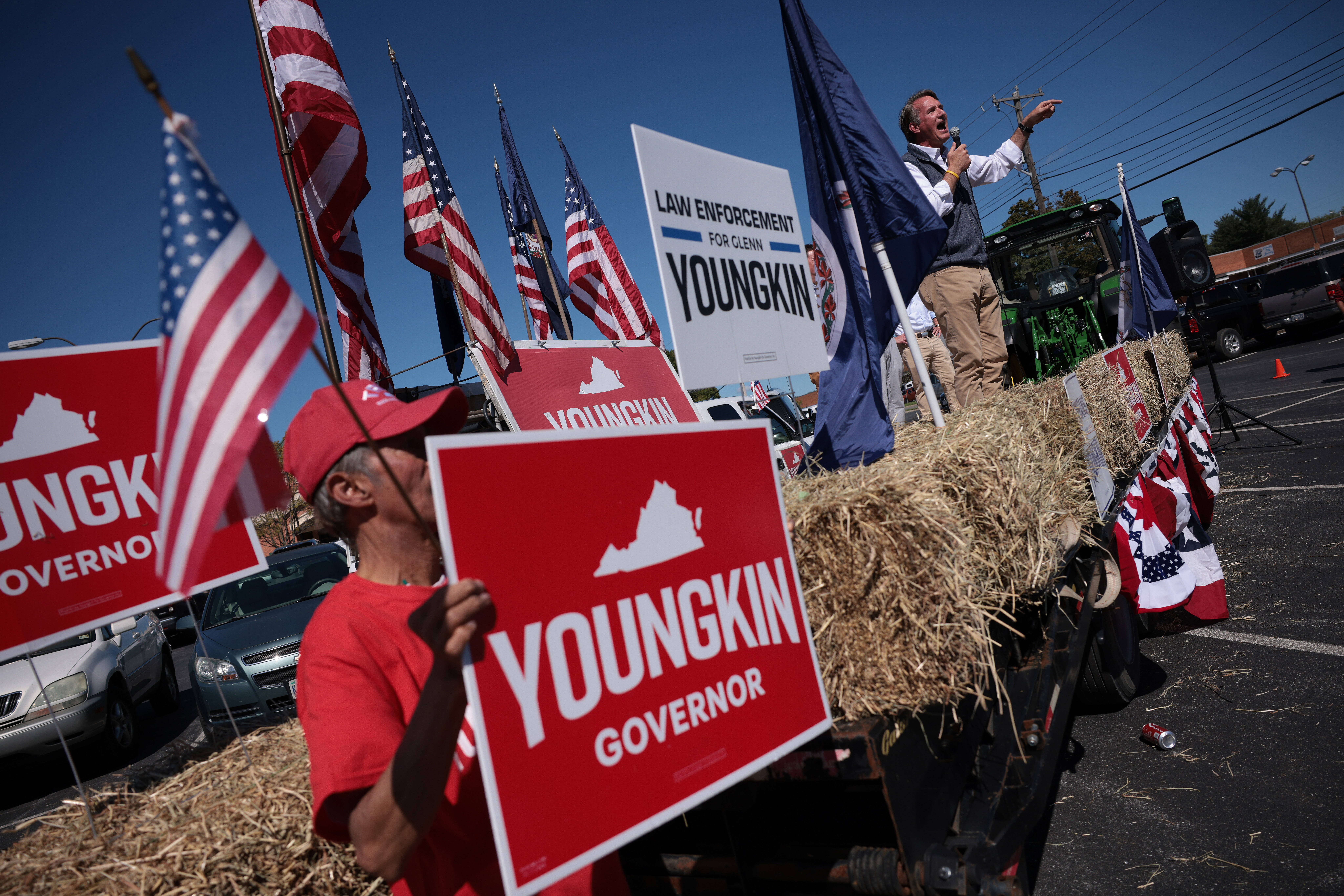 Republican gubernatorial candidate Glenn Youngkin campaigns in September. (McNamee/Getty Images) | Everyone's eyes are on the midterm elections next year, where Republicans have good shots at taking back the majorities in both the House and the Senate. But there's another election coming up next month, a governor's race in Virginia, that could help Democrats better understand how their chaos and fighting in Washington will affect voters outside of it. Once a swing state, Virginia is an increasingly blue state. Democrats have held the governor's mansion since 2012. Actually, they've won every statewide contest since 2012. A popular former Democratic governor, Terry McAuliffe, is running again. But he's in a surprisingly close race with the Republican, Glenn Youngkin, according to polls. What would make McAuliffe's contest easier? Congress passing an infrastructure bill, he told The Post's Michael Scherer and Sean Sullivan. "I want him announcing the billions of dollars that we're going to do on our roads and bridges," McAuliffe said of Biden. Here's another early sign that the road ahead for Democrats without big legislative wins could be tough. A year from now, Democrats are trying to unseat one of the most well-known Republican governors, Ron DeSantis, in Florida. Today, they're struggling to prop up a case against him and unify their party on a message, reports The Post's Tim Craig. More vaccine mandates are probably coming  California Gov. Gavin Newsom (D) at a middle school in San Francisco on Friday, as he announced a vaccine mandate next year for students. (Justin Sullivan/Getty Images) | Most American workers will soon have to get vaccinated or get tested weekly, under a rule Biden ordered. Hospital systems in states like New York and North Carolina have vaccine mandates. Federal workers have to be vaccinated by next month or they can lose their jobs. From workers to schools: In California, next year all students will have to get vaccinated, and there's no testing alternative, California Gov. Gavin Newsom (D) announced today. More governors, especially in Democratic-leaning states where vaccine mandates and the vaccine itself aren't as controversial, could follow his lead. In terms of getting more Americans vaccinated, that would be a good thing. Early evidence suggests that vaccine mandates actually do spur the reluctant to get vaccinated, The Fix's Aaron Blake writes. | 




 Email
Email