| Democrats are hopeful that they're closer to a deal on that big social safety net/climate change package that has eluded them for months. But they're still not really sure what will be in it nor how much it will cost. Universal prekindergarten might still be in the package, but free community college might not, report my colleagues. Whatever they come up with must have the support of an enigmatic holdout in the Senate, Kyrsten Sinema (D-Ariz.) Unlike another holdout, Sen. Joe Manchin (D-W.Va.), she has been very quiet about what she will support. Here's what we can piece together from her very few public comments about what she wants. Or, more accurately, what she has conveyed she doesn't want. She wants the social safety net bill to cost much less. Because of the budgetary maneuver they're using to pass this over Republican objections, Democrats actually had to vote on a price tag first. Sinema voted for a price of $3.5 trillion, but then immediately said she wanted it to be less to get her final vote. At first, liberals said no way. But it looks like Sinema will win this battle. 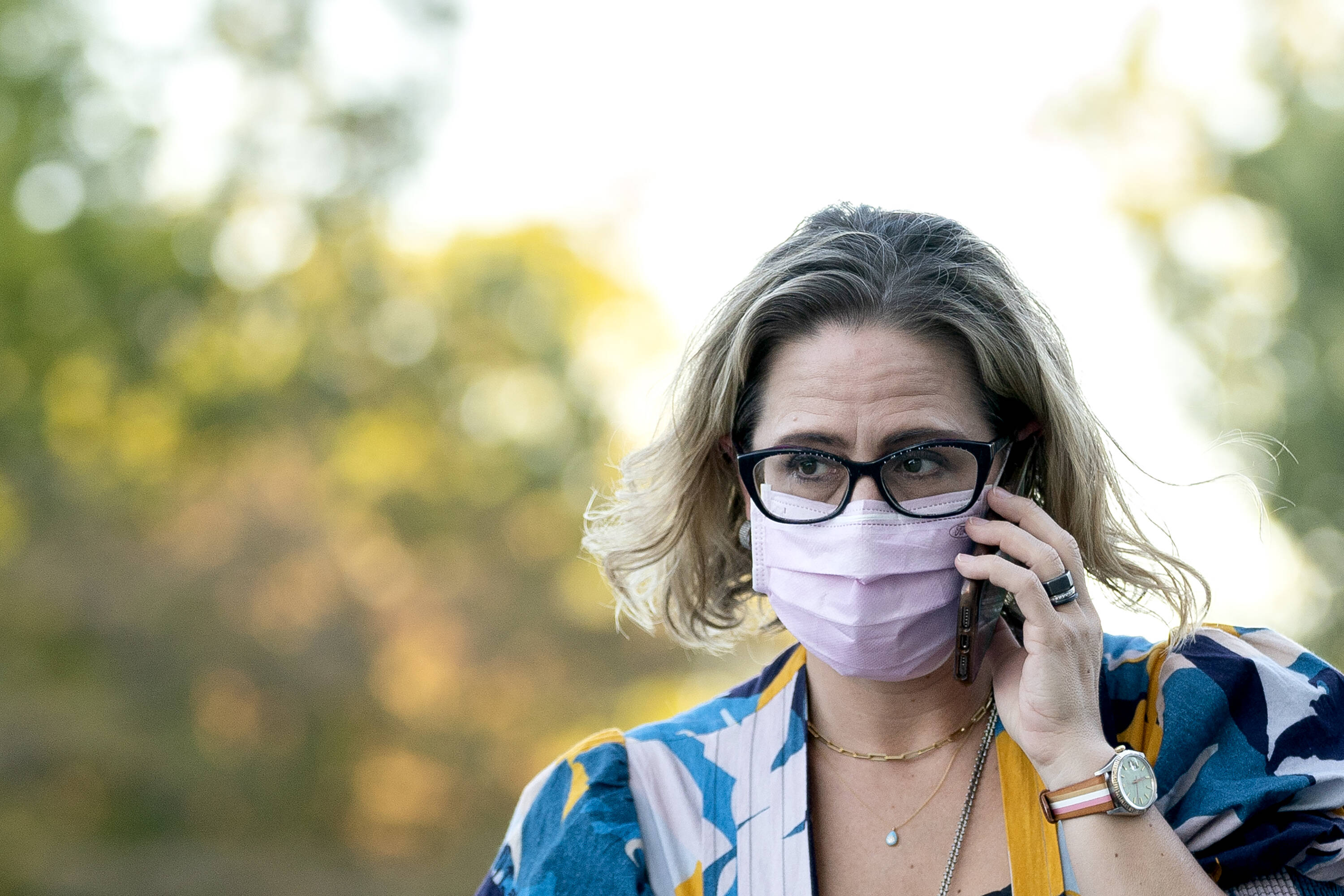 Sen. Kyrsten Sinema (D-Ariz.) (Stefani Reynolds for The Washington Post) | She is skeptical of raising corporate or individual taxes to pay for it. Democratic congressional leaders have insisted that this legislation would be paid for largely by raising taxes on corporations and the wealthy. Sinema, the New York Times reported, has privately told senators that she doesn't like those tax increases, at least to the degree the rest of the party has been open to. She has questioned a prescription drug-pricing measure. This, alongside her apparent opposition to raising taxes, could be a big problem for Democrats. Negotiators want to allow Medicare to negotiate lower drug prices. It's a popular item that could help pay for the bill. Her office says she's reviewing all proposals carefully. Sinema is one of the top recipients in Congress of donations from the pharmaceutical industry, Kaiser Health News reports. That includes about $25,000 from that industry this summer alone. She wants climate change proposals. She has talked about how her state is experiencing drought and wildfires as a result of climate change and indicated that she wants to prioritize legislation to help mitigate that and lower carbon emissions. "We know that a changing climate costs Arizonans," she told the Arizona Republic. "And right now, we have the opportunity to pass smart policies to address it — looking forward to that." How do Biden's border policies differ from Trump's? 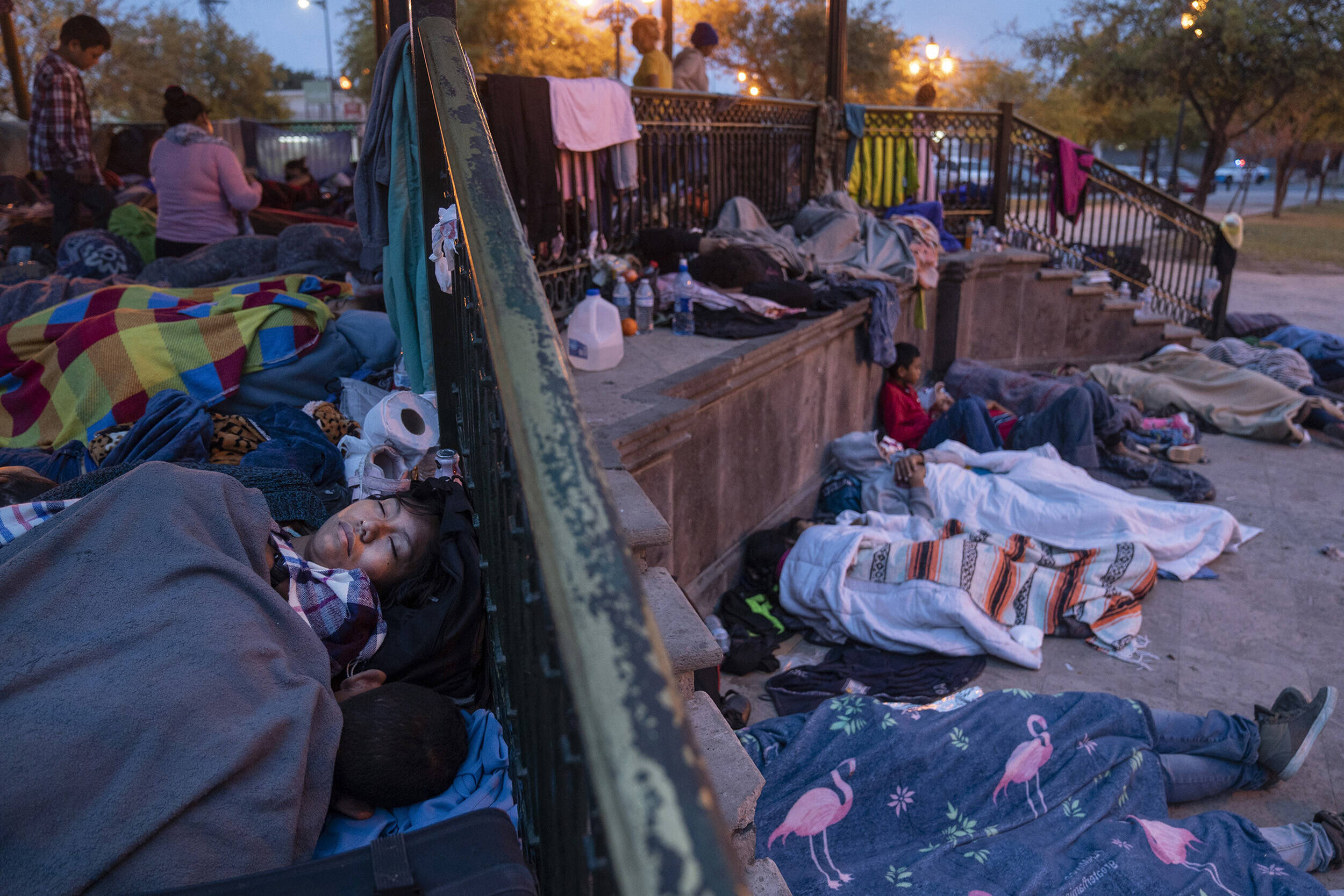 Recently deported immigrants, mostly from Central America, sleep under a gazebo near a border crossing into the U.S. Large numbers of immigrants, including young women and children, are crossing the border. (Michael Robinson Chavez/The Washington Post) | Arrests at the Mexico border are at their highest level ever, reports The Post's Nick Miroff. Many migrants who come trying to cross tell reporters that they think President Biden will be more lenient on letting them in than former president Donald Trump was. So how different are Biden's immigration policies? He's kept one controversial enforcement policy in place but has signaled in many ways that he wants to be more welcoming to immigrants. Let's run through them. First up: the most symbolic item of the Trump era — a border wall. Biden immediately stopped building it. Biden has approached deportations very differently from Trump as well. He first put a moratorium on them, then reduced deportations significantly. He lifted Trump's restrictions on how many people can seek asylum (and from what countries), but he did this only after an outcry from liberals and refugee advocates. He also stopped Trump's "Remain in Mexico" policy, which forces asylum seekers to stay in Mexico, vulnerable to violence, for potentially months on end while they await their case. Biden called it inhumane. (The Supreme Court recently ordered that to keep going.) But Biden has kept in place a controversial method for quickly booting migrants out of the country. It's a pandemic-rooted law the previous administration also used to justify sending people near the border home without giving most of them a chance to apply for asylum. This is technically different than deporting people — the administration calls it "expelling" — because it doesn't even allow people a chance to get into the country to apply for asylum. The ACLU and Senate Democrats have urged him to stop it. During a recent uproar over the Border Patrol's treatment of Haitian migrants, Senate Majority Leader Charles E. Schumer (D-N.Y.) publicly scolded Biden, saying: "We cannot continue these hateful and xenophobic Trump policies that disregard our refugee laws." All of this is putting immense pressure on Biden from both sides of the aisle. Nick reports that immigration activists are so upset at him for continuing some deportations that they staged a virtual walkout in a White House meeting the other day. And Republicans are ready and willing to attack Biden as weak at the border to rally their base voters in the midterms. That helps explain why immigration is one of the president's lowest-polling issues. | 




 Email
Email 


