| There's a pretty big update today to the Texas abortion law. It's still in effect, banning abortions in the state once a fetal heartbeat has been detected, typically around six weeks. But after months of legal wrangling, the Supreme Court has agreed to actually review whether a key aspect of the law — its enforcement mechanism — is legal. (Previously it only reviewed whether the law should temporarily be halted while the debate over its legality goes on.) The law asks regular people, rather than the state of Texas, to enforce it by suing doctors who provide an abortion after cardiac activity can be detected. This unusual mechanism presents an unusual issue for the Supreme Court, which decided last month it can't just force regular people to stop enforcing a law. 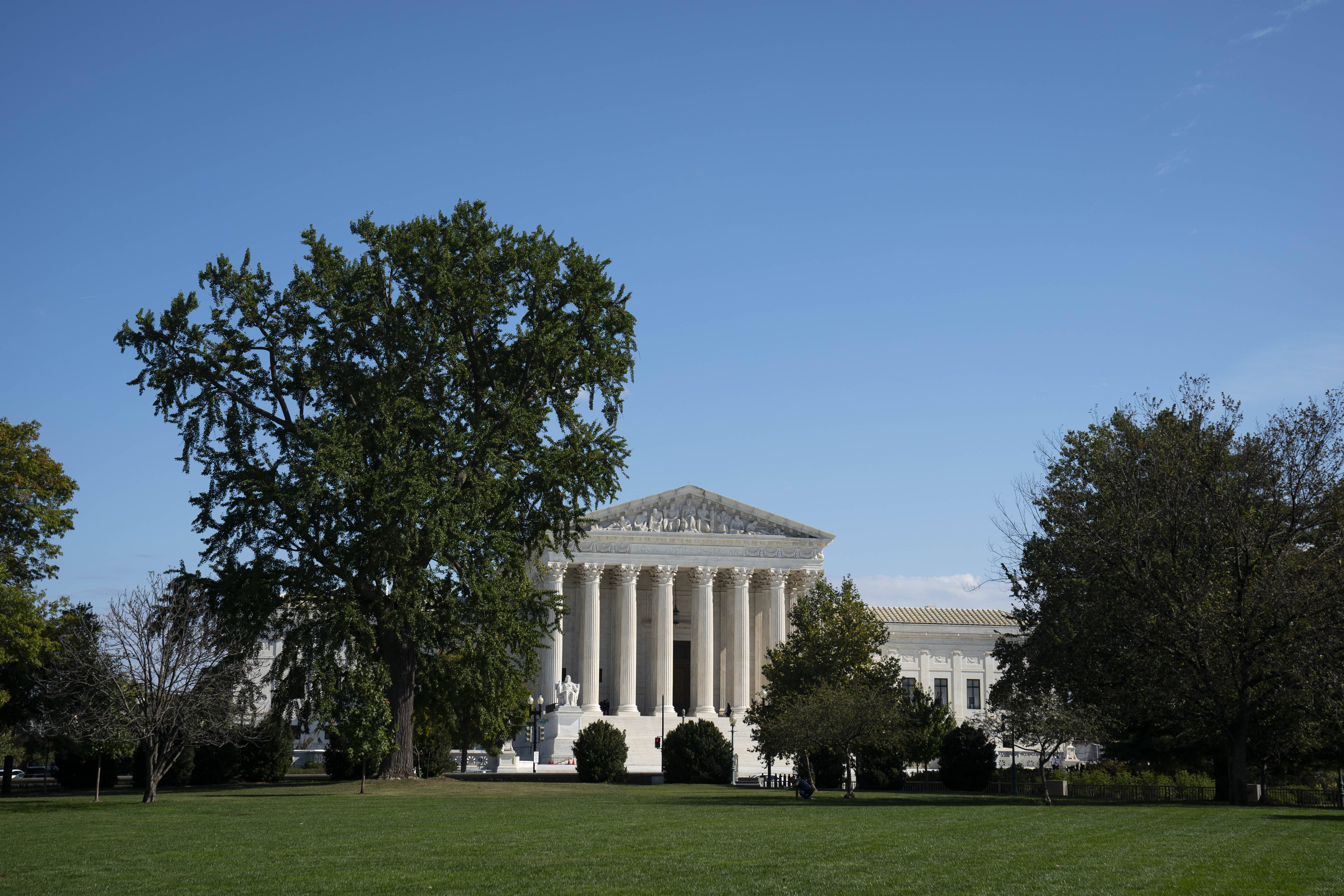 The U.S. Supreme Court (Sarah Silbiger/Bloomberg) | That has allowed the law to stay on the books for months even though it bans abortions well before the fetal viability benchmark laid out under the court's 1973 Roe v. Wade decision. The Supreme Court will start debating the Texas law on Nov. 1. Abortion rights advocates are worried. The court's five conservative justices — three of whom were appointed by former president Donald Trump — have twice decided to let the law stand, although they weren't specifically reviewing its legality like they will be in November. A decision upholding part or all of the Texas abortion law could result in a major shift for Roe v. Wade protections for those seeking abortions well into their pregnancies. But Barbara McQuade, a former U.S. attorney, said she thinks the Biden administration has a good chance of winning at least this round in the legal fight. And a win this fall at the Supreme Court means the government can sue to try to end the law altogether. What's out of Democrats' spending bill? 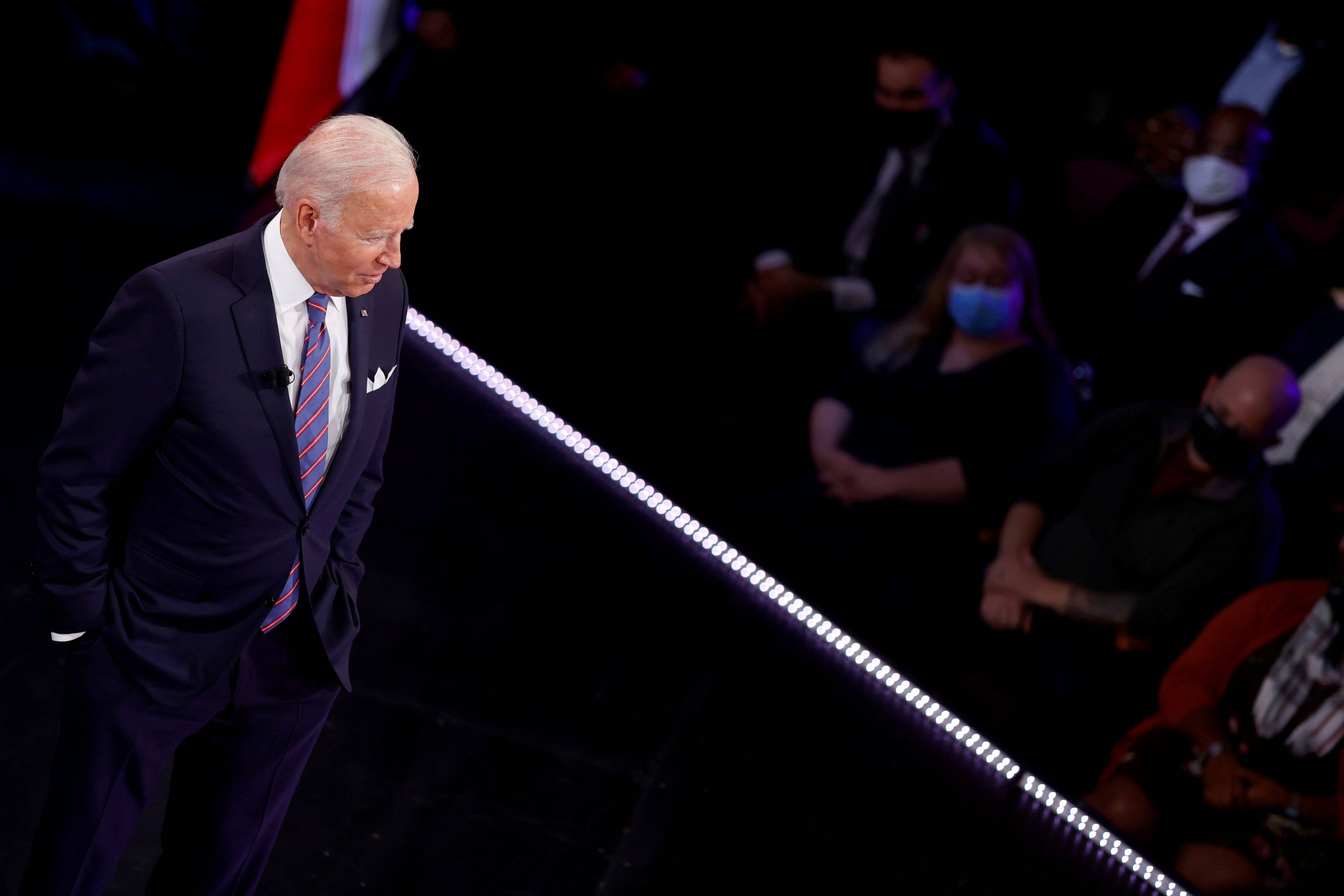 Biden at a town hall on Thursday spoke frankly about international negotiations. (Reuters/Jonathan Ernst) | Democratic leaders are talking like they've almost reached a deal after weeks — months, really — of haggling and even fighting over what to put in their social safety net/climate change bill. To get to a deal, a lot of sides had to compromise. Things are still fluid, but here's what we understand is left on the cutting room floor for now: Paid family leave for 12 weeks: It will be four. "And the reason it's down to four weeks, I can't get 12 weeks," Biden said flatly at a town hall Thursday. Free community college: "So far, Mr. Manchin and one other person has indicated that they will not support free community college," Biden said, speaking of a centrist holdout, Sen. Joe Manchin (D-W.Va.). Raising the corporate tax rate to pay for it: Sen. Kyrsten Sinema (D-Ariz.) has recently put her foot down on this. Biden acknowledged as much Thursday that they may have to figure out other ways to pay for the bill. One surprising idea, my colleagues report, is to tax billionaires more. "When you're in the United States Senate and you're president of the United States and you have 50 Democrats, every one is a president," Biden said. What might still be in the plan: Democrats' main provision to lower carbon emissions, a program to incentivize utility companies to move to renewable sources. Even though Manchin is opposed to it, Biden said it hasn't been dropped from the bill yet and warned those who think it's gone that "nothing has been formally agreed to." A name in the news you should know: John Eastman 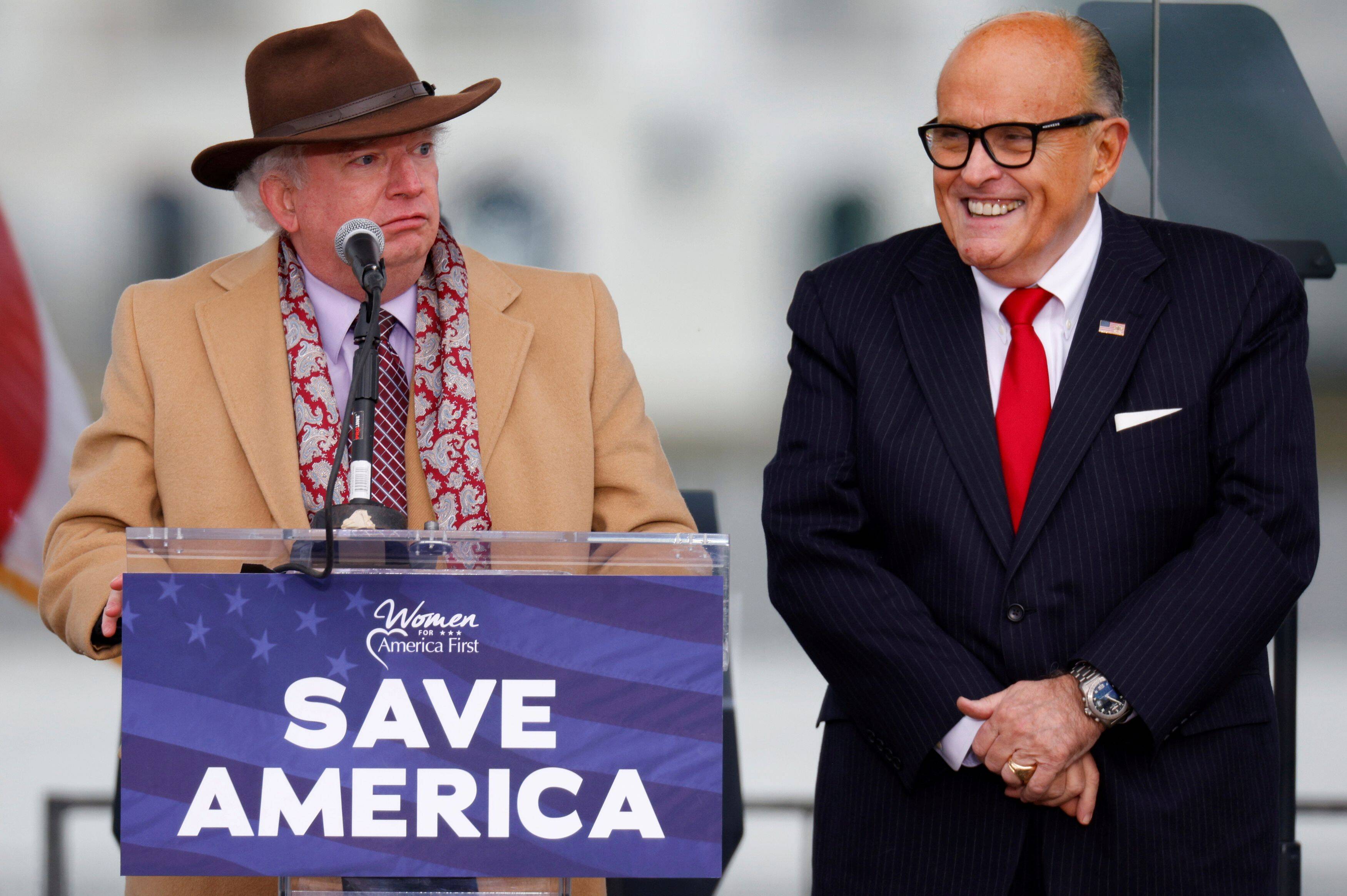 John Eastman speaks alongside Rudolph W. Giuliani on Jan. 6, before the Capitol riots. (Reuters/Jim Bourg) | Who he is: A lawyer who was advising Trump as the former president tried desperately to overturn his election loss Why he's in the news: Eastman wrote a memo for Trump right around Jan. 6 that essentially argues then-vice president Mike Pence could just count states' electoral votes how he wants and hand Trump the election. We now know Pence seriously looked at how to do this. This memo and Pence's consideration of it came to light last month in a book, "Peril," by Washington Post reporters Bob Woodward and Robert Costa. Today we're talking about Eastman because he's started to defend himself. And his defense is "absurd," writes The Fix's Aaron Blake. Eastman argues that he's actually the hero because he guided Trump to other options. Aaron writes: "The man who provided a road map for subverting democracy to a president intent upon doing just that, which the president then attempted to follow, would like to let you know that he is in fact the hero of this story." It's fascinating that as Trump prepares for a potential 2024 run on a platform that the election was stolen from him, some of those who conspired alongside him are backing away from the false claims. | 




 Email
Email 


