| Aside from then-President Donald Trump getting covid-19 a month before the election, never has politics and the coronavirus collided more than when Colin Powell died Monday of complications of the disease. It's a moment the history books will probably look back on to underscore how far the tentacles of this pandemic have reached into American society. Here's who Powell is and why his death is politically significant. Quick recap: Powell, the son of Jamaican immigrants, was a general who served as secretary of state under President George W. Bush during the administration's troubled Iraq War push. He's widely regarded as a member of the Republican foreign policy establishment. At the same time, Democrats welcomed him as a member of the anti-Trump movement; Powell called Trump a liar and endorsed Barack Obama and Joe Biden. 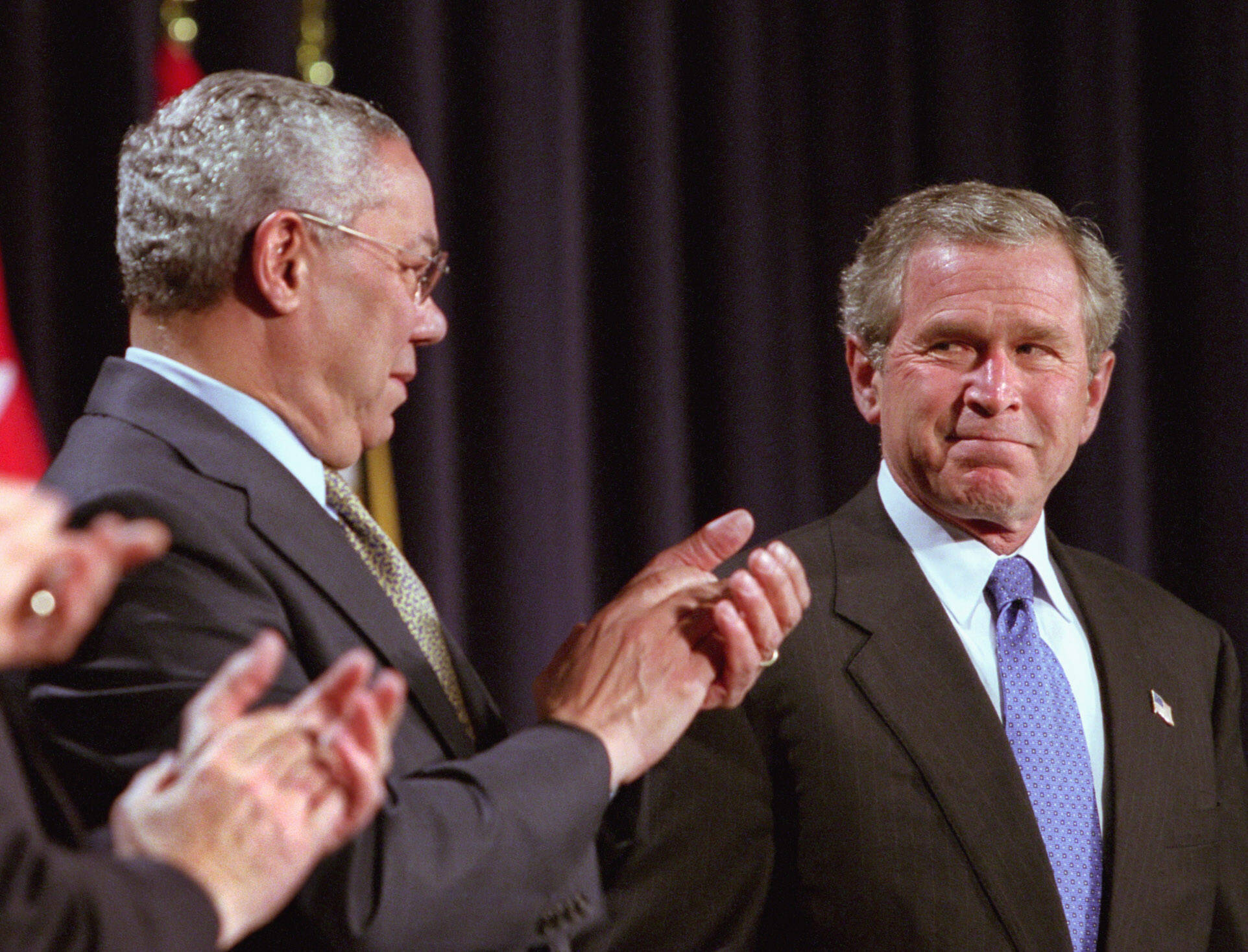 Colin Powell and President Bush in 20013. (Susan Biddle/Washington Post) | More on how he died: Powell was fully vaccinated. But he had a lot of the preexisting conditions that we know make the virus more dangerous. He was 84, and he had cancer; a dangerous combination, say health experts. So what does it mean that someone of his stature was fully vaccinated and still got a deadly case of covid? It means he got a breakthrough infection. What does that do for the battle to get reluctant Americans vaccinated? Time will tell. But it is disingenuous for anyone opposing vaccines to hold Powell's death up as an example of why you shouldn't get vaccinated. On the contrary, it underscores why people should get vaccinated; so breakthrough infections are less likely to spread to someone vulnerable like Powell, who was trying to protect himself. The Post's Philip Bump writes: "The lesson we should learn instead is that the vaccines work best when they work broadly and that, had Powell been protected both by the vaccine and by low rates of infection in his community, he might still be alive." What's up with Bernie Sanders vs. Joe Manchin 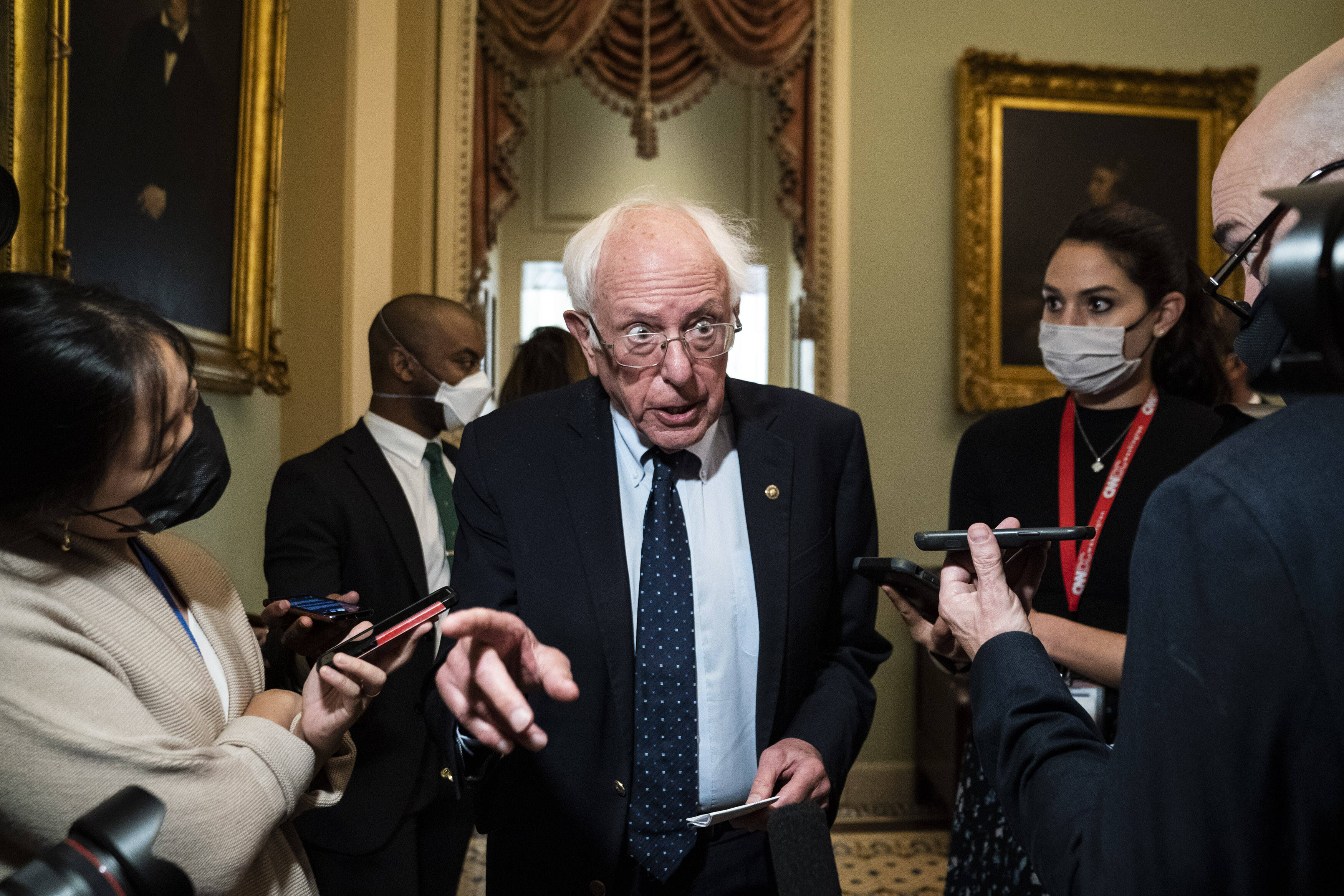 Sen. Bernie Sanders (I-Vt.) is trying to put pressure on Sen. Joe Manchin III (D-W.Va.). (Jabin Botsford/The Washington Post) | These two Democratic senators are really going at each other lately, and their fight illuminates how hard it is for Democrats to get major legislation done even though they have majorities in Congress and control the White House. On the left, there's Bernie Sanders of Vermont, the face of liberal policies that are increasingly being embraced by the rest of his party. He didn't win the presidential primary or a fight over universal health care, but he is the author of this $3.5 trillion spending bill that aims to expand child care and Medicare, make prekindergarten and community college free, and that would make big investments in reducing carbon emissions. On the right, there's Joe Manchin of West Virginia, who is one of a few senators to represent a state that voted for the other party's guy for president. West Virginia is a big Trump state, and a big coal producing state, and Manchin made much of his money off coal. Manchin is holding up Sanders's safety net bill over myriad concerns, including its major climate change initiative. Sanders has been vocally going after Manchin lately for not settling on specific policies, and for thinking too narrowly. In a pretty bold attempt to pressure Manchin, Sanders recently published an op-ed in Manchin's home-state newspaper, the Charleston Gazette-Mail, selling his bill: "This is a pivotal moment in modern American history," he writes. "We now have a historic opportunity to support the working families of West Virginia." "This isn't the first time an out-of-stater has tried to tell West Virginians what is best for them despite having no relationship to our state," Manchin tweeted in response. In hindsight, these two were probably always going to go after each other. They represent the poles of the party in an evenly divided Senate, where all 50 Democrats have to agree with each other to get any legislation passed over Republican objections. | 




 Email
Email 


