| Any way you slice it, things are hard for Democrats. There's voter frustration with the pandemic, the economy and immigration, and Democrats are struggling to take advantage of a rare opportunity of power in Washington to pass a liberal wish list of priorities. Those challenges are manifesting in one election in November, the Virginia governor's race, which has national implications for both parties. Here's why. - Virginia has traditionally been thought of as a bellwether state. Its governor's race comes right after a new president has settled into office and right before both parties start getting into midterm battle mode for control of Congress. So Virginia's results hint at which way the political winds are blowing.
- This is a race that's turning out much closer than Democrats had expected. A Republican hasn't won the Virginia governor's race since 2010. But polls show GOP candidate Glenn Youngkin is trailing Democrat Terry McAuliffe by just a few percentage points.
On paper, this should be a relatively easy win for Democrats. They have won every statewide elected office in Virginia since 2012. President Biden won the state last year by 10 percentage points. The Democratic nominee, McAuliffe, has already been governor before. 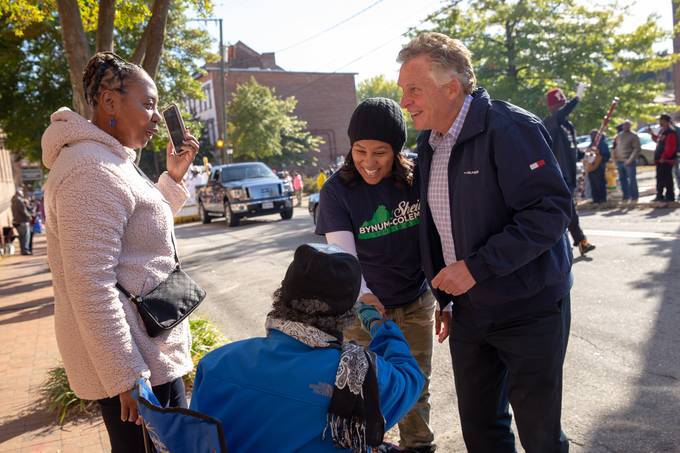 Terry McAuliffe campaigns in October. (Parker Michels-Boyce for The Washington Post) | But polls show the race much closer than Democrats want, probably because of all the struggles facing Biden in governing. Meanwhile Republican nominee Youngkin, a business executive, is trying to take advantage of a big opportunity for his party, but he has to carefully dance around former president Donald Trump and his false voter fraud claims. 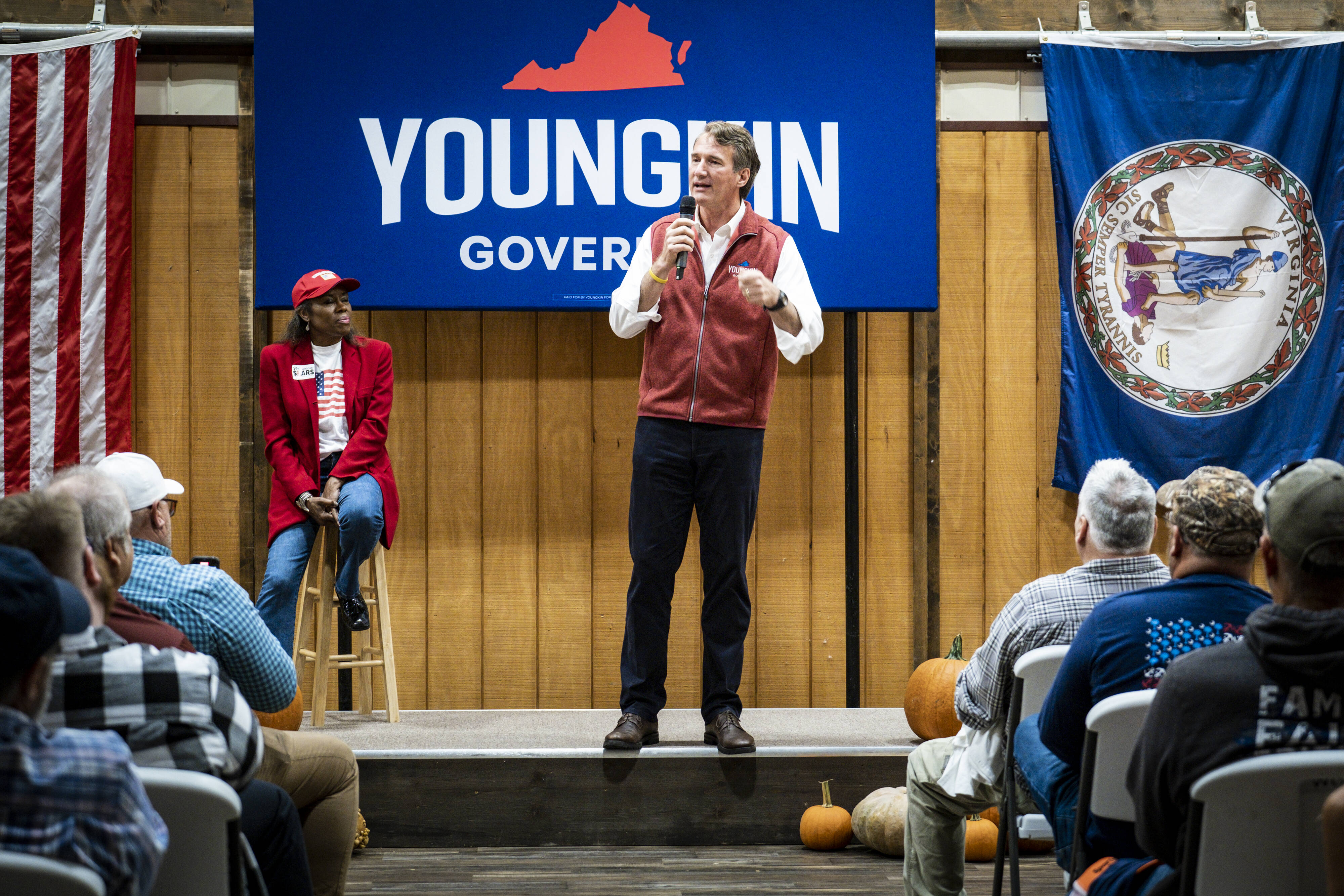 Glenn Youngkin campaigns Thursday. (Pete Marovich for The Washington Post) | Youngkin won his primary by refusing to acknowledge Biden legitimately won the presidency — an extreme position for any political candidate in America when you step back to think about it, but something that is fast becoming standard in the Republican Party. Now that he's got the nomination, Youngkin tries to avoid talking about Trump as much as possible. Yet hardcore Republican voters in the state are pro-Trump, and Trump endorsed Youngkin. Can he straddle both to pull off an upset over Democrats? Election Day is Nov. 2. What's going on in Wisconsin with this election audit? 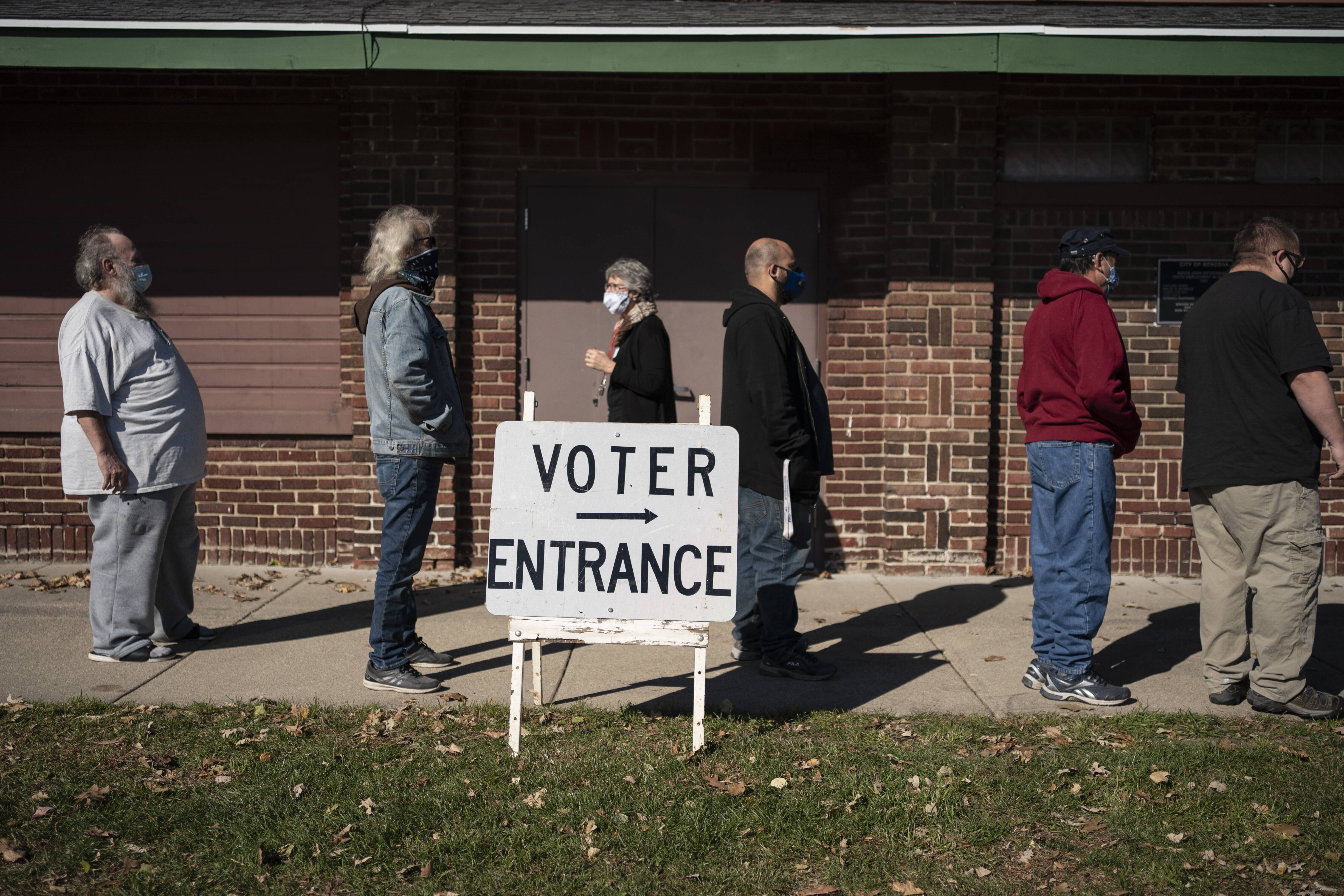 Voters in Wisconsin on Election Day. Biden won the state by less than a percentage point. (Wong Maye-E/AP) | Nearly a year after Biden's win, Trump supporters in nearly every state he lost are pushing for an "audit" of those results. I put audit in quotes because there is no evidence of widespread fraud in the first place that would necessitate such a look. And, the audits Republicans have conducted in Arizona, Pennsylvania and Wisconsin appear to be rife with errors, amateurism and partisan bent. Even with all that, Arizona has recently found MORE votes for Biden. A notable number of Republicans in some of these states are resisting pushes to keep investigating the election. The latest drama in Wisconsin underscores why. There, a former judge and state Republican official is leading an audit that has misspelled names of people he wants to talk to and referred to the wrong city, and he has admitted days later that he does not have "a comprehensive understanding or even any understanding of how elections work," reports The Post's Elise Viebeck. "It doesn't seem like they have any rules or know what they're doing," election expert Matthew Weil at the Bipartisan Policy Center told Elise. "I don't think they're going to do anything to improve confidence in the process." The Great Resignation, briefly explained  A job fair in Tulepo, Miss. (Rogelio V. Solis/AP) | Have you thought about quitting your job lately? If you're a woman, an hourly worker, and/or you work in hotels and restaurants, government data released this week show that the answer is probably, yes — or you already have. A Gallup poll shows nearly half of Americans (!) are actively job searching. So many workers quitting or retiring all at once is leading to what's being called the Great Resignation, report The Post's Taylor Telford and Aaron Gregg. It's a complex phenomenon, probably with many different causes. But there's evidence that lower wage workers in particular are feeling fed up with "years of lower pay and stressful conditions," exacerbated by having to go to work in public places amid a pandemic, writes The Post's Heather Long. Still other workers have had time to be at home and reflect on the kinds of jobs they want. It seems like everyone is making their moves, for reasons that are still unclear to economists. When (or if) this all settles, what the economy looks like, and how policymakers can help, is an unknown. | 




 Email
Email 


