| Welcome to The Daily 202! Tell your friends to sign up here. On this day in 2001, President George W. Bush signed the USA PATRIOT ACT into law, vastly expanding the federal government's already sweeping surveillance and investigative powers in response to 9/11. | | |  | The big idea | | 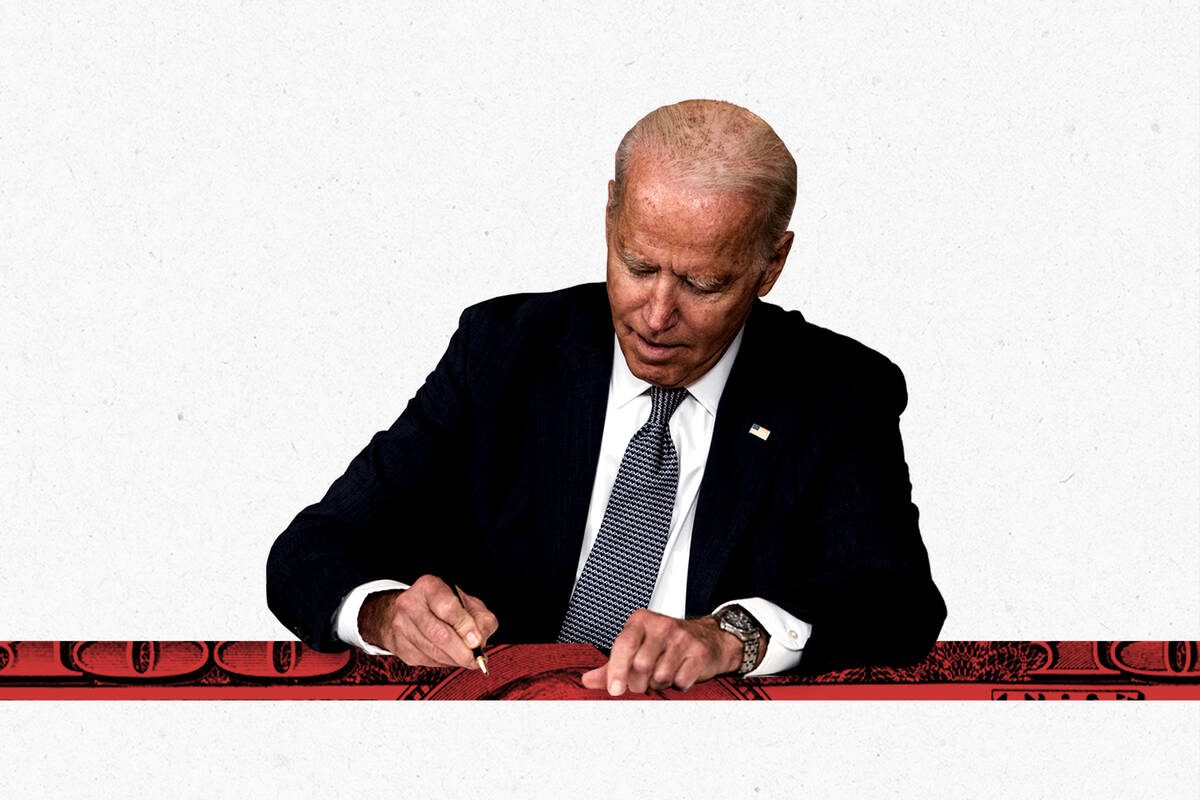 (Washington Post illustration; Demetrius Freeman/The Washington Post; iStock) | | | Hope is not a plan. Campaign promises don't magically turn into reality. In public, President Biden has largely spoken in generalities about what he will and won't accept in the final version of legislation he hopes will ferry his ambitious domestic agenda to his desk. The only red line he's clearly drawn is that people making under $400,000 won't see a tax increase. In private, Biden has tried to live up to his self-image as a Congress-whisperer by working through internal Democratic Party divisions, notably resistance from Sens. Joe Manchin III (D-W.Va.) and Kyrsten Sinema (D-Ariz.) not just to the original price tag but to individual components like tax hikes on the rich and corporations or steps to curb the climate crisis, both of which he initially portrayed as central to his plans. Whether these meetings, inevitably billed as "productive," will actually generate a product before the president leaves for Europe could be determined in the coming hours or days. He's expected to leave for Rome on Thursday. Biden aides want him to walk into the G-20 and the subsequent COP26 climate summit in Glasgow, Scotland, with new American commitments not old American promises. And Democrats increasingly clamor for concrete action on infrastructure before voters decide the next governors of Virginia and New Jersey next week. The president hasn't been missing. He's done speeches urging support for the Build Back Better package progressives had hoped would be a once-in-a-lifetime expansion of social policy, and sold his priorities in general terms in a couple of CNN town halls. But if he gets a deal, or a deal-to-make-a-deal, Biden will have to shift from broad appeals for popular ideas like expanded child care to selling the details of legislation that's been winnowed down from the grand promises he made in 2020. | | | | ADVERTISEMENT | | Content from Comcast | | Advancing Digital Equity to Build a Future of Unlimited Possibilities |  | | Comcast's Internet Essentials has connected 10 million people from low-income families to high-speed Internet for less than $10/month. But Americans need laptops, tablets and digital skills too. That's why, through Project UP, we're investing $1 billion over the next 10 years to connect people to the Internet, advance economic mobility, and open doors for the next generation of innovators, entrepreneurs, storytellers and creators. | | | | | | | | One of his challenges, I suggested last week, is whether it'll matter more to voters what's in the legislation — universal pre-K looks like it'll make it, so might four weeks of parental paid leave — or what ends up left out — tuition-free community college and 12 weeks of paid leave seem gone. Put another way, can he keep progressive voters on board? Democrats ran on repealing former president Donald Trump's tax cuts, which went predominantly to wealthy Americans, and on lowering prescription drug prices, and it's not clear as of this writing whether they'll have to settle for little on those fronts — or for nothing, at least in the emerging compromise. We got a glimpse of Biden's possible strategy last week when he spent much of a CNN town hall pleading for patience with progressives, promising action on voting rights and social programs in the future if only they'll stick with him now. | | Signing something into law could, at least, give the Biden White House a break from what they dismiss as questions about "process" (the maneuvering and negotiations necessary to get a bill to his desk) rather than "substance" (the promises that require the "process" to become reality). For weeks, Biden aides and progressives like Sen. Bernie Sanders (I-Vt.) have complained the national press corps has overly focused on "process" at the expense of telling Americans what was in the original bill. "There have been endless stories about the politics of passing Build Back Better, the role of the president, the conflicts in the House and the Senate, the opposition of two senators, the size of the bill, etc. — but very limited coverage as to what the provisions of the bill are and the crises for working people that they address," Sanders argued recently. (The implicit argument is that progressives might have had more leverage in the negotiations if Americans had known more fully what was in the legislation.) My friend James Fallows recently took a similar view after Biden's latest CNN town hall. "The [national] press keeps asking about the 'how' of politics. Citizens ask about the 'what' of governance," he wrote, bemoaning "usually predictable" national press corps questions of the "gotcha" variety. That certainly can be true. I've thought on many occasions that the Beltway press corps — the "politics" part, not the "policy" part — often focuses too much on whether a thing will happen at the expense of helping Americans figure out whether it should. | | But without the "how" of politics there isn't a "what" of governance. And it's not like policy questions are a skeleton key to get politicians to open up. At Biden's first formal news conference — the cringey one, without a single question about the pandemic — Bloomberg's Justin Sink asked the president straightforward questions about policy toward China. "Are you considering banning imports of forced-labor products?" got a meandering reply from Biden, not an answer. Last week, Politico took note of how few one-on-one interviews Biden has done, and cited a White House official echoing Bernie's complaint. The Daily 202 has heard the same argument. But, Politico continued, "[t]he only downside is the constant scolding from the press, which may actually make the president more popular in the eyes of many voters." Let's stipulate that we're talking about interviews with national outlets. When contacted for this column, a White House official provided a list of about 50 interviews Cabinet officials did with local or regional TV (which are more trusted, generally, than national outlets) from the second week of August to the second week of September. Even with that caveat, it's not the only downside. It's not hard to imagine Biden and first lady Jill Biden sitting down with, say, Parents Magazine at any point in the past 10 months to promote what Build Back Better could mean for children and their guardians. Or how about Kaiser Health News? Or talking about taxes with Bloomberg or Reuters? What about Biden discussing climate change with Agence France-Presse (my old shop)? Every competent White House press operation knows they'll get one kind of story if they put the president in front of the health care reporter, or climate reporter, or economics reporter, than if he sits down with the person covering the midterms. Let's see what this White House does. | | |  | What's happening now | | 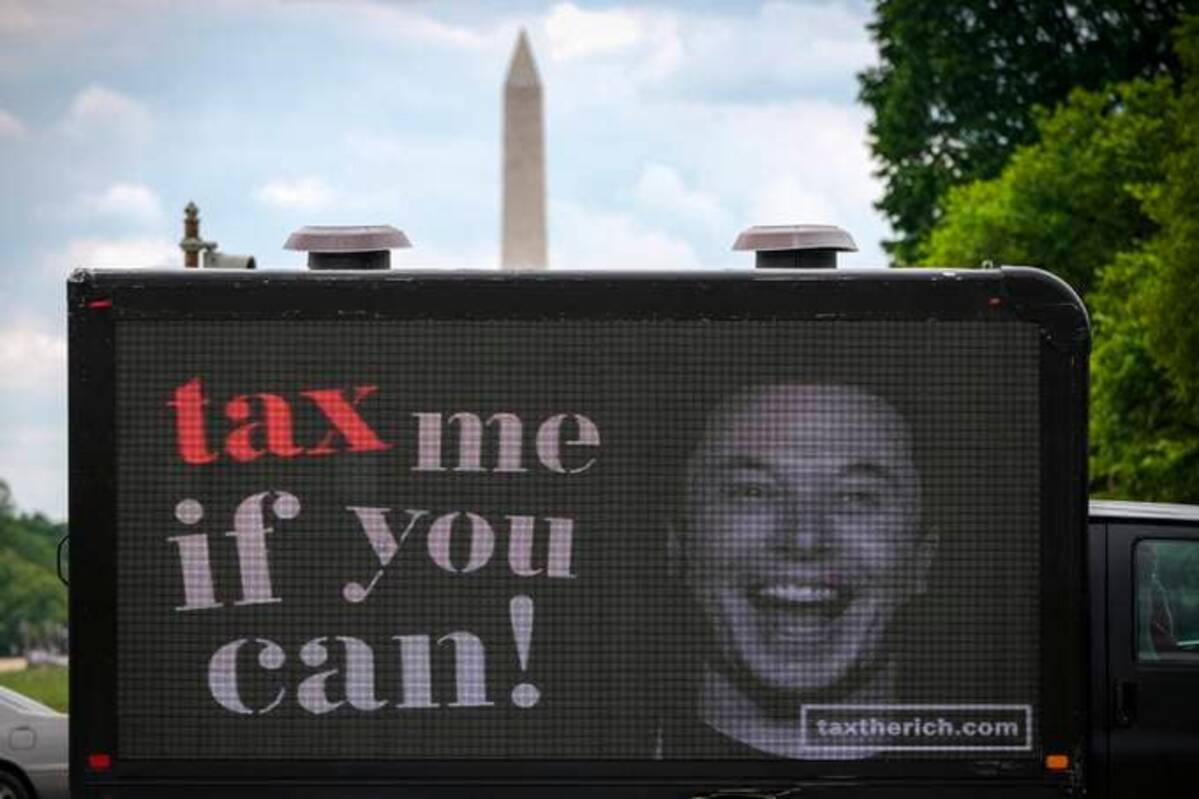 A mobile billboard calling for higher taxes on the ultrawealthy depicts an image of billionaire businessman Elon Musk, near the U.S. Capitol. (Drew Angerer/Getty Images) | | Billionaire tax would heavily target the 10 wealthiest Americans | | "Senate Finance Chair Ron Wyden (D-Ore.) said Monday he will 'in a matter of days' release a tax on billionaires that economists and tax experts project could raise more than half of its revenue from just 10 people, including Tesla founder Elon Musk and Amazon founder Jeff Bezos," Andrew Van Dam, Jeff Stein and Tony Romm report. (Bezos owns The Washington Post.) But "Democrats are considering swapping the billionaire tax for a separate 3 percent "surtax" on millionaires earning more than $5 million per year, according to two people familiar with the negotiations who spoke on the condition of anonymity to reflect internal negotiations. Details remain very much in flux." | - "The surtax on multimillionaires … may prove easier to administer and less vulnerable to legal challenge. But the billionaire tax would fall on far fewer people and, if successfully implemented, could do substantially more to reverse the massive concentration of wealth that Democrats have for years called reflective of a dangerous increase in U.S. inequality."
| One week to the election, dead heat in Virginia | | "Democrat Terry McAuliffe and Republican Glenn Youngkin are tied at roughly 45% each, according to a new USA TODAY/Suffolk University Poll released Tuesday. But roughly 5% of likely voters say they are still undecided a week before the Nov. 2 election," USA Today's Phillip M. Bailey and David Jackson report. "It's down to turnout," said David Paleologos, director of the Suffolk University Political Research Center. | Blinken calls for U.N. members to support Taiwan participation | | "In a statement, Blinken said Taiwan's exclusion from U.N. forums 'undermines the important work of the U.N. and its related bodies, all of which stand to benefit greatly from its contributions,'" Reuters reports. | | |  | Lunchtime reads from The Post | | 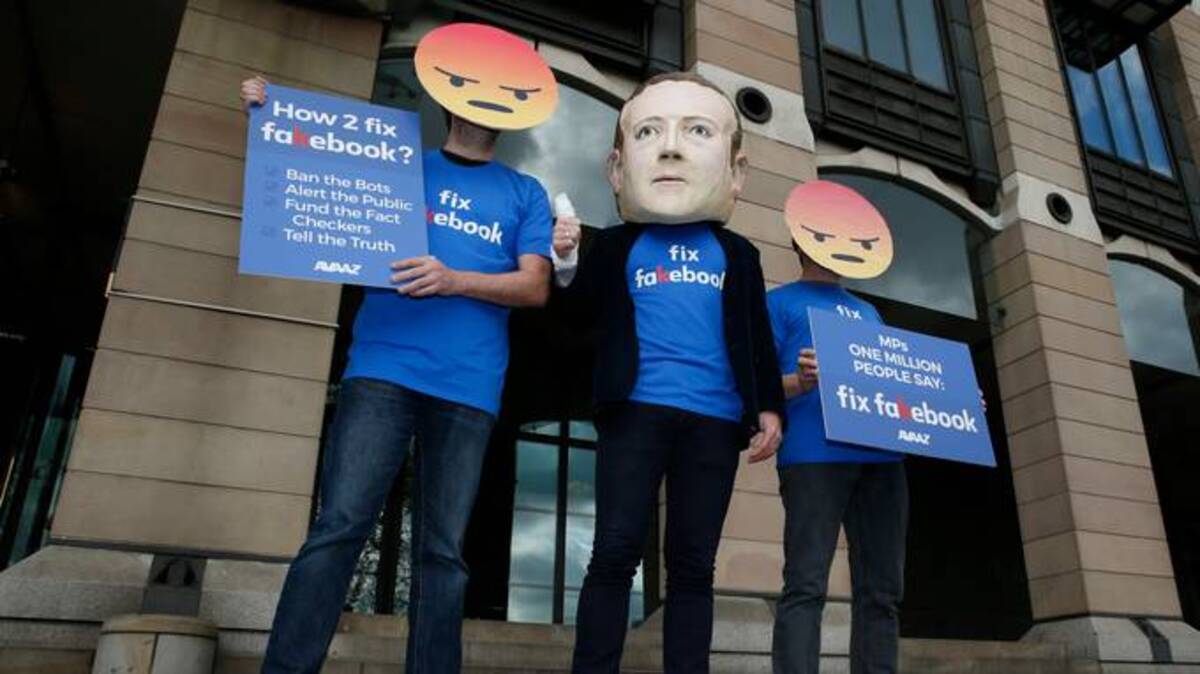 A protester wearing a mask with the face of Facebook founder Mark Zuckerberg, in between men wearing angry face emoji masks, protest Facebook outside Portcullis in 2018. (Alastair Grant/AP file) | | The weight of rage on Facebook 😡 | | "Facebook programmed the algorithm that decides what people see in their news feeds to use the reaction emoji as signals to push more emotional and provocative content — including content likely to make them angry. Starting in 2017, Facebook's ranking algorithm treated emoji reactions as five times more valuable than "likes," internal documents reveal. The theory was simple: Posts that prompted lots of reaction emoji tended to keep users more engaged, and keeping users engaged was the key to Facebook's business," Jeremy B. Merrill and Will Oremus report. | - "Facebook for three years systematically amped up some of the worst of its platform, making it more prominent in users' feeds and spreading it to a much wider audience. The power of the algorithmic promotion undermined the efforts of Facebook's content moderators and integrity teams, who were fighting an uphill battle against toxic and harmful content."
- "At one point, CEO Mark Zuckerberg even encouraged users in a public reply to a user's comment to use the angry reaction to signal they disliked something, although that would make Facebook show similar content more often."
| Inside Facebook's feed-curating algorithm | | "Since 2018, the algorithm has elevated posts that encourage interaction, such as ones popular with friends. This broadly prioritizes posts by friends and family and viral memes, but also divisive content." | - "Over the past 12 years, almost everything about the news feed algorithm has changed. But the principle of putting the juicy stuff at the top — or at least the stuff most likely to interest a given user — has remained. The algorithm has simply grown ever more sophisticated to the point that today it can take in more than 10,000 different signals to make its predictions about a user's likelihood of engaging with a single post, according to Jason Hirsch, the company's head of integrity policy."
- "Internal documents show Facebook researchers found that, for the most politically oriented 1 million American users, nearly 90 percent of the content that Facebook shows them is about politics and social issues. Those groups also received the most misinformation, especially a set of users associated with mostly right-leaning content, who were shown one misinformation post out of every 40, according to a document from June 2020."
| A new era of political violence | | For the New York Times Magazine, Charles Homans explores what Kyle Rittenhouse — and the response to his infamy — says about the nation. The then-17-year-old killed two men and wounded a third during protests in Kenosha, Wis., last summer. "They called themselves citizens or patriots, and the demonstrators and media often called them militias, but it would have been most accurate to call them paramilitaries: young-to-middle-aged white men, mostly, armed with assault-style rifles and often clad in tactical gear, who appeared in town that evening arrayed purposefully around gas stations and used-car lots." | - Prosecutors have yet to produce evidence that Rittenhouse held extremist views or associations before the shootings; his own defense attorneys intend to argue that in a chaotic moment, he simply acted in self-defense. This is likely to center the trial on Rittenhouse's actions over a series of brief and fateful moments, and not the much larger question of what brought Rittenhouse and so many others to the streets of Kenosha equipped for war."
| | |  | The Biden agenda | | Biden to campaign with McAuliffe tonight | 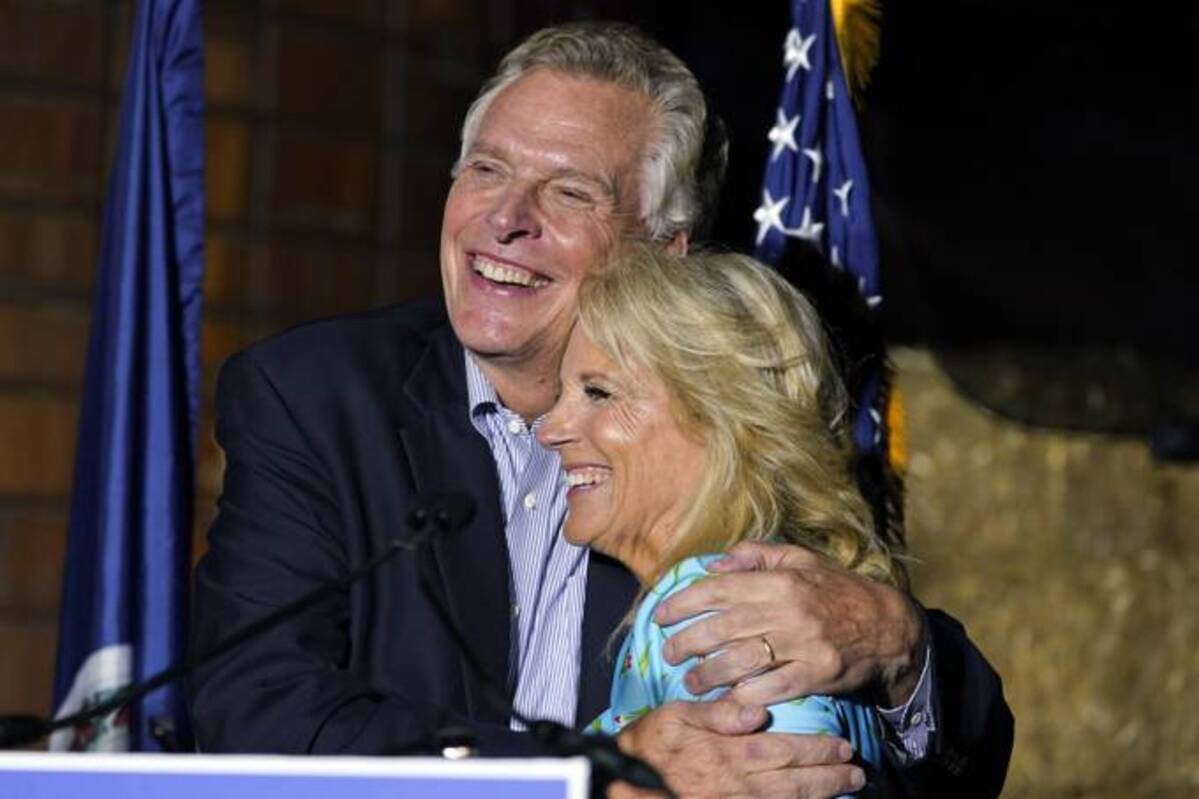 First lady Jill Biden gets a hug from Democratic gubernatorial candidate Terry McAuliffe during a rally in Richmond. (Steve Helber, AP File) | | The president goes all-in on McAuliffe | | "With the election coming next week, both the president and the Democratic Party are increasingly embracing the notion that it is in large part a referendum on their handling of the pandemic and their support of massive government spending programs — as well as a broader repudiation of the Jan. 6 attacks on the U.S. Capitol," Politico's Christopher Cadelago and Zach Montellaro report. | Democrats are scrambling to address immigration in reconciliation bill | | Talks are fluid, report Sean Sullivan and Marianna Sotomayor. "On Monday, Senate Majority Whip Richard J. Durbin (D-Ill.) said Democrats had made some progress on a proposal to give undocumented immigrants a protected status that would enable them to work legally, pay taxes and live without fear of deportation. He said the Congressional Budget Office gave the plan a preliminary score." | - "An alternate idea that House Speaker Nancy Pelosi (D-Calif.) and her advisers have told Democratic members and aides in recent days to keep pursuing, according to people with knowledge of the situation, is the one that would enable immigrants who arrived in the United States before 2010 to apply for a green card … Several people with knowledge of the situation said Democrats are pursuing this track in case they feel they need to reach an agreement on the larger social spending plan before the Senate parliamentarian rules on the plan Durbin touted."
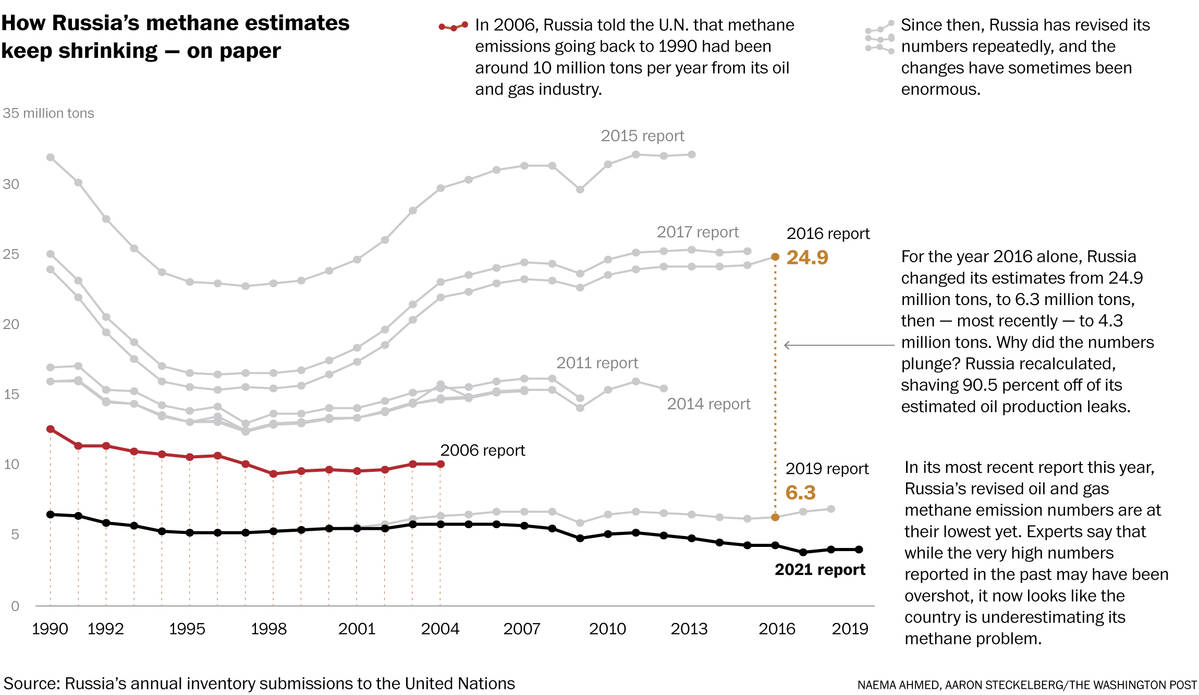
| Rising prices threaten Biden's agenda | | Persistent inflation has "complicated Mr. Biden's push for sweeping legislation to boost workers, expand access to education and fight poverty and climate change. And it is dragging on the president's approval ratings, which could threaten Democrats' already tenuous hold on Congress in the 2022 midterm elections," the New York Times's Jim Tankersley reports | Experts skeptical of the White House's gender equity strategy | | "Many gender equity advocates will be eagerly awaiting those implementation reports, including four experts who spoke to The Lily about the strategy, characterizing it as a crucial — and hopeful — step toward closing gender gaps and rectifying historic inequities. But, experts say, the strategy lacks clear implementation plans and measurable goals," Julianne McShane reports. | | |  | Russia's shrinking methane reports, visualized | | | |  | Hot on the left | | | The American Prospect's Paul Starr warns that Democrats need to remember that expanding Medicare though the reconciliation bill could be futile. "As Democrats decide which parts of the big reconciliation bill to keep and which to drop, they need to consider legal risk—the risk that a provision will be struck down by the conservative majority on the Supreme Court. That, in fact, is a serious risk for one major part of the legislation: the extension of broader Medicaid eligibility into the 12 states that have refused to adopt the Medicaid expansion created under the 2010 Affordable Care Act." | | |  | Hot on the right | | Manchin is still talking about party switching | | Manchin also said Monday night that he's "totally out of sync with 48 other Democrats," John Wagner reports. | | |  | Today in Washington | | | The president will campaign with Virginia gubernatorial candidate Terry McAuliffe at 7:50 p.m. at Virginia Highlands Park in Arlington. | | |  | In closing | |  Herman, the 12-foot skeleton, stands quite tall among his fellow skeletons in Middletown, Md., in October 2020. (Marvin Joseph/The Washington Post) | | | As we approach Halloween weekend, don't miss this Maura Judkis story about the 12-foot skeletons that are littered across lawns nationwide. If you're not a member of the giant skeleton-owning community, you might not have heard the news: Home Depot rolled out a new addition to the ultra-tall collection this year. Its head is a pumpkin. | | Thanks for reading. See you tomorrow. | | |