| Welcome to The Daily 202! Tell your friends to sign up here. On this day in 1968, the U.S. Olympic Committee suspended Tommie Smith and John Carlos for giving a "Black power" salute as a protest during a victory ceremony at the Mexico City games. In a blistering bit of on-air commentary, veteran ABC sports reporter Howard Cosell expressed support for the athletes' gesture and condemned the committee as "pompous, arrogant, medieval-minded men who regard the games as a private social preserve for their tiny clique." | | |  | The big idea | | States look to shore up child care with Biden's agenda uncertain |  Vice President Kamala Harris speaks about childcare at the Ben Samuels Children's Center at Montclair State University, in Little Falls, N.J. (AP Photo/Jacquelyn Martin) | | | With the fate of President Biden's stalled domestic agenda uncertain, Vermont has become the latest state to tap American Rescue Plan cash in an urgent effort to save its child-care providers, without whom a true return to something like a post-pandemic normal may be impossible. Though currently in congressional limbo, Biden's ambitious $3.5 trillion social spending program aims to make child care more affordable, provide universal preschool for kids three and four years old and expand paid family and medical leave. At about $450 billion in the proposed legislation, it would amount to the largest-ever federal investment in child care. With Republicans in lockstep opposition, Democrats have been locked in torturous intraparty negotiations that could end with the whole project collapsing. Last night, Axios reported Sen. Joe Manchin III (D-W.Va.) wants to cut back on the proposal's child-care provisions in a way progressives will find difficult to accept. States like Vermont haven't waited to see how the fight over Biden's agenda plays out. Instead, with the administration's blessing, they have turned to Biden's pandemic-relief American Rescue Plan Act (ARPA), which became law in March 2021 with zero GOP support. Now, whether governed by Republicans or Democrats, they're tapping into ARPA to help struggling child care providers pay for a wide range of expenses, including payroll and rent. Parents of young kids — who cannot yet be vaccinated — have suffered through disruptions in child care throughout the pandemic, which closed many facilities nationwide, and are likely to stay out of the workforce until they have a reliable place to send their little ones. Parents of prime working age (25-54 year olds) have endured considerable losses in income, especially women and non-White parents. | | "Given ongoing disruptions to child care arrangements, many working parents, especially of very young children, must provide more hands-on care during the workday, rendering them unable to work the same number of hours (if at all) than they otherwise would," the St Louis Fed reported in August. | | Meanwhile, things have gotten worse for a child-care industry that was already struggling before the coronavirus hit, with low wages fueling high turnover. Other industries struggling with their own worker shortfall have poached employees. Labor Department figures show the child-care sector is down 126,700 workers from where it was before the pandemic. And more workers are leaving. And a July survey from the National Association for the Education of Young Children found government assistance had proved helpful to keeping child-care providers in business — but that more than a third were considering leaving or closing down over the coming year. In September, the Treasury Department bluntly described the American child care system as "unworkable." On Friday, Vermont announced it was setting up a grant program, using ARPA moneys, to shore up its child-care system. Over at VTDigger.com (and please support local/regional news media), Lola Duffort reported the $29 million can't come quickly enough: "Vermont has directed tens of millions in federal relief dollars to the child care sector over the course of the pandemic, and largely succeeded at keeping the industry from suffering the kinds of losses seen elsewhere in the country. But while programs open and close in the industry on a regular basis, the state has continued to see a modest — but steady — decline in the number of providers. There were 1,181 regulated providers in December 2019. That's now down to 1,125, according to the most recent data from the Department for Children and Families." Vermont joined a long list of states tapping into ARPA | | In late September, Pennsylvania unveiled plans for $655 million in grants to child-care providers with the aim to "create a pathway for recovery from this pandemic — not just for child care, but for our economy as a whole." Earlier this month, Arkansas unveiled a $286 million ARPA-funded package, while Maryland showcased plans for $155 million in child care stabilization grants. Maine, $73 million. Minnesota is in. ARPA funding will underpin a $700 million initiative in New Jersey. Montana, $31 million. The list goes on. Biden has been selling the child-care spending to try to build support for the "Build Back Better" package. At an event in Connecticut last week, the president asked "How can we compete in a world if millions of America's parents, especially moms, can't be part of the workforce because they can't afford the cost of childcare or eldercare?" "It's time for us to invest in ourselves, show the world that American democracy works," Biden said. | | |  | What's happening now | | Former secretary of state Colin Powell died from covid-19 complications |  U.S. Joint Chiefs Chairman Gen. Colin Powell acknowledges a guest at a White House ceremony honoring former British Prime Minister Margaret Thatcher, as Powell's wife, Alma, watches in Washington, March 7, 1991. (Stelios Varias/Reuters) | | | Former secretary of state Colin L. Powell died today at age 84. The cause was complications from covid-19, his family said in a statement. They said Powell was fully vaccinated. But his immune system was already weakened by treatment for multiple myeloma. Gen. Powell helped guide the U.S. military to victory in the 1991 Persian Gulf War as chairman of the Joint Chiefs of Staff and then struggled a decade later over the U.S. invasion of Iraq as a beleaguered secretary of state under President George W. Bush, Bradley Graham reports in The Post. | - "As the Pentagon's top officer, he played a prominent role in restoring a sense of pride to the nation's post-Vietnam military and began the reshaping of American forces after the end of the Cold War. His famous prescription for the use of force, dubbed by journalists the Powell Doctrine, called for applying military might only with overwhelming and decisive troop strength, a clear objective and popular support."
| | "His selection by President George W. Bush in late 2000 to be secretary of state transformed Gen. Powell from soldier to statesman and made him the first Black person to lead the State Department. But his four years as secretary proved his most difficult assignment. A pragmatist and a strong believer in international alliances, Gen. Powell often found himself the odd man out in an administration dominated by neoconservative ideologues who were dubious about the usefulness of the United Nations and NATO and all too ready to employ U.S. military power." | | Former vice president Dick Cheney | "General Powell had a remarkably distinguished career, and I was fortunate to work with him. He was a man who loved his country and served her long and well … Working with him during Operations Desert Shield and Desert Storm, I saw first-hand General Powell's dedication to the United States and his commitment to the brave and selfless men and women who serve our country in uniform." | | | | | | | | "The first African-American Secretary of State, Powell, was a central figure in U.S. foreign policy dating back to his time as Chairman of the Joint Chiefs from 1989-1993. During this time, he oversaw planning for the invasion of Panama in 1989 and operations Desert Shield and Desert Storm," the Military Times reports. As his popularity soared after the Gulf War, "for a time in the mid-90s, he was considered a leading contender to become the first Black President of the United States," CNN reports. The New York Times's obituary for Powell recalled what he said while briefing reporters at the Pentagon at the beginning of the Gulf War: | - "Mr. Powell succinctly summed up the military's strategy to defeat Saddam Hussein's army: 'Our strategy in going after this army is very simple,' he said. 'First, we're going to cut it off, and then we're going to kill it.'"
| | Former president George W. Bush | "He was such a favorite of Presidents that he earned the Presidential Medal of Freedom — twice. He was highly respected at home and abroad. And most important, Colin was a family man and a friend." | | | | | | |  | Lunchtime reads from The Post | | Biden administration moves Monday to curtail toxic 'forever chemicals' | | "The Environmental Protection Agency said it will move with urgency to set enforceable drinking water limits on certain polyfluoroalkyl and perfluoroalkyl substances, or PFAS, more commonly known as "forever chemicals," which do not break down naturally and have turned up in the water supplies of communities around the country," Brady Dennis and Darryl Fears report. | - "This is a really bold set of actions for a big problem," EPA administrator Michael Regan said in an interview. "This strategy really lays out a series of concrete and ambitious actions to protect people. There are concrete steps that we are taking that move this issue forward in a very aggressive way."
- Despite promises to address the toxic chemicals during both the Obama and Trump administrations, Dennis and Fears report that little meaningful change has taken place.
| - The gist: The N.C. Commission for Public Health has the power to mandate vaccines for students.
- The details: "But the administration of Gov. Roy Cooper doesn't seem poised to ask the commission to adopt a mandate. And some commissioners privately say they have no idea how a vote would shake out—and fear for the commission's future if they do attempt to introduce a mandate."
| | |  | The Biden agenda | | Biden building intelligence cell to track migrant groups | 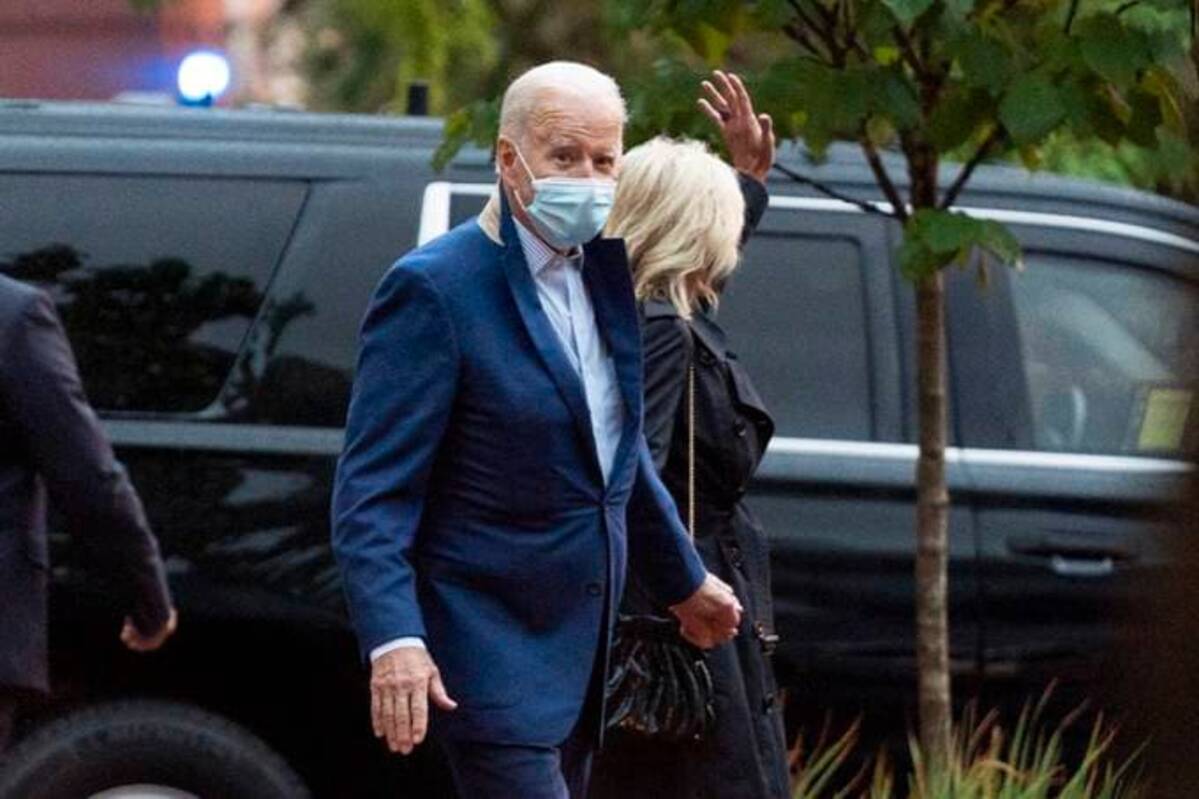 President Biden and first lady Jill Biden leave Holy Trinity Catholic Church in the Georgetown section of Washington, after attending a Mass, Saturday, Oct. 16, 2021. (AP Photo/Manuel Balce Ceneta) | | Biden administration is building intelligence-gathering cell to track migrant groups | | "The new cell, to be operational by the end of the month, would supply the agency with 'indications and warnings' of possible migrant surges by collecting intelligence from DHS personnel in Central and South America," NBC's Julia Ainsley reports. | - It will also "seek to establish aerial surveillance of trucks and migrant camps massing on borders and increase communication with the U.S. intelligence community and law enforcement agencies in other countries, according to [a] planning document."
| Will doing nothing cost more than doing something? | | A big question is on the table as lawmakers debate spending on Biden's Build Back Better bill: "Can a country already running huge deficits afford the scope of spending that the president envisions?" the Times's Jim Tankersley asks. "Or, conversely, can it afford to wait to address large social, environmental and economic problems that will accrue costs for years to come?" | Allied capitals put forth a cautious view of Biden | | "During less than a year in office, a narrative has taken hold among domestic political foes — and even some friends — that President Biden has undermined U.S. credibility and the very relationships and global leadership that he had promised to restore after the tumultuous Trump years," Karen DeYoung reports. | - "But senior officials from nine U.S. allies, in interviews and public statements in recent weeks, offered a more nuanced, if still somewhat cautious, view of the administration's foreign policy performance."
| | |  | Are you eligible for a coronavirus booster shot? | | | "Millions of people in the United States are eligible to get a coronavirus vaccine booster shot, but the confusing regulatory process can make it hard to figure out if you are one of them." Use our calculator to see if you qualify for a booster. | | |  | Hot on the left | | | The Post's editorial page editor Fred Hiatt walks us through "How a lie becomes respectable, step by cowardly step." "Case in point: The Japan-America Society of Washington, D.C., inviting Republican Sen. Bill Hagerty (Tenn.) to its annual gala this week as featured guest and honorary chairman. "What, you ask, could that little bit of inconsequential politesse have to do with Donald Trump's undermining of democracy? Well, bear with me for a moment." | | |  | Hot on the right | | | "Republicans believe they have a good shot at taking Congress next year. But there's a catch," the Times's Jeremy W. Peters reports. And what might that catch be? Former president Donald Trump. "The former president's fixation on disproved conspiracy theories is frustrating to many in his party who see it as needlessly divisive at a time when Republicans feel they are poised to take back the House of Representatives and perhaps the Senate in the 2022 midterm elections. They worry he could cost Republicans otherwise winnable seats in Congress and complicate the party's more immediate goal of winning the governor's race in Virginia next month." | | |  | Today in Washington | | | Vice President Harris will take a tour of Lake Mead in Nevada at 3:05 p.m. before delivering remarks on climate change and infrastructure. | | |  | In closing | | 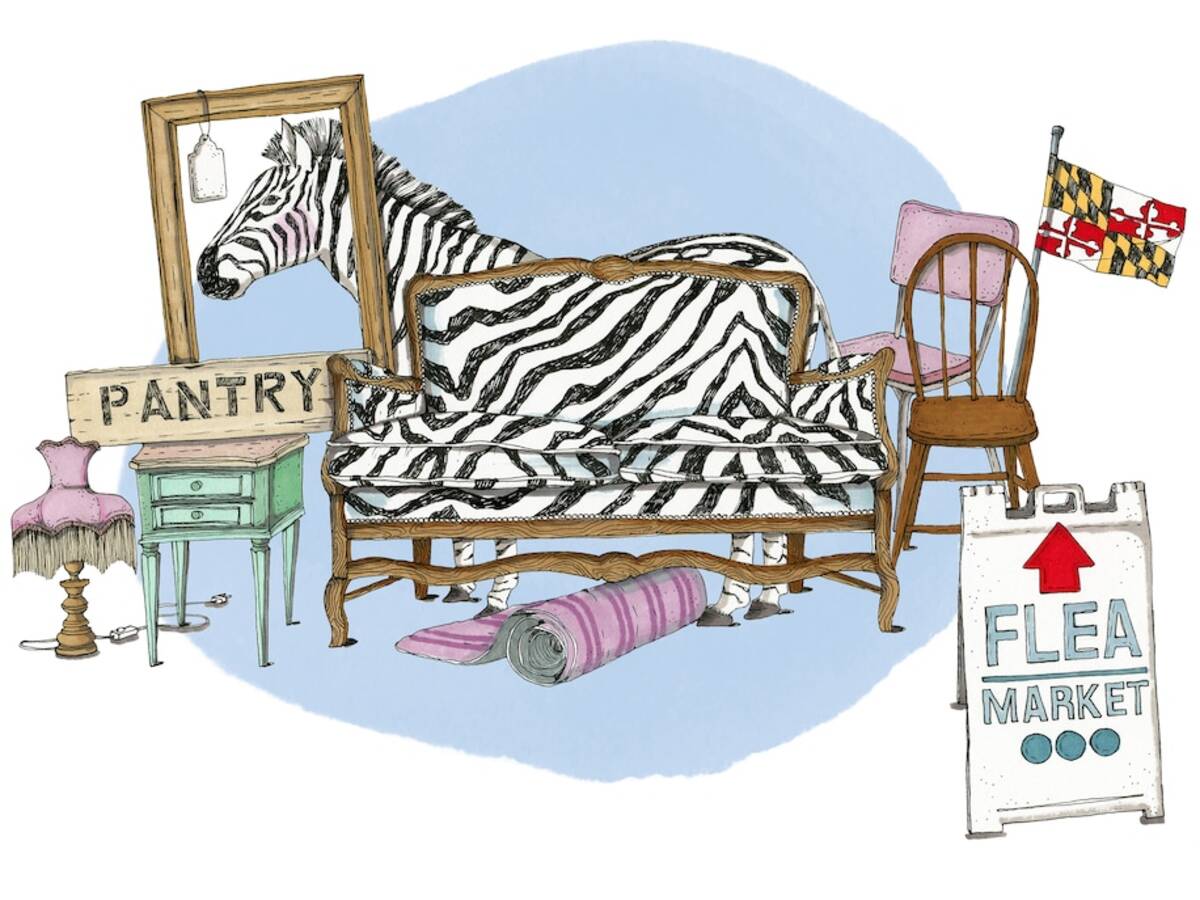 (Ana Jarén/The Washington Post) | | | Maura Judkis chronicles the saga of the fugitive zebras, whose story has enthralled the DMV for weeks. "The Washington Post was unable to reach any zebras for comment, but [Marc] Bekoff, who studies animal emotions, said he suspects that, at the very least, the zebras know they're on an adventure together." | | Thanks for reading. See you tomorrow. | | |