Billie Razor drama, and the danger of ads becoming an aesthetic vibe

 The Curious Case of the Billie Razor 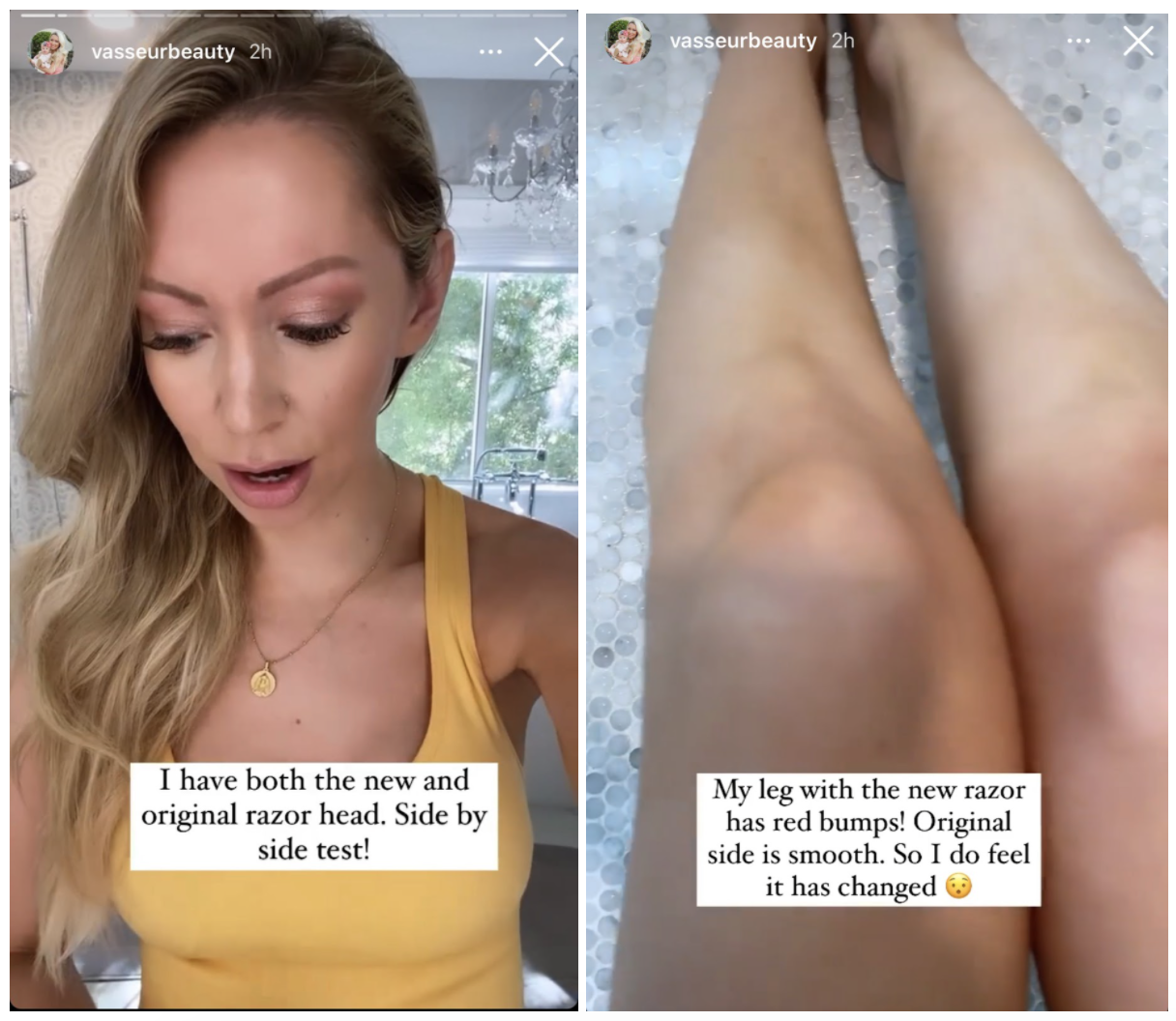 Instagram / @vasseurbeauty Last week, I got a note from a reader who had a burning question for me: Why had so many influencers turned on Billie razors?
At first, I wasn't sure what they were talking about. Billie, which markets itself as a razor company for women, has been an influencer marketing mainstay for years. It is one of those direct-to-consumer brands that influencers always rave about — one of many similar companies that has found success through this business model (according to one report, 60% of Billie's customers bought after seeing the company on social media.). The brand offers convenience (a subscription sends new blades every month or so, depending on your preference), a stylish aesthetic, and, influencers have raved, a great shave.
Once I started looking around, though, I realized that this reader was right. Some influencers had begun to say they no longer liked their Billie razors, with one, Courtney Kerr, saying via Instagram story last week that they "suck now."
Courtney, in a series of stories, said she had loved her Billie razor, but she thinks they are now different. She speculated the company had changed ownership.
"Billie shit the bed," she said. "He's really not doing it for me anymore."
Courtney told me she is disappointed in the way her relationship with Billie, who she has parted ways with, ended.
"The biggest disappointment looking back at this dissolved partnership... is feeling like I've asked my followers, who trust me, to spend their hard earned money on a product over the past couple of years and to now be left with a "WELL WHAT SHOULD I USE??" feeling," she said.
Had Billie razors actually changed in quality? Or, had the company just ended or changed the terms of its contracts with influencers, who are now no longer supporting the brand because of that?
I reached out to Billie via multiple channels but didn't get a response, so I couldn't get its side of the story. But, I have found that a lot of readers are really interested in this. They want to know if influencers are being real with them and whether they are truly willing to be honest about a product, even if the company had once paid them to shill for it.
Some people DMed me to say they were suspicious of those who no longer liked Billie because of the fact that one of the first people to claim Billie had changed was Daryl-Ann Denner, who said on her Instagram story in August that she felt the razor heads had changed. However, this came around the same time as her massive COVID-19 scandal.
I decided to ask my Instagram followers for their thoughts, and I honestly was a little shocked at the results. I got dozens of DMs from readers who told me they also thought the Billie razor had changed. Some said they felt the shave was not as close as it used to be, while others said they got razor burn from the razor after previously having no issues. Still more people told me the coating on the razor head seemed off.
There were other readers who told me they had noticed no difference and still liked their Billie, and some users also pointed out that Billie had raised its prices recently by $1 per refill. But still, the dozens of people who insisted to me that something was off kind of blew me away.
Influencers are also taking pains to show their readers what they mean about no longer supporting Billie. One, Brittany Vasseur of @VasseurBeauty, posted stories of her legs after shaving one with a "new" Billie, and another with an "old" Billie. She reported that her leg shaved with the "new" Billie had red bumps.
"I had several hundred DMs of people saying they felt it has changed as well," she told me.
I am still hoping to speak with someone at Billie about these allegations. I have, however, been surprised by how many people have been engaged with this topic. I think it's because of the relationship influencers have with their audiences. If you buy something solely based on an influencer's recommendation, it can feel jarring for them to suddenly say they no longer like or use it. Since people can sometimes be suspicious about some influencers' ulterior motives — this felt like a test of the "reality" of influencer endorsements.
And many influencers have passed this test by honestly reporting how they feel about a product. Courtney said the trust her community has in her is everything, and she wants to maintain it.
"My top priority as an influencer is having this community where I can share products that I believe in, so it was important to me to disclose that I no longer stood by this recommendation and that I would no longer be a brand partner," she said.
We will see if this is just a fluke in the product, or if these influencers will be ditching their Billie for good.
— Stephanie McNeal A whole vlog about selling baking soda, but make it aesthetic 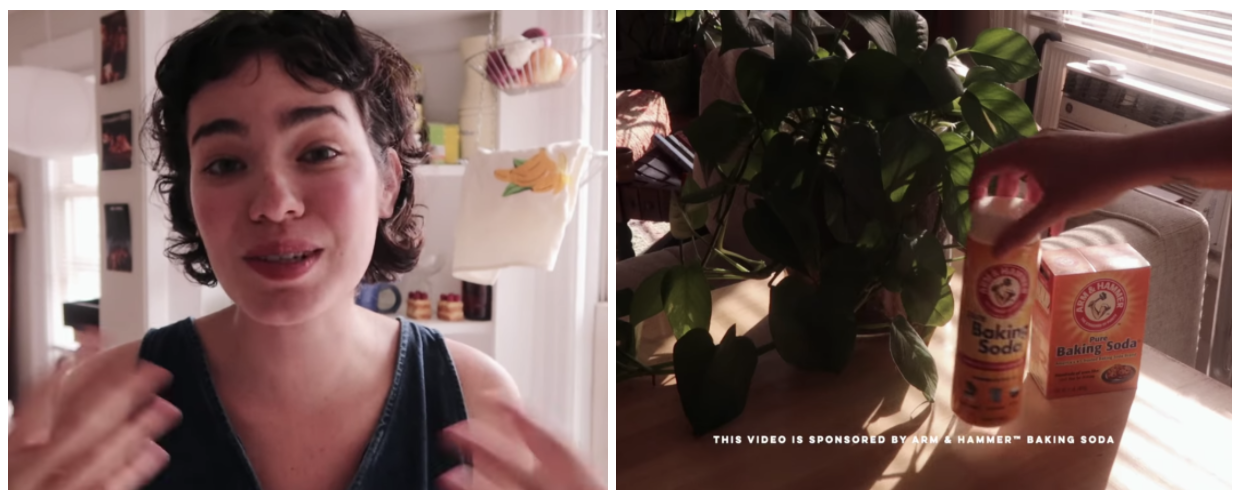 YouTube / Madelynn De La Rosa I really loved this epic critique and homage to aesthetic vlogging by Safy-Hallan Farah at Tech Crunch last week. It sent me down a romantic rabbit hole of my favorite young YouTubers and their cinematic vlogs. Or, as Safy-Hallan describes them, as "the day-to-day labor of feminine preening and aspirational-yet-relatable 'influencing' that captures daily tasks like eating, running errands, socializing, applying makeup and exercising on camera."
The videos are incredibly soothing and pretty to watch.
In the essay, she mentions all of the GOATs of aesthetic vloggers: Ashley of bestdressed, Elena Taber, Orion Carloto, Madelynn De La Rosa, and lately, even Emma Chamberlain. They're not dissimilar to other famous lifestyle vloggers — giving us fashion try-on hauls, home makeovers, and intel on their personal lives — but this group of women are defined by how they present things on camera.
This creates a really interesting contrast with how we have traditionally conceptualized influencers. Lifestyle gurus have the reputation of always shilling something; every outfit-of-the-day has an affiliate link, every catchphrase has the opportunity to be turned into merch, and there are seldom brand deals that they won't accept.
Aesthetic vloggers, on the other hand — or, perhaps, the same hand, but more prudently — are influencing viewers to buy locally, and to recycle fashion. It's become tacky to try to sell and brand as many things as possible, and their fans are much younger, savvier, and eco-conscious.
But an aesthetic vlogger is still a vlogger. Their revenue still mostly comes from the same brand deals that other, more conventional influencers are taking — they've just figured out how to bury it beautifully.
I came across this recent vlog from Madelynn titled "Finding my groove in New York + talking sustainability! - Daily Vlog No. 19." Under four minutes in length, the entire video is a carefully crafted commercial for Arm & Hammer Baking Soda.
It's appropriately tagged an #ad, and with a clear FTC disclaimer in the caption. But I was really impressed, and a little jarred, by how effortlessly she wove the sponcon throughout the entire vlog.
In one scene — as she comes home, takes her shoes off, and drops off a cute yellow tote bag of flowers she purchased — she sprinkles the baking soda into her shoes to deodorize. In another, she pours it into a vase with water for her flowers. Smooth jazz plays in the background. 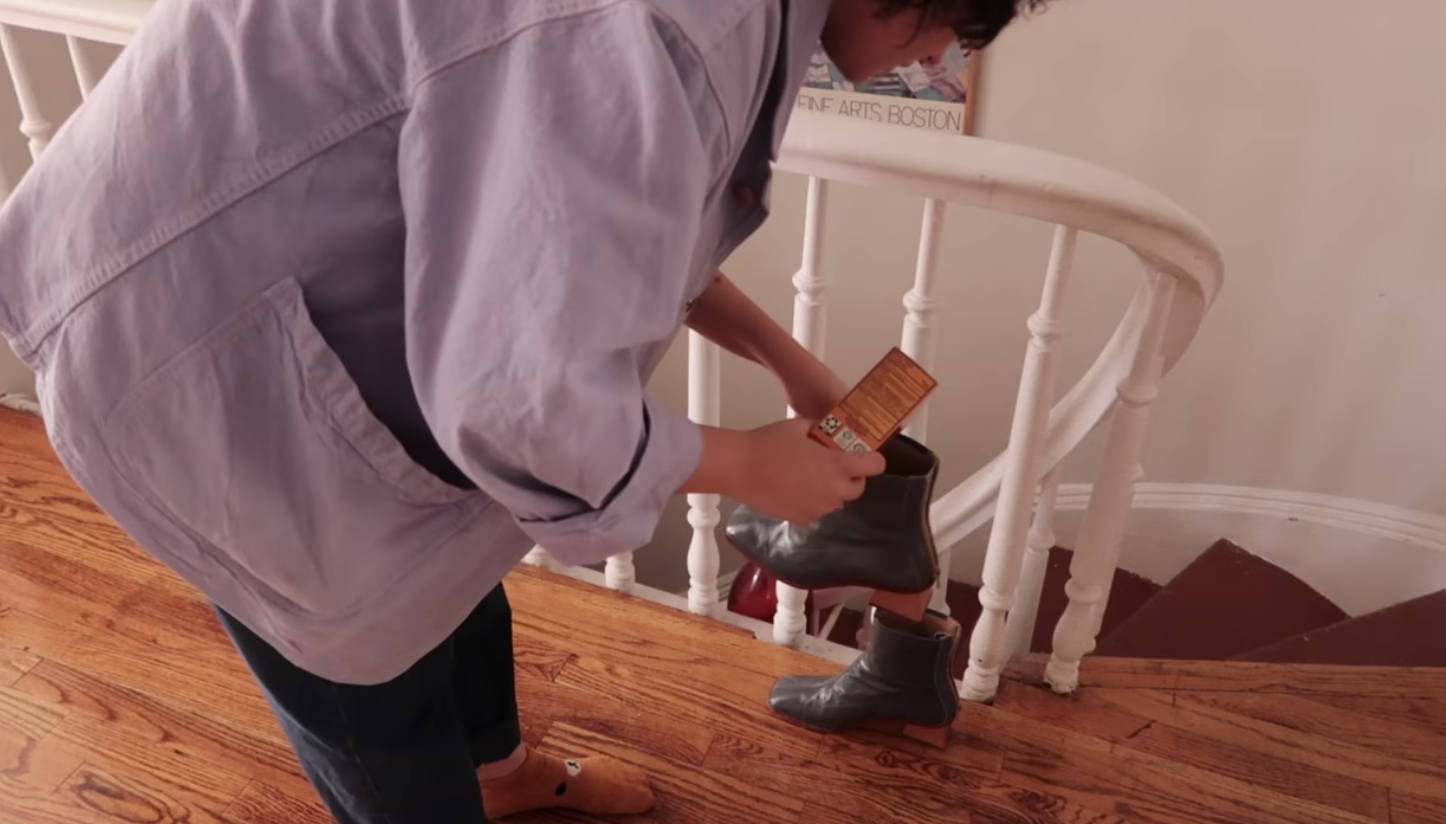 YouTube / Madelynn De La Rosa "I hope that this helped give you some ideas on how you can just maintain stuff and be more mindful and sustainable and thoughtful, and thank you again Arm & Hammer for sponsoring this video," Madelynn says at the end.
The entire vlog is done so tactfully that it lulls viewers into forgetting it's essentially one elaborate commercial.
This, of course, brings up a stickier conversation about ethical marketing. Safy-Hallan addresses this tensione: "What sets aesthetic vloggers apart from other kinds of influencers, the more explicit hustlers, is their sense of ease and a disavowal of labor that is in fact a form of labor, as it yields the same outcome: income," she wrote.
An ad is an ad is an ad. But when an ad is camouflaged in romanticized content, it edges into more dangerous terrain — even if the ad is labeled correctly as such.
Tech Crunch linked to a story I wrote in 2019 about how Ashley/bestdressed, a YouTuber who's always encouraged thrifting, upset her fans after publishing a branded video with Amazon to help sell their fast fashion. They accused her of "selling out" and being inauthentic.
This is a really hard conflict for influencers like Ashley, Madelynn, and other aesthetic vloggers to navigate. They have to sell to make a living, but their selling point to their fans is their resistance to sell out.
I reached out to Madelynn about her latest vlog/ad to see if she'd share any thoughts, and asked Arm & Hammer if these deals are structured differently because they're not direct-to-consumer.
I haven't heard back from either, but I continue to stay cautious about this shift, particularly on YouTube. Pushing more mindful practices is great, especially on young impressionable audiences, but obscuring brand deals is very risky. In some cases, I even prefer the vlogs or Instagram posts that overtly say: Hey, I'm selling this thing. Buy it. I need to get paid.
Until next time, Tanya Want more? Here are other stories we were following this week. How skater Brooklinn Khoury changed her approach as an influencer after a dog attack disfigured her face. After a relative's dog tore off her upper lip and parts of her nose in November 2020, Khoury is reevaluating what it means to be so visible to so many on social media.
The therapist behind the "trauma dumping" TikTok says she wanted to make the point that therapy is a process. Ilene Glance, who works with young adults and specializes in trauma treatment, said she was trying to be "cute" in the video.
The sexfluencers. Rebecca Jennings at Vox explores all the ways that OnlyFans influencers are changing the practices and the industry for sex workers who've long been there before them. P.S. If you like this newsletter, help keep our reporting free for all. Support BuzzFeed News by becoming a member here. (Monthly memberships are available worldwide.) 📝 This letter was edited and brought to you by Tanya Chen, Stephanie McNeal, and BuzzFeed News. You can always reach us here. BuzzFeed, Inc. |


