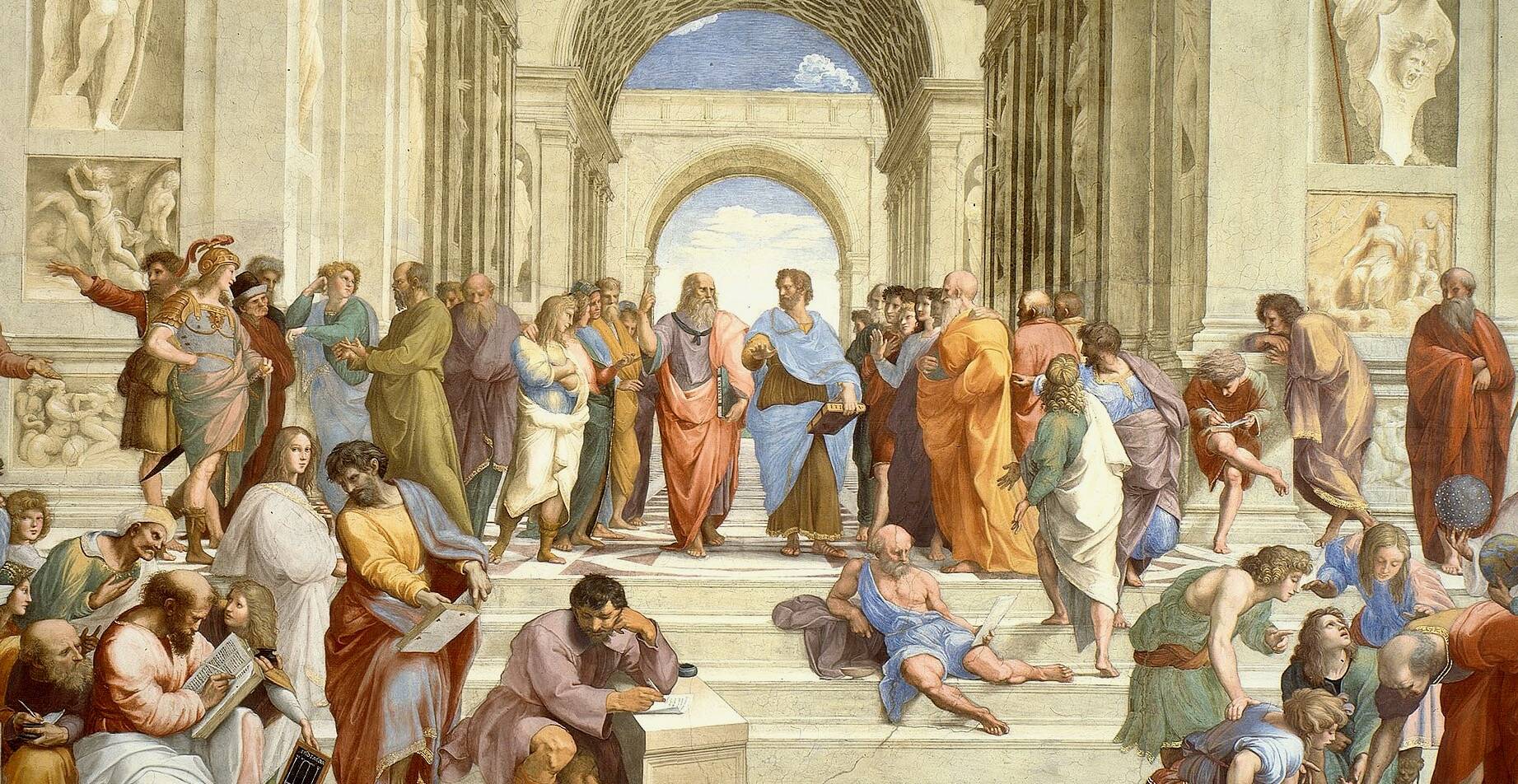
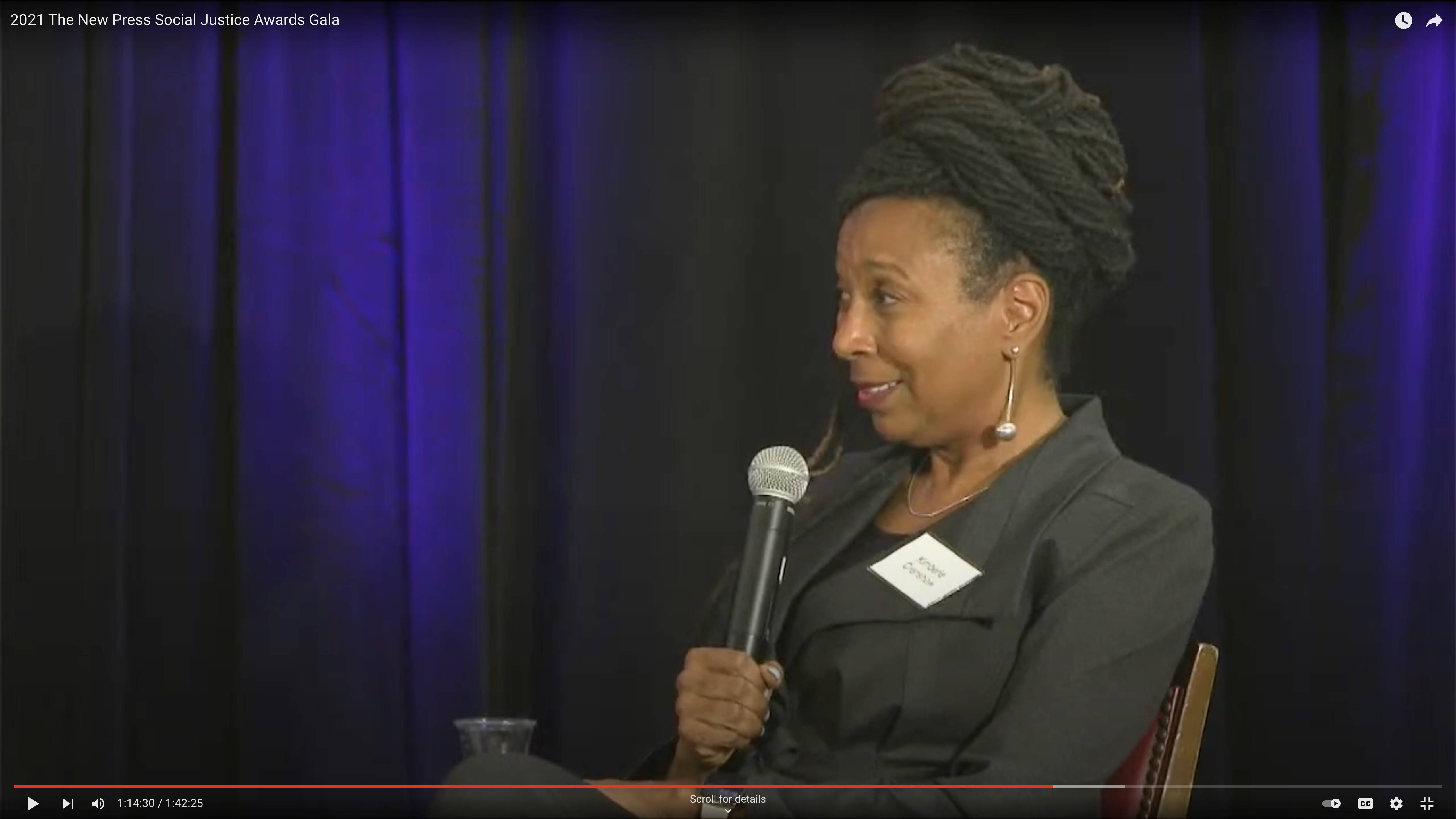
 "The School of Athens," by Raphael, 1511 | John Cleese was scheduled to speak at Cambridge University today, but on Wednesday he canceled. "I hear that someone there has been blacklisted for doing an impersonation of Hitler," Cleese tweeted to his 5.6 million followers. "I regret that I did the same on a Monty Python show, so I am blacklisting myself before someone else does." Cleese's condemnation of "morally superior, hypersensitive, narcissistic Puritans" echoed the latest revolt against cancel culture in the United States. This week, former New York Times writer Bari Weiss announced the formation of the University of Austin — "a new university dedicated to the fearless pursuit of truth." The Trumpy bombast of that phrase is unfortunate, although it probably sounds better in Latin. Pano Kanelos, the new president of the University of Austin and the former president of St. John's College, said in a blog post that "illiberalism has become a pervasive feature of campus life," and "faculty are being treated like thought criminals." Scholars with unfashionable ideas, he said, have been disinvited from campus visits and even driven from their jobs. (What is the University of Austin's purpose?) "We can no longer wait for the cavalry," Kanelos proclaimed. "And so we must be the cavalry." Next summer, UATX plans to offer "Forbidden Courses" to encourage "spirited discussion about the most provocative questions that often lead to censorship or self-censorship." This sounds perfect for that guy in your writing workshop who brings every conversation back to Ayn Rand. As the money pours in — and it will — how might this new university play out? Will it become an oasis for unfettered scholarship or a refuge for transphobic climate-change deniers nattering on about the horrors of Islam? The university's first supporters include economist Larry Summers; activist Ayaan Hirsi Ali; her husband, the historian Niall Ferguson; playwright David Mamet; Texas GOP 2020 Victory Chairwoman Stacy Hock; political commentator Andrew Sullivan; and columnist Sohrab Ahmari, who calls on conservative Christians "to enforce our order and our orthodoxy." Cavalry and Calvary! Among these advisors who command unfettered access to vast audiences but remain spooked by cancel culture is the Atlantic magazine writer Caitlin Flanagan. Because she's one of my favorite essayists and seems to exist outside the conservative rage-o-sphere, I reached out. She admitted that she felt "extremely concerned" when she first saw the list of other UATX advisors. But then she steeled herself with her absolute faith in open dialogue. Her father, after all, was a professor at Berkeley during the 1960s and '70s, which gave her an early appreciation for radical free speech. Alas, she doesn't see that spirit thriving today. "There are an awful lot of young people who like this idea that something should not be allowed to be said," Flanagan tells me, "and that some ideas are a priori so evil or so bad that they should not be allowed to be uttered." Universities have seen a rising number of these controversies. "When you begin to see things that are impinging upon the speech of tenured professors, that's where I think either we're at the end of the university as we know it, or, if we're going to try and save it, this problem has got to be resolved." I knew Clifford the Big Red Dog was big, but just how big will give you paws. Norman Bridwell published his first Clifford book in 1963 and wrote or originated five dozen more before he went to live on a farm in 2014 (obit). Scholastic, which publishes the oversized canine franchise, has released 500 different editions, including nine this year! There are more than 150 million copies in print, enough to potty train 12 million big red puppies. The movie version that opened this week, starring Jack Whitehall and self-blacklisted John Cleese, will surely encourage another generation of kids to fetch Clifford books. Our critic says the hybrid live-action/animation feature is "funny and sweet," which is really all we ever wanted from the big bloodhound (review). And in the great cycle of life, this Clifford movie, which is based on the PBS TV show, will be adapted as a graphic novel next month, which just goes to show you that if you give a moose a muffin. . . . 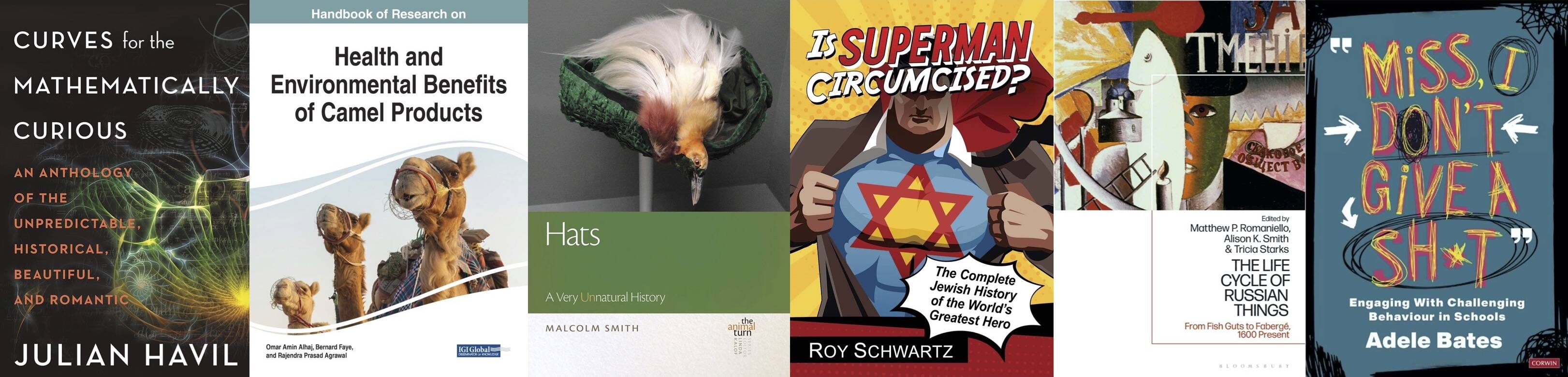 Princeton University Press; IGI Global; Michigan State University Press; McFarland; Bloomsbury Academic; SAGE Publications | "Is Superman circumcised?" It's a question that raises so many more questions. For instance, would the mohel need a knife made of kryptonite? Presumably, Roy Schwartz knows the answer to that and more. He's the author of "Is Superman Circumcised?: The Complete Jewish History of the World's Greatest Hero," which is a finalist for this year's Diagram Prize for Oddest Book Title. Now more than four decades old, this peculiar contest honors the year's funniest strangest title. The first glorious winner, way back in 1978, honored: "Proceedings of the Second International Workshop on Nude Mice." Again, so many more questions. . . . Surprisingly, this is the first year that all six finalists have come from university presses or academia. Horace Bent, administrator of the prize, wonders, "Would our quirky title prize even exist without the hallowed groves of academe?" Now that the scholars have done their job, we must do ours. The public is invited to choose the winner, which will be announced Dec. 3. Study the list below and vote here: - "Curves for the Mathematically Curious: An Anthology of the Unpredictable, Historical, Beautiful, and Romantic," by Julian Havil
- "Handbook of Research on Health and Environmental Benefits of Camel Products," by Omar Amin Alhaj et al.
- "Hats: A Very Unnatural History," by Malcolm Smith
- "Is Superman Circumcised?" by Roy Schwartz
- "The Life Cycle of Russian Things: From Fish Guts to Fabergé," edited by Matthew P. Romaniello et al.
- "Miss, I Don't Give a S**t: Engaging with Challenging Behaviour in Schools," by Adele Bates
 Kimberlé Crenshaw accepts the New Press Social Justice Award in New York on Nov. 9, 2021. (Screenshot) | Satanic panic redux. After condemning critical race theory for a year, conservative entertainer Tucker Carlson admitted that he doesn't know what critical race theory is (story). No matter: Republicans have convinced a sizable portion of the public that something more dangerous than comic books and more pervasive than fluoridated water is coming for our children. If you've had enough of this white-wing hysteria, you could check out the actual scholarship that has suddenly generated so much alarm. Back in 1996, the New Press published a ground-breaking anthology called "Critical Race Theory: The Key Writings that Formed the Movement," edited by Kimberlé Crenshaw et al. At a ceremony on Tuesday in New York, Crenshaw received a Social Justice Award from the New Press in recognition of her work to promote equity and inclusion. Diane Wachtell, executive director of the New Press, noted that sales of "Critical Race Theory" have recently exploded. Turning to Crenshaw, Wachtell asked, "Did you ever think 25 years later we would not be able to keep it in stock?" Crenshaw, a law professor at UCLA and Columbia, called what has been done to her field over the last year "the Willie Hortonization of ideological debate." She sees the attack on critical race theory as a reenactment of the concerted effort to undermine Reconstruction after the Civil War. "There are people who think the greatest challenge right now to free ideas is wokeness," Crenshaw said. "More people are upset about the fantasy of what's going on in classrooms than the reality of the corpse of the Confederacy marching through the Capitol." While acknowledging that "we've got a problem," Crenshaw went on to call this "a teachable moment." But that will depend on Americans' willingness to learn. 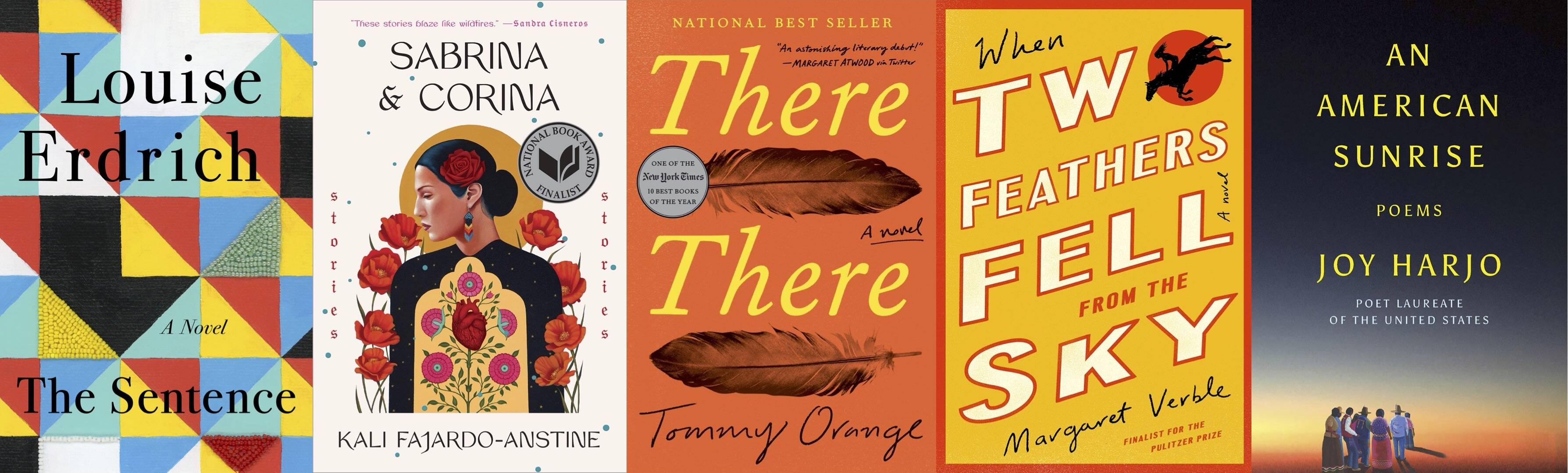 Harper; One World; Knopf; Mariner Books; W.W. Norton | I may have to stop reviewing Louise Erdrich, only because I'm running out of superlatives. She's long been one of my favorite novelists. Earlier this year, she won a Pulitzer Prize for "The Night Watchman" (review), and this month she's released "The Sentence." With a curious mixture of comedy and tragedy, "The Sentence" is a ghost story set against the covid-19 pandemic and the Black Lives Matter protests. It shouldn't work at all, but it works fantastically. What's more, this is a novel about the power of novels, and it takes place in an indie bookstore, like the one Erdrich owns in Minneapolis, which makes "The Sentence" a perfect gift for book lovers (rave). In observance of Native American Heritage Month, PEN/Faulkner is hosting a conversation on Nov. 17 with Erdrich; Kali Fajardo-Anstine, author of "Sabrina & Corina"; and Tommy Orange, author of "There There" (review). Their discussion will be moderated by Margaret Verble, author of "When Two Feathers Fell from the Sky." Tickets to this streaming event are pay-what-you-can, and half the proceeds will be donated to Through Piscataway Eyes, a nonprofit that supports the Piscataway Conoy Tribe (ticket information). Joy Harjo, the first Native American to serve as U.S. poet laureate, will talk about her life and work at the Miami Book Fair with Robert Casper of the Library of Congress. You can watch this streaming event on Monday, Nov. 15 at noon EST (details). Harjo's most recent collection is "An American Sunrise" (review). 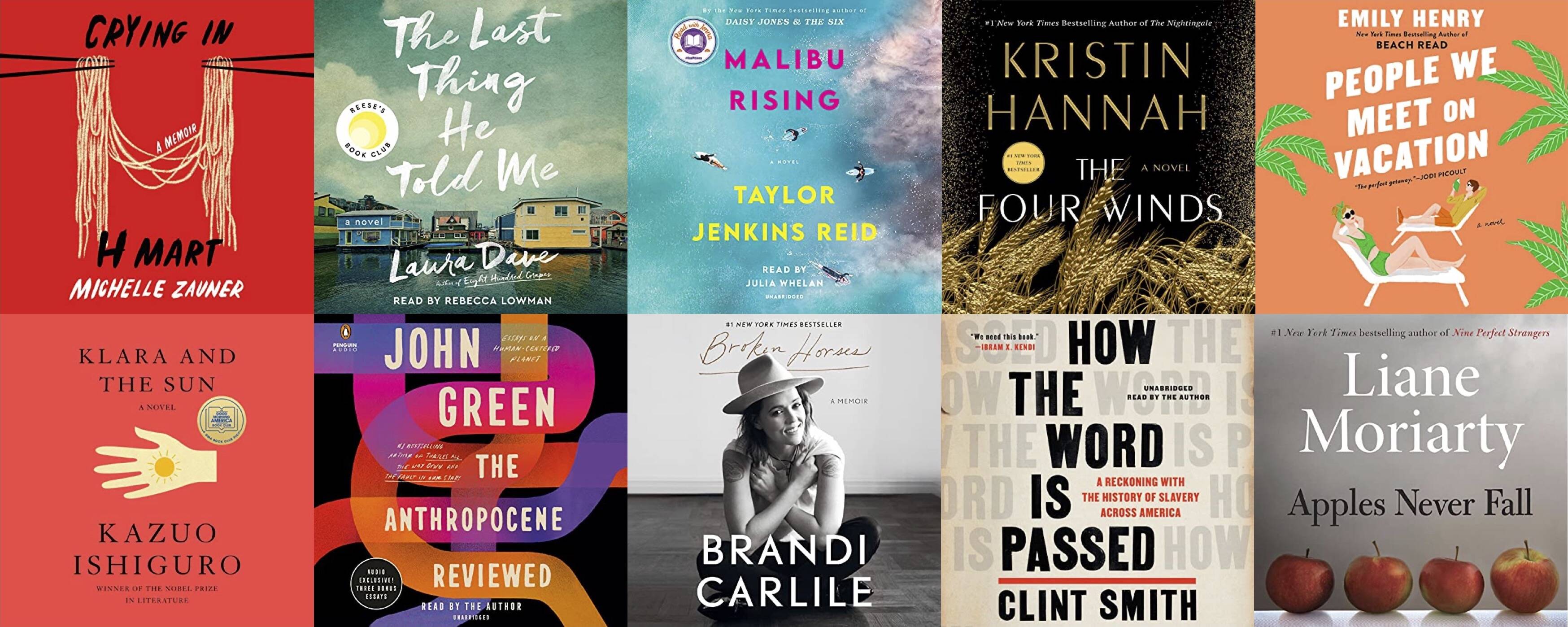 Top: Random House Audio; Simon & Schuster Audio; Random House Audio; Macmillan Audio; Penguin Audio. Bottom: Random House Audio; Penguin Audio; Random House Audio; Little, Brown; Macmillan Audio | Libro.fm, the audiobook provider used by more than 1,500 independent bookstores, released a list of the top 10 best-selling titles in 2021. Remarkably, three of the 10 are narrated by actress and writer Julia Whelan. "That delights but doesn't surprise me," says our audiobook columnist, Katherine Powers. She tells me, "Whelan's warm, low-pitched voice, natural pacing and faithfulness to the spirit of every book she narrates exerts a magnetic pull on the listener. Absent any trace of thespianism, she becomes the voice of the book, even, at times, making it more accessible or compelling than it is on the silent page." - "Crying in H Mart: A Memoir," by Michelle Zauner, narrated by the author (review)
- "The Last Thing He Told Me," by Laura Dave, narrated by Rebecca Lowman (Let's talk about the ending)
- "Malibu Rising," by Taylor Jenkins Reid, narrated by Julia Whelan (review)
- "The Four Winds," by Kristin Hannah, narrated by Julia Whelan (review)
- "People We Meet on Vacation," by Emily Henry, narrated by Julia Whelan (review)
- "Klara and the Sun," by Kazuo Ishiguro, narrated by Sura Siu (review)
- "The Anthropocene Reviewed: Essays on a Human-Centered Planet," by John Green, narrated by the author (review)
- "Broken Horses," by Brandi Carlile, narrated by the author (video)
- "How the Word Is Passed," by Clint Smith, narrated by the author (review)
- "Apples Never Fall," by Liane Moriarty, narrated by Caroline Lee (profile)
 Puzzle designed by Ann Shen (Courtesy of Libro.fm) | Speaking of Libro.fm: Yesterday, the audiobook retailer launched a holiday gift package to celebrate independent bookstores. The limited-time offer includes a 10-ounce candle, an audiobook of your choice and a 1,000-piece puzzle designed by Ann Shen. (Yes, she's the author and illustrator of such bestsellers as "Bad Girls Throughout History," but to me she'll always be the person who designed the carton for Jeni's Dolly Parton Strawberry Pretzel Pie Ice Cream!) The "Bookstore Magic" gift package is available for $48 while supplies last (order here). Best part: Libro.fm has pledged to donate all the proceeds to We Need Diverse Books, a nonprofit organization that mentors marginalized creators, provides resources to diverse publishing professionals and gives tens of thousands of books to schools and libraries across the country. 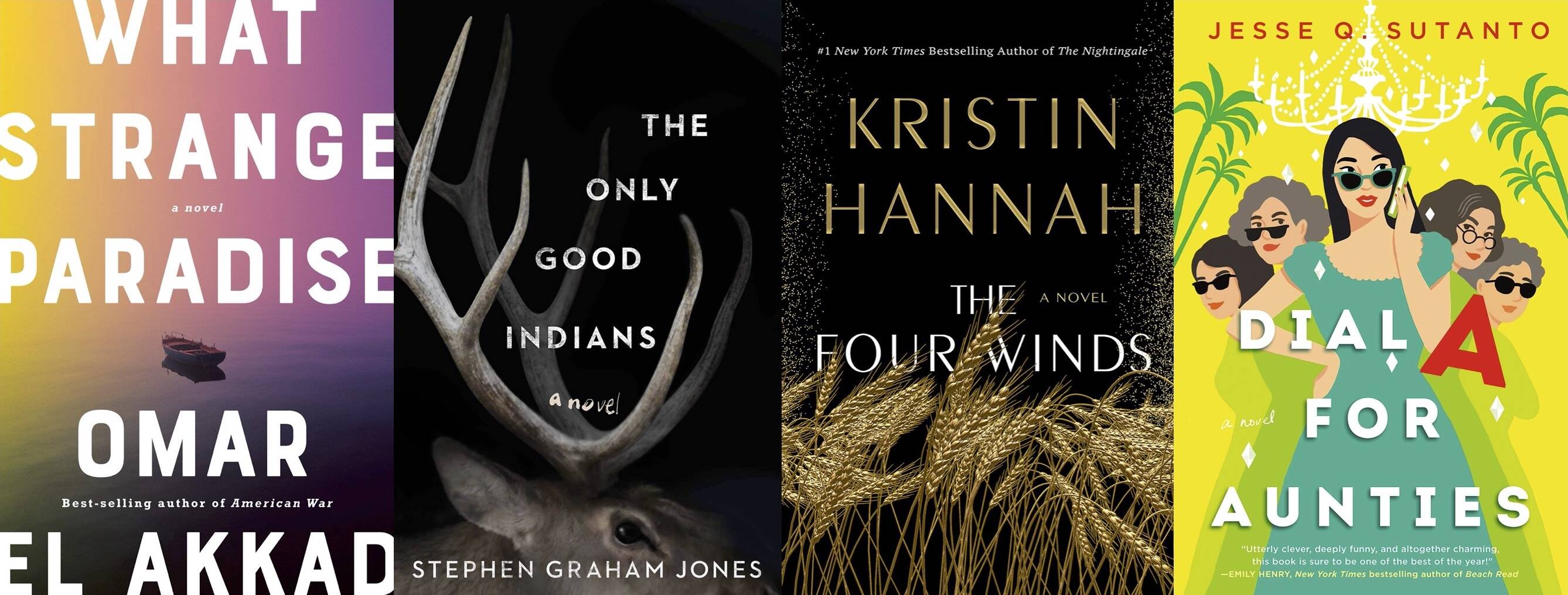 Knopf; Gallery; St. Martin's Press; Berkley | More literary awards and honors this week: - "What Strange Paradise," by Omar El Akkad, won the Scotiabank Giller Prize. The award, worth about $80,000, honors the best work of fiction by a Canadian writer. "What Strange Paradise," which invokes the horrific image of 3-year-old Alan Kurdi dead on a Turkish beach, is a searing novel about the plight of the world's refugees (review).
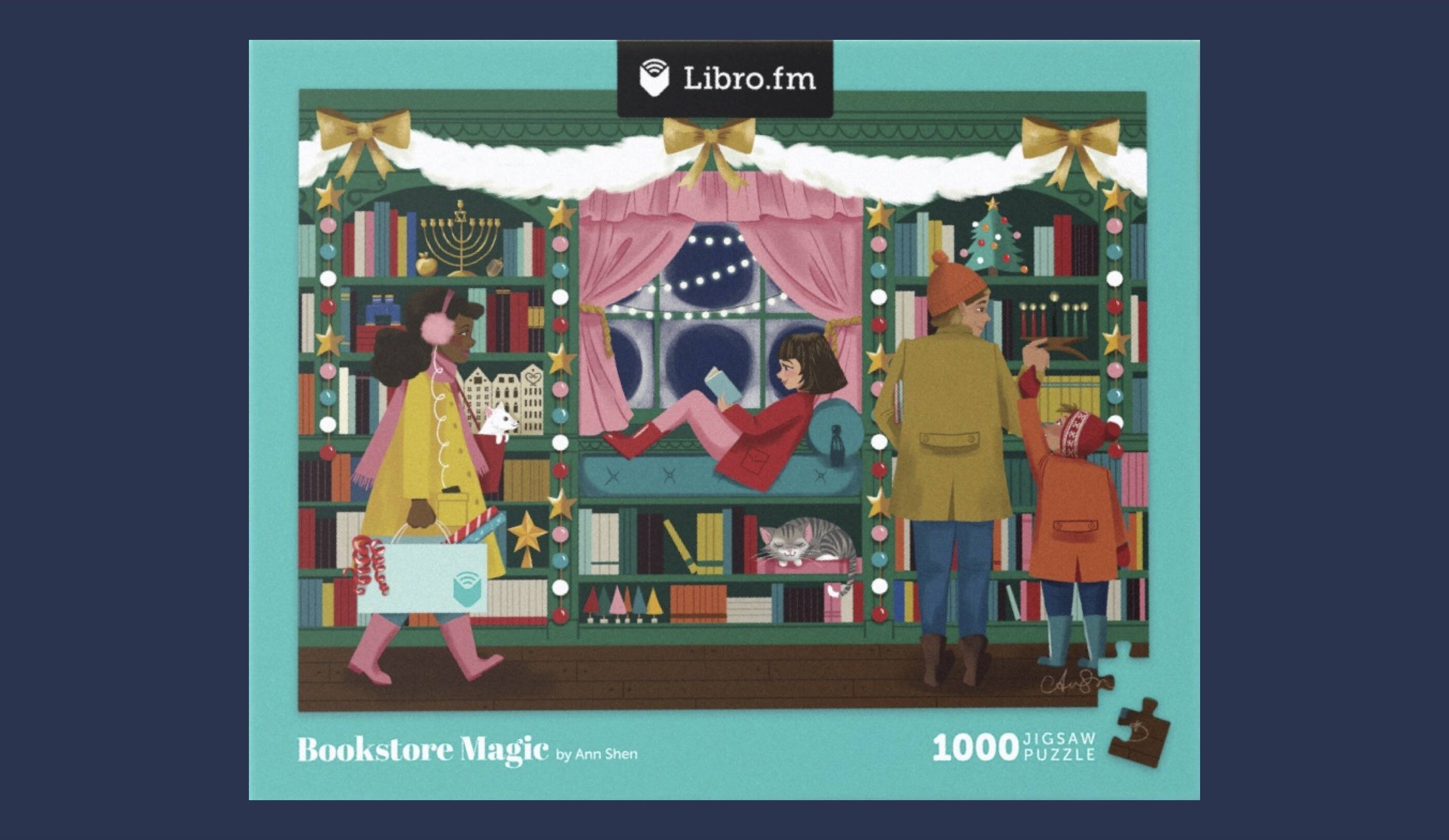
- "The Only Good Indians," by Stephen Graham Jones, won the Mark Twain American Voice in Literature Award. The $25,000 prize, conferred by the Mark Twain House & Museum in Hartford, Conn., honors a work of fiction that "best exemplifies or expresses a uniquely American voice." "The Only Good Indians" is about four Native Americans who once illegally killed an elk on Montana's Blackfeet Reservation. Our reviewer says the story "sprints from start to finish" (rave).
- Members of the Book of the Month Club have voted for Kristin Hannah's "The Four Winds" as the best book of 2021. Hannah will receive $10,000 and a golden Lolly trophy. "The Four Winds" is an emotional story about efforts to organize migrant workers in California during the Depression (review).
- "Dial A for Aunties," by Jesse Q. Sutanto, won the top Comedy Women in Print book prize. The award, worth about $4,000, honors the work of a funny female writer of any nationality published in English in the UK or Ireland. Funnily enough, over the last 12 months, The Washington Post has recommended "Dial A for Aunties" on four separate occasions — such as here — which may be a record!
The Sitwells are a biographer's dream. For several centuries this clan of eccentrics, politicians, gamblers, felons, artists and writers raised eyebrows across England. In the early 20th century, they lived among the Bright Young Things. Noël Coward included a satirical sketch of the Sitwells in "London Calling!" It proved so popular that the poet Edith Sitwell worried about speaking at Oxford for fear that Coward's fans would heckle her. (If only she'd lived to see the University of Austin!) Reviewing a book about Edith's brother Sacheverell in 1994, our reviewer wrote, "The saga of the Sitwell family would make an excellent subject for a film by Monty Python." Earlier, one of our reviewers claimed that the antics of the Sitwell family "appear merely an affront to virtue." Alas, all eccentric families eventually peter out. Next week, the contents of the Sitwells' ancestral home in Northamptonshire will be auctioned off by Dreweatts. Of particular interest is the family's extraordinary library, assembled over three hundred years. Among the books that will go up for sale on Tuesday are: - a leather-bound first edition of John Milton's epic poem "Paradise Lost" (1668)
- an Ottoman atlas, by Mahmoud Raif Efendi, believed to be the first large folio atlas printed in the Islamic world (1804)
- a first edition of Capt. James Cook's "A Voyage Towards the South Pole" containing 64 maps and plates (1777)
- a first edition of "Official Letters to the Honorable American Congress, written during the war between the United Colonies and Great Britain," by His Excellency George Washington (1795)
Even if you don't have an ancestral home to receive these treasures, the Dreweatts website offers a wealth of photos, videos and information about the Sitwells, their glamorous lives and the extraordinary possessions they're now sending out into the world (details). 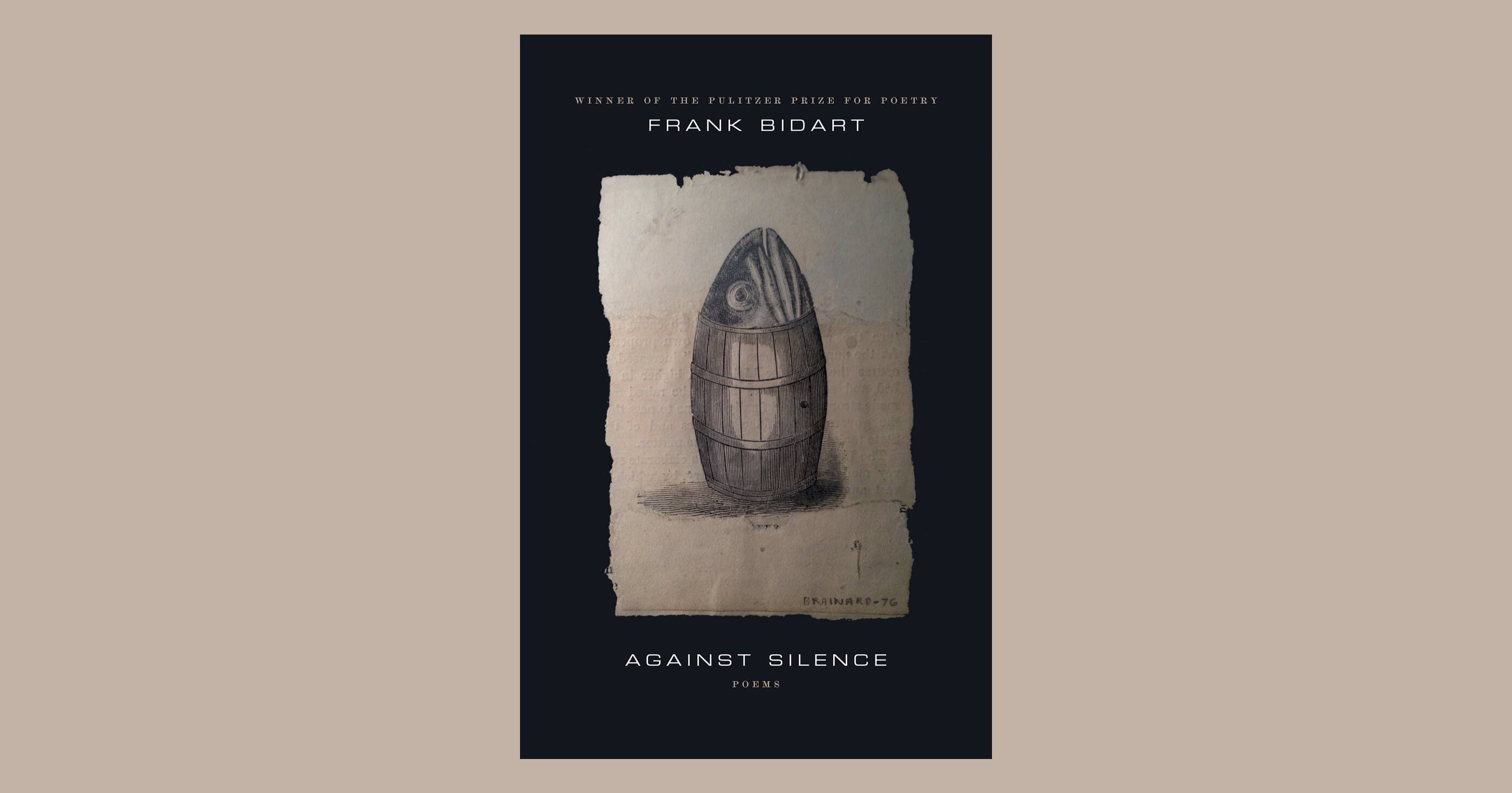 Farrar, Straus and Giroux | Frank Bidart's new collection, "Against Silence," is a bold, often painful exploration of regret and mortality. This is his first book of poetry since he won a Pulitzer Prize and a National Book Award for "Half-light: Collected Poems 1965-2016." When I interviewed Bidart in 2015 for Life of a Poet, he said, "There is a kind of beast within us that wants to destroy us, and I think people who manage to do what they set out to do have overcome some very profound impulse toward self-destruction" (video). Few poets have managed to do as much as Bidart. On My Seventy-Eighth There will be just two at
table tonight,
though to accommodate all those who have
so mattered
and still so matter in my life, the table will be
very long:
though empty. I say to you, Jaya
shoma khalee!
Your place is empty! Your place at my table
is saved
for you. I tried to construct in my soul
your necessary
grave (because you were dead/because you were
flawed/preoccupied,
concentrated on your soul, too often you were
cruel—) but
as I shoveled dirt onto your body, the dirt refused,
soon, to
cling. Those who torment because you know you
loved them
refuse to remain buried. Is anything ever forgotten,
actually forgiven?
Shovel in hand, I saw how little I had
known you.
Tonight, I abjure the wisdom, the illusion of
forgetting. Come,
give up silence. Intolerable the fiction
the rest
is silence. To the dead, to the living:
your place
is empty. Excerpted from "Against Silence: Poems," by Frank Bidart. Published by Farrar, Straus and Giroux. Copyright © 2021 by Frank Bidart. All rights reserved. 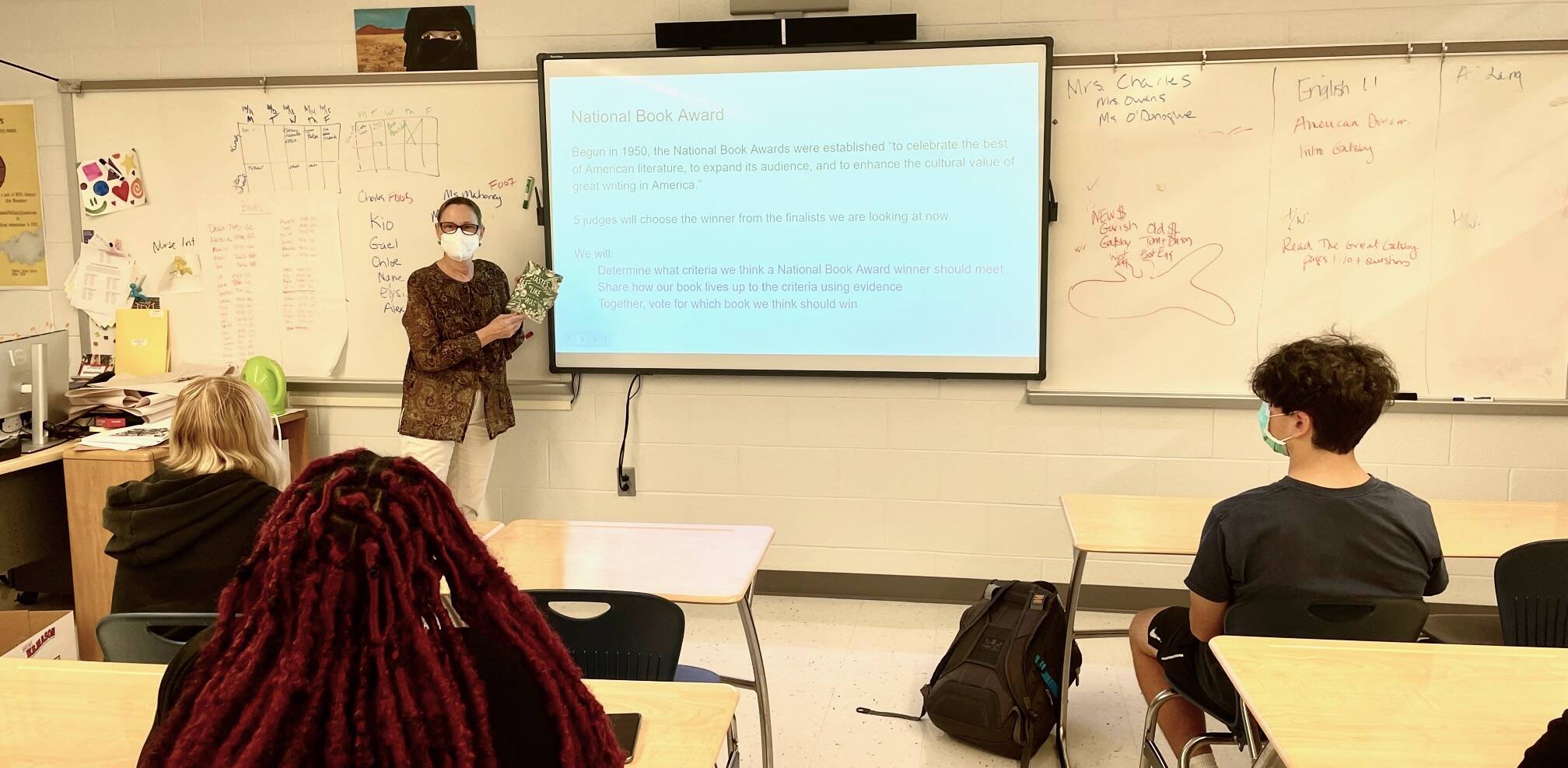 Ms. Charles teaching 11th grade English on Nov. 11, 2021 in Bethesda, Md. (Clara Coukell) | My wife, Dawn, has started one of her favorite projects with her 11th graders. She brings in copies of the five finalists for the National Book Award in Nonfiction and breaks the class into five groups. Each group reads the first chapter of one of the finalists. Then the students devise criteria for a winning book and explain to the class how well their finalist meets those standards. Next Wednesday, just hours before the National Book Awards ceremony, her students will vote on which title they think should win. It's a fun way to introduce these kids to the country's best new nonfiction books. You can follow along, too. The NBA ceremony will stream on Nov. 17 at 7 p.m. ET. (free, but donations appreciated). I'll be there (virtually) to introduce Nancy Pearl, winner of this year's Literarian Award for Outstanding Service to the American Literary Community. Meanwhile, send any questions or comments about our book coverage to ron.charles@washpost.com. You can read last week's issue here. And if you know friends who might enjoy this newsletter, please forward it to them and remind them it's free! To subscribe, click here.
Interested in advertising in our bookish newsletter? Contact Michael King at michael.king@washpost.com. |





 Email
Email