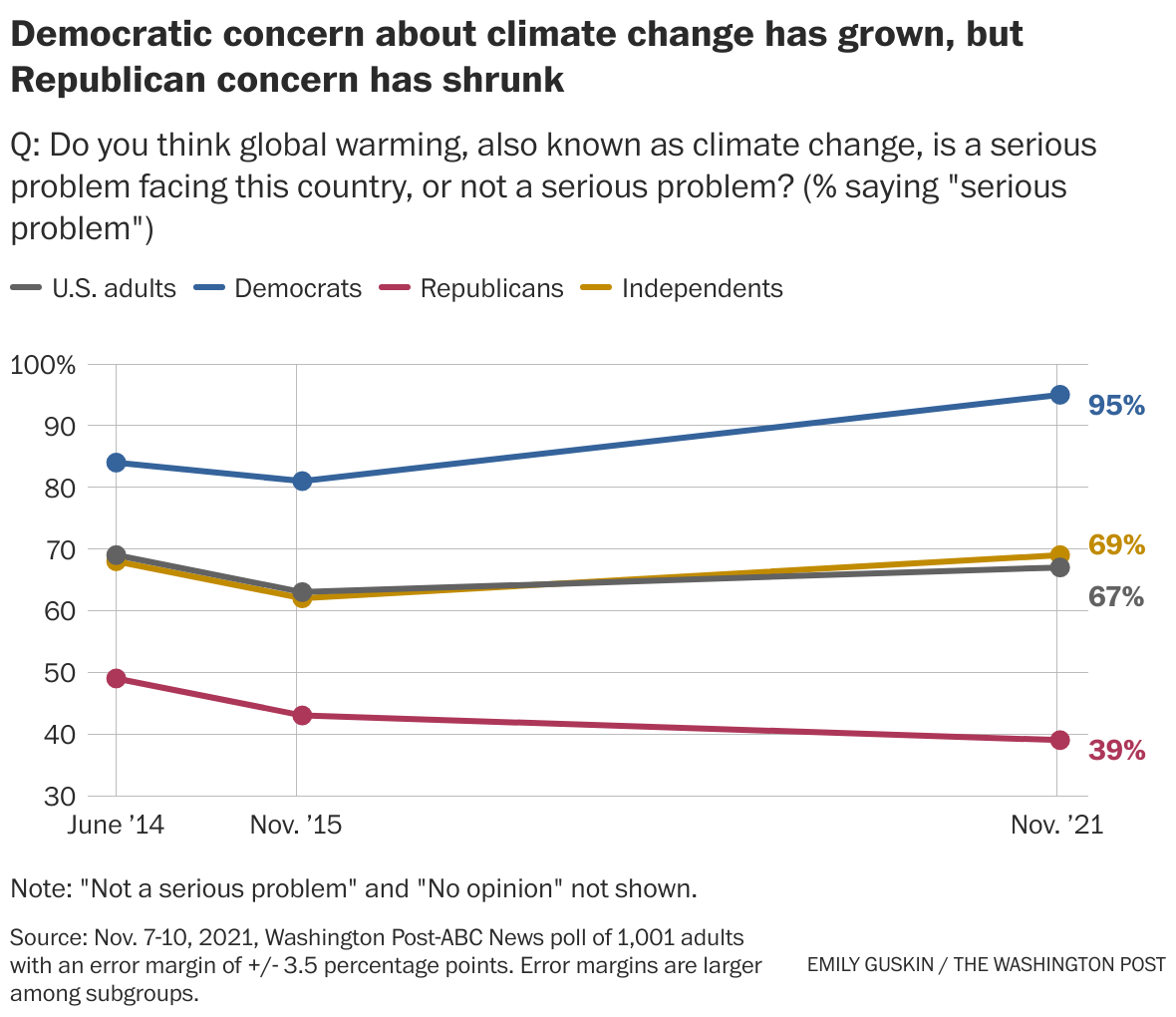
| It's Friday. Let's take your questions about the week in politics. Q: Are Democrats taxing the rich — or are they just talking about taxing the rich? It's a little bit of both. As Democrats debate how to pay for their big social safety net legislation, they're prioritizing taxing the wealthy and corporations. But there appear to be lots of carve outs. Sen. Kyrsten Sinema (D-Ariz.) has objected to taxing some millionaires. And since one senator can sink the legislation, that means that the Biden administration has now agreed to drop a tax on people earning over $5 million, instead taxing those with at least $10 million, reports The Post's Jeff Stein. The nonpartisan Tax Policy Center actually estimated the bill as stands would mean a number of millionaires have a smaller tax bill. And thanks to this bill, it looks like wealthy homeowners on the East Coast in particular would be able to deduct more state-and-local taxes, so they pay less in federal taxes. 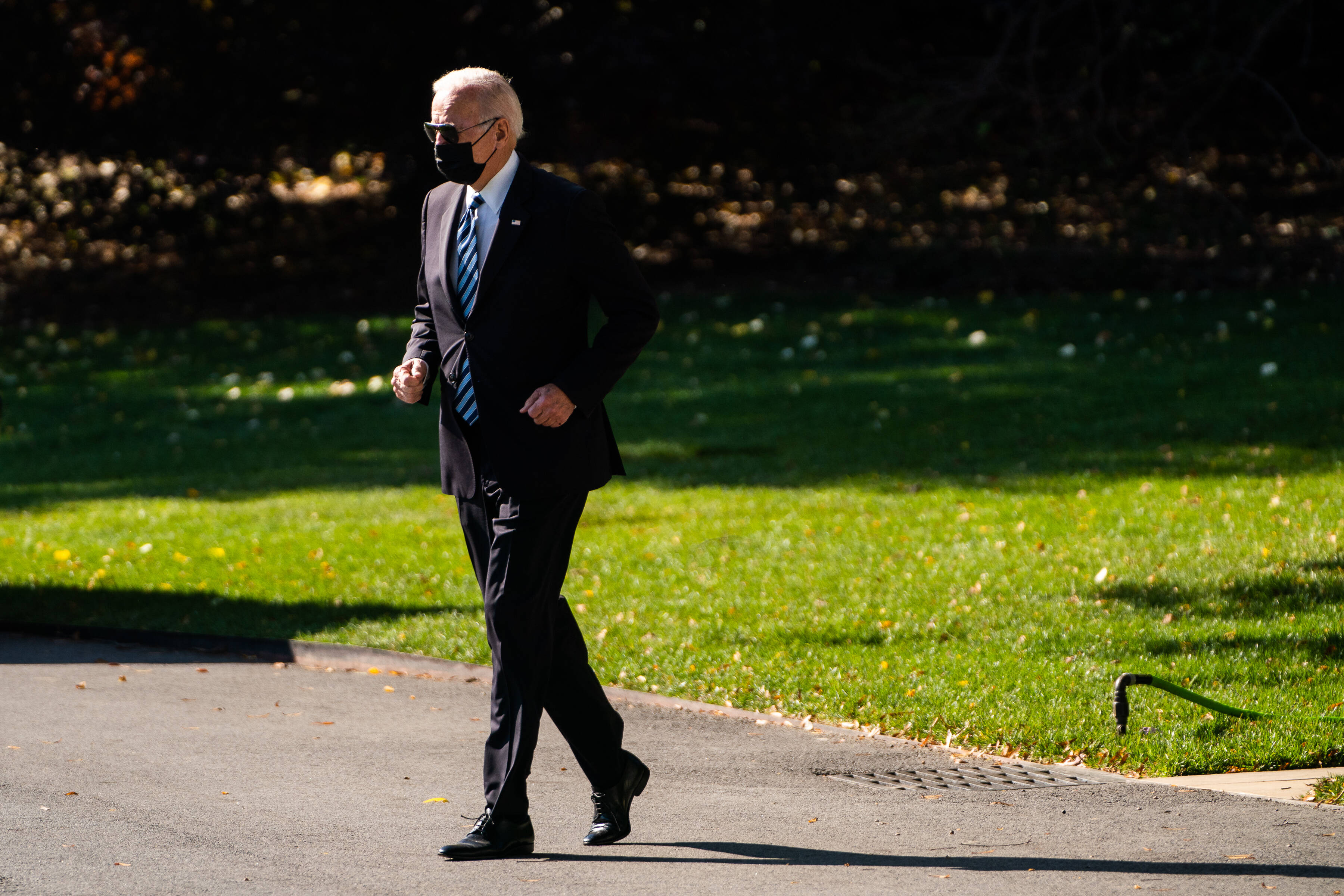 (Demetrius Freeman/The Washington Post) | What is the latest concerning Steve Bannon's refusal to abide by the congressional subpoena? As of Friday afternoon, he is indicted by a federal grand jury for refusing to comply with that congressional subpoena. Trump's former adviser is trying to cite executive privilege, even though he didn't work in the White House at the time the Jan. 6 committee is investigating. Congress voted to hold Bannon in contempt in October and then asked the Biden Justice Department to consider criminal penalties. They did, and now Bannon could go to jail: Willfully ignoring a subpoena can be punishable by a fine or up to a year in jail. This could become a road more traveled. Also on Friday, the committee said that Trump's former chief of staff, Mark Meadows, refused to testify to them and now they're considering contempt charges for him, too. Said the committee's leaders, Reps. Bennie Thompson (D-Miss.) and Liz Cheney (R-Wyo.) in a statement: "There couldn't be a more compelling public interest than getting answers about an attack on our democracy." What is Congress doing to address climate change? Almost all of it is in this social safety net legislation, which an advocate told me really is the first serious investment by Congress to lower U.S. carbon emissions. The Sierra Club says there are nearly 100 different kinds of spending, which can be generally summed up as tax credits for American companies — from manufacturers to carmakers — to transition to clean energy. The infrastructure bill also aims to invest in electric bus and rail transportation and to outfit schools to be more environmentally friendly. But advocates say it's not enough. And there may be an underlying reason politicians aren't going as far as climate activists want: Over the past seven years, despite a warming world, Americans' opinions on climate change remain largely static. That's according to a new poll from The Washington Post and ABC News, which found that 67 percent of Americans say climate change is a serious problem, but Republican concern about it has shrunk. Why is there not a law requiring a politician to recuse themselves from debating or voting on an issue that they are financially involved in? Let's go back to that climate debate to answer this question. One of the biggest climate initiatives Biden proposed — a program to get utility companies to quickly move from fossil fuel to cleaner energy — is out because Sen. Joe Manchin (D-W.Va.) opposes it. He says he doesn't want to pay companies that are already making this shift. But he also owns millions in stock tied to coal, reports the New York Times. There are technically rules in the Senate — and other legislative bodies across the nation — prohibiting lawmakers from taking money that would be a conflict of interest to do their jobs. But most of these rules are so vague that they're rarely applied. (Lawmakers themselves made them, after all!) A very interesting Trump vs. GOP battle 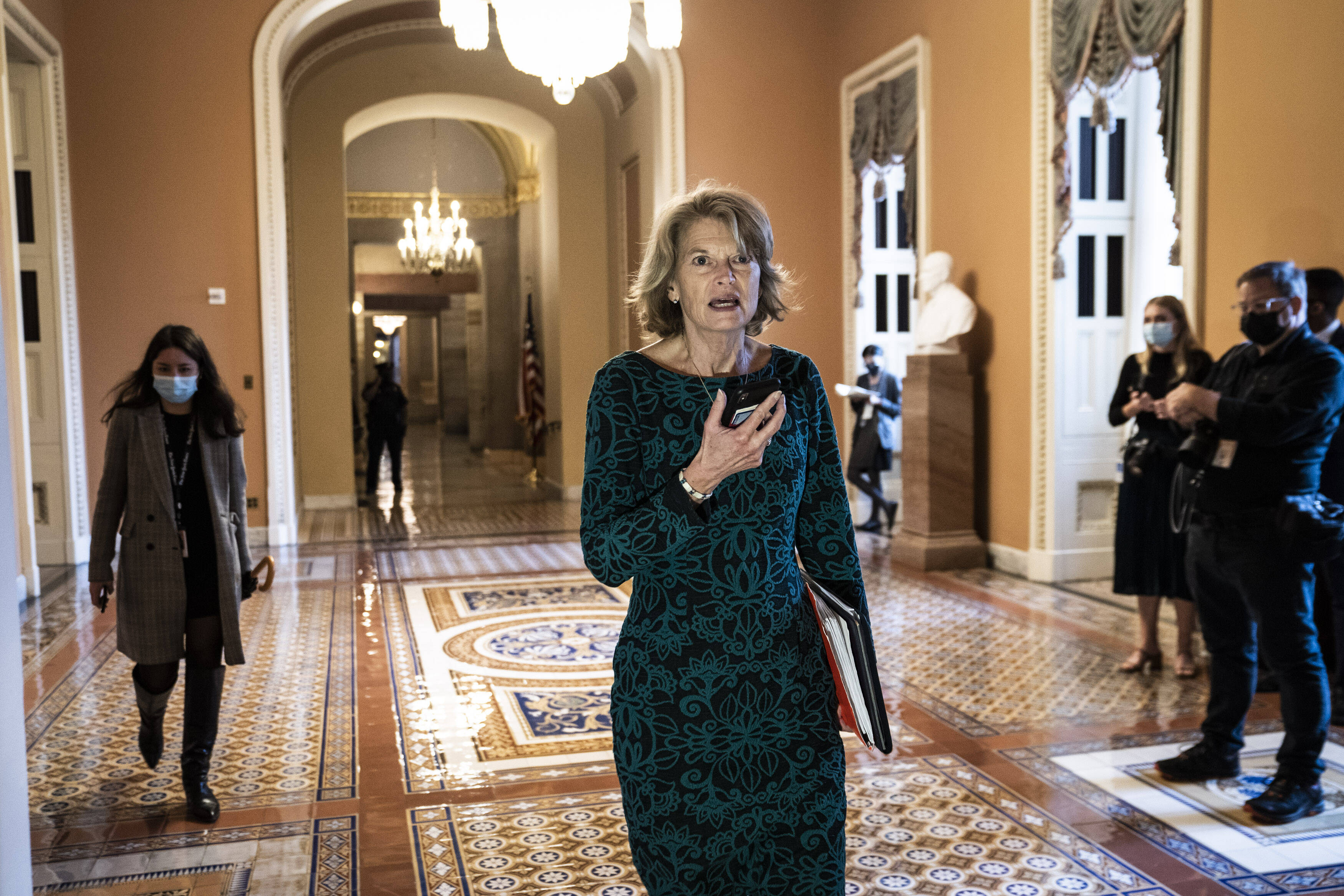 Sen. Lisa Murkowski (R-Alaska). (Jabin Botsford/The Washington Post) | By now, you know that Trump isn't fading into the background. One of his most active roles comes in trying to play kingmaker in Republican primaries. And it's rubbing a few establishment Republicans the wrong way in two states where GOP senators are actively trying to take down Trump-backed candidates. In Alabama, Sen. Richard Shelby (R) is retiring. But he is said to be spending $5 million to try to pick his predecessor, reports The Post's Michael Scherer, and it's not the person Trump has endorsed in that race. In Alaska, Sen. Lisa Murkowski (R) just announced she's running for reelection. That's big because she voted for Trump's second impeachment, and Trump has propped up a primary challenger to defeat her. "In this election, Lower 48 outsiders are going to try to grab Alaska's Senate seat for their partisan agendas," she said. There's a constant tension between Trump and establishment Republicans in these primaries. He has a tendency to endorse candidates who are loyal to him, no matter their messy backgrounds (earlier this year, he endorsed a candidate in Pennsylvania who was later accused of strangling his wife). But Republicans also acknowledge that Trump has helped them reach voters they never could have on their own. Meanwhile, Trump continues to steer the party exactly where most of them don't want to go: endorsing political violence. In an interview for an upcoming book, Trump said his supporters chanting "Hang Mike Pence" was "common sense," because, essentially, the former vice president wouldn't help him steal an election. | 




 Email
Email