| Democrats lost the Virginia governor's race. And results are still coming in, but in New Jersey, a blue state, the Democratic governor faced an unexpectedly stiff challenge from his Republican opponent. Here are four takeaways from the biggest races of the biggest election day in 2021. The Post's Aaron Blake has even more takeaways. 1. Democrats should be very worried about their chances of keeping control of Congress next year 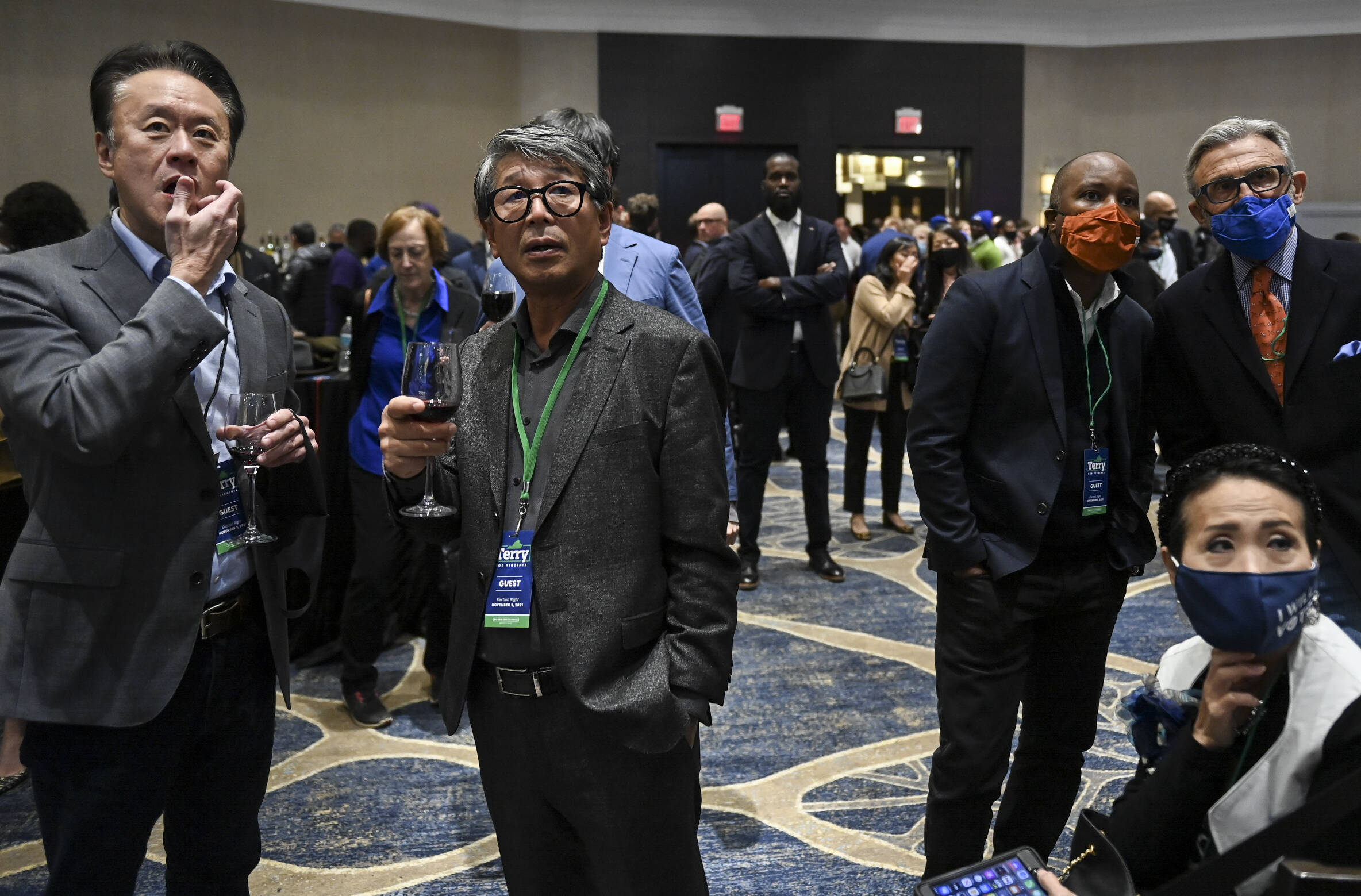 Virginia Democrats watch returns come in on Tuesday. (Jonathan Newton/The Washington Post) | Virginia Democrats haven't lost a statewide race since 2009. Now it appears they've lost all three (we're still awaiting a final count in the attorney general race) and control of the House of Delegates. Looking forward to next November's battle for control of Congress, there are 50 House Democrats right now sitting in districts that are more Republican leaning than the state of Virginia. Republicans only need to net five of those seats to win back the majority. "The math is very much on our side," said one Republican operative. As The Post's Dan Balz put it: "To lose a state like Virginia, which has been trending Democratic for a decade, and to struggle so much in New Jersey suggests that, unless things change, only the bluest of states or districts are likely to be safe in 2022." And for reasons that Democrats are still trying to sort out, The Post's Philip Bump finds that this backlash to President Biden led by Republican voters was far bigger than Democratic voters' 2017 backlash against Trump. 2. Glenn Youngkin provided a road map for Republican candidates 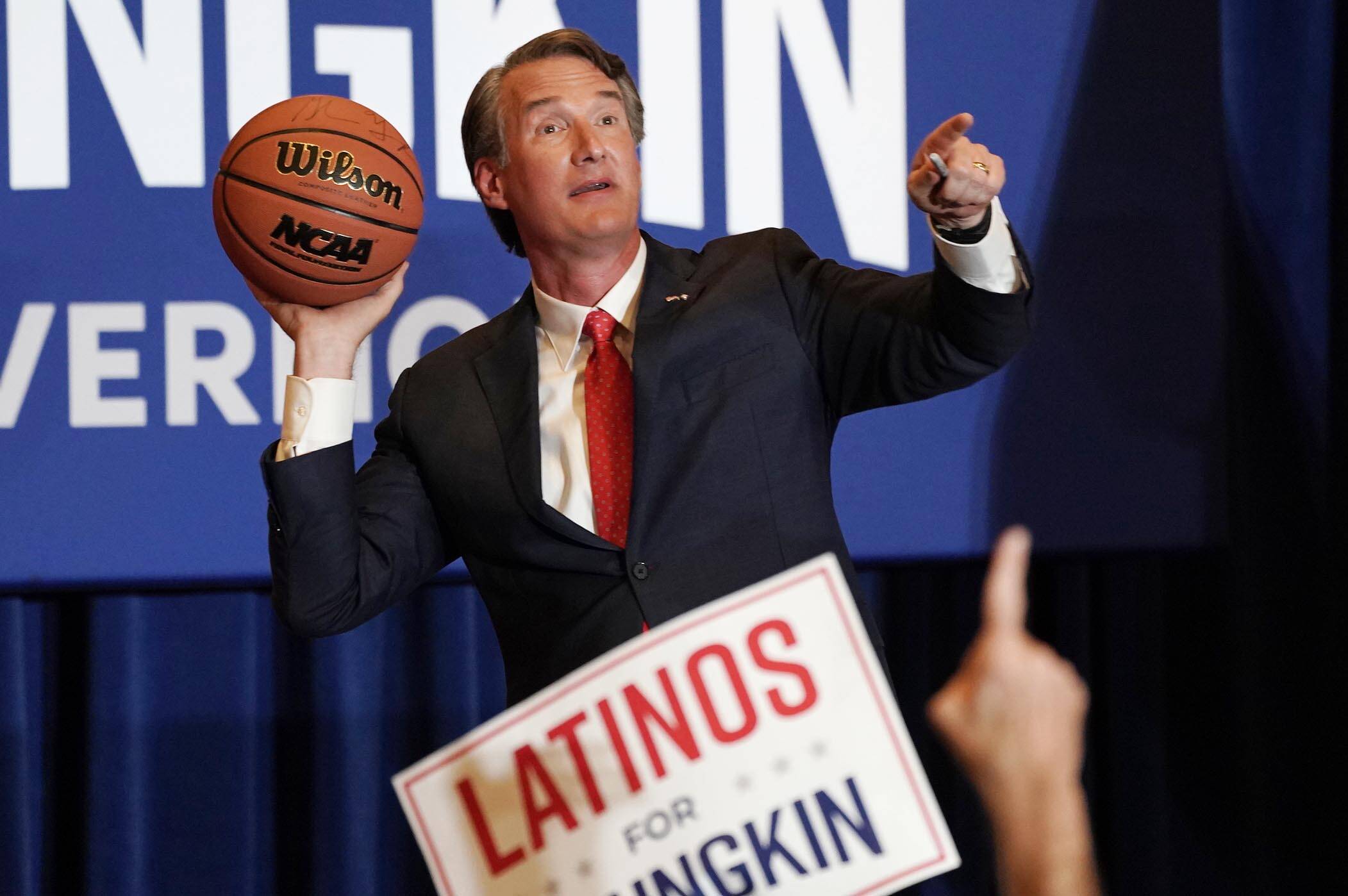 Virginia Republican candidate Glenn Youngkin celebrates Wednesday. (Salwan Georges/The Washington Post) | The Republican Party is desperately split between pro-Trump, "the election-was-stolen" base voters and Republicans grounded in reality. Virginia's next Republican governor, Glenn Youngkin, proved it is possible to unite that coalition. He did it by very gingerly suggesting to the base that he didn't think Biden actually won the presidential election, then trying to bury that statement with millions of dollars of ads presenting himself as an innocuous, not-scary Republican. It worked. Exit polls show Youngkin won voters with a favorable view of former president Donald Trump, of course, but he also won a sizable chunk of voters with an unfavorable view of the former president. Youngkin also won a majority of voters who said education is their top priority. He very successfully packaged a litany of education-related issues — critical-race-theory/ coronavirus-safety-mandates /transgender-rights debates — that have raised concerns among some parents. He promised to give parents and voters more say over their children's education and their pandemic-safety choices. It struck a chord with Virginia parents who had to home-school their kids basically overnight during the height of the pandemic, Republican strategist Doug Heye pointed out. Lifelong Democratic voter Laurel Wise told my colleagues that she's fed up with mask mandates in Virginia: "I've never voted for a Republican in my life, and I'm going to today," she said. 3. Democrats need to pass their social spending bill ASAP "It's not too late to course correct," said Jim Kessler, a Democratic strategist. He and a number of other Democrats believe the party can change the national conversation by passing universal prekindergarten, child care tax credits, expanded Medicare, a prescription drug pricing deal for seniors, and major investments to lower carbon emissions. But they need to do it now. "At this point," Kessler said, "the major items on the Biden agenda should have been passed." Biden was asked about his party's losses Wednesday and seemed to agree a legislative victory was his party's ticket out of their rut. "People are upset and uncertain about a lot of things, from covid to school to jobs to a whole range of things -- the cost of a gallon of gasoline," he said. "If I'm able to sign into law my Build Back Better initiative, you will see a lot of those things ameliorated, quickly and swiftly." 4. Expect a lot more culture wars Critical race theory was not a hot topic in New Jersey — underscoring that Democrats' problems are deeper than debates over how race and racism should be taught in schools. But in Virginia, Youngkin expertly wielded schools and freedom and a post-George Floyd national conversation about race against his opponent, former Virginia governor Terry McAuliffe. And Republicans won back the Virginia House of Delegates in part by attacking some Democrats as radical "defund-the-police" candidates. More centrist Democrats fear that some of their party's most liberal politicians are getting too far ahead of American voters on everything from health-care policy to race. "There is enough there on cultural issues that shows Democrats are turning people off," Kessler said, "and Republicans realize it." | 




 Email
Email 


