| After losing the Virginia governor's race this week (among other elections), Democrats are in a rush to pass two big pieces of legislation — a bipartisan infrastructure bill and that big economic package to dramatically expand the social safety net. Both have been held up in Congress for months, and Democrats are getting nervous that they don't have much time to pass the bills, start getting new programs implemented and campaign on them before voters start deciding whether Democrats should keep control of Congress in the November 2022 elections. To that end, House Democrats are pushing for votes on both pieces of legislation as soon as today. Here's what votes in the House would mean: - The bipartisan infrastructure would go to President Biden's desk to be signed into law. It would be a major victory for him: $1 trillion in investments in roads, bridges and broadband throughout the nation. And he could say he did it with Republican support.
- The social spending/climate change legislation still has a long way to go. Even if it passes the House today or in the next few days — a big if — it needs to get 50 votes in the Senate. And by now, you know what that means: It needs the support of Sen. Joe Manchin III (D-W.Va.), who increasingly is the main holdout. He's especially reticent on things like expanding Medicare and some of the spending on renewable energy. And if the Senate changes the bill, it has to go back to the House for a vote, and … it's potentially a long road, longer than Democrats think they have to get back on stable ground politically.
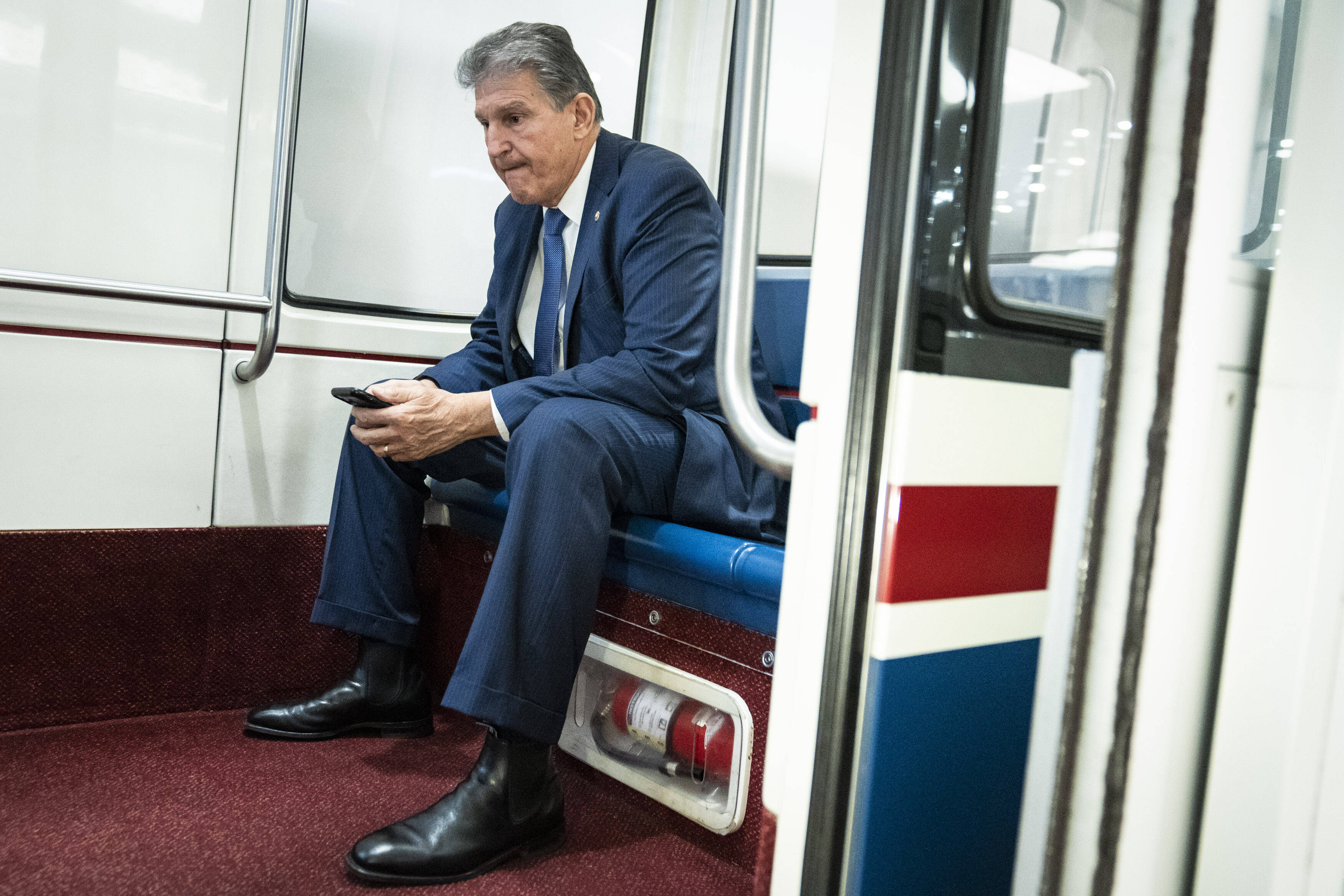 Sen. Joe Manchin III (D-W.Va.) on the subway in the Senate. (Jabin Botsford/The Washington Post) | What's up with Joe Manchin? And more of your questions Q: What is Manchin up to? A run for president as a Republicrat? Embarrassing Joe Biden for some reason? Help me understand his motivation as spoiler in chief. Thirty-nine percent. That's the number that can help you understand him. That's the margin Trump won Manchin's state by in 2020, one of his largest margins anywhere. Manchin is a political anomaly in politics, a Democrat representing a Republican state. He feels like he can speak to a group of voters that he thinks the rest of the party is losing touch with. (By the way, he's said he doesn't want to switch parties.) I really think it's as simple as that. Q: There is lots of discussion about division among Senate Democrats. But are there truly zero centrist or liberal-leaning Republicans willing to work with the president to get Build Back Better? Yes. Bipartisan agreements in Congress are more common than we think, says Molly Reynolds, a congressional analyst with the Brookings Institution. But the really big stuff gets stuck in the mud — think immigration and police reform. It's just become more common for both parties to avoid helping out the other on controversial items. This is not a hard decision for Republicans since Democrats' "Build Back Better" plan — that $1.75 trillion spending bill — has policies that Republicans oppose, like paid family leave, or expanded Medicare. But Democrats don't need Republican votes for this. They're using a budget tool called reconciliation to dodge a Republican filibuster. The catch: They can only have spending-related items in the bill, which means a path to citizenship for Dreamers has been nixed. How can we get rid of a fire hose of falsehoods? Both sides in politics embellish the truth. That's why we have The Fact Checker at The Post. But the conservative media ecosystem has taken this to a whole other level, pushing falsehoods about whether Democratic candidates support "defund the police" (most don't), or whether critical race theory specifically is taught in schools (not in Virginia, though parents say they are upset about new ways being explored to teach race in schools). Democrats I talked to this week after their election losses named fighting this as a top priority. But they didn't have any answers on how. Q: Why is Biden being bashed for things he has no control over, such as gas prices and backed-up shipping vessels? Part of that just comes with the territory of being president. People vote on how thin their wallets are feeling. And gas prices, inflation and a global supply chain conundrum greatly affect the American economy, even though the president doesn't have much say in it. But Biden may be particularly vulnerable to economic attacks because he campaigned on restoring normalcy and order to American lives. A year on, many Americans don't seem to feel that way. Ask me a question anytime. | 




 Email
Email 


