| Perhaps it's a reflex toward ultimate privacy. Perhaps it's habit by now to fight Democrats in Congress. Or perhaps he has something he doesn't want made public. For whatever reason, Trump is going all in on trying to keep what he was doing and saying during the Jan. 6 Capitol insurrection from getting in the hands of congressional investigators. It's a legal battle that, so far, he's losing. But it could go all the way to the Supreme Court in a rare test of presidential power for someone who is no longer president. A quick recap: The special, bipartisan committee investigating the Jan. 6 insurrection has requested hundreds of pages of official government emails and call logs and White House visitor logs that it says help tell the story of what Trump was doing Jan. 6. Lawmakers said they want to know his every move that day and the days leading up to it, as they try to paint a picture of how much he contributed to this attack on democracy. 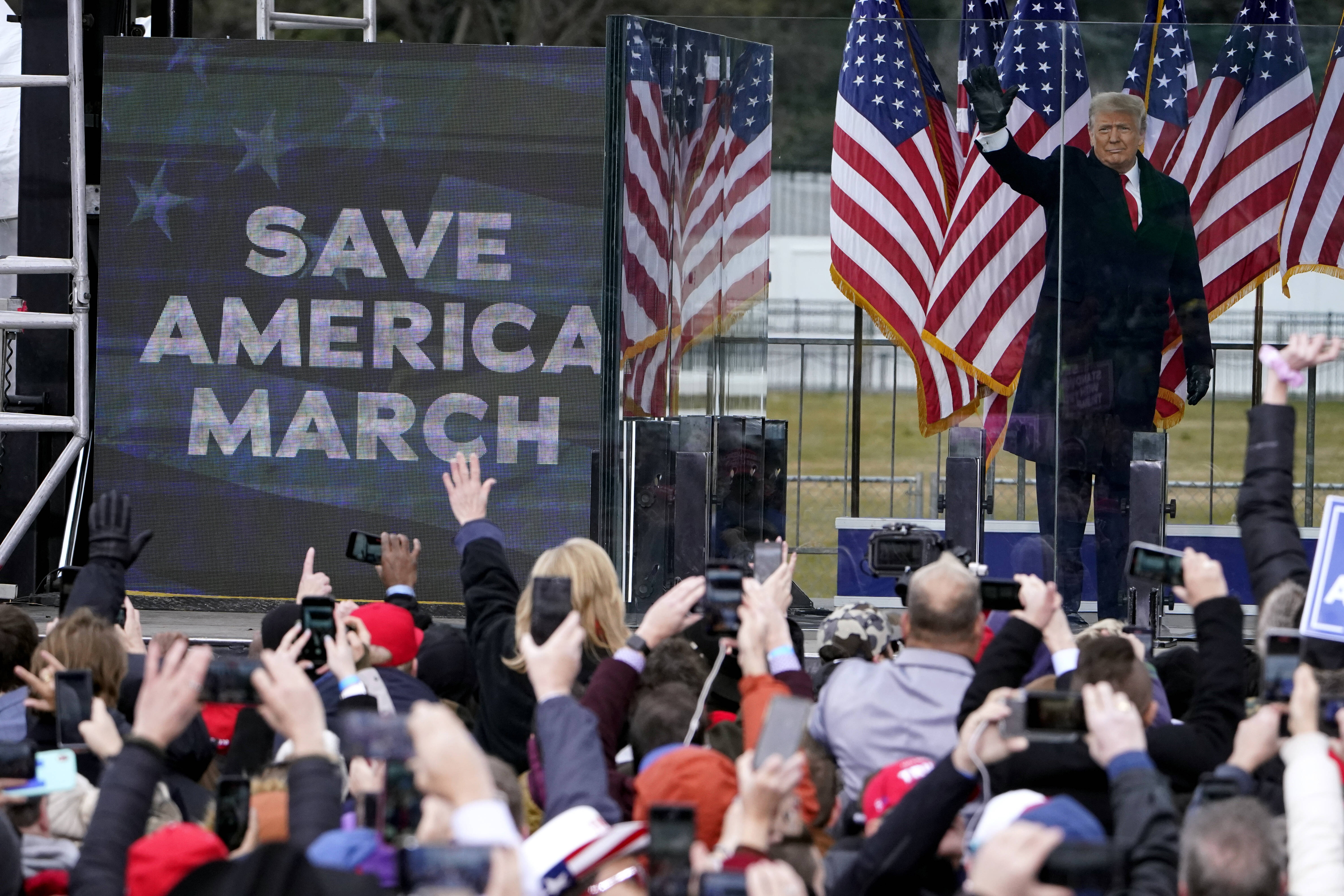 Donald Trump speaks to supporters on Jan. 6. | Trump claimed executive privilege and sued the committee. On Tuesday, Trump lost the first round of his lawsuit. A federal judge ruled that the documents can go to Congress. Trump is likely to appeal to a higher court, and legal experts I talked to say there isn't much precedent for what the courts will decide. Here's a brief rundown of the arguments on either side. Trump says: Congress's request erodes the protections the Constitution affords presidents, which is that they can have frank conversations and make decisions with a reasonable expectation of privacy. His spokesman has framed this as a "battle to defend executive privilege for presidents past, present and future." The House committee says: Jan. 6 was no ordinary day, and Trump was not an innocent bystander. It believes he "helped foment the breakdown in the rule of law," and it wants to ensure this doesn't happen again. So far, one federal judge has said: That she agrees with Congress. She wrote: "The court holds that the public interest lies in permitting … the combined will of the legislative and executive branches to study the events that led to and occurred on January 6, and to consider legislation to prevent such events from ever occurring again." All of this may be moot, though: That is, if Trump can extend this legal battle well into next year, which The Post's Spencer S. Hsu reports is possible. If Republicans take control of Congress in January 2023, they could disband the committee altogether. What you need to know about Kyle Rittenhouse 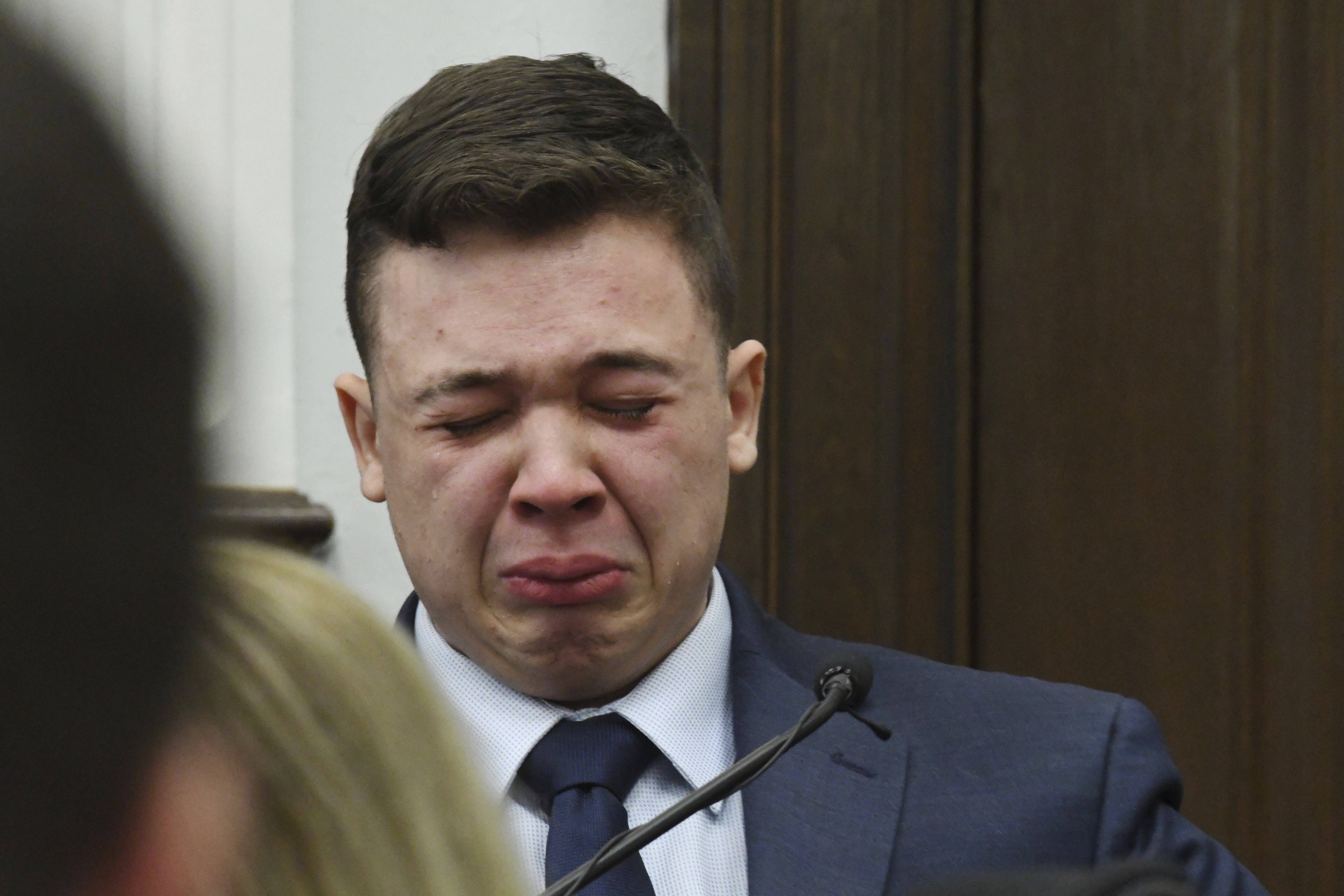 Kyle Rittenhouse breaks down on the stand as he testifies about his encounter with the late Joseph Rosenbaum during his trial Wednesday in Kenosha, Wis. | It's August 2020, the height of the racial unrest in America, and daytime protests followed by nighttime chaos are breaking out in Kenosha, Wis., after a White police officer shot Jacob Blake, a Black man. Kyle Rittenhouse, then 17, illegally brings a rifle and travels from out of state to Kenosha, patrolling the streets at night. He ends up fatally shooting two people and injuring another. His murder trial is this week. Did he shoot in self-defense, as he tearfully testified Wednesday? Or was he a vigilante motivated by White extremists? How this could reverberate in the political world: Rittenhouse has become a stand-in for the debate around white supremacy and extremism. Were his actions dangerous or helpful? Trump has made Rittenhouse a sort of celebrity on the right. Shortly after the shootings, he defended Rittenhouse: "They violently attacked him," Trump said of the people Rittenhouse shot. Joe Biden ran a presidential campaign ad implicitly tying Rittenhouse to white supremacy. The results of Rittenhouse's trial will lend one side more talking points. 'Defund the police' isn't so popular in elections National Democrats quickly backed away from calls in 2020 to defund the police — and it appears their instincts were correct. Voters even in progressive cities aren't on board with stripping money away from police departments, at least per last week's election results. Let's review. In Seattle: Last week, voters chose law-and-order candidate Ann Davison as their city attorney, putting a Republican in the spot for the first time in three decades. Her opponent was Democrat Nicole Thomas-Kennedy, who called for a process to abolish the police and last year called people destroying public property in the wake of George Floyd's murder by police "heroes." In Minneapolis: Also last week — in the very city where protests over Floyd's murder began — voters rejected a proposal to replace the city's police department with a new Department of Public Safety that would use police officers only "if necessary." Instead of dispatching armed officers to every call, the new agency would have sent mental health workers in certain scenarios. More money would have been spent on violence prevention. But the measure failed, opposed by 56 percent of voters, plus the city's Democratic mayor, Jacob Frey. In Buffalo: Voters chose Mayor Byron Brown (as a write-in candidate, no less) over a self-described democratic socialist who had initially called for defunding the police, although she later softened that stance. The most obvious takeaway from these elections is that living in safe areas is a core priority for voters, and when crime rises — as it is across the country — it becomes an even bigger focus. Voters don't seem willing to experiment right now with policing. The obvious takeaway for Democrats is that going anywhere in the vicinity of "defund the police" can backfire politically. | 




 Email
Email